







Prayagraj
The King of All Teerth Sthals
Prayagraj — known for most of its modern history as Allahabad, and before that as Prayag — sits at the confluence of three rivers: the Ganga, the Yamuna, and the Saraswati, which is said to flow underground and join the other two invisibly.
4.4 from 55 Google reviews · 9,300+ travellersWhen to goNov–Feb
- Jan (good)
- Feb (good)
- Mar
- Apr
- May
- Jun
- Jul
- Aug
- Sep
- Oct
- Nov (good)
- Dec (good)
What to see in Prayagraj
Built from the guide’s sections.

The Triveni Sangam
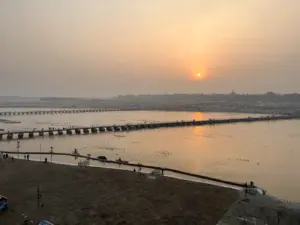
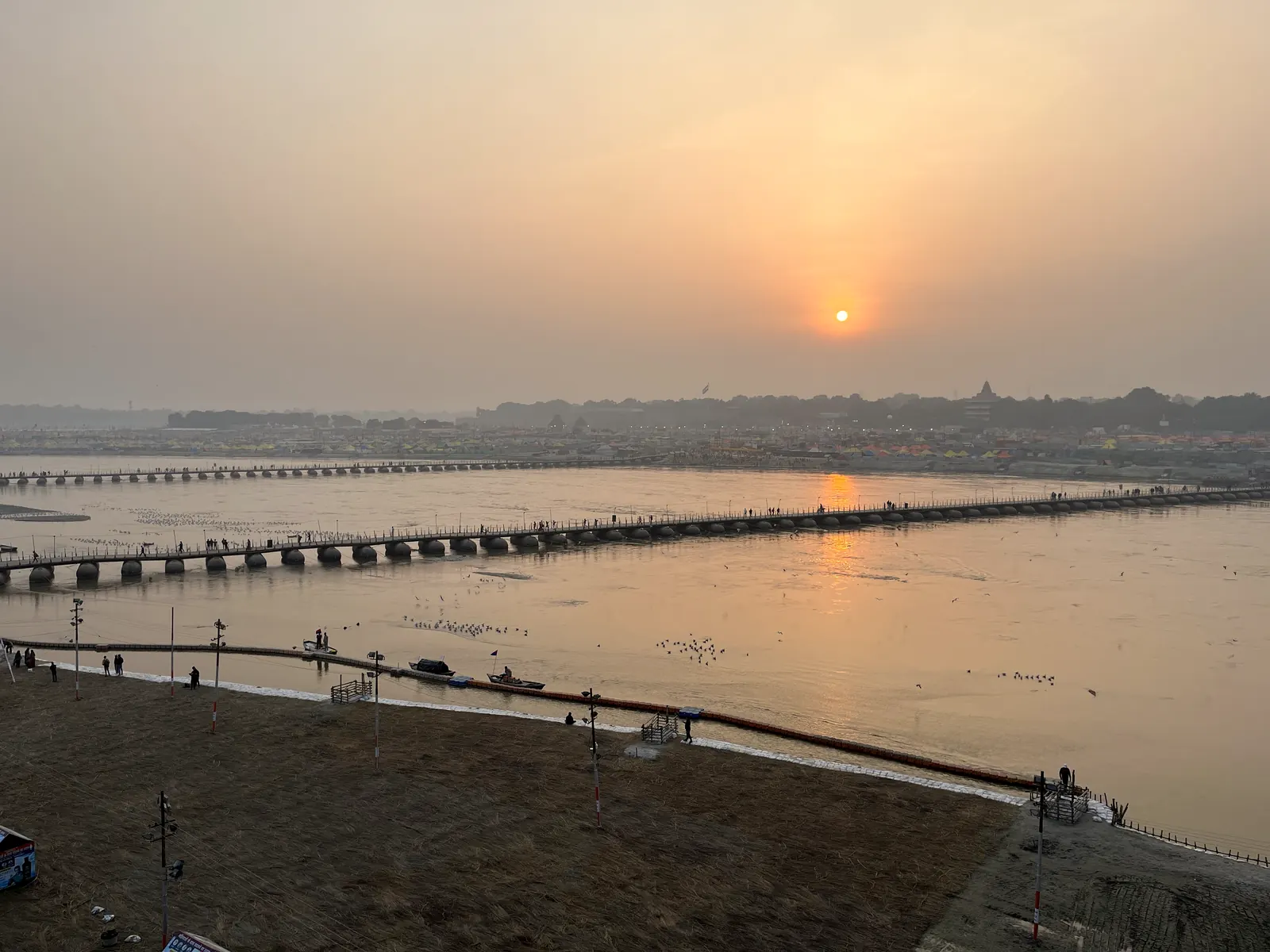
Standing at the Sangam's edge, you can see the visual difference between the rivers: the blue-green Yamuna meets the green-grey Ganga in a line where the two colours run side by side for several metres before merging. The Saraswati, the third of the three, is invisible to the eye but present in faith.
Read this in the guideKumbh Mela: The World's Largest Gathering
Prayagraj hosts the Kumbh Mela every 12 years and the Ardh (half) Kumbh every 6 years. The Maha Kumbh of 2025 drew an estimated 40–45 crore visitors over 45 days — the largest peaceful gathering in human history. The event's dates are determined by the position of Jupiter, the sun, and the moon.
Read this in the guideAllahabad Fort and the Akbar Complex
The massive Allahabad Fort was built by Emperor Akbar in 1583 on the site of an ancient Hindu fort at the Sangam's edge. It is one of the largest forts built by Akbar and covers a significant stretch of the riverfront.
Read this in the guideHanuman Mandir: The Reclining Hanuman
Near the Sangam, the Lete Hue Hanuman Ji Temple houses a 20-foot reclining idol of Hanuman that is partially submerged each monsoon as the Ganga rises — devotees believe the river itself comes to offer respects. During the Kumbh period, the entire idol is submerged.
Read this in the guideAnand Bhavan and the Nehru Legacy
Prayagraj was the epicentre of much of India's independence movement, and the ancestral home of the Nehru family — Anand Bhavan — has been converted into a museum.
Read this in the guideAllahabad University and the City's Intellectual Heritage
Established in 1887, Allahabad University is one of the oldest universities in India and was historically among the most prestigious — a generation of Indian civil servants, judges, and writers were educated here. The neo-Gothic campus buildings on the Thornhill Road are worth a short walk.
Read this in the guideFood Culture in Prayagraj
Prayagraj's food is deeply rooted in the Awadhi and Gangetic plain tradition. Tehri is a yellow rice preparation — a vegetarian cousin of biryani made with potatoes and spices — that is eaten at home and sold at stalls across the city.
Read this in the guideMankameshwar Temple
The Mankameshwar Temple on the banks of the Yamuna is dedicated to Lord Shiva and is one of Prayagraj's oldest and most revered shrines. The name means "the one who fulfils desires" — thousands of devotees visit on Mondays and during Shravan month. The temple is open from 5:00 AM to 10:00 PM daily.
Read this in the guideAlopidevi Temple: The Shaktipeeth
The Alopi Devi Temple is one of the 51 Shaktipeethas — the most sacred sites dedicated to the goddess Shakti. According to the legend of Sati, Prayagraj is where her hands (hasta) fell after Lord Vishnu's Sudarshana Chakra divided her body.
Read this in the guideVeni Madhav Temple
The Veni Madhav Temple near the Ganga bank is dedicated to Lord Vishnu and is one of the Pancha-Madhava temples of Prayagraj. It occupies an important place in the city's Vaishnava pilgrimage circuit.
Read this in the guidePractical Travel Information
Getting there: Prayagraj Sangam railway station is the closest to the ghats (around 3 km). Prayagraj Junction (formerly Allahabad Junction) is the main hub with connections to Delhi (Rajdhani Express, approximately 7–8 hours), Mumbai, Varanasi (about 2.5 hours), and Lucknow (about 3 hours).
- Getting there
- Getting around
- Best time to visit
Tours that include Prayagraj
Private departures, planned to your dates.
 Yatra2N / 3D · Private2N / 3D · Yatra
Varanasi Prayagraj Tour Package 2N/3D
- Varanasi
- Prayagraj
Starting from ₹9,000per person · 6 Pax MinimumTravellers
Ancient Varanasi ghats and the timeless Ganga Aarti at DashashwamedhAsk us on WhatsApp
- Private departure
- Planned to your dates
- We'll send you a plan and a price
 Yatra4N / 5D · Private4N / 5D · Yatra
Varanasi-Gaya-Prayagraj 4N/5D Tour Package
- Varanasi
- Prayagraj
- Bodh Gaya
Starting from ₹11,000per person · 6 Pax MinimumTravellers
Complete Pind Daan at Varanasi, Gaya and Prayagraj in one journeyAsk us on WhatsApp
- Private departure
- Planned to your dates
- We'll send you a plan and a price
 Yatra3N / 4D · Private3N / 4D · Yatra
Varanasi Prayagraj Ayodhya Tour Package 3N/4D
- Varanasi
- Prayagraj
- Ayodhya
Starting from ₹16,999per person · 6 Pax MinimumTravellers
Kashi Vishwanath DarshanAsk us on WhatsApp
- Private departure
- Planned to your dates
- We'll send you a plan and a price
- Yatra4N / 5D · Private4N / 5D · Yatra
Varanasi Prayagraj Ayodhya Chitrakoot Tour Package 4N/5D
- Varanasi
- Prayagraj
- Chitrakoot
- Ayodhya
Starting from ₹17,999per person · 6 Pax MinimumTravellers
Four cities on the Ramayana trail in 5 daysAsk us on WhatsApp
- Private departure
- Planned to your dates
- We'll send you a plan and a price
 Yatra5N / 6D · Private5N / 6D · Yatra
Varanasi Ayodhya Prayagraj Gaya Tour Package 5N/6D
- Varanasi
- Gaya
- Prayagraj
- Ayodhya
Starting from ₹20,000per person · 6 Pax MinimumTravellers
Complete Pind Daan at Prayagraj and Gaya - both included in priceAsk us on WhatsApp
- Private departure
- Planned to your dates
- We'll send you a plan and a price
 Yatra7N / 8D · Private7N / 8D · Yatra
Varanasi Prayagraj Ayodhya Chitrakoot Gaya Tour Package 7N/8D
- Varanasi
- Bodh Gaya
- Prayagraj
- Chitrakoot
- Ayodhya
Starting from ₹27,000per person · 6 Pax MinimumTravellers
A 5-city pilgrimage through Varanasi, Prayagraj, Ayodhya, Chitrakoot and GayaAsk us on WhatsApp
- Private departure
- Planned to your dates
- We'll send you a plan and a price
 Ritual4N / 5D · Private4N / 5D · Ritual
Prayagraj Varanasi Gaya 4N/5D Teerth Shradh Package
- Prayagraj
- Varanasi
- Bodh Gaya
Starting from ₹36,000per person · 6 Pax MinimumTravellers
Complete Pind Daan at all three supreme tirthas - Prayagraj, Varanasi, and GayaAsk us on WhatsApp
- Private departure
- Planned to your dates
- We'll send you a plan and a price
 Yatra8N / 9D · Private8N / 9D · Yatra
Kashi Rameshwaram Yatra Package 8N/9D
- Rameshwaram
- Madurai
- Varanasi
- Prayagraj
- Gaya
Starting from ₹60,0002 Pax MinimumTravellers
Complete Rameshwaram temple worship ceremoniesAsk us on WhatsApp
- Private departure
- Planned to your dates
- We'll send you a plan and a price







- 2N3 days Varanasi Prayagraj Tour Package 2N/3D Varanasi ₹9,000 per person · 6 Pax Minimum
- 4N5 days Varanasi-Gaya-Prayagraj 4N/5D Tour Package Varanasi Gaya ₹11,000 per person · 6 Pax Minimum
- 3N4 days Varanasi Prayagraj Ayodhya Tour Package 3N/4D Varanasi Ayodhya ₹16,999 per person · 6 Pax Minimum
- 4N5 days Varanasi Prayagraj Ayodhya Chitrakoot Tour Package 4N/5D Varanasi Prayagraj Ayodhya Chitrakoot ₹17,999 per person · 6 Pax Minimum
- 5N6 days Varanasi Ayodhya Prayagraj Gaya Tour Package 5N/6D Varanasi Gaya Ayodhya ₹20,000 per person · 6 Pax Minimum
- 7N8 days Varanasi Prayagraj Ayodhya Chitrakoot Gaya Tour Package 7N/8D Varanasi Ayodhya Chitrakoot Gaya ₹27,000 per person · 6 Pax Minimum
- 4N5 days Prayagraj Varanasi Gaya 4N/5D Teerth Shradh Package Varanasi Gaya Prayagraj ₹36,000 per person · 6 Pax Minimum
- 8N9 days Kashi Rameshwaram Yatra Package 8N/9D Madurai Rameshwaram Varanasi Gaya ₹60,000 2 Pax Minimum
Temples in Prayagraj
From our temple guide.
About Prayagraj
Our guide to the city.
Prayagraj — known for most of its modern history as Allahabad, and before that as Prayag — sits at the confluence of three rivers: the Ganga, the Yamuna, and the Saraswati, which is said to flow underground and join the other two invisibly. This meeting point, called the Triveni Sangam, is considered the most sacred tirtha in Hinduism. The Mahabharata calls Prayag the "king of tirthas" — tirtharaja — and the tradition of bathing here at the Sangam predates recorded history.
The Triveni Sangam
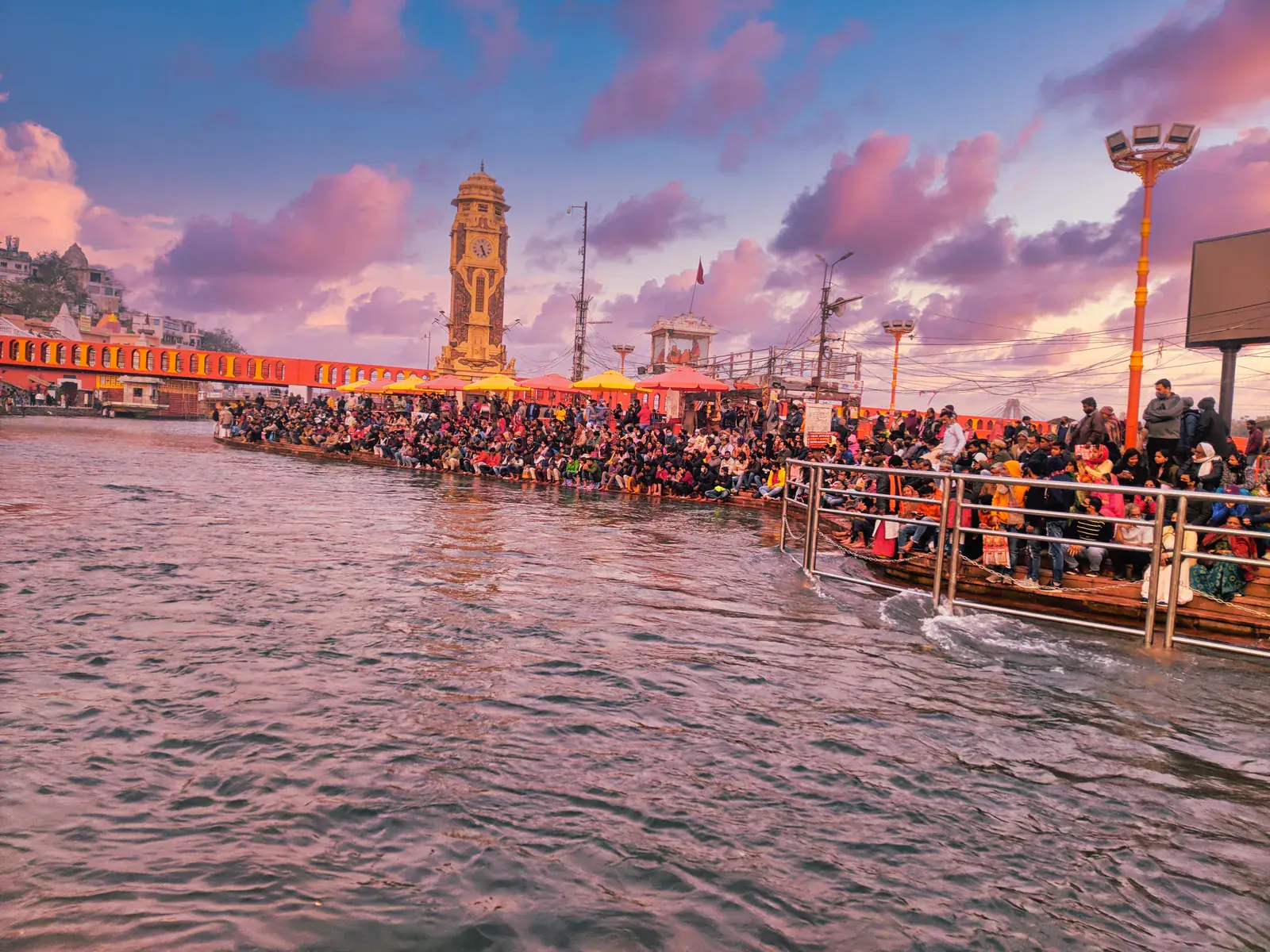
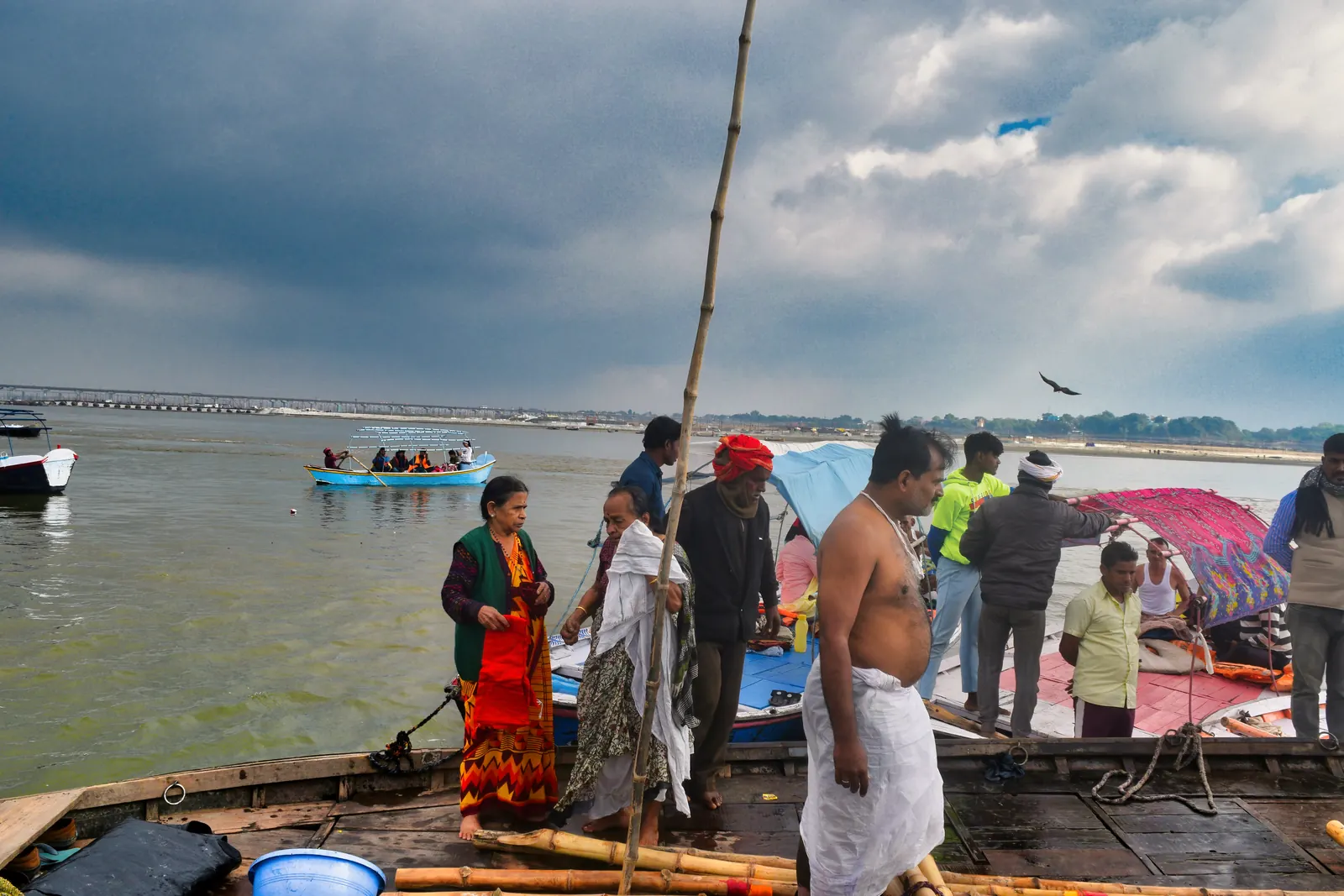
Standing at the Sangam's edge, you can see the visual difference between the rivers: the blue-green Yamuna meets the green-grey Ganga in a line where the two colours run side by side for several metres before merging. The Saraswati, the third of the three, is invisible to the eye but present in faith. Priests maintain permanent camps on the sandbanks throughout the year, and pilgrims arrive daily to take a dip at the confluence, offer water to the sun, and float diyas on the current.
The sandbanks shift with the seasons. In winter (October–February), the water level drops and vast expanses of pale sand emerge — it is on these maidan-like sandbars that the Kumbh Mela erects its tented city. During the monsoon, the confluence is deep and the banks nearly disappear.
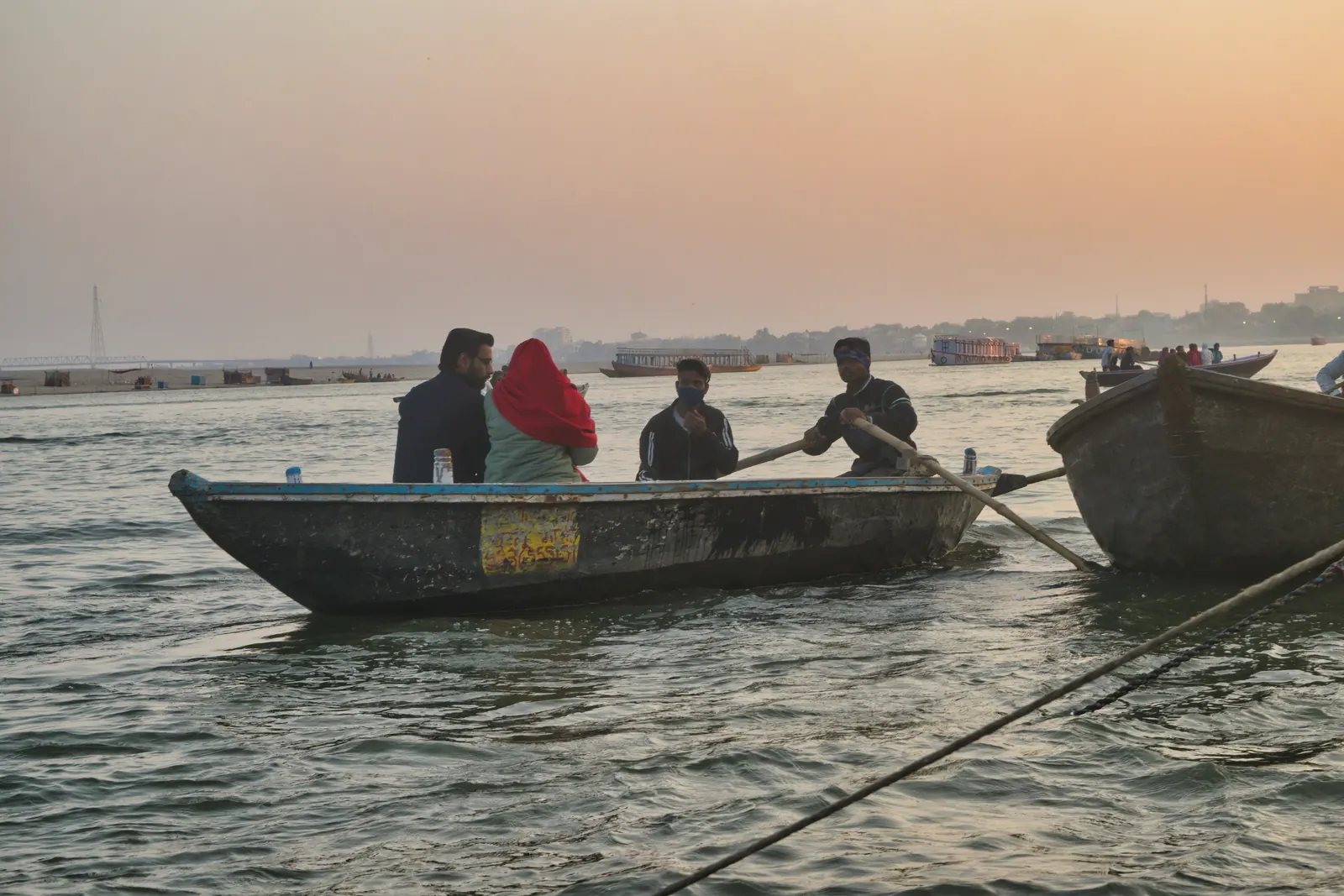
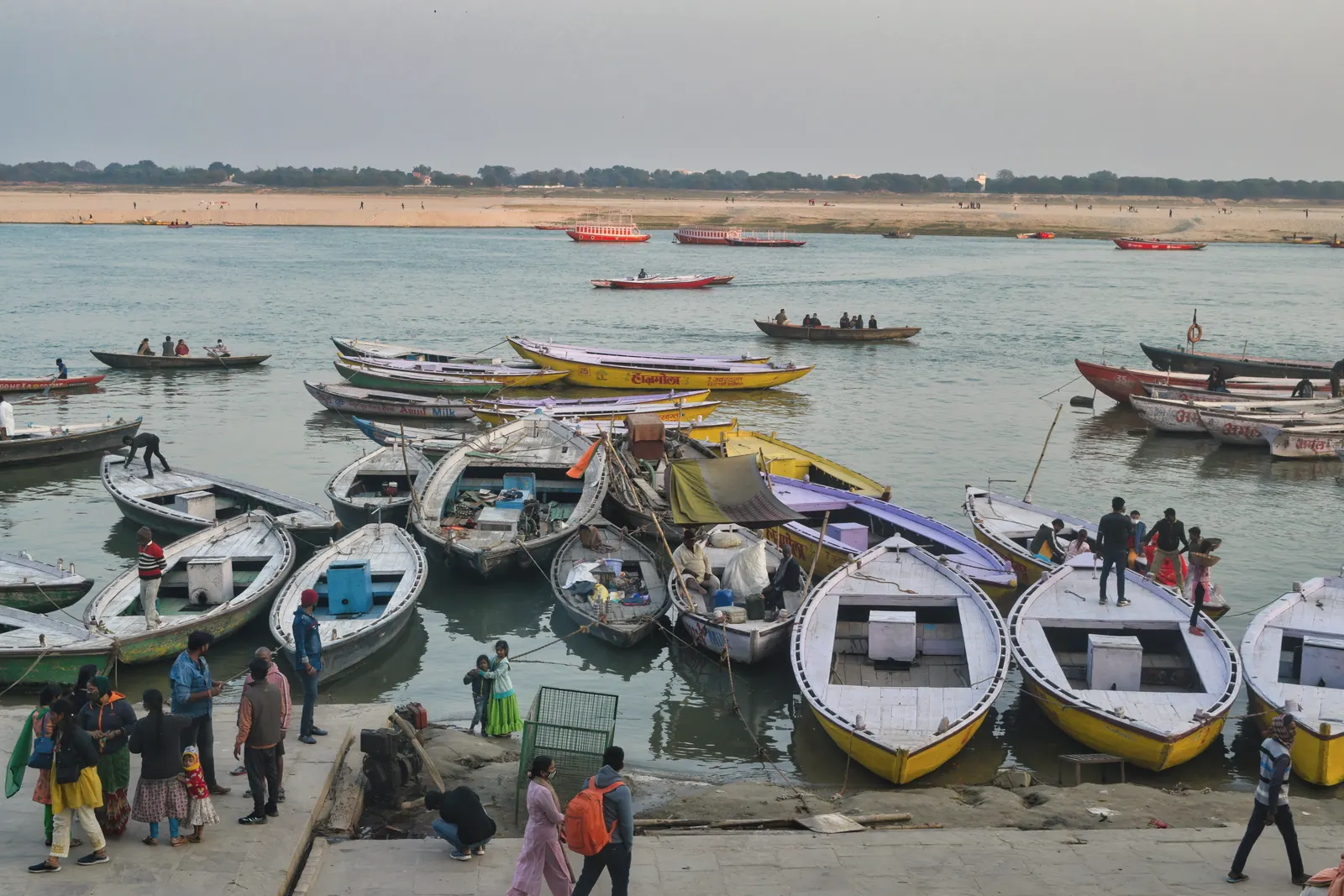
Boat rides to the Sangam are available from the ghat near Allahabad Fort throughout the day. A shared boat costs around ₹50–100 per person; a private boat for 4–6 people runs ₹300–600 depending on duration and negotiation. Prices rise sharply during the Kumbh period.
Kumbh Mela: The World's Largest Gathering
Prayagraj hosts the Kumbh Mela every 12 years and the Ardh (half) Kumbh every 6 years. The Maha Kumbh of 2025 drew an estimated 40–45 crore visitors over 45 days — the largest peaceful gathering in human history. The event's dates are determined by the position of Jupiter, the sun, and the moon. The most auspicious bathing dates are the Shahi Snan days, when the akharas (orders of sadhus and saints) procession to the Sangam in a display that has no parallel anywhere on earth.
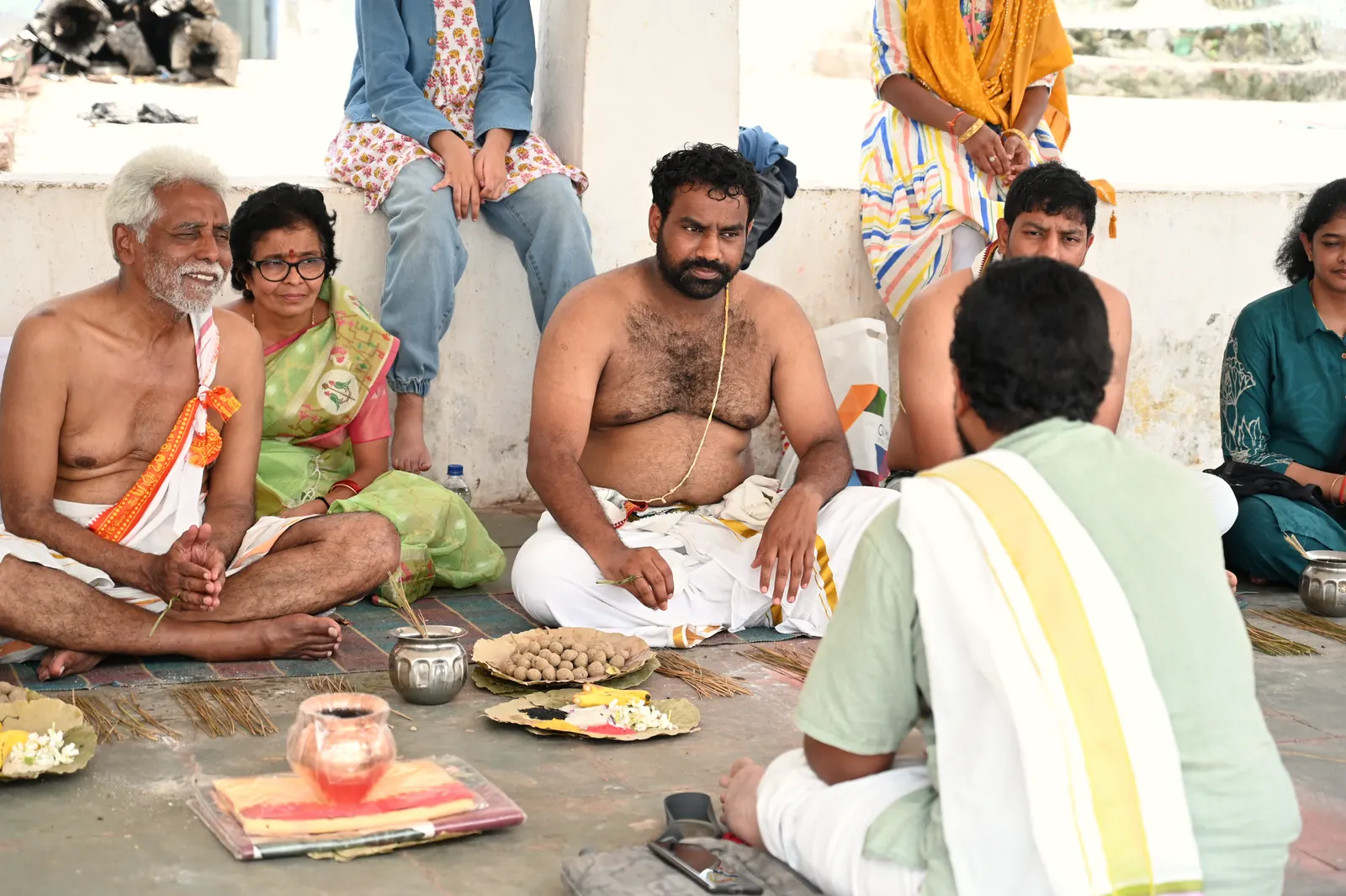
The smaller Magh Mela takes place every year at Prayagraj in January–February, and even this annual version draws millions. During Magh Mela, some pilgrims perform Kalpvas — a full month of ascetic residence in tents on the banks, waking before dawn for three cold-water baths daily, living on one simple meal, and devoting the rest of the day to prayer and discourse.
Allahabad Fort and the Akbar Complex
The massive Allahabad Fort was built by Emperor Akbar in 1583 on the site of an ancient Hindu fort at the Sangam's edge. It is one of the largest forts built by Akbar and covers a significant stretch of the riverfront. The fort is currently under the control of the Indian Army, so most of its interior is off-limits, but the Ashoka Pillar inside the fort — one of the few original Mauryan pillars still in situ, inscribed by Emperor Ashoka in the 3rd century BCE and later also by Emperor Samudragupta — can be seen through arranged access during certain periods.
Within the fort grounds is the Patalpuri Temple, an underground temple containing a sacred peepul tree known as Akshayavat (the indestructible fig). Hindu texts describe the Akshayavat as eternal, and the tradition of visiting it at Prayag is ancient. The Akshayavat darshan is now accessible to civilian pilgrims via a designated entry; check current army-issued visiting hours before your trip.
Hanuman Mandir: The Reclining Hanuman
Near the Sangam, the Lete Hue Hanuman Ji Temple houses a 20-foot reclining idol of Hanuman that is partially submerged each monsoon as the Ganga rises — devotees believe the river itself comes to offer respects. During the Kumbh period, the entire idol is submerged. It is one of the few temples in North India where Hanuman is depicted in a reclining posture and is a distinctive sight worth including in any Prayagraj itinerary.
Anand Bhavan and the Nehru Legacy
Prayagraj was the epicentre of much of India's independence movement, and the ancestral home of the Nehru family — Anand Bhavan — has been converted into a museum. It sits a short distance from Civil Lines and houses personal effects, photographs, and documents related to Jawaharlal Nehru, Indira Gandhi, and Motilal Nehru. Entry fee is modest (₹70 for Indian adults, ₹500 for foreigners as of 2024). The adjacent Swaraj Bhavan, the original family home, is also open to visitors.
Alfred Park (now renamed Chandrashekhar Azad Park) is where the revolutionary Chandrashekhar Azad shot himself rather than surrender to British police in 1931. The park has a memorial at the spot, beneath a large peepul tree.
Allahabad University and the City's Intellectual Heritage
Established in 1887, Allahabad University is one of the oldest universities in India and was historically among the most prestigious — a generation of Indian civil servants, judges, and writers were educated here. The neo-Gothic campus buildings on the Thornhill Road are worth a short walk. The city also has a long literary tradition in Hindi; writers like Harivansh Rai Bachchan (father of Amitabh Bachchan) and Suryakant Tripathi "Nirala" were associated with Allahabad.
Food Culture in Prayagraj
Prayagraj's food is deeply rooted in the Awadhi and Gangetic plain tradition. Tehri is a yellow rice preparation — a vegetarian cousin of biryani made with potatoes and spices — that is eaten at home and sold at stalls across the city. Imarti (a spiral orange sweet made from urad dal and syrup, sharper than jalebi) from the old city's sweet shops is a local favourite. Chaat in Prayagraj is distinctly different from Delhi or Varanasi styles — the Elgin Road and Civil Lines areas have well-regarded chaat corners. Kulfi with faluda and badam milk are popular throughout the year.
The area around the Sangam during Kumbh sees thousands of langars (community kitchens) run by akharas and religious organisations — free meals are served to all visitors without distinction of caste, creed, or economic status.
Mankameshwar Temple
The Mankameshwar Temple on the banks of the Yamuna is dedicated to Lord Shiva and is one of Prayagraj's oldest and most revered shrines. The name means "the one who fulfils desires" — thousands of devotees visit on Mondays and during Shravan month. The temple is open from 5:00 AM to 10:00 PM daily.
Confirm before you go — times change on festivals.
Alopidevi Temple: The Shaktipeeth
The Alopi Devi Temple is one of the 51 Shaktipeethas — the most sacred sites dedicated to the goddess Shakti. According to the legend of Sati, Prayagraj is where her hands (hasta) fell after Lord Vishnu's Sudarshana Chakra divided her body. There is no idol in the main sanctum — devotees worship a doli (palanquin), representing the missing body part. The temple draws large crowds on Navratri.
Veni Madhav Temple
The Veni Madhav Temple near the Ganga bank is dedicated to Lord Vishnu and is one of the Pancha-Madhava temples of Prayagraj. It occupies an important place in the city's Vaishnava pilgrimage circuit.
Practical Travel Information
Getting there: Prayagraj Sangam railway station is the closest to the ghats (around 3 km). Prayagraj Junction (formerly Allahabad Junction) is the main hub with connections to Delhi (Rajdhani Express, approximately 7–8 hours), Mumbai, Varanasi (about 2.5 hours), and Lucknow (about 3 hours). The Prayagraj (Bamrauli) Civil Airport has flights to Delhi, Mumbai, and Bengaluru, though services are limited compared to tier-1 airports. The city is 200 km south-east of Lucknow and 120 km north-west of Varanasi.
Getting around: E-rickshaws and autos are the main mode of transport in the old city. The Sangam ghats are about 7 km from the main Civil Lines area. During the Kumbh, a dedicated bus network and shuttle system operates from the main entry points.
Best time to visit: October through March is the right window. The Magh Mela runs through January–February and is the best time to experience the Sangam pilgrimage culture at scale without the logistical intensity of the full Kumbh.
Prayagraj combines naturally with Varanasi (120 km east), Ayodhya (170 km north), and Chitrakoot (130 km south). Our Prayagraj–Ayodhya–Varanasi tour package is designed around this exact triangle.
Questions pilgrims ask about Lalita Devi Temple in Prayagraj
What is the significance of Lalita Devi Temple in Hindu mythology?
The Lalita Devi Temple is regarded as one of the 51 Shaktipeeths in India, which are significant pilgrimage sites for devotees of Goddess Shakti. According to Hindu mythology, these sites are where the body parts of Goddess Sati fell when Lord Shiva was carrying her. The temple in Prayagraj is believed to be the location where the right-hand finger of Sati fell.
Read before you go
Our Prayagraj guides.
Plan Prayagraj with us
Tell us your dates and who is travelling. We reply with a plan and a price.
- A person replies, not a bot, during desk hours
- A plan and a price for your dates
- Your number is used only to reply about your trip
Namaste, I'm your name. We'd like to visit Prayagraj. Please suggest the right tour and how to reach me.
Request sent, ji
It's with our planning desk in Prayagraj. A planner replies on WhatsApp during desk hours: Mon–Sat 11 AM–9 PM · Sun 12–8 PM (IST).
Prefer to talk now? +91 77540 97777