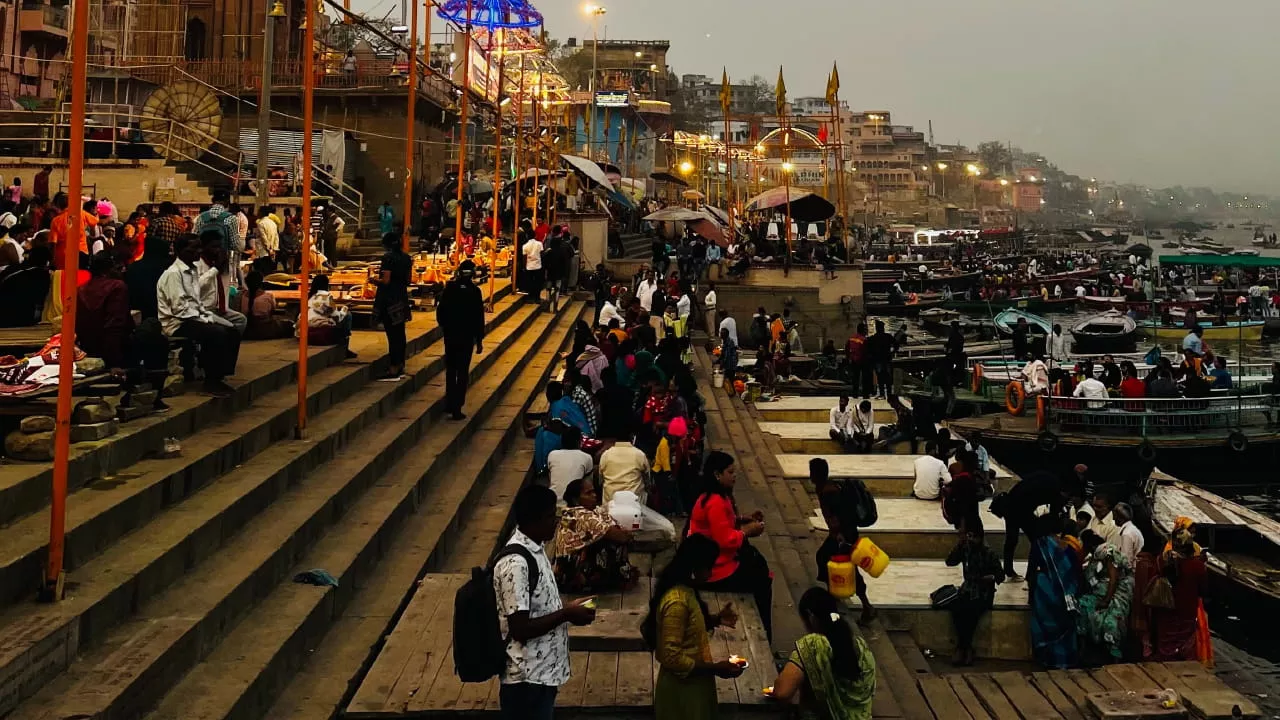
Pind Daan in Varanasi — At the Feet of Lord Shiva
Varanasi is not simply old — it is, according to Hindu tradition, older than history itself. The Kashi Khanda of the Skanda Purana describes Varanasi as a city that existed before the current cycle of creation, a city that Lord Shiva himself holds balanced on the tip of his trident even when the universe dissolves at the end of each kalpa. Within this city, every sacred act carries a weight that is simply impossible to replicate elsewhere.
Performing Pind Daan in Varanasi — offering rice balls to the ancestors on the banks of the Ganga — is considered among the most powerful things a family can do for the spiritual liberation of those who have passed. The Garuda Purana, which is the primary scriptural authority on post-death rites, specifically names Kashi as a place where Pind Daan earns immeasurable punya. The reason given is precise: Varanasi sits on the Anandavana — the “forest of bliss” — which is Shiva’s own sacred grove, and any offering made within this geography reaches the pitru with the amplification of Shiva’s grace.
The Significance of Varanasi for Ancestral Rites
The connection between Varanasi and death is one of the most distinctive features of this city. Unlike other cities that focus on aspects of life and prosperity, Varanasi has always been, at some level, a city that faces death directly. The burning ghats at Manikarnika and Harischandra have never gone cold. Families bring their dying relatives to spend their final days here because of the belief that dying in Kashi — or having one’s ashes immersed here — grants automatic moksha.
This same principle extends to Pind Daan. When a family performs the rite here, they are not merely completing a ritual obligation — they are placing their ancestors directly within Shiva’s field of vision, in a city where he is believed to be physically present in a way that transcends ordinary divine omnipresence. The Tirth Purohits of Varanasi say it simply: “Jo Kashi mein kiya, woh Shiv ji ke haath mein diya” — what is done in Kashi is placed directly in the hands of Shiva.
Furthermore, Varanasi is associated with Lord Vishnu in a specific way that pertains to Pind Daan. The city is described in the Puranas as the udar — the stomach — of Lord Vishnu. Since it is the job of the stomach to receive, process, and distribute nourishment, performing Pind Daan in Varanasi means the offerings reach the pitru through Vishnu’s own body. The protection of both the major deities — Shiva and Vishnu — is invoked simultaneously.
Where is Pind Daan Performed in Varanasi?
Several ghats in Varanasi are traditionally used for Pind Daan and Shraddha ceremonies:
- Pishach Mochan Ghat (Pishach Mochan Kund): The specific site most traditionally associated with ancestral rites in Varanasi. The name literally means “the liberator from pishach” — the belief is that souls of people who died with unfulfilled desires or sudden deaths wander as spirits, and Pind Daan performed here releases them. The Tirth Purohit tradition at this site is specifically oriented toward ancestral liberation.
- Manikarnika Ghat: The primary cremation ghat, also used for Pind Daan by families who have performed the cremation at this same site and wish to complete all rites in the same sacred location.
- Dashashwamedh Ghat: The main ghat of Varanasi, site of the daily Ganga Aarti, and a common site for Pind Daan for families staying in the main pilgrim areas of the city.
- Ram Ghat and Assi Ghat: Quieter alternatives used when the primary ghats are busy, particularly during Pitrupaksha when Varanasi’s ghats see enormous footfall.
Our Tirth Purohit will advise on the most appropriate ghat based on your timing and the specific nature of the rites to be performed.
The Ritual — Step by Step
Pind Daan in Varanasi follows the Garuda Purana’s prescribed sequence, with mantra traditions specific to the Varanasi Tirth Purohit lineage:
- Ganga snan: The person performing the Pind Daan (the karta) takes a ritual bath in the Ganga before the ceremony. This is essential — the karta must be ritually purified before making offerings.
- Sankalp: Sitting at the ghat with water cupped in the right hand, the karta recites the sankalp mantra guided by the purohit. This includes the deceased’s name and gotra, the karta’s own name and gotra, the day, the teertha sthala (Kashi), and the specific purpose.
- Navgraha Puja: A brief puja of the nine planets is performed, seeking their permission and support for the ancestral ceremony to follow.
- Pind preparation: The purohit prepares the pind balls from cooked rice, barley flour, sesame, ghee, and honey — combining ingredients that are considered sattvic and appropriate for offerings to the departed.
- Pind offering and Tarpan: Each pind is offered with the appropriate mantras while water mixed with sesame (kala til) is poured three times. The ritual addresses three generations by default — the immediately departed, their parents, and their grandparents — though it can be extended to seven if the family requests.
- Brahmin bhojan: A respectful meal (or its equivalent in dakshina) is offered to the purohit as the ritual concludes. Feeding a brahmin is understood as feeding the ancestors directly.
The ceremony takes approximately 1 to 1.5 hours. Pind Daan can be combined with Asthi Visarjan on the same visit if the family has ashes to immerse.
Best Time to Perform Pind Daan in Varanasi
- Pitrupaksha (September–October): The 15-day period when the entire city of Varanasi orients itself toward ancestral rites. Ghats are lined with families performing Tarpan at dawn every day. The collective spiritual power of thousands of families performing rites simultaneously is considered to amplify the efficacy of each individual ceremony.
- Death anniversary (Tithi): Performing Pind Daan on the exact lunar date (tithi) of the ancestor’s death is considered most powerful. Our purohit can calculate the correct tithi from the solar date if you provide the date of passing.
- Amavasya: The new moon day every month. Considered the most auspicious day for all pitru-related rites throughout the year.
- Kartik Purnima (October–November): The full moon of Kartik, which coincides with Dev Deepavali in Varanasi — the ghats light up with diyas and the city’s energy is considered particularly elevated.
What to Bring
All ritual materials are included in our package — rice, sesame, flowers, incense, clay lamps, and puja items. Please prepare:
- Full name of the deceased and their gotra if known (ask elder family members if uncertain)
- White or light-coloured clean clothing for the karta performing the rite
- Any specific traditional item the family wishes to offer — a favourite devotional object, a mala, or a cloth belonging to the deceased
After Pind Daan — What Families Often Add in Varanasi
Many families performing Pind Daan in Varanasi also schedule:
- Kashi Vishwanath darshan — the gold-spired temple of the presiding deity of Varanasi, a short walk from Dashashwamedh Ghat
- Evening Ganga Aarti at Dashashwamedh Ghat — watching this after the solemnity of the Pind Daan ceremony provides a sense of completion and peace
- Boat ride at dawn on the Ganga — the early morning light over the ghats of Varanasi is unlike anything else in India
Booking and Pricing
Our Pind Daan service in Varanasi is available every day of the year at ₹5,100, covering the Tirth Purohit’s fees, all ritual materials, and guide support throughout the ceremony. We work with established purohit families from the Varanasi Tirth Purohit tradition — these are families whose records in conducting ancestral rites at these ghats extend back several generations.
Contact us at least 2 days before your arrival in Varanasi to confirm the purohit and ghat. For urgent requests on short notice, call us directly — same-day arrangements are possible in most cases.