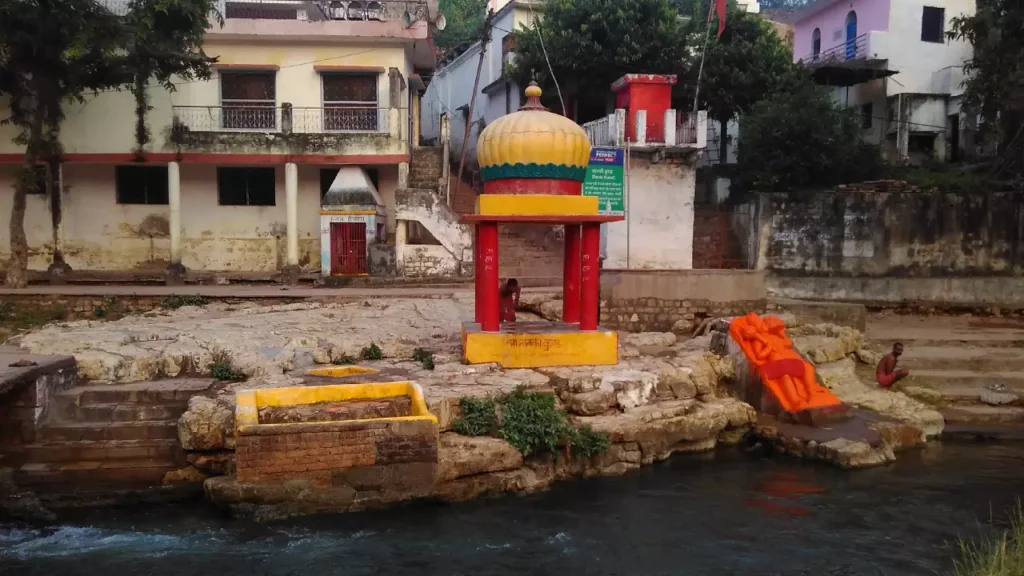
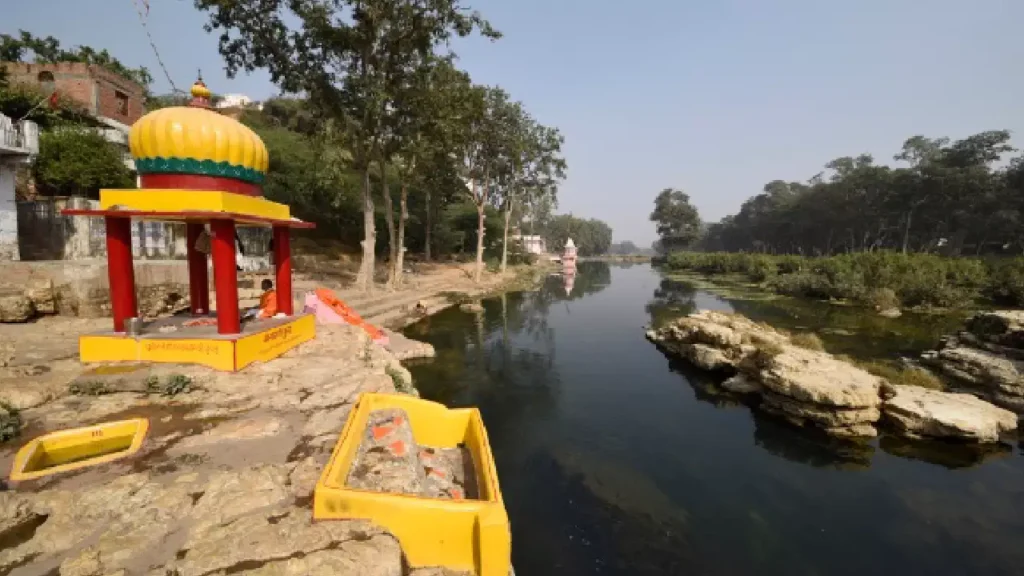
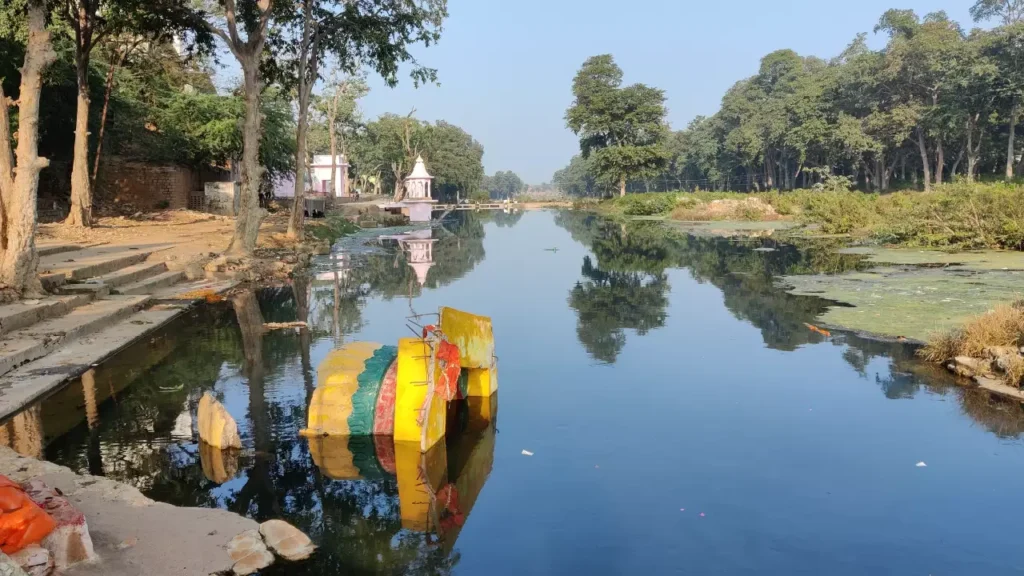
Janki Kund sits on the southern bank of the Mandakini river in Chitrakoot, roughly two kilometres upstream from Ram Ghat. It is a place of stillness — a small sacred tank named after Janki (Sita), who is said to have bathed here regularly during the years that Ram, Sita, and Lakshman spent in this forest. The clarity of the water, the sound of the Mandakini flowing just beyond, and the forest of Pramod Van across the river combine to give this spot a quality of peace that devotees describe as something more than scenic — as if the place itself holds the memory of Sita’s presence and returns some of it to each visitor.
Sita in the Forest: The Chitrakoot Years
Chitrakoot was Ram, Sita, and Lakshman’s primary home for the majority of their fourteen-year exile. The Valmiki Ramayana describes them spending approximately eleven of those fourteen years in Chitrakoot before moving south. The Aranya Kanda is filled with descriptions of life in this forest — the riverside walks, the ashrams of sages, the simplicity of forest food, and the gradual deepening of Ram and Sita’s understanding of dharma through forest life.
For Sita, Chitrakoot was a profound test. She had left the comforts of Ayodhya — the palace life, the servants, the jewellery, the status of a crown princess — to accompany Ram into the forest. The Ramayana honours her choice as the highest expression of patni-dharma, the duty of a wife. And yet the forest was real: it had predators, hardship, and an existential uncertainty about the future. Sita’s daily rituals at the Mandakini river — her baths, her prayers, her worship of the river goddess — were her way of maintaining both physical routine and spiritual grounding through the uncertainty of exile.
Janki Kund is where those daily rituals happened. A small shrine nearby preserves what are venerated as Sita’s padukas (footprints) in stone — a form of sacred memory keeping that allows pilgrims to connect their own feet to where Sita once stood.
The Sacred Geography Around Janki Kund
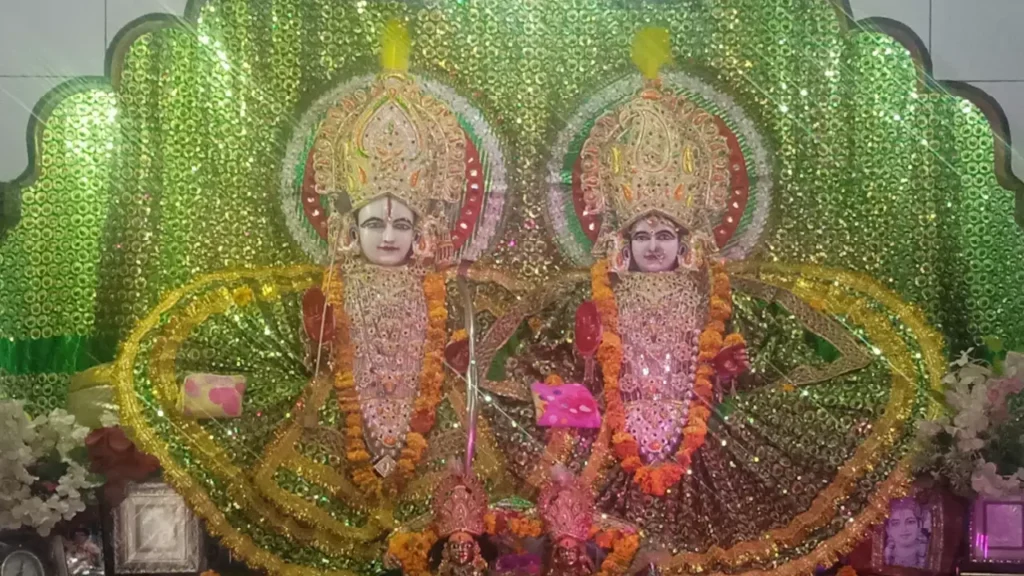
The kund does not stand alone. Just behind it are two temples: the Sankat Mochan Hanuman Temple, dedicated to Hanuman in his protective aspect, and the Shree Raghuvir Temple, which houses Ram. The presence of Hanuman here is not incidental — he is understood as the eternal guardian of wherever Ram and Sita are venerated. The Pramod Van, the forest across the Mandakini that Sita and Ram walked through regularly, is also within sight of the kund, making this a spot where the geographical setting of the Ramayana can still be read in the landscape.
Ram Ghat, the main bathing ghat of Chitrakoot and one of the most sacred spots in the city, is about two kilometres downstream. The walk from Ram Ghat to Janki Kund along the Mandakini riverbank is itself considered a meritorious act by pilgrims — a Parikrama (circumambulation) of the river that traces the paths Ram and Sita walked. Many pilgrims who complete the Kamadgiri Parikrama (the circumambulation of the sacred Kamadgiri hill) extend their journey to Janki Kund on the same day.
The Mandakini River: Chitrakoot’s Sacred Thread
The Mandakini is Chitrakoot’s sacred river, the way the Ganga is to Varanasi or the Sarayu to Ayodhya. In the Ramcharitmanas, Goswami Tulsidas describes the Mandakini with exceptional beauty — its clear water, the chakravak birds on its banks, the reflections of the Chitrakoot hills in its surface. In Canto 2 of the Ramcharitmanas (Ayodhya Kanda), when Bharat and his entourage are travelling through the forest to meet Ram, Tulsidas describes the natural world of Chitrakoot in terms that make it clear this was understood as a place of divine presence, not merely forest exile.
Bathing in the Mandakini at Janki Kund is considered as meritorious as bathing at the Triveni Sangam in Prayagraj by some Shastra references — a claim that underlines the extraordinary spiritual standing of Chitrakoot in the Hindu pilgrimage tradition. The water at Janki Kund remains notably clean and cool, fed by the Mandakini’s relatively unpolluted upper course, which adds a sensory dimension to the spiritual experience of bathing here.
Sita Padukas: Memory Preserved in Stone
The small shrine containing Sita’s padukas (footprint impressions) is one of the most intimate sites at Janki Kund. In the Hindu pilgrimage tradition, padukas serve as a form of divine presence — the footprint of a deity or a great soul is held to carry something of that being’s essence. At Janki Kund, the padukas are understood as proof of continuous divine inhabitation: Sita was here, she stood at this bank, she bathed in this water, and some trace of that presence remains.
Pilgrims offer flowers, sindoor, and yellow turmeric at the padukas — offerings associated with Sita’s identity as a married woman of the Kshatriya class. Some bring small pieces of cloth as offerings, others bring sacred thread. The entire atmosphere is one of quiet, personal devotion rather than the larger ceremonial worship of a major temple complex.
Best Time to Visit and Practical Notes
The months of October through February offer the most comfortable conditions for visiting Janki Kund. The Mandakini is at a manageable level, the forest is green without being oppressively humid, and the mornings at the kund — when mist sometimes sits on the water and the forest is alive with birdsong — are genuinely extraordinary. Ram Navami (March-April) and the period of Shravan (July-August) see large numbers of pilgrims at Chitrakoot, which adds a festive energy but also means crowds at the kund.
For everything you need to know about planning a visit to Chitrakoot, see our Chitrakoot travel guide, which covers the full sacred circuit including Kamadgiri, Ram Ghat, Bharat Milap Temple, and the forest ashrams. Our Varanasi-Prayagraj-Ayodhya-Chitrakoot 4N/5D Deluxe tour connects all the major Ram pilgrimage centres of Uttar Pradesh in a single curated journey.