
Why is Varanasi called Kashi? The question has a deeper answer than most people expect. The name Kashi — derived from the Sanskrit root kāś (काश), meaning to shine or to illuminate — is older than Varanasi, older than Banaras, and older than recorded Indian history. Long before British maps stamped “Benares” across the Gangetic plain, and centuries before the Mughals formalized “Banaras,” the city on the banks of the Ganga was simply called Kashi — the City of Light. Understanding why Varanasi is called Kashi means tracing the origins of one of the oldest inhabited cities on earth.

The Sanskrit Root: What “Kashi” Actually Means
The name Kashi comes from the Sanskrit verbal root kāś (काश्), which carries the core meaning of shining, radiating, or being luminous. From this root come related words like kāśate (it shines), and the noun kāśī (that which shines, the luminous one). In Sanskrit grammatical tradition, a city takes a feminine noun form, so Kāśī — the luminous one, the shining city — became the sacred name.
This is not metaphorical branding invented by priests centuries later. The Kashi Khand of the Skanda Purana — one of the most detailed accounts of Varanasi’s sacred geography — explains this etymology explicitly. It says that Kashi is called Kashi because it is the place where Brahma Jyotis, the divine light of Brahman, is directly perceptible to spiritual seekers. In the cosmology of the Skanda Purana, Kashi is not just a city built on earth — it rests on Shiva’s trishul (trident) and therefore never truly touches the ground. It exists in a state of perpetual spiritual luminescence.
The Kashi Khand also uses the phrase kāśate brahma atra iti kāśī — “because Brahman shines here, it is called Kashi.” This one phrase encodes the entire theological claim behind the name: the city is luminous because the ultimate reality shines through it more clearly than anywhere else on earth.
Kashi in the Rig Veda and Ancient Sanskrit Literature
The name “Varanasi” appears in ancient texts, but “Kashi” appears earlier and more frequently in Vedic and early Sanskrit literature. The Rig Veda, composed approximately 1500–1200 BCE, contains references to the Kashi region, making it among the oldest named places in Indian literature. The Atharva Veda also references Kashi in connection with the production of fine textiles — the kāśya vastra — indicating that the city was already a recognized center of craft and culture in the Vedic period.
In the Mahabharata, Kashi appears dozens of times — both as a kingdom and as a sacred city. Amba, the daughter of the King of Kashi, is one of the pivotal figures in the Mahabharata narrative. Bhishma’s forcible abduction of the three daughters of the King of Kashi is a foundational event in the epic. The text consistently refers to the kingdom as “Kashi,” not “Varanasi” — which suggests that in the Mahabharata period, Kashi was the dominant name for both the city and the surrounding kingdom.
The Ramayana, too, references Kashi as a place of pilgrimage and sanctity. Lord Rama, during his exile through the Gangetic plains, is associated with various sites across north India, and Kashi’s sanctity is taken as a given throughout the narrative. The city’s spiritual importance was already a settled fact by the time the Ramayana was composed.
The Kashi Mahajanapada: A Kingdom Named After the City
Between roughly the 6th and 4th centuries BCE, the Indian subcontinent was organized into sixteen major kingdoms called the Mahajanapadas (महाजनपद — “great territories of people”). Kashi was one of these sixteen. The Kashi kingdom centered on the city we now call Varanasi, and at its height it rivaled Kosala and Magadha in political power.
The Kashi kingdom’s capital city gave the kingdom its name — or perhaps the kingdom gave the city its name. Scholars debate which came first, but the consistent thread is that “Kashi” was the dominant identity marker for this entire political and cultural region. Buddhist texts, Jain texts, and Brahmanical literature from this period all refer to the kingdom as Kashi and its capital as Kashi-nagara. Eventually Kashi was absorbed by Kosala, and Kosala was later absorbed into the Magadha empire under the Nandas and Mauryas — but the city itself kept its sacred name.
This political history matters for understanding the etymology question: the name Kashi was so deeply embedded in the landscape, religion, and cultural memory of the region that no amount of political conquest could dislodge it. Kingdoms came and went; Kashi remained Kashi.
King Kasha, King Kashya, and the Mythological Founders
One of the mythological explanations for the name Kashi connects it to its legendary founding king. The Puranas give varying accounts, but a consistent tradition holds that the city was founded by or named after a king called Kasha (काश) or Kashya — a descendant of the lunar dynasty (Chandravamsha) connected to King Pururavas. In this tradition, the city took the name of its founder-king, which itself derived from the Sanskrit root meaning to shine.
The Vishnu Purana lists Kasha as a king of the Puru lineage who established the Kashi kingdom. The Vayu Purana offers similar genealogies. The Bhagavata Purana mentions King Divodasa, one of the most celebrated kings of Kashi, who is associated with a famous episode involving Shiva, Parvati, and the city’s sacred status. According to the narrative in the Skanda Purana, Shiva left Kashi for a period because Divodasa ruled it so righteously that even the gods came to live there — eventually, Shiva’s emissaries found reason for Divodasa to leave, and Shiva returned. The story underlines how ancient the association between the city and Shiva truly is.
Whether one reads these genealogies literally or as mythological frameworks for understanding identity, the consistent pattern is: the city’s name was ancient, divine, and deeply tied to its spiritual character. “Kashi” was never just a geographic label — it was a theological statement.

Kashi in Jain and Buddhist Traditions
One of the most striking things about the name Kashi is that it was claimed not just by Hindu tradition but by Jain and Buddhist traditions as well — which gives the name a cross-sectarian authority that “Varanasi” and “Banaras” never achieved.
In Jain cosmology, Parsvanatha — the 23rd Tirthankara — was born in Varanasi. Jain texts consistently call the city Kashi. The Uttaradhyayana Sutra, one of the oldest surviving Jain texts, contains a famous dialogue between a monk from Kashi and a monk from Kosala — the city is called Kashi throughout.
For Buddhists, the connection runs even deeper. Sarnath, the site where the Buddha delivered his first sermon after attaining enlightenment, lies just 10 kilometers from the city center. In Pali Buddhist texts, this event is described as occurring in the “deer park at Isipatana, near the city of Baranasi in the kingdom of Kashi.” Both names are used — Baranasi (the Pali form of Varanasi) for the city, and Kashi for the kingdom. The Buddha himself is referred to in some texts as having been born as a Bodhisattva in the kingdom of Kashi in previous lives.
This cross-traditional usage confirms something important: Kashi was not a name invented by one religious community to describe their sacred city. It was the shared regional name that Hindus, Jains, and Buddhists all used naturally, because the entire cultural-geographic territory was understood as Kashi.
How “Varanasi” and “Kashi” Coexisted as Names
Here is a historical nuance that most casual accounts miss: Varanasi and Kashi were never strictly competing names. They referred to slightly different things, and for much of ancient history they coexisted without contradiction.
“Varanasi” is a geographical name derived from the two rivers that once flanked the sacred zone — the Varana (now Varuna) to the north and the Asi to the south. Varanasi = the land between Varana and Asi. This is a physical, geographic description. It defined the ritual boundary — the Panchakroshi pilgrimage circuit — of the sacred city.
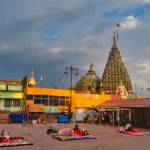
“Kashi,” by contrast, was always the spiritual and cultural name. It named what the place was, not just where it was physically located. So in ancient texts you find both names used simultaneously: Varanasi describes the geographic and administrative entity; Kashi describes its transcendent identity. This is why the Kashi Vishwanath temple — the most sacred Shiva shrine in the city — bears the name Kashi, not Varanasi. The temple enshrines Shiva as the lord of Kashi, not the lord of Varanasi.
For more on the relationship between these names, see our detailed guide on whether Varanasi and Kashi are the same and our post on whether Varanasi and Banaras are the same city — both explore the distinct histories of each name.
The Mughal Period and the Persistence of “Kashi”
When Mughal rule extended over north India, the city acquired its Persian-inflected form: Banaras. This was an adaptation of “Varanasi” through Persian phonology — the ‘v’ became ‘b’, the ‘r’ remained, and the ending was simplified. By the 16th and 17th centuries, Banaras had become the standard administrative and commercial name for the city.
Yet among the Sanskrit-educated pandits, temple priests, and pilgrims, “Kashi” never wavered. The Kashi Khand of the Skanda Purana continued to be recited at dawn on the ghats. The Kashi Vishwanath temple remained the focal point of worship. Pilgrims arriving from across India described themselves as going on “Kashi Yatra,” not “Banaras Yatra.” The sacred name proved immune to political change.
This resilience is itself significant. It suggests that “Kashi” was not merely a name but a religious category — like “Tirtha” or “Kshetra.” To call the city Kashi was to assert a theological claim about its nature. Calling it Banaras or Varanasi was describing a location. Calling it Kashi was acknowledging a cosmic reality.
You can read more about the history of the Banaras name in our post on why Varanasi is called Banaras.
The British Colonial Era: Benares, Banaras, and the Official Renaming to Varanasi
The British transliterated “Banaras” as “Benares” — a phonetic rendering that became the official colonial spelling. The Benares Hindu University, founded in 1916, still carries this name. The Benares Gharana of classical music takes its name from the same colonial-era usage. For most of the 19th and early 20th centuries, the city was officially “Benares” in English-language administration.
After Indian independence, the government undertook systematic renaming of cities that had been renamed or corrupted during the colonial period. In 1956, Benares was officially renamed Varanasi — reverting to the ancient Sanskrit geographic name rather than the colonial distortion. This was the most recent “official” name change, but it was actually a restoration: Varanasi had been the formal Sanskrit name all along.
Crucially, the renaming to “Varanasi” in 1956 did nothing to displace “Kashi” in religious usage. Today in 2026, if you visit the city’s temples, you will hear priests and pilgrims say “Kashi” dozens of times for every single utterance of “Varanasi.” The official name and the sacred name remain distinct, and both are in active simultaneous use.
Why Religious Texts Still Use “Kashi” Exclusively
The Puranas, Upanishads, and Sanskrit commentaries use “Kashi” — not “Varanasi” — when describing the city’s spiritual significance. This is not antiquarianism or stylistic preference. It reflects a deliberate theological distinction.
In Hindu cosmology, Kashi is one of the Sapta Puri — the seven sacred cities whose mere remembrance is said to grant liberation. The verse listing these cities reads: Ayodhyā Mathurā Māyā Kāśī Kāñcī Avantikā / Purī Dvārakāvatī caiva saptaitā mokṣadāyikāḥ — “Ayodhya, Mathura, Maya (Haridwar), Kashi, Kanchipuram, Avantika (Ujjain), and Puri with Dwaraka — these seven bestow liberation.” The name used here is Kashi, and no substitution is ritually permissible. If a priest were to recite “Varanasi” in this verse, it would be a ritual error.
Similarly, the Kashi Mahatmya texts — devotional literature praising the city’s sacred power — consistently use Kashi because the liberating power is attributed to Kashi specifically. The theological argument is that dying in Kashi grants moksha because Shiva himself whispers the Taraka Mantra into the ear of the dying. This divine act belongs to Kashi, the eternal city that rests on Shiva’s trident. Varanasi, as a geographic description, has no such metaphysical weight in the scriptural framework.
Explore the city’s complete spiritual significance in our guide to what Varanasi is famous for, and discover the ancient ghats that define this sacred landscape in our guide to Varanasi’s ghats.
Why Varanasi is Called Kashi: The Kashi Yatra Pilgrimage Tradition
One of the clearest ongoing demonstrations of why Varanasi is called Kashi is the Kashi Yatra tradition itself. Across India, millions of Hindus undertake what they describe as “Kashi Yatra” — a pilgrimage to Varanasi that carries specific ritual obligations and spiritual rewards. The itinerary of a proper Kashi Yatra is defined in Sanskrit texts and includes:
- Bathing at the Dashashwamedh Ghat — the primary Ganga snan point
- Darshan at Kashi Vishwanath — the central act of the entire pilgrimage
- Visiting Annapurna Devi’s temple for the prasad of food offered to the goddess
- The Panchakroshi Yatra — a five-day circumambulation of the entire sacred zone, approximately 88 kilometers
- Bathing at Manikarnika Ghat — the cremation ghat considered the most powerful spot for liberation
- Visiting Sarnath for those who include Buddhist traditions in their pilgrimage
In the South Indian tradition, many communities have a custom where the eldest son undertakes Kashi Yatra before his wedding — a symbolic renunciation of worldly life before accepting its responsibilities. The prospective father-in-law intercepts him and persuades him to return to marry his daughter instead. This ritual is still performed in weddings across Tamil Nadu, Karnataka, Andhra Pradesh, and Telangana. The city in this ritual is always “Kashi” — never Varanasi, never Banaras.
Kashi in Astrology and the Hindu Calendar
The Kashi Panchang — the Hindu almanac issued from Varanasi — is one of the most authoritative astrological calendars in the Hindu tradition. Pandits across north India consult the Kashi Panchang for determining auspicious dates for weddings, thread ceremonies, festivals, and other rituals. The almanac is called “Kashi Panchang” precisely because the astrological calculations are performed according to the meridian of Kashi — the city’s sacred geography is embedded into its astronomical framework.
Kashi has traditionally been associated with Shani (Saturn) in some astrological frameworks, and pilgrimage to Kashi is sometimes prescribed as a remedy for Shani-related afflictions in a horoscope. The connection between Kashi and astrological significance reinforces the city’s role as a cosmic center — a place where the physical and metaphysical planes intersect.
The Kashi Panchang tradition is also why Varanasi’s pandits hold a special status in ritual matters across India. A pandit trained in Kashi carries a credential that extends beyond their individual knowledge — they are considered inheritors of a lineage connected to the city of light itself.
The Name Kashi in Modern Varanasi: Living Evidence
Walk through Varanasi today and the name Kashi appears everywhere. The city’s main railway station is “Varanasi Junction,” but its older station is “Kashi Station.” The Banaras Hindu University is the institution’s formal name, but its students and faculty casually refer to it as being “in Kashi.” The Kashi Vishwanath Corridor — the major urban redevelopment project completed in 2021 that transformed the area around the temple — kept the Kashi name prominently. The Chief Minister’s office refers to the city’s development program as developing “Kashi.”
Prime Minister Narendra Modi’s constituency is Varanasi — officially. But his 2014 election campaign used “Kashi” extensively, including his famous remark that he had not come to Varanasi by choice but had been “called by Maa Ganga” — language that frames the city through the Kashi lens of divine invitation and cosmic significance.
The Kashi name also appears in the city’s most beloved foods (Kashi chaat, Kashi paan), its musical tradition (Kashi Gharana), its textile identity (Kashi silk, used interchangeably with Banarasi silk), and its local newspapers and institutions. The name has survived three thousand years of political change, language change, and religious upheaval. That is not coincidence — it is the result of a name so deeply embedded in the city’s spiritual DNA that no external force could fully uproot it.
For a full overview of the city’s history and how it became what it is today, read our guide on when Varanasi was founded. And if you are planning a visit, our comprehensive Varanasi travel guide covers everything from ghats to temples to local food.
Why Varanasi is Called Kashi: A Summary of the Reasons
The question “why is Varanasi called Kashi” does not have a single answer — it has at least five distinct answers, each valid within its own frame:
- Etymological reason: The Sanskrit root kāś (to shine) gives the city its identity as the City of Light — the place where divine radiance is most directly perceptible.
- Historical reason: Kashi was the name of an ancient Mahajanapada kingdom and its capital city, predating both “Varanasi” and “Banaras” as political labels.
- Scriptural reason: The Skanda Purana, Mahabharata, Ramayana, Upanishads, and Puranas all use “Kashi” as the city’s primary religious name — a usage that has been continuous for over two thousand years.
- Cosmological reason: In Hindu theology, Kashi is the city where Shiva eternally resides, where the dying are granted liberation, and where Brahman (ultimate reality) shines most brilliantly. The name carries this metaphysical claim.
- Cultural persistence reason: Despite centuries of political change — Magadha, Maurya, Gupta, Mughal, British — the name Kashi survived in religious practice, pilgrimage tradition, and popular usage because no conqueror could replace the spiritual identity the name embodied.
Varanasi is the address. Kashi is the soul. Both names point to the same city, but they describe fundamentally different aspects of what that city is.
Frequently Asked Questions
Why is Varanasi called Kashi and not the other way around?
Kashi is actually the older name. It appears in Vedic literature, the Mahabharata, and early Buddhist and Jain texts — all predating the widespread use of “Varanasi” as the dominant name. “Varanasi” is a geographic descriptor (the land between the Varuna and Asi rivers), while “Kashi” is the spiritual and cultural name. In religious contexts, Kashi is always preferred because the scriptural tradition treats it as the theologically correct name — the one that carries the city’s sacred identity rather than just its physical location.
What does Kashi mean in Sanskrit?
Kashi (काशी) comes from the Sanskrit verbal root kāś (काश्), meaning to shine, to radiate, or to be luminous. The noun form Kāśī means “the luminous one” or “the shining city.” The Skanda Purana explains this with the phrase kāśate brahma atra iti kāśī — “because Brahman (divine reality) shines here, it is called Kashi.” The name is a theological statement: Kashi is the place where the divine light is most directly accessible to human consciousness.
Is Kashi older than Varanasi as a name?
Yes. Kashi appears in earlier texts with more frequency than Varanasi. The Rig Veda references the Kashi region; the Mahabharata refers to the Kingdom of Kashi repeatedly; early Buddhist Pali texts use both “Baranasi” (Varanasi) and “Kashi” — with Kashi referring to the broader kingdom. While both names are ancient, Kashi has the older and deeper scriptural pedigree. It was the name used when this region was one of the sixteen Mahajanapadas, centuries before the modern city boundaries were defined.
Why do religious texts use Kashi instead of Varanasi?
In the Sapta Puri verse listing the seven sacred cities that grant liberation, the name used is Kashi — not Varanasi. This is not interchangeable in ritual recitation. Religious texts use Kashi because the spiritual and cosmological claims — Shiva’s residence, liberation at death, the shining of Brahman — are attributed to Kashi as a transcendent city, not merely to Varanasi as a geographic location. Substituting “Varanasi” in ritual texts would be considered a ritual error by traditional scholars.
When did Varanasi officially get its current name?
The city was officially renamed from “Benares” (the British colonial spelling of Banaras) to “Varanasi” in 1956, after Indian independence. This was actually a restoration of the ancient Sanskrit geographic name rather than a new invention — Varanasi had been in use since Vedic times as the name for the physical territory between the Varuna and Asi rivers. The 1956 renaming corrected the colonial distortion, but it did not replace Kashi in religious and cultural usage. Even after 1956, the city remained — and remains — Kashi to its pandits, pilgrims, and devout residents.
Experience Kashi With a Guide Who Knows It Inside Out
Reading about Kashi and walking its narrow lanes at dawn are two very different things. Our Varanasi-Prayagraj-Ayodhya package includes a Ganga Aarti boat ride at Dashashwamedh Ghat, a guided walk through the Kashi Vishwanath corridor, and Sarnath — all without the stress of arranging anything yourself. Three sacred cities, one seamless trip.
Starting from ₹10,300 per person | Includes darshan, meals, and local transport