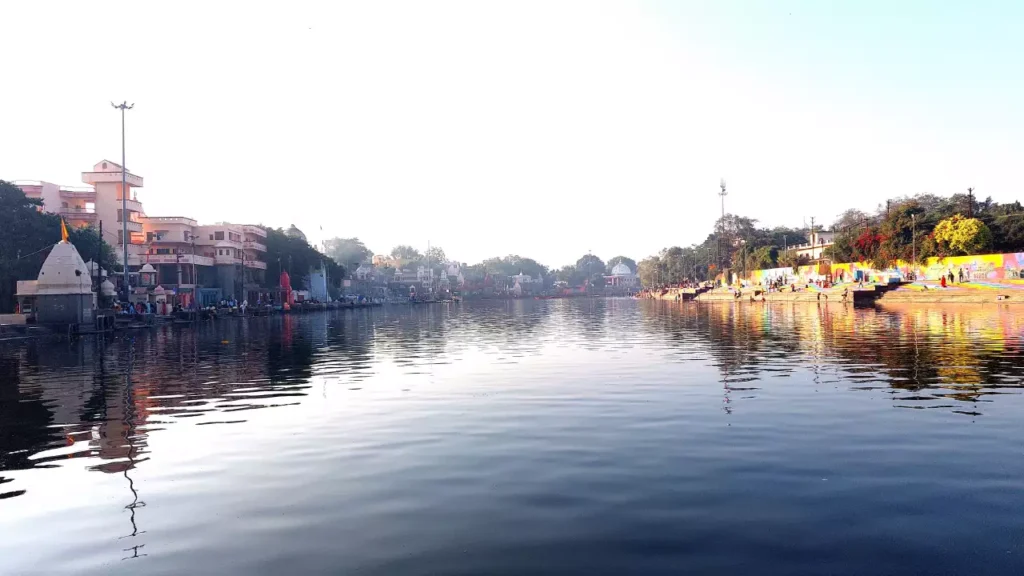
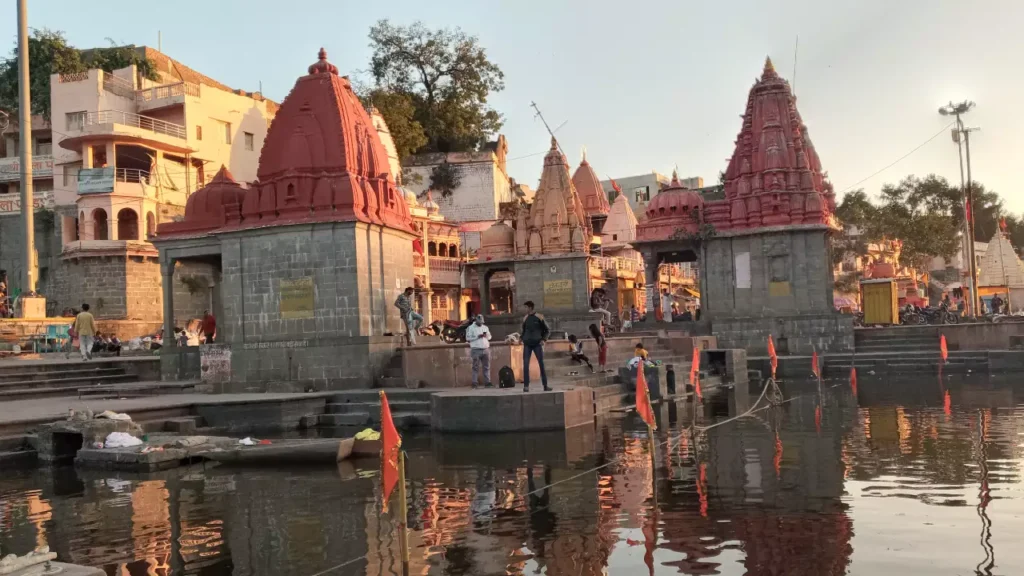
Ram Ghat is the most sacred bathing ghat in Ujjain — the one place on the Kshipra River where every tradition of Ujjain’s ancient spiritual identity converges. Situated approximately 3 km from Ujjain Junction, this ghat holds the same position in Ujjain that Dashashwamedh Ghat holds in Varanasi: it is where the city shows itself most openly to the divine. The wide stone steps descending to the Kshipra, the line of ancient temples behind the ghat, and the evening aarti that fills the riverfront with light and sound each night make Ram Ghat the beating heart of Ujjain’s religious life.
Why Ram Ghat is the Most Important Ghat in Ujjain
Among the many ghats that line the Kshipra in Ujjain — Mangalnath Ghat, Ganesh Ghat, Pishach Mochan Ghat, and others — Ram Ghat stands above all for one primary reason: it is the principal bathing site during the Simhastha Kumbh Mela. Every twelve years, when Jupiter enters Leo (Simha Rashi) and the sun is in Aries, Ujjain hosts the Kumbh Mela on the banks of the Kshipra. The main snan on the most auspicious dates takes place at Ram Ghat, where Amrit (the nectar of immortality) is believed to have fallen during the cosmic churning of the ocean (Samudra Manthan).
This belief — that Amrit was spilled here — is the theological foundation of the entire Kumbh Mela. Bathing at Ram Ghat during the Simhastha is believed to cleanse all accumulated sins across multiple lifetimes and grant the bather liberation from the cycle of rebirth. The next Simhastha Kumbh Mela in Ujjain is scheduled for 2028, and advance planning is strongly recommended for those wishing to attend the main snan dates.
The Kshipra Aarti at Ram Ghat
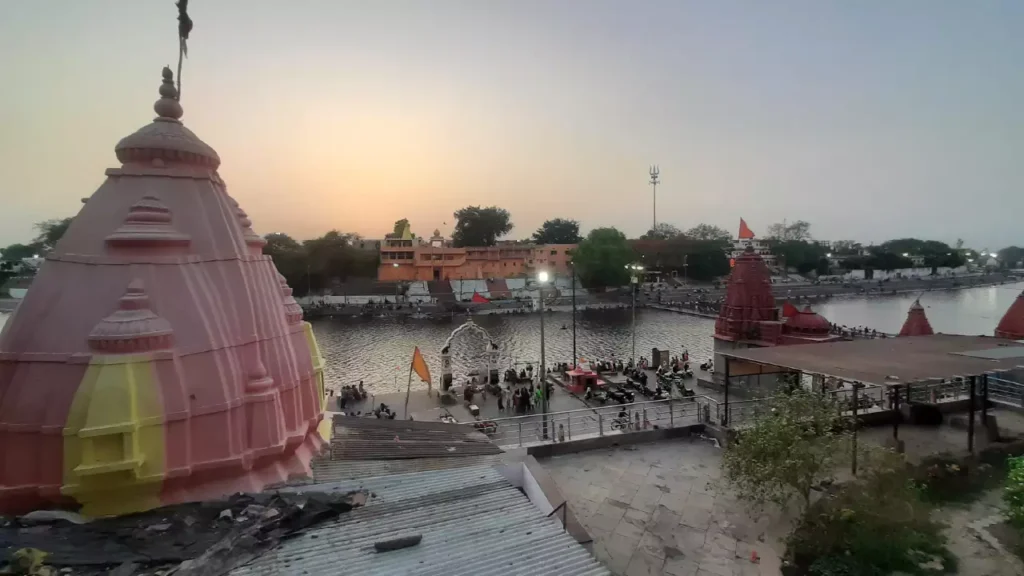
Every evening at sunset, Ram Ghat becomes the venue for the Kshipra Aarti — a river worship ceremony modelled on the famous Ganga Aarti of Varanasi and Haridwar, but with its own distinctive Ujjain character. Priests stand at the ghat steps holding large brass lamps and perform the aarti to the Kshipra River while chanting Vedic hymns and Shiva stotras, given Ujjain’s primary identity as the city of Mahakal. Drums, conch shells, and cymbals provide the musical backdrop. Devotees float diyas (small lamps on leaf boats) on the river during the ceremony.
The Kshipra Aarti has grown significantly in organisation and scale over the past decade, and it now draws hundreds of visitors every evening. For anyone arriving in Ujjain for the first time, attending this aarti is the most complete introduction to the city’s living spiritual culture.
Temples at and Near Ram Ghat
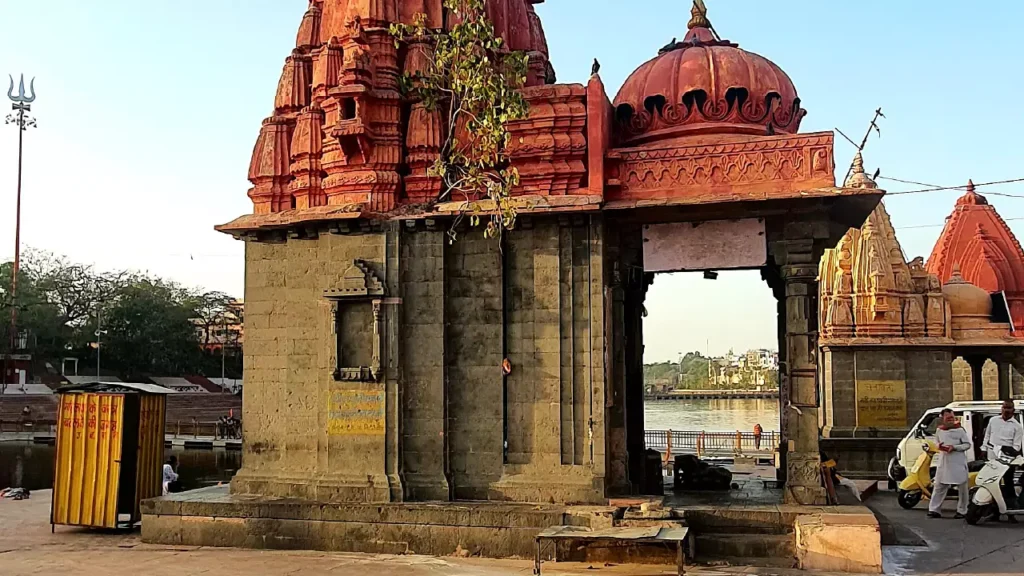
The ghat area is ringed with temples of different deities. The Chitragupta Temple nearby is one of the most visited — Chitragupta is the deity who keeps the record of every soul’s actions, and his temple at a bathing ghat has deep symbolic significance. A bath in the Kshipra followed by darshan at Chitragupta is considered particularly meritorious for those seeking resolution of karmic accounts.
Ram Mandir itself, which gives the ghat its name, sits close to the water’s edge. Other small shrines dedicated to Shiva lingas, Hanuman, and various river goddesses are distributed along the ghat frontage. Many of these shrines are centuries old and have been maintained by the temple families of Ujjain across generations.
Ram Ghat and Avantika’s Ancient Heritage
Ujjain, known as Avantika in ancient texts, is one of the seven Moksha-puri cities of Hindu tradition. The Kshipra River — called Shipra colloquially — is the sacred river associated with this city, much as the Ganga is to Kashi or the Yamuna to Mathura. The Puranas, particularly the Skanda Purana’s Avantika Khanda, describe the Kshipra as equal to the Ganga in sanctity during the Kumbh period. Ram Ghat is where this sanctity is most directly available to the ordinary pilgrim through the act of bathing.
The ghat has been a centre of religious activity for at least two thousand years. References to the sacred waters of Avantika appear in the Mahabharata, where Ujjain is described as a major city of the ancient world. The Jyotirlinga tradition, which places Mahakaleshwar in Ujjain, further anchors the city’s status as one of Shaivism’s most ancient centres.
Sunset Views and the Meditative Atmosphere
Beyond its ritual significance, Ram Ghat offers one of the most beautiful sunset experiences in central India. The western-facing ghat catches the late afternoon light falling across the Kshipra, and the combination of the river’s curve, the temple spires visible from the water, and the gradual descent of light creates a scene of genuine natural and spiritual beauty. Many visitors to Ujjain specifically arrive in the late afternoon to walk the ghat, watch the sunset, and remain for the aarti that follows shortly after.
How to Reach Ram Ghat
Ram Ghat is approximately 3 km from Ujjain Junction railway station and accessible by auto-rickshaw, e-rickshaw, or on foot through the old city. Most hotels in Ujjain are within reasonable distance. During the Simhastha Kumbh, the areas around Ram Ghat are heavily managed by authorities, and specific bathing timings are assigned for different groups of pilgrims.
For a complete guide to Ujjain’s ghats, temples, and pilgrimage routes, see our Ujjain travel guide. Visit Ram Ghat and all major Ujjain shrines on our Ujjain 4N/5D Mahakal tour package. Also read about the top temples of India to plan your broader pilgrimage journey.