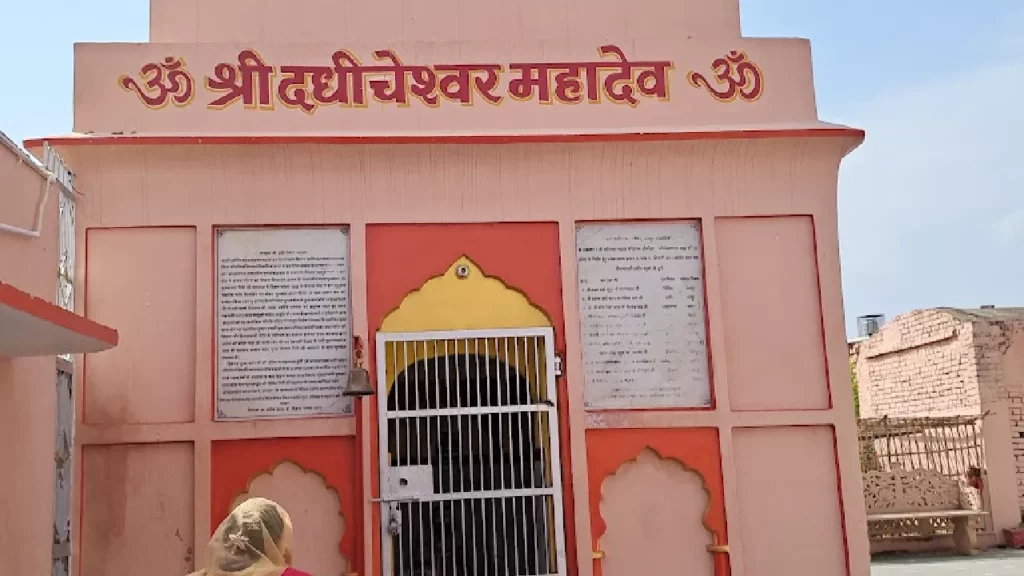
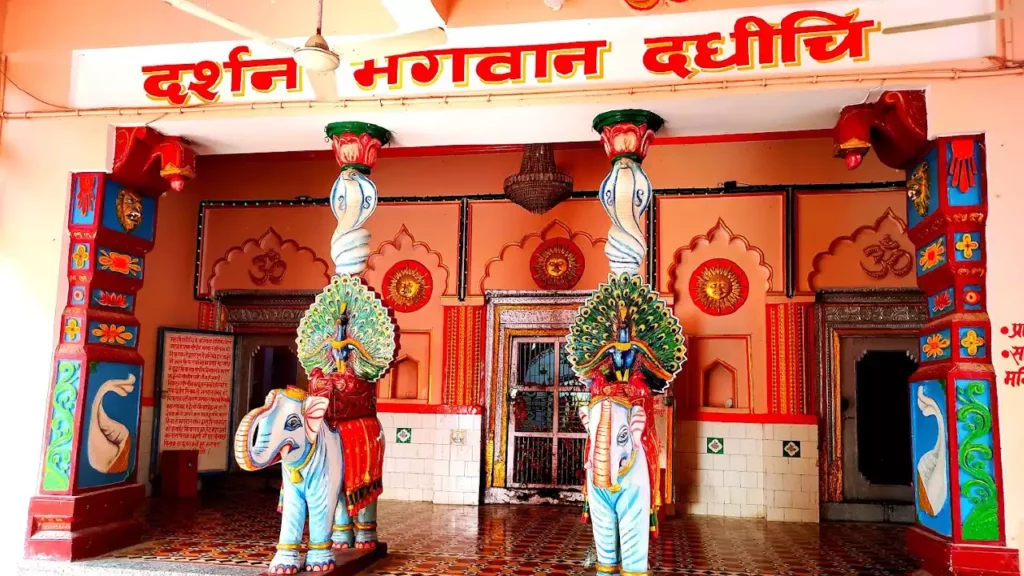
Dadhichi Kund at Naimisharanya — also known as Misrikh Teerth — is one of the most morally charged pilgrimage sites in the Hindu tradition. This is not a place associated with royal power, divine birth, or cosmic battles won through supernatural force. It is associated with something rarer: the voluntary gift of one’s own body for the welfare of all creation. Maharishi Dadhichi gave his bones — literally, the physical structure of his living body — so that a weapon could be made to save the gods and humanity from demonic tyranny. That act of absolute self-offering is what Dadhichi Kund commemorates, and it is why the site carries a quality of devotional intensity that goes beyond ordinary temple worship.
The Story of Maharishi Dadhichi
The legend of Dadhichi is one of the most powerful in all of Puranic literature. The demon Vritra had grown invincible through a boon and had driven Indra, the king of the gods, and the entire deva community out of their realm. Indra and the gods, unable to defeat Vritra through conventional means, approached Lord Vishnu for guidance. Vishnu told them that only a weapon made from the bones of a great rishi could destroy Vritra — and specifically, the bones of Maharishi Dadhichi, a sage of immense accumulated tapasya (spiritual power), whose body had been made extraordinarily potent through decades of ascetic practice and devotion.
This placed Indra in an extraordinary position. He had to ask a living human being to die for him — to surrender their body so that it could be broken down into a weapon. No amount of wealth, power, or divine blessings could substitute for this gift. The only currency that could save the gods was Dadhichi’s willingness to give up his life.
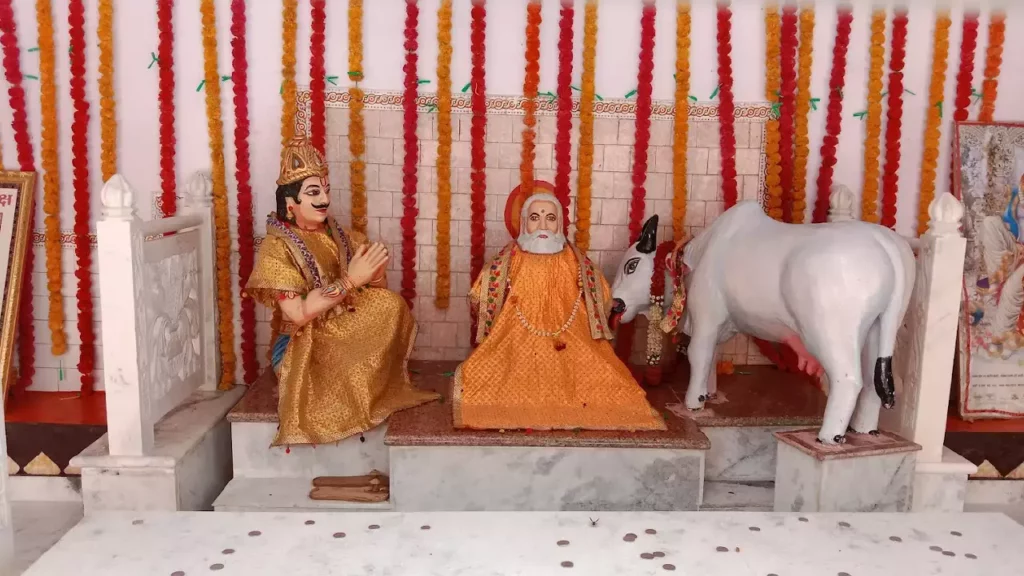
Indra approached Dadhichi and made his request with full transparency, explaining why the bones were needed and what the consequences would be if he refused. Dadhichi’s response, as recorded in the Srimad Bhagavata Purana and the Vishnu Purana, is one of the great moments of philosophical clarity in Sanskrit literature: he agreed immediately and without condition. He told Indra that the body is temporary, that it will be destroyed by time in any case, and that if its destruction can serve the cause of dharma and the welfare of all beings, then its surrender is not a sacrifice at all — it is the highest use to which a body can be put.
Dadhichi then sat in meditation, gave up his life voluntarily, and allowed his body to dissolve. From his bones — hardened by years of tapasya into something described as vajra-like in their density — Vishvakarma fashioned the Vajra (thunderbolt), the weapon with which Indra subsequently defeated and killed Vritra. The entire episode took place here at Misrikh, which is why the kund and the temple complex bear Dadhichi’s name.
Misrikh Teerth: The Sacred Complex
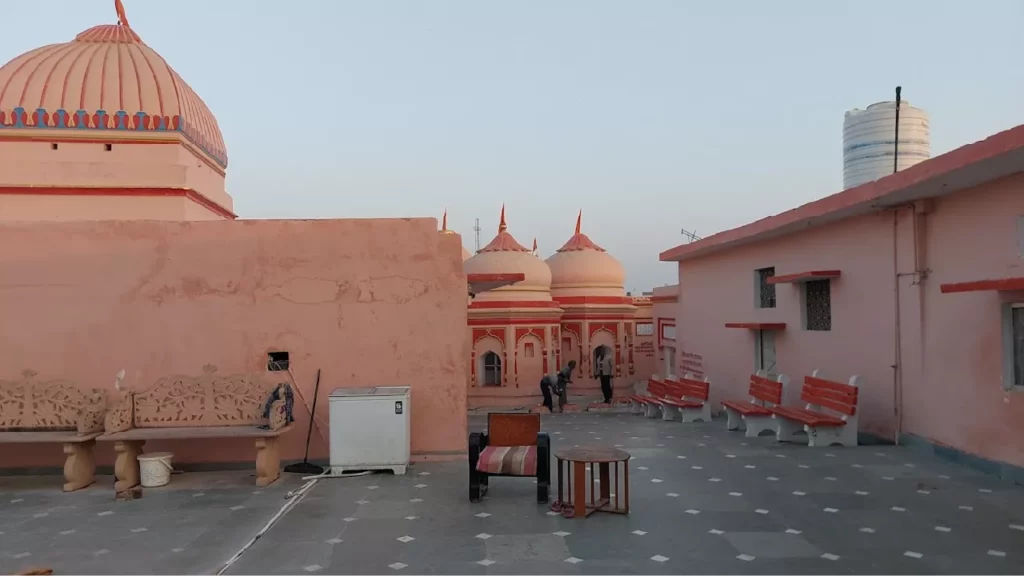
The Dadhichi Kund complex at Misrikh includes the kund (sacred tank) itself, an ashram area associated with Dadhichi’s meditation, and a temple where the sage is venerated. The ghats of the kund are well-maintained, with stone steps descending to the water. The wall inscriptions that devotees encounter as they walk the perimeter of the kund depict moments from Dadhichi’s life — his tapasya in the forest, his meeting with Indra, his act of self-surrender, and the creation of the Vajra from his bones. These narrative inscriptions serve as an ambient scripture for pilgrims who may not have read the Puranas directly but can absorb the story through visual storytelling as they walk.
The water of Dadhichi Kund is considered highly sacred — bathing here is believed to purify the bather of accumulated sins and to generate punya equivalent to far more elaborate rituals. The tradition holds that Dadhichi’s dissolved body still infuses the water with spiritual potency. This is a form of the concept of tirtha-shakti: the sacred power that a place accumulates through the events that happened there and through continuous acts of devotion over generations.
Nishkama Seva: The Theology of Dadhichi’s Gift
Dadhichi’s story is used throughout Hindu ethical and devotional literature as the supreme illustration of nishkama seva — selfless service without expectation of personal return. He received nothing from Indra in exchange for his bones. He did not negotiate better terms, or ask for cosmic reward, or make conditions. He gave what was asked, completely, and died. This radical selflessness is what distinguishes Dadhichi from other heroic figures in Hindu mythology who typically receive boons or recognition for their sacrifices.
In the Bhagavata Purana’s retelling of the story, the narrative pauses to have Dadhichi explicitly articulate his philosophy: the self that inhabits the body is not the body, and therefore the body’s dissolution is of no ultimate consequence to the one who has realised this. He dies as a jnani (one who has realised the self’s independence from the body) and as a karma yogi (one who acts without attachment to the fruit of action). The site where this happened is therefore not just a historical or mythological location — it is a teaching in physical form.
Annual Observances at Dadhichi Kund
The most significant annual event at Dadhichi Kund is the Dadhichi Jayanti, which falls in the month of Shravan (July-August). On this day, the ashram and kund are decorated, special puja and havan (fire ritual) are performed, and devotees from across Uttar Pradesh gather to offer prayers at the kund and to the temple of Maharishi Dadhichi. The Puranic story of Dadhichi is read aloud throughout the day, and speakers give discourse on the meaning of his sacrifice for contemporary life.
Kartik Purnima (October-November) and Makar Sankranti (January) are also major bathing occasions at Dadhichi Kund, when large numbers of pilgrims come for the sacred bath. The broader Naimisharanya complex sees its largest gatherings during these dates, and Dadhichi Kund is always one of the key stops on the pilgrimage circuit.
Reaching Dadhichi Kund
Dadhichi Kund is located in Misrikh, a small town adjacent to Naimisharanya in Sitapur district of Uttar Pradesh. It is approximately 25 kilometres from the main Chakra Teerth of Naimisharanya, though many pilgrims include both in a single day’s circuit. From Lucknow, Misrikh is approximately 90 kilometres, accessible by road. Local transportation connects Misrikh to Sitapur and from there to Lucknow.
For complete planning information on the Naimisharanya-Misrikh pilgrimage circuit, see our Naimisharanya travel guide, which covers Chakra Teerth, Vyas Gaddi, Suta Gaddi, and all the major sacred sites of the forest. Our UP Pilgrimage circuit tour connects the major sacred cities of Uttar Pradesh in a single organised journey.