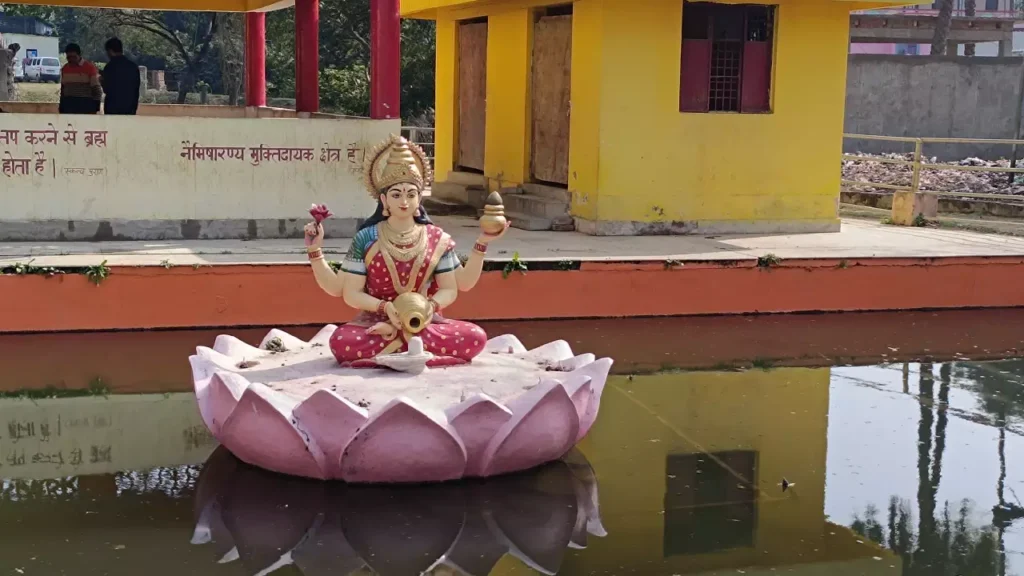
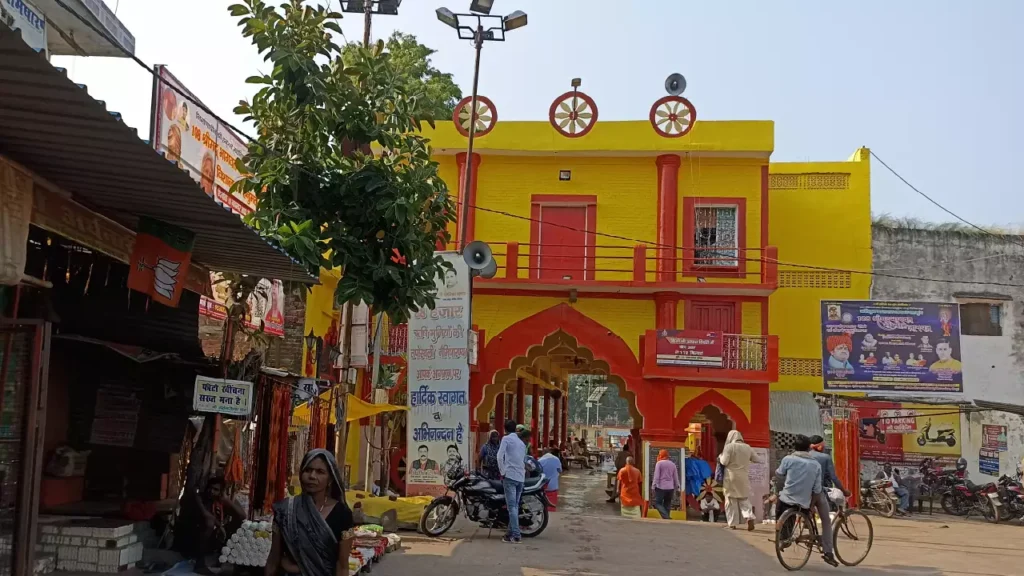
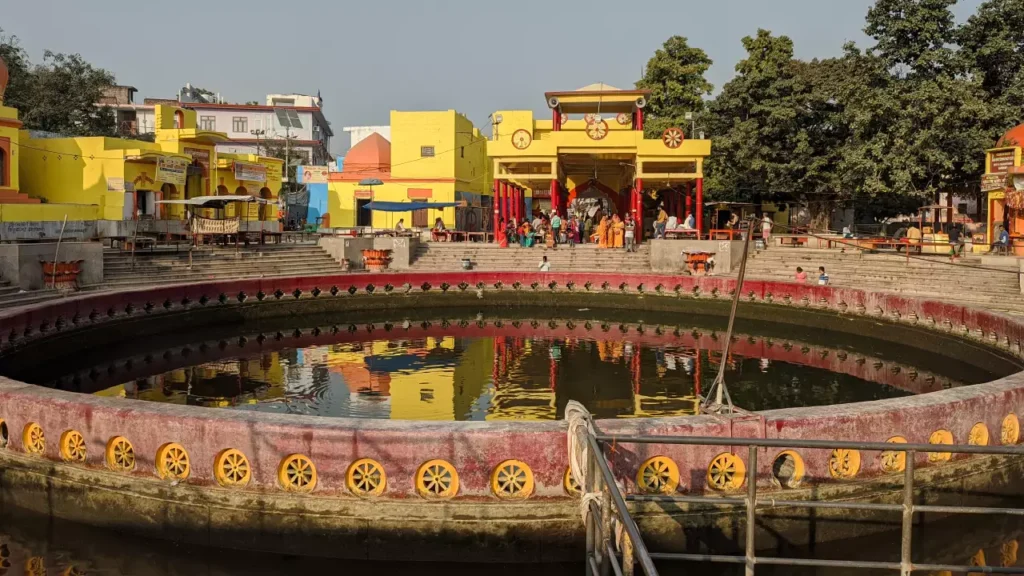
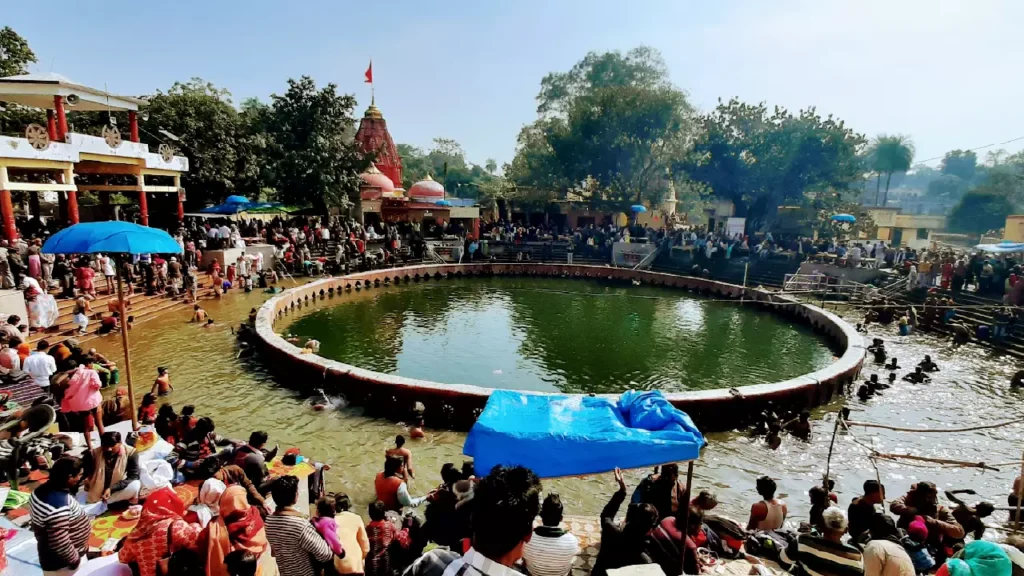
Chakra Teerth — also called Chakratirth — is the geographical and spiritual heart of Naimisharanya. This is the sacred pond whose origin gives the entire forest its name and its significance. According to Puranic tradition, it was here that Lord Brahma’s chakra (divine disc) descended and struck the earth, creating a body of water whose circumference marks the boundary of the holiest zone of Naimisharanya. Bathing in Chakra Teerth is not merely a ritual act here — it is understood as bathing at the very centre of the universe’s spiritual axis, where the divine and the earthly intersect most directly.
Why Naimisharanya is Sacred: The Origin Story
The name Naimisharanya comes from the Sanskrit words “Naimish” (from the Naimisha forest) and “Aranya” (forest). But the Puranic explanation of the name is more specific and more dramatic. The Skanda Purana and other texts describe how the rishis (sages), tormented by the Asuras (demons) who were obstructing their yagnas (fire sacrifices), approached Lord Brahma for protection and for a place where they could perform their spiritual work undisturbed.
Brahma created a divine chakra and instructed the sages to follow it wherever it went. He promised them that wherever the chakra came to rest, that would be the safest and most sacred place on earth — the Naimisha, or the “blink” of the divine eye. The chakra rolled and rolled across the land and finally settled at this spot in what is now Sitapur district of Uttar Pradesh, sinking into the earth and creating a large circular pond. The sages followed the chakra here and established their ashrams, and Naimisharanya became the greatest centre of Vedic and Puranic learning in ancient India.
The name “Naimisha” is explained in some texts as referring to the twinkling of an eye — the chakra disappeared in the blink of an eye (nimesha) when it landed here. The forest, and by extension the entire pilgrimage zone, takes its name from this moment of divine arrival.
Chakra Teerth: The Pond and Its Powers
The kund at Chakra Teerth is a roughly circular pond surrounded by stepped ghats. Pilgrims descend the stone steps to bathe in the sacred water, which is understood to cleanse not just physical impurity but karmic accumulation — the store of past actions (sanchita karma) that weighs on the soul. Scriptural texts describe bathing at Chakra Teerth as equivalent to performing the Ashwamedha Yagna — an extraordinarily powerful ritual — in terms of spiritual merit (punya).
The water of the kund is treated with great reverence. Unlike many temple tanks in urban India that have suffered from pollution and neglect, the community of priests and pilgrims at Naimisharanya maintains a culture of care around Chakra Teerth. The ghats are kept clean, and the ritual bathing schedule — with designated times for communal bathing before sunrise and at other auspicious hours — preserves the tank’s sanctity.
The 8,000 sages who are said to have simultaneously performed their tapasya at this spot were not a casual gathering. In Puranic cosmology, the collective austerity of thousands of realised beings generates a kind of spiritual field that permanently transforms a place. Chakra Teerth is understood to carry that field — the residue of millennia of concentrated spiritual practice that makes even a brief visit here qualitatively different from a visit to an ordinary temple or tank.
The Lalita Devi Connection
The myth continues with a second divine intervention. After the chakra created the kund, the water that flowed from it was so abundant and forceful that the sages found their ashrams being flooded. They returned to Brahma, who instructed them to seek the help of Goddess Lalita Devi — one of the forms of Adi Shakti, the divine feminine principle. Lalita Devi restored the water flow to a manageable level, and in gratitude the sages established the Lalita Devi temple adjacent to Chakra Teerth. This temple, one of the 108 Shakti Peethas according to some traditions, stands just beside the kund and is an integral part of the Chakra Teerth complex.
The combination of a Vishnu-associated site (the chakra being Vishnu’s weapon as much as Brahma’s creation in some versions of the story) with a prominent Shakti temple makes Chakra Teerth a site where multiple strands of Hindu tradition converge. Shaiva, Vaishnava, and Shakta devotees all find their traditions honoured here, which contributes to the extraordinary diversity of pilgrims one sees at Naimisharanya.
Naimisharanya as a Centre of Puranic Knowledge
The Puranas themselves were recited for the first time at Naimisharanya. This is not a minor claim — all 18 Mahapuranas, the vast encyclopaedias of Hindu cosmology, mythology, ethics, and ritual that together form the foundation of popular Hinduism, were first narrated here. The Srimad Bhagavata Purana was recited by Suta Goswami to the assembled sages at Naimisharanya. The Mahabharata, according to some accounts, was also first recited here by Sauti (another name for Suta).
Chakra Teerth is the geographical anchor of all this knowledge transmission. The sages gathered here not just for physical safety from demons but because this was understood as the place on earth where spiritual knowledge could be transmitted most effectively — where the clarity of the water, the quietness of the forest, and the presence of the divine chakra created optimal conditions for the reception of Vedic and Puranic wisdom.
The Pilgrimage Circuit and Practical Information
The Naimisharanya pilgrimage circuit is centred on Chakra Teerth. From here, pilgrims typically proceed to Vyas Gaddi (where the Vedas were compiled), Suta Gaddi (where the Puranas were first recited), Dadhichi Kund (associated with the sage who gave his bones to defeat the demon Vritra), and the Hanuman Garhi temple. The full circuit can be completed in a single day for dedicated pilgrims, or spread over two days with more time at each site.
The best time to visit Naimisharanya is between October and March, when the weather is comfortable and the forest is at its greenest. During Kartik Purnima (October-November), Naimisharanya sees one of its largest annual gatherings, with hundreds of thousands of pilgrims. The Naimisharanya Parikrama Mela, held annually, draws pilgrims for a circumambulation of the entire sacred forest.
For a full guide to planning your visit, see our Naimisharanya travel guide, which covers the complete pilgrimage circuit, accommodation options, and how to reach this ancient forest from Lucknow. Our UP Pilgrimage tour package connects Naimisharanya with Prayagraj, Ayodhya, and Varanasi in one comprehensive journey.