Ayodhya stands on the right bank of the Sarayu River in Faizabad district of Uttar Pradesh, about 135 km east of Lucknow. For Hindus, it is one of the seven most sacred cities (saptapuri) in India — the birthplace of Lord Rama, the seventh avatar of Vishnu and the hero of the Ramayana. Few cities in India have undergone as dramatic a transformation in recent years: the consecration of the Ram Janmabhoomi temple in January 2024 has drawn millions of new visitors and fundamentally changed the city’s scale and infrastructure.
Ram Janmabhoomi Temple
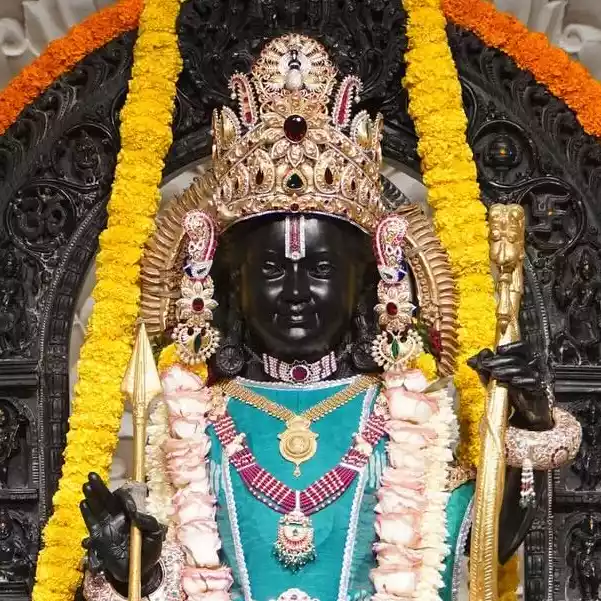
The Shri Ram Janmabhoomi Temple is the centrepiece of Ayodhya and the fulfilment of a centuries-long religious aspiration. The new temple, consecrated on 22 January 2024 with Prime Minister Narendra Modi leading the prana pratishtha ceremony, is built in Nagara style using Rajasthani pink sandstone quarried from Bansi Paharpur. The main sanctum houses a black stone idol of Ram Lalla (infant Rama) in a form carved by sculptor Arun Yogiraj of Mysuru. The complex covers 70 acres; construction of the full temple complex is ongoing.
Darshan is free. Entry from the main gate on Shri Ram Path; queues start forming by 6:00 AM and can extend to 3–4 hours during weekends and festivals. Temple timings: 7:00 AM to 11:00 AM (morning darshan), 2:00 PM to 5:00 PM (afternoon), 7:00 PM to 9:00 PM (evening). Security check at entry; no electronics permitted inside.
Hanuman Garhi
The Hanuman Garhi Temple is the most prominent landmark in Ayodhya’s old city, visible from a distance because of its elevated position — it sits atop a hillock and is reached by 76 steep steps. The presiding deity is a four-armed Hanuman accompanied by his mother, Anjani Devi. The tradition holds that Hanuman Ji guards Rama’s birthplace from this vantage point. The temple is managed by a Nirvani Akhara and is open from early morning to late evening. The views of the city from the top are excellent. Most pilgrims visit Hanuman Garhi before proceeding to the Ram Janmabhoomi temple — the order is considered correct.
Kanak Bhawan
The Kanak Bhawan is one of Ayodhya’s most beautiful temples, dedicated to Lord Rama and Sita. The legend says the palace was given as a wedding gift to Sita by her mother-in-law, Queen Kaushalya — hence it is also called “Sone ka Ghar” (the golden house). The current structure is a more recent construction, but the spiritual significance is ancient. The temple is celebrated for its elaborate decorations and its Shringar (ornamentation) darshan — the idols of Rama and Sita are adorned in different costumes for each occasion. Timings: 8:00 AM to 12:00 noon, 4:00 PM to 9:00 PM.
Dashrath Mahal
The Dashrath Mahal is believed to be on the site of the palace of King Dashrath, Rama’s father. The complex contains shrines to the four sons of Dashrath — Rama, Lakshmana, Bharata, and Shatrughna. The ceiling paintings in the main hall depict scenes from the Ramayana in a folk-art style. It is quieter than the major temples and worth a visit for the paintings.
Nageshwarnath Temple
The Nageshwarnath Temple on the banks of the Sarayu is said to have been established by Kush, Lord Rama’s son. A Shiva temple in a predominantly Vaishnava city, it is especially significant on Mahashivratri, which is celebrated here with a major fair. The original temple is ancient, though the current structure is renovated.
Ram Ki Paidi and the Sarayu Ghats
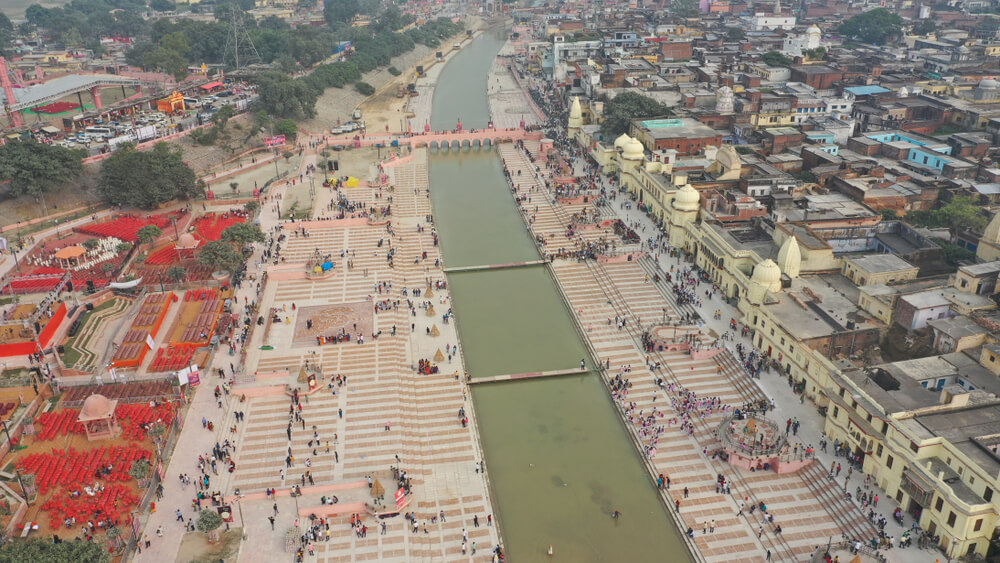
Ram Ki Paidi is the main ghat complex on the Sarayu River — a series of stepped bathing ghats where pilgrims take a dip before proceeding to the temples. The sunrise aarti at these ghats is a serene experience. After the 2024 temple consecration, the ghats have been beautified with better lighting, stone work, and facilities. Evening aarti at Ram Ki Paidi (around 6:30–7:00 PM) draws large crowds and is comparable in atmosphere, if not scale, to the Ganga aarti at Varanasi.
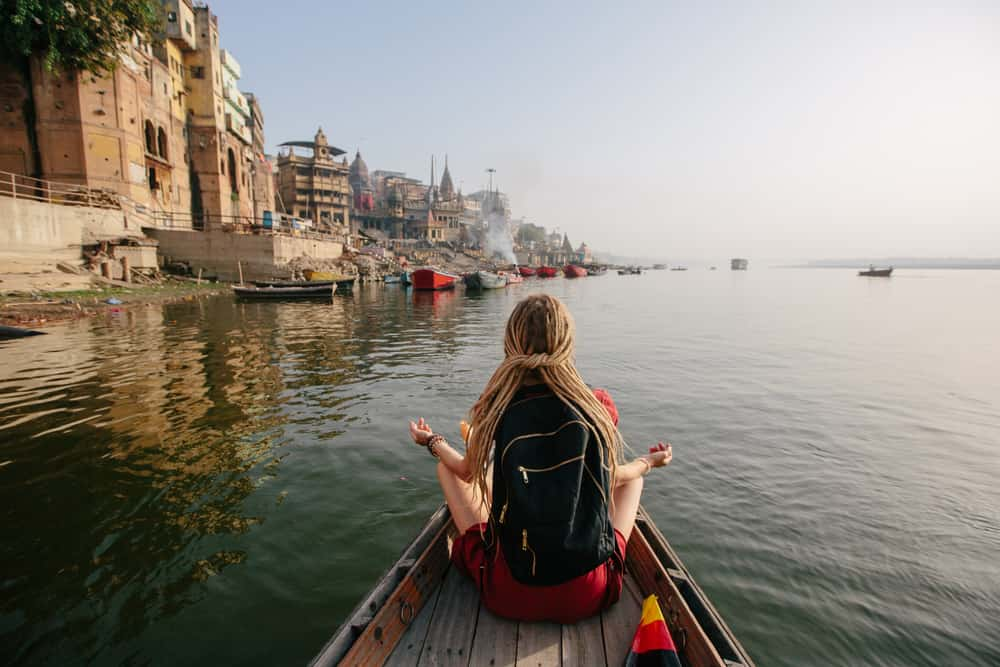
Boat rides on the Sarayu are available from the ghats — a gentle way to see the temple town from the river’s perspective.
Ramayana Circuit: Beyond the Main Temples
Ayodhya’s religious geography extends well beyond the central temple cluster. The Treta ke Thakur temple is located at the site where Rama is said to have performed the Ashwamedha yajna. Sita ki Rasoi (Sita’s Kitchen) is a temple complex that tradition identifies as the kitchen of the palace — it shows sculpted images of cooking vessels. Mani Parbat and Sugriv Parbat are two hillocks on the outskirts believed to have associations with Ramayana events.
For those interested in the broader Ramayana trail, our Ramayana Yatra tour package covers Ayodhya, Chitrakoot, Nasik, Hampi, and Rameswaram in a structured itinerary.
Ayodhya’s Festivals
Ram Navami (March–April) is Ayodhya’s biggest festival — celebrating the birth of Lord Rama. The city sees an estimated 25–30 lakh visitors over the nine-day period. Streets are lined with flowers and lights, and religious processions move through the city continuously. Diwali in Ayodhya has become nationally famous since 2017, when a record 5 lakh diyas were lit on the Sarayu ghats. The event now attracts national television coverage. Parikrama Mela (the Ayodhya circumambulation) takes place in Kartik month (October–November); pilgrims walk a 14-km circuit around the sacred precincts.
Food in Ayodhya
Ayodhya is a strictly vegetarian city — no meat or fish is sold anywhere near the temple areas, and most of the city follows this standard. Rabri (a thick sweetened condensed milk dessert) from the sweet shops on the main temple road is excellent. Peda (milk fudge) and Khoya ki kachori are popular with pilgrims. Mawa jalebi is a specialty — thicker than the standard jalebi and made with khoya. Near Ram Ki Paidi, several stalls sell chaat and aloo puri that are popular with visitors.
Practical Travel Information
Getting there: The newly built Maharishi Valmiki International Airport (also called Ayodhya Dham Airport, IATA: AYJ) became operational in December 2023 with direct flights from Delhi, Mumbai, Ahmedabad, and a handful of other cities. Ayodhya Dham Railway Station (renamed from Faizabad Junction) is the main rail head; trains run from Lucknow (2 hours), Delhi (7–9 hours), Varanasi (4–5 hours), and Mumbai. By road, Ayodhya is 135 km from Lucknow on NH27, about 2.5 hours by car.
Getting around: E-rickshaws are the main mode of local transport and are affordable. The core temple cluster (Ram Janmabhoomi, Hanuman Garhi, Kanak Bhawan, Ram Ki Paidi) is walkable if you are reasonably fit. A battery-operated shuttle runs between the main entry points and the temple gate.
Where to stay: Ayodhya has added significant hotel capacity post-2024. Options range from budget dharamshalas (₹500–1,500/night) to mid-range hotels along VIP Road and Ram Path (₹3,000–8,000/night). Premium hotels have opened in the Naya Ghat area. Book well in advance for Ram Navami and Diwali.
Ayodhya connects naturally with Varanasi (200 km), Prayagraj (170 km), and Chitrakoot (235 km). Our Prayagraj–Ayodhya–Varanasi tour package is one of the most popular itineraries for this region.