

Is Varanasi worth visiting? It is the first question most travellers ask after scrolling through a few photographs of burning ghats and smoke-filled alleyways. The honest answer is yes — but Varanasi is not a city you simply visit; it is a city that happens to you. Known as Kashi in ancient texts and Banaras to locals, this 3,000-year-old city on the banks of the Ganga is simultaneously one of the most spiritually charged and most visually confronting destinations in the world. Nothing quite prepares you for it, and almost no one forgets it.

Is Varanasi Worth Visiting? The Direct Answer
Yes — with the right expectations. Varanasi is consistently ranked among the top heritage destinations in India on TripAdvisor, and it draws over 6.8 million domestic and international visitors each year. But it is not for everyone in the same way. The city does not sanitise its realities — open cremation fires burn at Manikarnika Ghat around the clock, cows own the lanes, and centuries-old sewage channels run alongside sacred steps. That rawness is precisely what makes it so powerful.
If you are willing to meet the city on its own terms, Varanasi will give you something no resort, no hill station, and no beach in India can: an unfiltered encounter with how life, death, faith, and continuity coexist in a single place. Travellers who approach it with curiosity rather than comfort-seeking consistently call it the most memorable trip they have ever taken.
Who Will Love Varanasi
Varanasi is genuinely worth visiting if you fall into any of these categories:
- Spiritual seekers — Whether you follow Sanatana Dharma or are simply drawn to contemplative traditions, Varanasi is the axis of Hindu spiritual life. The Ganga Aarti at Dashashwamedh Ghat is one of the most moving rituals you will witness anywhere on earth.
- History and archaeology enthusiasts — Varanasi is older than Rome, older than Athens. Walking its lanes is walking through living history, with temples, havelis, and ghats that predate most European capitals.
- Photographers — Dawn light over the Ganges, the orange glow of aarti lamps, the chaos of a narrow bazaar, the stillness of a solitary sadhu — Varanasi rewards every visual instinct. It is one of the most photographed cities in Asia for good reason.
- Textile and craft lovers — Banarasi silk weaving is a UNESCO-recognised craft. The old weaver quarters around Madanpura and Lallapura offer a chance to see handloom artisans at work and buy directly from them.
- Food explorers — The street food culture here is extraordinary. From thandai at Blue Lassi to baati chokha, tamatar chaat, and malaiyo in winter — Varanasi’s food scene has depth and character that few Indian cities can match.
- Students of world religions — Sarnath, just 10 km away, is where the Buddha delivered his first sermon. Varanasi is also a major centre for Jain pilgrimage and classical music — it sits at the intersection of several major traditions.
- Slow travellers — People who take three days to sit on a ghat and simply observe the river traffic, the rituals, and the rhythms of ghat life often say Varanasi is where they finally slowed down.
Who Might Struggle With Varanasi
Honesty matters here. Varanasi is not the right destination for every kind of traveller, at least not without specific preparation:
- Those who need sterile environments — The old city lanes, the ghats, and the markets are ancient and organic. Hygiene standards in the alleys are inconsistent. If this causes significant distress, consider staying in the Civil Lines or Cantonment area and taking day trips to the ghats rather than diving in fully.
- Travellers easily overwhelmed by sensory intensity — The soundscape alone — bells, horns, chanting, loudspeakers, and the sound of the river — is relentless. For people with anxiety disorders or sensory sensitivities, this can be genuinely difficult to manage over multiple days.
- Those seeking luxury beach or mountain escapes — Varanasi is a pilgrimage and heritage city. It is not a leisure destination in the traditional sense. If you are hoping for spas and infinity pools, there are better options.
- Very young children on short trips — The heat, the crowds, and the proximity to cremation sites can be challenging to manage with small children. Families with older children (10+) tend to have a much richer experience.
Manikarnika and Harishchandra ghats are active cremation sites, not tourist attractions. Viewing from a respectful distance from the river (by boat) is acceptable. Walking directly into the cremation area, photographing bodies, or accepting “guided tours” from strangers claiming to be priests there is considered deeply disrespectful and is often a scam. Keep your camera away.
10 Reasons Varanasi Is Worth Visiting
Here are the ten experiences that make Varanasi irreplaceable — and why no other city in India offers them in the same way.
1. The Ganga Aarti at Dashashwamedh Ghat
Every evening at sunset, seven priests in saffron robes simultaneously perform an elaborate fire ritual on the main ghat. Enormous brass lamps, conch shells, incense, and Sanskrit chants — all synchronised, all theatrical, all completely genuine. This is not a performance staged for tourists; it has been conducted daily for centuries. Arrive 30 minutes early to secure a good vantage point, either from the steps or from a boat on the river.
2. The 84 Ghats
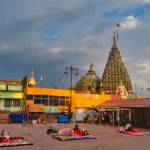
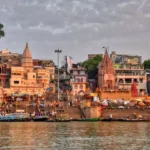
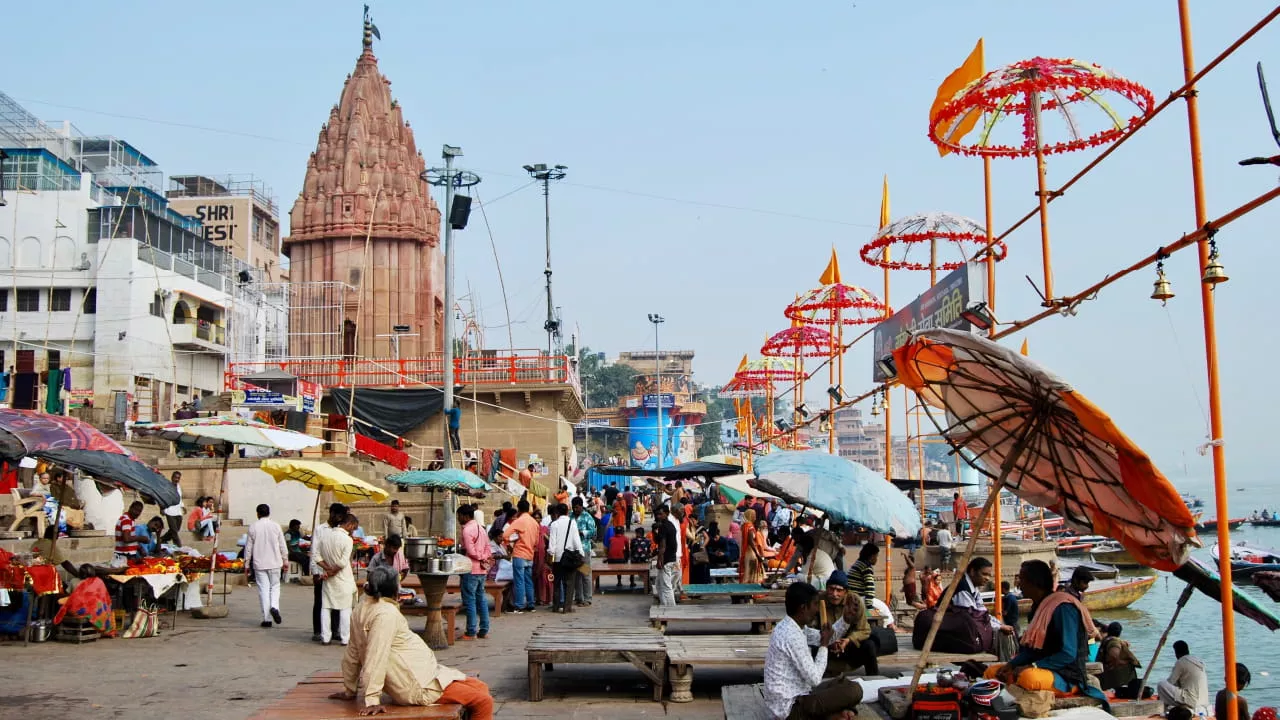
Varanasi’s ghats stretch for nearly 7 km along the western bank of the Ganga. Each one has a distinct identity — Assi Ghat is the backpacker hangout and yoga hub, Tulsi Ghat is named after the 16th-century poet-saint Tulsidas who wrote the Ramcharitmanas here, and Scindia Ghat has a half-submerged Shiva temple that has been sinking since the 19th century. Walking the entire ghat promenade from Assi to Raj Ghat takes about 3 hours and covers more of Varanasi’s soul than any tour guide ever could.
3. The Sunrise Boat Ride
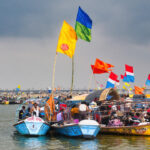
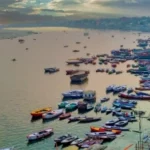
Getting on the river at 5:30 AM is the single most universally recommended experience in Varanasi — and it earns that reputation. As dawn breaks over the opposite bank (the eastern bank of the Ganga has no construction, by tradition), the light catches the temples, the bathers, and the drifting flower offerings simultaneously. Negotiate a fixed price with a boatman the evening before (around ₹200–400 for a shared boat, ₹600–1,000 for private). The ride lasts about 90 minutes.
4. Kashi Vishwanath Temple
One of the 12 Jyotirlingas of Lord Shiva, the Kashi Vishwanath Temple is the spiritual core of the city. The newly completed Kashi Vishwanath Corridor, inaugurated in 2021, has transformed access to the temple and created a magnificent riverside promenade connecting it to the ghats. Non-Hindus are not permitted inside the main sanctum, but the corridor itself and the surrounding temples are accessible to all.
5. Sarnath — The Deer Park Where Buddhism Began
Just 10 km from Varanasi, Sarnath is where Siddhartha Gautama delivered his first sermon after attaining enlightenment, setting the Wheel of Dharma in motion. The Dhamek Stupa (built in 500 CE), the ruins of the ancient monastery complex, and the Sarnath Museum (which houses the original Ashoka Lion Capital — India’s national emblem) are all here. Budget half a day. The contrast between Varanasi’s sensory excess and Sarnath’s meditative stillness makes visiting both on the same trip deeply worthwhile.
6. The Street Food
Varanasi has one of the most distinctive food cultures in North India. The iconic stops: Blue Lassi shop near Vishwanath Gali (open since 1925, with a menu of 80+ lassi varieties), thandai at Pehelwan Lassi near Godowlia Chowk, tamatar chaat (a thick tomato-based snack unique to Kashi), baati chokha at any roadside stall, and winter-only malaiyo — a gossamer sweet cream made from dew-whipped milk that melts before you can finish describing it. A street food tour of Varanasi is one of the best ways to spend an afternoon.
7. Banarasi Silk and Craft Shopping
Varanasi has been producing silk brocade for over 500 years. The finest Banarasi sarees — with their zari (gold and silver thread) work — are woven on traditional handlooms in homes around the Madanpura district. Buying directly from weavers rather than from tourist-facing shops gives you better prices and a chance to watch the craft in action. Beware of synthetic imitations; ask for GI-tagged (Geographical Indication certified) Banarasi silk.
8. Classical Music and the Living Arts
Varanasi is the heartland of the Benares gharana of Hindustani classical music, which produced legends like Ustad Bismillah Khan (shehnai) and Pandit Ravi Shankar. Evening performances still happen at venues like Sankat Mochan Music Festival (held annually in April–May) and smaller concerts at cultural centres near the ghats. The tabla, sitar, and shehnai traditions remain alive here in a way they are not in most Indian cities.
9. The Old City Lanes (Galiyan)
The network of lanes (called galiyan) behind the ghats is Varanasi’s most disorienting and most rewarding feature. These alleys — some barely wide enough for two people to pass — connect hundreds of temples, sweet shops, flower sellers, and quiet courtyards. There is no map that truly captures them; getting lost is part of the experience. Hire a local guide for your first walk through the Vishwanath Gali area and then explore independently from day two.
10. The Philosophy of Life and Death
Varanasi is the only major city in the world where death is not hidden away. The cremation fires at Manikarnika Ghat have burned continuously for thousands of years. Hindus believe that dying in Kashi guarantees moksha — liberation from the cycle of rebirth. This is why the elderly come here to spend their last days, why bodies are brought from across India for cremation on these steps. Experiencing this — from a respectful distance on the river — is not morbid; it is clarifying. Many visitors say it is the most life-affirming thing they have ever witnessed.
What Makes Varanasi Unlike Any Other Indian City
India has many ancient cities — Madurai, Thanjavur, Ujjain, Vrindavan — but Varanasi stands apart for a specific reason: it has been continuously inhabited and continuously sacred for longer than almost any other living city on earth. Mark Twain wrote in 1897 that Varanasi “is older than history, older than tradition, older even than legend, and looks twice as old as all of them put together.”
That unbroken continuity is felt, not just read about. The Ganga Aarti being performed tonight is the same ritual performed last night and 400 years ago. The weaver in Madanpura works on a loom his grandfather used. The priest at Kashi Vishwanath chants the same Sanskrit hymns recited when Akbar ruled from Agra. This depth of continuity is genuinely rare in modern travel and is the core reason so many people rank Varanasi as the single most affecting destination of their lives.
Explore everything the city has to offer at the Varanasi city hub, or read our deep dive on why Varanasi is so very special for more on what sets it apart.
Best Time to Visit Varanasi
The right time depends on what kind of experience you are after. For a full breakdown, see our dedicated guide on the best time to visit Varanasi, but here is the summary:
| Season / Time | Conditions | Best For |
|---|---|---|
| October to February | Cool, dry, clear skies (10–22°C) | First-timers, boat rides, photography, general sightseeing |
| November (Dev Deepawali) | Kartik Purnima festival — all ghats lit with thousands of lamps | The single most spectacular visual experience Varanasi offers |
| March–April (Mahashivaratri) | Warm, festival-heavy, large crowds at Kashi Vishwanath | Devotees, Shiva festival seekers |
| July–August (Monsoon) | Heavy rains, Ganga in full flood, moody light | Photographers, dramatic river scenes; ghats may be submerged |
| May–June (Summer) | Extreme heat (40–45°C), very humid | Avoid unless you have no other option |
Dev Deepawali (the full moon of Kartik month, typically falling in November) is the single most spectacular time to be in Varanasi. Every ghat from Assi to Raj Ghat is lined with oil lamps, and the reflection on the river creates a scene that photographs simply cannot convey. Book accommodation three to four months in advance for this period.
How Many Days Do You Need in Varanasi?
This is one of the most common questions travellers ask, and the answer depends on your pace:
- Minimum 2 days: Enough to see the Ganga Aarti, take a sunrise boat ride, walk the main ghats, visit Kashi Vishwanath, and have one good street food session. You will leave wanting more, which is not a bad thing.
- Ideal 3–4 days: Add a half-day at Sarnath, explore the old city galiyan in depth, attend an evening music or cultural programme, spend time at Assi Ghat in the morning (yoga, chai, conversations), and browse the silk weaving quarters. This is the sweet spot for most travellers.
- Extended 5–7 days: Worthwhile if you want to take a day trip to Chunar Fort, attend a Dhrupad or tabla concert, take a cooking class, or simply sit on the ghats and absorb the pace of the city across multiple sunrises. Long-term travellers who stay a week often say they still feel they only scratched the surface.
Budget Breakdown: How Much Does Varanasi Cost?
Varanasi is one of India’s more affordable major destinations. Here is a realistic daily budget per person:
| Budget Level | Accommodation | Food | Activities | Daily Total |
|---|---|---|---|---|
| Budget | Ghat-side guesthouse / hostel dorm: ₹400–800 | Street food + local dhabas: ₹200–400 | Boat ride + walking: ₹300–500 | ~₹900–1,700 |
| Mid-range | Heritage guesthouse / 3-star hotel: ₹1,800–3,500 | Mix of restaurants: ₹600–1,200 | Guided tours + entry fees: ₹700–1,200 | ~₹3,100–5,900 |
| Luxury | BrijRama Palace / Taj Ganges / Ramada: ₹6,000–18,000 | Restaurant dining: ₹1,500–3,000 | Private boat + guide: ₹2,000–4,000 | ~₹9,500–25,000 |
For international tourists, even mid-range Varanasi is remarkably good value. A private sunrise boat ride, a full day of guided ghat walks, and dinner at a proper restaurant can be done for under $25 USD.
Is Varanasi Safe to Visit?
Yes — Varanasi is a safe destination for tourists, including solo female travellers, though as with any high-density city it requires ordinary awareness. Violent crime against tourists is rare. The more common issues are:
- Touts near the ghats — Men who approach claiming to offer “free” temple guidance or boat rides, then demand money at the end. A firm but polite “no thank you” is enough; they will move on.
- Unofficial silk shop commission schemes — A “friendly” person who steers you to their cousin’s silk shop after gaining your trust. If you want to buy silk, find shops independently.
- Boat ride overcharging — Negotiate and confirm the price before boarding. ₹200–400 per person for a shared sunrise ride is fair; ₹600–900 for private. Anything substantially above this is tourist pricing.
- Stomach issues — Street food is generally safe if you eat from busy stalls with visible turnover, but be cautious with water (always drink bottled or filtered) and dairy in summer months.
Getting to Varanasi is straightforward — by rail to Varanasi Junction (BSB) or Manduadih, or by air to Lal Bahadur Shastri International Airport. Read our full guide on how to reach Varanasi for routes, fares, and transport options from major Indian cities.
Honest Counter-Arguments: The Complaints and Why They Hold Up (Sometimes)
No honest guide pretends Varanasi is without flaws. Here are the common complaints, assessed fairly:
“The city is too dirty.”
Partly true. The narrow lanes behind the ghats are ancient and the municipal infrastructure has struggled to keep pace with the city’s population and visitor numbers. The ghats themselves are significantly cleaner since the Namami Gange programme and the Kashi Vishwanath Corridor project. The river water quality remains a serious environmental concern — don’t swim. But “dirty” is a relative term; if you have travelled in older parts of Indian or South Asian cities before, Varanasi will not shock you. If you have only been to mall-corridor Indian tourism zones, prepare to recalibrate.
“The touts are exhausting.”
Fair, especially around the main ghats and the tourist bazaars. The solution is straightforward: a confident gait, sunglasses, earphones in (even if nothing is playing), and a clear destination in mind. The older residential areas away from the main ghat corridor are almost entirely tout-free. Most travellers adapt within half a day.
“The traffic and roads are terrible.”
True within the old city, but that area is largely pedestrian anyway. The ghats themselves have no vehicle access. Auto-rickshaws, e-rickshaws, and walking are the primary modes, which makes the old city more accessible than it looks on a map. The road quality on routes to Sarnath and the airport has improved considerably post-2020.
“The Ganga is polluted. What’s the point?”
The river’s pollution is well-documented and an ongoing policy challenge. For pilgrims, the Ganga’s spiritual sanctity exists independently of its chemical composition — this is not cognitive dissonance but a deeply held theological position. For secular tourists, watching the ritual life of the ghats — bathing, offerings, aarti, prayer — does not require you to swim in the river. The visual and cultural experience is entirely intact.

First-Timer Tips for Varanasi
If this is your first visit, these practical points will save you time and frustration:
- Book accommodation near the ghats, not near the train station. The station area is unremarkable. Staying within walking distance of Assi Ghat or Dashashwamedh Ghat puts you in the middle of everything meaningful.
- Set two alarms for the sunrise boat ride. This is the one experience you do not want to sleep through. Go on your first morning, while the novelty is fresh.
- Get a local guide for your first half-day in the old city. The galiyan are genuinely maze-like and the difference between a random wander and a guided walk through the same lanes is enormous in terms of what you see and understand. After that half-day, explore alone.
- Do not photograph at cremation ghats. This is both a matter of basic respect and a practical safety point — phones and cameras have been confiscated and broken by grieving families. The experience of witnessing from a boat is completely sufficient.
- Carry cash. The lanes and ghat-side vendors are almost entirely cash-based. ATMs are available near Godowlia Chowk and the main road, but the old city has none.
- Wear covered footwear that slips off easily. You will remove shoes at multiple temples daily. Slip-ons or sandals with secure straps are practical. The ghat steps can be slippery with water and ritual offerings.
- Eat the street food. From the right vendors, it is safe and remarkable. Start with Blue Lassi, tamatar chaat at the older stalls in Vishwanath Gali, and baati chokha at an evening dhaba. Your stomach will thank you.
- Come with questions, not judgements. Varanasi will present you with things that look strange, shocking, or irrational by the standards of other contexts. The travellers who get the most from it are those who ask “why does this happen?” rather than those who arrive having already decided what to think about it.
What Travellers Say After Visiting Varanasi
The ghats of Varanasi generate a specific kind of testimony that is hard to manufacture. First-time visitors consistently describe not just the visual experience but something harder to name — a shift in how they think about their own life after spending time somewhere that holds life and death so openly together.
What you hear most often: “I went expecting to be overwhelmed and I was. But then something settled, and I didn’t want to leave.” The city has a way of initially repelling and then quietly holding you. Travellers who leave after two days usually wish they had stayed four. Those who stay a week often return. Varanasi is a city that earns its fame the hard way — not through spectacle alone but through a cumulative, undeniable weight of place that takes time to understand.
Whether you are drawn by the Ganga Aarti, the silk bazaars, the ancient lanes, the food, the music, or simply the desire to see one of the oldest living cities on earth — Varanasi will deliver. Not comfortably, not predictably, but completely.
🛕 Divine Pilgrimage: Prayagraj, Kashi Varanasi & Ayodhya
Cover the three holiest cities of North India in one expertly guided tour. Triveni Sangam at Prayagraj, the sacred ghats of Varanasi, and the Ram Janmabhoomi at Ayodhya — with accommodation, meals, and local guides included.
- Hotel Stay
- All Meals
- AC Transportation
- Expert Local Guides
Varanasi: Frequently Asked Questions
Honest answers to the questions most travellers ask before booking
Is Varanasi worth visiting for non-Hindu travellers?
Absolutely. While Varanasi is one of Hinduism’s holiest cities, its appeal as a heritage destination, photography location, food destination, and window into one of the world’s oldest continuous civilisations is completely independent of religious belief. Non-Hindu travellers regularly rate it as one of the most profound travel experiences of their lives. You can attend the Ganga Aarti as an observer, explore the ghats freely, and visit Sarnath (a Buddhist pilgrimage site) — all without any religious affiliation required.
Is Varanasi too dirty to visit?
The old city lanes are ancient and hygiene standards are uneven in places. However, the ghats and the Kashi Vishwanath Corridor area have been significantly improved under recent urban renewal projects. If you have travelled in any older dense South Asian urban environment, Varanasi will not surprise you. If you are used to only sanitised tourist zones, manage expectations and book a cleaner hotel in the Civil Lines area as a base.
How many days should I spend in Varanasi?
A minimum of 2 full days covers the essentials: sunrise boat ride, Ganga Aarti, main ghats, and Kashi Vishwanath. An ideal visit is 3–4 days, which allows you to add Sarnath, explore the old city galiyan properly, and try the street food without rushing. Travellers who stay 5–7 days tend to leave with the deepest connection to the city. Almost everyone who stays fewer than 2 days wishes they had stayed longer.
What is the best time of year to visit Varanasi?
October to February is the most comfortable period — cool temperatures, clear skies, and manageable crowds outside peak festival dates. November, specifically Dev Deepawali (the full moon of Kartik), is the single most spectacular time to visit. Every ghat is lined with oil lamps and the reflection on the Ganga is extraordinary. Book accommodation several months in advance for this period. Avoid May–June when temperatures regularly exceed 42°C.
Is Varanasi safe for solo female travellers?
Generally yes. Varanasi has a large, visible tourist presence and most locals are accustomed to international visitors of all kinds. The main issues are persistent touts and occasional unsolicited attention in crowded areas, both of which are manageable with standard awareness. Dress modestly (covering shoulders and knees) around temple areas and the main ghats, stick to well-lit ghat promenades after dark rather than deserted lanes, and you will have no significant problems. The ghat area is active day and night with both locals and travellers.