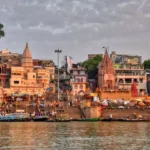

Are Varanasi and Kashi the same? The short answer is yes — they refer to the same ancient city on the banks of the Ganga in Uttar Pradesh. But that answer barely scratches the surface. Varanasi is a name on a map. Kashi is something far older, far deeper, and for hundreds of millions of Hindus, something that exists on a plane that no administrative boundary can contain. To ask whether Varanasi and Kashi are the same is to ask whether a person and their soul are the same thing.
This city has three names — Varanasi, Kashi, and Banaras — and each one tells a different story. If you want to understand the Banaras name, we have a dedicated guide to why Varanasi is called Banaras. And if you want to understand how Varanasi and Banaras relate to each other, that comparison is covered separately. This post is about Kashi — specifically about what the name Kashi means, where it comes from, what the scriptures say about it, and why the city’s most devout visitors almost always use the word Kashi rather than Varanasi.
What Does “Kashi” Actually Mean?
The word Kashi derives from the Sanskrit root kash, which means to shine, to be brilliant, to radiate light. Kashi, therefore, translates as the City of Light — not in any metaphorical or tourist-brochure sense, but in a deeply cosmological one. According to Hindu theological tradition, Kashi is the place where the light of Brahman — the ultimate, formless, infinite consciousness — is most directly accessible to human beings.
This is not a poetic flourish. The Skanda Purana’s Kashi Khanda, one of the most detailed scriptural accounts of the city, states explicitly that Kashi glows with the divine luminescence of Shiva himself. The city is described as Jyotirmaya — made of light. In this understanding, the physical city of ghats, lanes, and temples is a material manifestation of something that exists on an altogether different level of reality. You are not just visiting a city when you come to Kashi. You are standing at the point where the transcendent and the earthly are closest to each other.
The name Varanasi, by contrast, is geographical. It comes from the two rivers — the Varuna and the Asi — that once marked the northern and southern boundaries of the city. Varanasi is what you put in your train ticket. Kashi is what you say when you bow your head.

Kashi in the Hindu Scriptures: What the Texts Say
No Indian city has as extensive a scriptural documentation as Kashi. It appears in the Rigveda, the Mahabharata, the Ramayana, the Puranas, and dozens of Upanishads. But the most sustained and detailed treatment comes in the Kashi Khanda of the Skanda Purana — a text of roughly 15,000 verses dedicated almost entirely to this one city.
The Kashi Khanda opens with a dramatic statement: that Kashi is not merely a tirtha (pilgrimage site) among other tirthas, but the tirtha that gives meaning to all other tirthas. All the sacred waters of India, the text says, flow eventually into the Ganga at Kashi, and the merit of all pilgrimages is subsumed in the merit of Kashi. This is the scriptural basis for the phrase you will still hear from priests at the ghats: Sarva tirthamayee Kashi — Kashi contains all tirthas.
The Shiva Purana reinforces this by describing Kashi as the city that Lord Shiva personally chose as his permanent abode — not a temporary dwelling, not a sacred spot he visits, but his nitya vasa, his eternal home. The text uses the specific term Avimukta for this — a Sanskrit word meaning “never abandoned.” Shiva, the texts say, never leaves Kashi. Even when the universe is destroyed at the end of a cosmic cycle, Kashi alone remains, held up on Shiva’s trident.
The Linga Purana takes this further, describing Kashi as existing outside the normal laws of creation and destruction. While the rest of the manifest universe undergoes dissolution at the end of each kalpa (cosmic age), Kashi is Apratishtitha — it has no fixed ground because it is not truly part of the material world. It is, in theological terms, a piece of the eternal inserted into the temporal.
Avimukta Kshetra: The Land That Shiva Never Abandons
Of all the theological concepts attached to Kashi, none is more central than Avimukta Kshetra — the sacred field that is never released, never abandoned. This term appears repeatedly across the Puranas and Upanishads, and it is the theological foundation for one of Kashi’s most remarkable beliefs: that dying in Kashi guarantees moksha, liberation from the cycle of birth and death.
The logic runs as follows: because Shiva never leaves Kashi, his presence permeates every particle of the city. When a person dies within the boundaries of Avimukta Kshetra, Shiva himself whispers the Taraka Mantra — the crossing mantra — into the dying person’s ear. This mantra grants immediate liberation, regardless of the person’s spiritual attainment during life, regardless of their caste or background or the deeds of their past lives. Death in Kashi is not an ending. It is, according to this tradition, the most direct possible path to moksha.
This belief has shaped the city profoundly. For centuries, devout Hindus from across the subcontinent have come to spend their final years or months in Kashi — not as tourists, not even exactly as pilgrims, but as people who have decided where they want to die. The Mukti Bhavans (salvation hostels) of Varanasi, where the dying are brought to spend their last days, exist because of this theology. The Manikarnika Ghat, where cremations have burned continuously for what the tradition calls thousands of years, is considered so sacred precisely because it lies within Avimukta Kshetra.
None of this is captured in the name Varanasi. All of it is carried, for those who know, in the single word Kashi.
Lord Shiva and Kashi: An Eternal Bond
To understand Kashi, you have to understand its relationship with Shiva — and it is a relationship unlike any other deity-city pairing in Hindu geography. Mathura belongs to Krishna, Ayodhya to Rama, Tirupati to Vishnu. But Kashi does not merely belong to Shiva in the sense of being associated with him. According to the Puranas, Kashi is Shiva — a physical extension of his being.
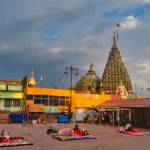
The Kashi Vishwanath temple, one of the twelve Jyotirlingas of Shiva, sits at the centre of this theology. The Jyotirlingas are not ordinary Shiva lingas. They are the sites where Shiva manifested as an infinite column of light — the Jyotirlinga — to settle a dispute between Brahma and Vishnu about supremacy. At Kashi Vishwanath, the linga is said to be self-manifested (svayambhu), not installed by human hands, not brought from elsewhere. It rose from the ground of Kashi itself, because Kashi is Shiva’s own body.
The Skanda Purana describes Kashi as Mahashmashaneshwara — the great cremation ground over which Shiva presides. This connects to Shiva’s iconography as the lord of death, the one who wears ash and haunts cremation grounds. Kashi is both the city of life — teeming, loud, full of colour and commerce — and simultaneously the city of death and liberation, a place where the boundary between living and dying is thinner than anywhere else. That paradox is Shiva himself.
The Kashi Vishwanath temple was destroyed and rebuilt multiple times over the centuries. The current temple structure was built in 1780 by Ahilya Bai Holkar, the Maratha queen, and the gold plating on the spires was added later by Maharaja Ranjit Singh of Punjab. The recent Kashi Vishwanath Corridor project has transformed the approach to the temple. But in all these physical changes, the theological core has remained untouched: Kashi Vishwanath is the lord of Kashi, and Kashi is his eternal home.
Kashi as One of the Seven Moksha-Giving Cities (Sapta Puri)
Hindu tradition recognizes seven cities as Mokshapuris or Sapta Puri — the seven cities that can grant moksha to those who die within their boundaries or perform specific rites there. The verse that lists them has been recited for centuries:
Ayodhya Mathura Maya, Kashi Kanchi Avantika |
Puri Dvaravati chaiva, Saptaita Mokshadayikah ||
Translation: Ayodhya, Mathura, Haridwar (Maya), Kashi, Kanchipuram, Ujjain (Avantika), Puri, and Dwarka — these seven grant liberation.
Kashi holds a unique position even within this list. While all seven are Mokshapuris, Kashi is specifically described in multiple Puranas as the greatest among them — the one where liberation is most assured, most direct, and most accessible. The reasoning given is consistent: in other Mokshapuris, moksha depends on the spiritual merit of the individual, on how they lived and what they achieved. In Kashi, the Taraka Mantra from Shiva himself overrides individual karma. The playing field, in Kashi, is levelled by divine grace.
This is why Kashi draws not just Shaivites but Vaishnavas, Shaktas, Jains, Buddhists, and seekers from every tradition. The city’s liberation-granting power, in the popular understanding, is not sectarian. It belongs to whoever dies within the boundaries of Avimukta Kshetra.
Kashi and Buddhism: The City That Witnessed the First Sermon
The significance of Kashi extends well beyond Hinduism. Sarnath, where the Buddha delivered his first sermon after attaining enlightenment — the event known as Dhammacakkappavattana Sutta or the Setting in Motion of the Wheel of Dharma — lies approximately 13 kilometres north of central Varanasi. In ancient geographical terms, Sarnath was part of the broader Kashi region, which is why early Buddhist texts refer to this event as taking place in the “deer park in Kashi” or near the “Kashi region.”
This makes Kashi uniquely significant in the history of both Hinduism and Buddhism — a city that is simultaneously the eternal abode of Shiva and the location where the Buddhist dharma was first formally taught. The Buddha chose this location deliberately. Varanasi was the greatest centre of learning and spiritual authority in the Gangetic plain. If the new dharma was to be heard, Kashi was where it had to be announced.
The archaeological site at Sarnath contains the Dhamek Stupa (built in 500 CE on the spot where the first sermon was delivered), the Ashoka Pillar (whose capital — the four lions — became India’s national emblem), and the ruins of monasteries that once housed thousands of monks. Sarnath today is a separate town, but its spiritual history is inseparable from Kashi’s.
The Jain tradition also has a strong connection to Kashi. Four Jain Tirthankaras — including Parshvanatha, the 23rd Tirthankara — were born in Varanasi. The city’s spiritual gravitational pull, it seems, has been drawing enlightened teachers for as long as human civilization has existed in this part of India.

Are Varanasi and Kashi the Same in Daily Life? How Locals Use Each Name
Walk through the lanes of this city and pay attention to the language. A rickshaw driver navigating the alleys near Dashashwamedh Ghat will say he is going to Kashi. A priest at the ghat will begin his rituals by invoking Kashi. The Sanskrit chants and the devotional songs call the city Kashi. Pilgrims who have saved for years for this journey — from Tamil Nadu, from Rajasthan, from Bengal — arrive saying they have come to Kashi.
Switch to a different register and the name changes. The train station is Varanasi Junction. The university is Banaras Hindu University. The district administration sits in Varanasi. The news channels say Varanasi when covering the city. When politicians give speeches, they say Varanasi. When the tourism department prints brochures, it uses both names.
The pattern is consistent: Kashi is the sacred, spiritual, devotional name. Varanasi is the civic, administrative, and modern name. Banaras is the colloquial, affectionate, historical name — the name that carries the flavour of the city’s everyday life, its chai, its silk, its ghats at dawn. All three names coexist without contradiction because they describe different aspects of the same reality.
A local brahmin might say, “I live in Varanasi but I consider myself a resident of Kashi.” That sentence makes complete sense to anyone from the city. The two names are not interchangeable — they occupy different registers — but they refer to the same place. This is the most precise answer to the question of whether Varanasi and Kashi are the same: geographically, yes; spiritually and linguistically, they carry distinct weight.
The Spiritual Geography of Kashi: Panch Kroshi Yatra and Sacred Boundaries
The boundaries of Kashi as a sacred space are not the same as the boundaries of Varanasi as an administrative district. The scriptural texts define Kashi’s sacred perimeter through the Panch Kroshi Yatra — a circumambulation route of approximately 88 kilometres that pilgrims walk over five days, touching 108 shrines along the way. This route marks the outer boundary of Kashi as a sacred field, and it extends well beyond the modern city limits of Varanasi.
Within this outer boundary lies the inner sacred zone defined by the Antargriha — the inner sanctum of Kashi — which centres on the Kashi Vishwanath temple and the Manikarnika Ghat. The various ghats that line the Ganga between Asi Ghat in the south and Rajghat in the north all fall within Kashi’s most sacred core. For a comprehensive exploration of these ghats and what each one means, our Varanasi ghats guide covers them in detail.
The concept of Kashi as a bounded sacred geography means that the city’s holiness is not randomly distributed — it has a structure, a centre, and a periphery. Dying within the Panch Kroshi boundary is said to grant liberation. Dying within the Antargriha is said to grant it with certainty. This layered geography is unique to Kashi and has no equivalent in any other Indian sacred city.
For a complete picture of what draws pilgrims and visitors to this city, see our guide to what Varanasi is famous for, which covers everything from the ghats to the cuisine to the weaving traditions. And if you want to understand the deeper question of what makes this city spiritually special beyond the obvious, why Varanasi is so special explores that at length.
Modern Varanasi and Ancient Kashi: The Same City, Two Worlds
Contemporary Varanasi is a city of 1.5 million people, an important commercial and educational hub, home to Banaras Hindu University (one of India’s largest residential universities), a major silk-weaving industry, and an increasingly significant tourist destination drawing visitors from across the world. The city has an airport, expressway connections, and is part of the government’s Smart City initiative. In this sense, Varanasi is entirely modern.
Kashi, the sacred city, runs on a different clock. The rituals that happen at Dashashwamedh Ghat every evening — the Ganga Aarti, with its fire and its bells and its chanting that has continued every single day for decades — are not performances for tourists. They are the continuation of a practice that the Kashi Khanda says has existed since the beginning of the current cosmic age. The sadhus who live along the ghats, the pandas who maintain the temple rituals, the boatmen who know the prayers associated with each ghat — they inhabit Kashi, not Varanasi.
The remarkable thing about this city is that both dimensions exist simultaneously and without obvious friction. A street that in the morning is thick with pilgrims reciting Sanskrit mantras and being guided through rituals by priests will, by afternoon, have motorbikes weaving through it and a mobile phone shop blaring music. The sacred and the mundane exist in immediate, unmediated proximity — and somehow neither cancels the other out. That coexistence is, perhaps, the most Shaivite thing about Kashi: Shiva is the lord of opposites, the god who holds creation and destruction in the same hand, and his city reflects that perfectly.
For travellers planning to experience the city properly — the ghats at dawn, the Kashi Vishwanath corridor, Sarnath, the evening aarti — a dedicated Varanasi destination guide covers practical details, best times to visit, and the full range of experiences the city offers. And if you want an organized itinerary that ensures you don’t miss the spiritual highlights, our Varanasi tour package is built around the city’s sacred geography.
Why Kashi Cannot Simply Be Called Varanasi: A Summary
The question “Are Varanasi and Kashi the same?” has a different answer depending on what you mean by “same.”
If you mean: do they refer to the same city on the map of Uttar Pradesh, sitting on the western bank of the Ganga? Yes, they do.
If you mean: do they carry the same meaning, the same weight, the same theological implications? No, they do not — not remotely.
Varanasi is a geographic name rooted in the topography of two rivers. Kashi is a cosmological name rooted in the concept of divine light, eternal Shiva-presence, and liberation from the cycle of existence. Varanasi can change — it has been renamed, rebuilt, developed, and modernized many times over its long history. Kashi, according to its own theology, cannot change, cannot be destroyed, and does not belong to the temporal world at all.
When a pilgrim travelling from Chennai or Kolkata or Mumbai says they are going to Kashi, they are not making a geographical statement. They are making a statement about purpose, about the direction of their spiritual life, about what they hope to encounter or receive in this city. The name carries within it the entire theology of Avimukta Kshetra, the entire mythology of Shiva’s eternal presence, the entire promise of moksha. No map name can do that work.
Kashi is, in the end, less a city than a concept — a concept that happens to have a physical address. And that address, for what it is worth, is Varanasi, Uttar Pradesh.
Frequently Asked Questions: Are Varanasi and Kashi the Same?
Are Varanasi and Kashi the same city?
Yes, Varanasi and Kashi refer to the same physical city in Uttar Pradesh, India, located on the western bank of the Ganga river. However, the two names carry very different meanings. Varanasi is a geographical name derived from the rivers Varuna and Asi. Kashi is a sacred name derived from the Sanskrit root kash (to shine), meaning the City of Light. In religious and scriptural contexts, Kashi is the preferred and more theologically significant name.
Why is Varanasi called Kashi?
Varanasi is called Kashi because the name Kashi predates Varanasi by thousands of years and carries deep scriptural authority. The Skanda Purana’s Kashi Khanda and the Shiva Purana describe the city as radiating with the divine light of Shiva — Jyotirmaya, made of light. The name Kashi (City of Light) captures this theological identity that the geographic name Varanasi does not. In Hindu tradition, Kashi is the eternal abode of Shiva and the most sacred city in the world.
What is Avimukta Kshetra and why is it important in Kashi?
Avimukta Kshetra means “the sacred field that is never abandoned.” According to the Shiva Purana and Skanda Purana, Kashi is the place Lord Shiva permanently inhabits and never leaves — even during the cosmic dissolution at the end of each kalpa. This makes Kashi uniquely powerful: anyone who dies within the boundaries of Avimukta Kshetra receives the Taraka Mantra (liberation mantra) whispered by Shiva himself, guaranteeing moksha regardless of their karma. This belief is the foundation of Kashi’s identity as the supreme liberation-granting city in Hinduism.
Is Kashi one of the Sapta Puri — the seven moksha-giving cities?
Yes. Kashi is one of the Sapta Puri — the seven cities that are said to grant moksha (liberation) to those who die within their boundaries. The other six are Ayodhya, Mathura, Haridwar (Maya), Kanchipuram (Kanchi), Ujjain (Avantika), Puri, and Dwarka. Among these seven, Kashi holds a special position because the liberation it grants is described in multiple Puranas as direct and unconditional — dependent on Shiva’s grace through the Taraka Mantra rather than solely on the individual’s spiritual merit.
What is the connection between Kashi and Buddhism?
Sarnath, where the Buddha delivered his first sermon after attaining enlightenment — an event known as the first turning of the Wheel of Dharma — is located approximately 13 kilometres from central Varanasi and was historically part of the Kashi region. Early Buddhist texts place this foundational event “near Kashi.” The Dhamek Stupa at Sarnath marks the exact spot. This makes Kashi significant in Buddhist history as well as Hindu — it is the city where both Shiva’s eternal presence (in Hinduism) and the Buddha’s first teaching (in Buddhism) are rooted. The Buddha deliberately chose Kashi for its unmatched spiritual authority in the ancient world.
Experience Varanasi and Kashi in One Complete Journey
Varanasi, Kashi, Banaras — three names, one extraordinary city. Our package gives you the time and guidance to experience it properly: a predawn boat ride along the ghats, the Ganga Aarti in the evening, Kashi Vishwanath darshan, and a walk through the silk weavers’ lanes. Extend to Prayagraj and Ayodhya to complete the sacred UP circuit across all three holy cities.
Starting from ₹10,300 per person | Includes darshan, meals, and local transport