



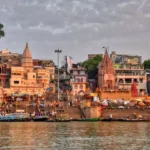

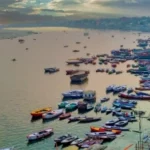


Ask anyone who has ever visited this ancient city on the Ganga, and they will tell you something curious: the official name on maps and government documents is Varanasi, yet nearly everyone — rickshaw drivers, shopkeepers, railway announcers, and poets — still calls it Banaras. Why Varanasi is called Banaras is not a simple question of pronunciation. It is a story of conquest, colonial administration, cultural identity, and a name so deeply embedded in everyday life that even a formal act of Parliament could not fully dislodge it.
This post traces the specific journey of the name “Banaras” — where it came from, how it was amplified under Mughal and British rule, why Madan Mohan Malaviya deliberately chose it for his university, and why it persists in the mouths of millions more than seven decades after Independence.

The Ancient Name and Its Sanskrit Roots
Before tracing the Banaras name, it helps to understand what the city was called before that name arrived. The oldest recorded name is Varanasi — derived from the two rivers that once defined its boundaries: the Varuna (which still flows) to the north and the Assi (now reduced to a nullah) to the south. The city stood between these two rivers, so it was called Varanasi, “the city between the Varuna and the Assi.” This etymology appears in the Rigveda and in multiple Puranas. The name is Sanskrit in structure, geography in logic.
A second ancient name — Kashi — carries an entirely different register. Kashi comes from the Sanskrit root kas, meaning to shine or to illuminate. It describes the city’s spiritual character: the place of divine light, the city where Shiva himself is said to reside and grant liberation to those who die within its bounds. Kashi is the theological name; Varanasi is the geographical one. Banaras, as we will see, is something else entirely — a name born from historical contact and administrative convenience.
If you want to understand the difference between all three names and what they mean for the city’s identity, the post Are Varanasi and Kashi the Same? covers that ground in detail. The present post focuses specifically on the Banaras name.
Xuanzang’s Account: The Earliest External Record of the Banaras Sound
The Chinese Buddhist pilgrim Xuanzang (also written Hsüan-tsang) visited the Indian subcontinent between 629 and 645 CE, during the reign of Emperor Harsha. He left behind a detailed account of his travels — the Da Tang Xiyu Ji (Great Tang Records on the Western Regions) — that historians regard as one of the most reliable external sources on early medieval India.
Xuanzang recorded the city’s name phonetically in Chinese as Po-lo-nai-ssu (sometimes transliterated as Bārānasī). This is a direct phonetic rendering of Varanasi as spoken in 7th-century India. But notice what happens when that phonetic rendering moves through languages and centuries: Po-lo-nai-ssu → Bārānasī → Baranasi → Banarasi → Banaras. The shortening and softening of the middle syllables is a natural pattern in how long Sanskrit place names compress in everyday use. By the time Arabic and Persian-speaking rulers arrived in the region, some version of “Banaras” was already how many ordinary people referred to the city in speech.
This matters because it shows that “Banaras” did not originate as a foreign corruption — it emerged as an organic phonetic contraction that was already in common spoken use before the Mughals arrived.
The Mughal Transformation: How “Varanasi” Became “Banaras” in Official Records
When the Mughal Empire extended its administrative reach across northern India in the 16th century, Persian became the language of court and record-keeping. Varanasi — a five-syllable Sanskrit name — was difficult to render accurately in the Persian script and challenging for Persian-speaking administrators to pronounce without training in Sanskrit phonetics. The contracted form “Banaras” (بنارس in Perso-Arabic script) was phonetically manageable and administratively convenient.
Under Akbar’s administrative reorganization documented in the Ain-i-Akbari (1590s), the city appears as Banaras. The Ain-i-Akbari, compiled by Abul Fazl, lists Banaras as a sarkar (administrative district) within the Subah of Allahabad. This is among the earliest formal administrative uses of the name in official imperial records. The Mughal sarkar of Banaras covered a significant territory, and the name became attached not just to the city but to the entire administrative unit.
Aurangzeb’s reign brought the city particular attention — he commissioned the demolition of the Vishwanath temple and the construction of the Gyanvapi Mosque on its site in 1669. The official records from this period consistently use Banaras. By the late Mughal period, Banaras had become the standard administrative and diplomatic name for the city in all correspondence conducted in Persian.
It is worth noting that local Brahmin scholars, pilgrims, and Sanskrit texts continued using Varanasi and Kashi throughout this period. The divergence in naming reflects the division between administrative language (Mughal Persian → Banaras) and sacred language (Sanskrit → Varanasi/Kashi). Both sets of names coexisted, applied to the same city by different communities for different purposes.
British Colonial Formalization: “Benares” as the Official Name
When the British East India Company consolidated power in northern India through the 18th century, they inherited the Mughal administrative framework — including its Persian-derived place names. The British anglicized “Banaras” into “Benares,” a spelling that more closely matched English phonetic conventions for representing the sound.
In 1775, the Company signed the Treaty of Benares with the Nawab of Awadh, formally acknowledging the city under that name in an international instrument. In 1781, Warren Hastings established the “Benares Province,” making it an official unit of British Indian administration. The city’s name now appeared in parliamentary reports in London, on maps published by the Survey of India, in census records, and in railway timetables — all as Benares.
The British also created the “Benares State” — a princely state under the control of the Maharajas of Benares (the Kashi Naresh family). The Maharajas of Benares were significant figures, and their title itself embedded the colonial name into the highest levels of local governance.
For nearly two centuries, this was the name on every official document — land records, court proceedings, post offices, railway stations, and administrative gazettes. Children attending English-medium schools learned to write “Benares.” Foreign visitors arrived at “Benares Junction.” The colonial system had the power to make a name feel permanent through sheer bureaucratic repetition.

Why Madan Mohan Malaviya Named His University “Banaras Hindu University”
One of the most illuminating examples of the name’s cultural weight is Banaras Hindu University — BHU. Founded in 1916 by Pandit Madan Mohan Malaviya, it is among India’s most prestigious institutions of higher learning. Malaviya was a deeply learned man, a Sanskrit scholar, a congressman, and a passionate Hindu revivalist. He could have named his university Varanasi Hindu University or Kashi Hindu University. He chose Banaras.
The choice was strategic and reflects the naming landscape of 1916. “Banaras” was the name the educated classes, the nationalist press, the colonial administration, and the international community all recognized. “Varanasi” was then primarily used in religious and Sanskrit contexts. Malaviya needed his university to have a name that would work in English correspondence, British government petitions (the university required a royal charter), and international academic circles. “Banaras Hindu University” was that name.
The irony is striking: a university founded with explicitly Hindu revivalist aims, dedicated to recovering Sanskrit learning and Indian civilization, carried a name derived from Mughal and British administrative usage. Malaviya’s pragmatism shows how deeply “Banaras” had penetrated even the consciousness of those most committed to Hindu tradition. The name appears in the Banaras Hindu University’s founding documents and has never been changed, making it one of the most visible ongoing uses of the Banaras name in modern India.
1956: The Official Name Change Back to Varanasi
After Independence, the Indian government undertook a systematic program of reverting place names that had been distorted or replaced under colonial rule. The logic was straightforward: colonial names were seen as impositions that severed present-day India from its pre-colonial identity. Bombay became Mumbai, Calcutta became Kolkata, Madras became Chennai.
In 1956, the government of Uttar Pradesh officially renamed Benares as Varanasi. The choice of Varanasi over Kashi was itself significant — Varanasi is the geographic name, traceable directly to Sanskrit texts and the two rivers. Kashi carries strong religious connotations and might have seemed exclusionary to non-Hindu residents of the city. Varanasi was the more inclusive, secular choice in the newly independent republic.
Government offices were renamed. Official correspondence switched. The district became Varanasi District. But the name change ran into the same problem that every administrative renaming faces: it could change the letterhead, but it could not change what people said when they opened their mouths. Varanasi and Banaras continued to be used side by side — with Varanasi dominating formal contexts and Banaras dominating everyday speech.
Why Locals Still Say Banaras: Cultural Attachment and Everyday Language
The persistence of “Banaras” in everyday speech is not laziness or ignorance. It reflects a genuine cultural attachment to a name that carries centuries of associations specific to this city’s identity as a place of music, weaving, food, and lived urban culture — as distinct from its identity as a pilgrimage destination.
When a musician from the city introduces herself, she says she belongs to the Banaras Gharana — not the Varanasi Gharana. When a weaver describes his craft, he makes Banarasi silk — not Varanasi silk. When someone offers you a paan, it is Banarasi paan. The city’s cultural exports — its music tradition, its weaving industry, its food culture — all carry the Banaras name. Renaming these would mean abandoning brand recognition built over centuries of trade and cultural exchange.
There is also a class and register dimension. In Hindi-speaking northern India, “Varanasi” tends to appear in formal, official, or news contexts — the kind of language you use when filling a form or reading a headline. “Banaras” is what you say in conversation, what appears in song lyrics, what the auto driver announces when you ask where you are headed. Language communities rarely abandon informal names entirely, especially when those names carry emotional warmth and cultural specificity that the formal name lacks.
For a fuller exploration of the relationship between these two names in everyday usage, see Are Varanasi and Banaras the Same?
The Banaras Gharana: A Musical Legacy That Carries the Name
Indian classical music is organized into gharanas — schools of thought and technique that trace their lineage through master-disciple relationships over generations. The Banaras Gharana is one of the most important tabla gharanas in Hindustani classical music, known for its powerful, bass-heavy playing style and its emphasis on the resonance of the bayan (the bass drum of the tabla pair).
Founded and developed over centuries in the lanes of the city, the Banaras Gharana produced legendary figures including Pandit Anokhelal Mishra and Pandit Kishan Maharaj. The gharana’s name is inseparable from the city’s musical identity. No musician of this tradition would call it the Varanasi Gharana — the name Banaras is baked into the institutional identity of this school of music in a way that cannot be administratively changed.
The same applies to the Banaras style of classical vocal music, which has its own distinct approach to thumri and dadra — the semi-classical forms that originated and flourished in the city’s royal courts and courtly traditions. The Banaras style of thumri is recognized across the Hindustani classical world as a distinct aesthetic category.
Banarasi Silk: Why Varanasi is Called Banaras in the World of Textiles
If there is one product that has made the name Banaras globally recognizable beyond religious tourism, it is the Banarasi saree. Woven on handlooms in the narrow lanes of localities like Madanpura, Lallapura, and Peeli Kothi, Banarasi silk sarees are among India’s most prestigious textiles. They are characterized by their use of real gold and silver zari (metallic thread), their dense brocade patterns inspired by Mughal floral motifs, and the extraordinary weight and sheen of their silk.
Banarasi sarees hold a Geographical Indication (GI) tag from the Government of India — meaning that only sarees produced in Varanasi and its immediate surrounding areas can legally be labeled “Banarasi.” This GI tag uses the name “Banarasi” explicitly, not “Varanasi silk.” The product’s identity, its legal protection, and its market recognition are all attached to the Banaras name.
The weaving tradition itself is believed to have deepened during the Mughal period, when Mughal patronage brought in Persian design sensibilities — the same period when the name Banaras was becoming dominant in administrative usage. The name and the textile tradition were shaped by the same historical forces.
Today, Banarasi silk is exported across India and internationally. Brides from across the country seek out authentic Banarasi sarees for their weddings. The silk industry employs hundreds of thousands of weavers in and around the city. This economic reality means the Banaras name has commercial as well as cultural weight that no renaming can displace.
Banarasi Paan, Street Food, and the City’s Culinary Identity
The city’s food culture is another domain where “Banaras” is the operative name. Banarasi paan — a betel leaf preparation made with specific locally grown Magahi leaves, a particular mix of kattha, lime, fennel, and various sweet or spiced additions — is famous across India. The Banarasi paan shops in the lanes near the ghats are institutions. Visitors make a point of having one before they leave.
Beyond paan, Banarasi street food has a distinct identity: kachori-sabzi at dawn outside temple lanes, tamatar chaat on the ghats, malaiyyo (a winter sweet made from whipped milk foam) in the cold months, thandai during Holi. These are not just foods — they are experiences attached to the name Banaras in the imagination of travelers across India.
For anyone planning to experience this food culture firsthand, the Varanasi Street Food Tour guide covers the best spots and what to try. And for a full overview of what makes the city worth visiting, What is Varanasi Famous For is the place to start your research.
Banaras in Bollywood and Pop Culture
Hindi cinema has consistently used “Banaras” rather than “Varanasi” as the name in film titles, song lyrics, and dialogue. Films set in the city — from older productions to more recent ones like Gangs of Wasseypur‘s cultural universe and Prakash Jha’s political dramas — almost invariably use “Banaras” when characters speak about the city. The 2023 film Kashi: In Search of Ganga and numerous travel documentaries use Banaras and Kashi interchangeably, rarely defaulting to Varanasi in conversational contexts.
Song lyrics across decades of Hindi film music reference “Banaras” — the word fits Hindi meter and rhyme schemes naturally. “Varanasi” with its five syllables is harder to work into song, whereas “Banaras” at three syllables sits easily in verse. This is a trivial-sounding but actually significant factor in name persistence: names that work in song and poetry stay alive.
In social media and travel content, #Banaras routinely outperforms #Varanasi in terms of usage, even though the official and SEO-preferred name is Varanasi. This reflects organic linguistic preference over administrative convention.
BSB: The Airport and Railway Code That Preserves “Banaras”
Here is a practical detail that reveals how thoroughly the Banaras name is embedded in infrastructure: the IATA airport code for Lal Bahadur Shastri International Airport — the airport that serves Varanasi — is VNS. But the Indian Railway station code for Varanasi Junction, one of the busiest railway stations in northern India, is BSB — standing for Banaras.
Railway codes are not easily changed. The BSB code appears on millions of train tickets issued each year. When someone books a train to “Varanasi,” their ticket says BSB. The code is a fossil of the colonial naming period preserved in the infrastructure of modern India.
There is also Banaras Junction itself (station code BCY), a separate railway station within the city, which still carries the full Banaras name. So travelers to Varanasi navigate between Varanasi Junction (BSB) and Banaras Junction (BCY) — two stations in the same city, each reflecting a different moment in naming history.
For practical travel planning — including which station to arrive at, how to reach the ghats, and what to see — the Varanasi Ghats guide and the Varanasi city destination page have the details you need.
Mark Twain and the Western Literary Tradition
The name “Benares” (the British spelling of Banaras) also traveled deep into Western literature and thought. Mark Twain visited in 1896 and wrote in Following the Equator: “Benares is older than history, older than tradition, older even than legend, and looks twice as old as all of them put together.” This sentence — perhaps the most quoted description of the city in the English language — uses Benares, not Varanasi.
Twain’s line has circulated in travel writing, academic texts, and tourist literature for more than a century. It anchors the city’s identity in the English-speaking imagination under the Benares/Banaras name. Countless other Western travelers, missionaries, Orientalist scholars, and colonial administrators wrote about “Benares” — creating an enormous body of published material in European languages that reinforced the Banaras name’s global reach.
The British-era gazetteer Imperial Gazetteer of India has a lengthy entry on Benares. Academic works on Indian religion, philosophy, and culture published before 1956 — including seminal texts by Diana Eck, who later published Banaras: City of Light (1982) — used Banaras. Eck’s book title itself is a choice: she could have called it Varanasi: City of Light, but she chose the name that she found her interlocutors using naturally in the city.
Why Varanasi is Called Banaras: The Short Answer
After tracing this entire history, the short answer is this: Varanasi is called Banaras because a phonetic contraction of the Sanskrit name Varanasi — already in common spoken use by the 7th century — was adopted by Mughal administrators as the city’s official Persian-language name, then inherited and anglicized by the British as “Benares,” which became the standard administrative, commercial, cultural, and literary name for the city across roughly 400 years. Post-Independence, the government restored “Varanasi” as the official name, but 400 years of usage had made “Banaras” too deeply rooted in music, textiles, food, infrastructure, institutions, and everyday language to be replaced by administrative order.
The city answers to both names, and both names are correct — they just belong to different registers of the same identity. If you want to understand the full picture of how these names relate to each other, Why Varanasi is Called Kashi completes the trilogy.
Planning a visit? The Varanasi travel hub has everything from itinerary suggestions to tour packages.
Frequently Asked Questions
Why is Varanasi called Banaras and not the other way around?
Varanasi is the older, Sanskrit-origin name derived from the rivers Varuna and Assi. Banaras is a phonetic contraction that became dominant through Mughal and British administrative usage over roughly 400 years. Post-Independence, India officially restored “Varanasi” as the city’s name, so today Varanasi is the formal name and Banaras is the informal/cultural name — not the reverse.
When did Banaras officially become Varanasi?
In 1956, the government of Uttar Pradesh officially renamed the city from Benares (the British spelling of Banaras) to Varanasi as part of post-Independence de-colonization of place names. The new name reflects the original Sanskrit etymology from the rivers Varuna and Assi.
Is Banaras a Mughal name?
Not entirely. “Banaras” originated as a natural phonetic contraction of “Varanasi” in common speech, traceable to the 7th century in Xuanzang’s accounts. However, it was the Mughal administration that formalized this contracted form in official records — most notably in the Ain-i-Akbari (1590s) — making it the dominant administrative name. The British then inherited and anglicized it as “Benares.”
Why is BHU called Banaras Hindu University and not Varanasi Hindu University?
Banaras Hindu University was founded in 1916, forty years before the official name change to Varanasi. In 1916, “Banaras” was the universally recognized English-language name for the city. Founder Madan Mohan Malaviya chose this name because it was the name that worked in British colonial correspondence and international academic contexts. The university’s name has never been changed and remains one of the most prominent ongoing uses of the Banaras name.
What is the airport and railway code for Varanasi — does it use Banaras?
The IATA code for Varanasi’s Lal Bahadur Shastri International Airport is VNS (Varanasi). However, the Indian Railway station code for Varanasi Junction is BSB — standing for Banaras — a legacy of the colonial-era naming. There is also a separate station called Banaras Junction with station code BCY. So train tickets to Varanasi still carry the BSB code, preserving the Banaras name in daily use across the railway system.
Plan Your Varanasi Trip With Us
Whether you call it Banaras, Kashi, or Varanasi, the experience is the same — and it stays with you long after you leave. Our 3-night package covers the Ganga Aarti, the Kashi Vishwanath temple, the ghats at sunrise, and Sarnath, plus Prayagraj and Ayodhya if you want the full UP pilgrimage circuit. Comfortable hotels, experienced local guides, no planning stress.
Starting from ₹10,300 per person | Includes darshan, meals, and local transport