
When Was Varanasi Founded?
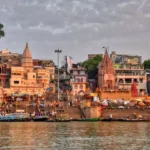
Varanasi, also known as Kashi or Banaras, is a city in the northern Indian state of Uttar Pradesh. It is one of the oldest towns in the world and has always had people living there. It is on the banks of the Ganges River.

This city is well-known for its religious and cultural significance and has a lengthy history. In this article, we’ll look at Varanasi’s history and the significance it has for Hinduism.
The Background of Varanasi in History
Excavations carried out at Rajghat (near the Malviya Bridge) in 1940 revealed ancient pottery and seals proving that an urban settlement existed here as early as 1800 BCE, supporting its claim as the “Oldest Living City.”
There are many myths and legends surrounding Varanasi‘s beginnings. Hindu mythology holds that Lord Shiva, one of the main deities in the Hindu pantheon, built Varanasi. According to legend, Lord Shiva stood where the present-day city is located and fashioned the Hindu god’s emblem, the lingam, into existence. This lingam was installed in a temple, the Kashi Vishwanath Temple, which is now regarded as one of Hinduism’s holiest sites.

While Varanasi’s exact founding date is unknown, it is thought to have been somewhere in the past 3,000 years. The city was first mentioned in writing in the sixth century BCE, and archaeological evidence shows that people lived there in the eleventh century BCE.
Varanasi has a lengthy and complicated past, and over that time, a variety of different empires and dynasties held power over the city. During the time of the Mauryan Empire (322–185 BCE), it was a major center for trade and business. During this time, Varanasi was a hub of scholarship and culture, and it is believed that the Buddha delivered his first speech there.
During the time that the Gupta Empire was in power, from the fourth to the sixth centuries CE, Varanasi became an important center for Hinduism. There were many temples and ashrams in the city, which was a hub for religious and cultural activities.
How Old is Kashi?
Perspectives on the city's age
Varanasi’s Importance in Hinduism
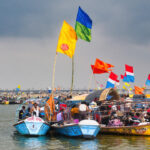
Hindus from all over the world often go to Varanasi, which is one of Hinduism’s seven holiest cities, for religious reasons. People in Varanasi believe that having their bodies burned on the banks of the Ganges River after they die will give them moksha, or freedom from the cycle of rebirth.

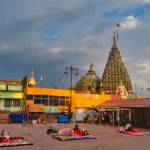
Many significant Hindu temples, including the Kashi Vishwanath Temple, the Annapurna Temple, and the Sankat Mochan Temple, are located in the city. Millions of pilgrims visit these temples every year, and they play a significant role in Hindu religious life.
Varanasi is renowned for its rich cultural legacy in addition to its religious significance. The city has a long history of literary, artistic, and musical accomplishments, and throughout its existence, many well-known poets, authors, and musicians have called it home. The city is renowned for its silk weaving and for its Banarasi saris, which are made of quality silk with threads dipped in gold or silver.
🪷 Walk Through Time
Explore the lanes that have existed for millennia. Our Varanasi Heritage Walk takes you through the oldest “Galis,” hidden temples, and historical mansions of the city.
- 24/7 support and assistance throughout the tour.
- In-depth historical and cultural insights at each destination.
- Daily breakfast and dinner included.
- Accommodation in well-appointed hotels with comfortable amenities.
Conclusion
In the end, Varanasi is one of the world’s oldest cities that has always been inhabited. It has a long and complicated history. The city’s actual origin date is unknown; however, it is thought to have been around 3,000 years ago. Varanasi is regarded as one of the holiest cities in Hinduism and has contributed significantly to the growth of the faith. Millions of pilgrims visit its temples and shrines every year, and its rich cultural history is a source of pride for both its citizens and the nation at large.
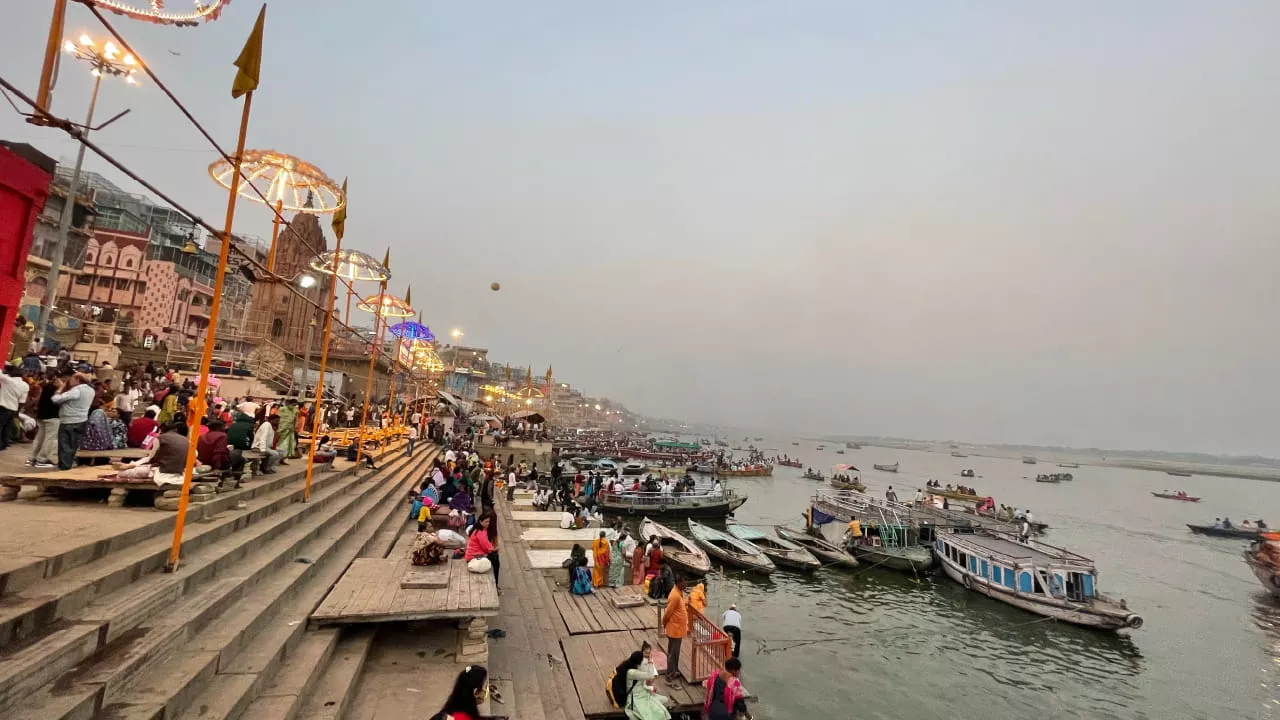
Despite its antiquity and historical importance, Varanasi is nonetheless a thriving metropolis. Its ghats (steps leading down to the river) are bustling with activity as people take river baths, carry out rituals, and go about their everyday lives. Its small lanes and alleys are crowded with vendors selling everything from street food to silk saris.
Varanasi is a city that is both historic and contemporary, where innovation coexists with tradition. It is a city that has survived invasions, wars, and natural disasters while still doing well in modern times. Varanasi is a place you shouldn’t miss if you’re a traveller looking to see a distinctive and fascinating city, a pilgrim seeking spiritual enlightenment, or just someone who is interested in history and culture.
Varanasi History FAQs
Uncovering the past
Who founded Varanasi?
Mythologically, it was founded by Lord Shiva. Historically, it was established by ancient Aryan tribes who settled on the fertile banks of the Ganga.
Is Varanasi the oldest city in the world?
It is widely considered one of the oldest continuously inhabited cities in the world, often compared with Damascus, Jericho, and Athens.
What was the ancient name of Varanasi?
In ancient texts, it was known as Kashi (The City of Light) and Avimukta (The Never-Forsaken Zone). “Varanasi” comes from the rivers Varuna and Assi.
Why is it called the City of Learning?
For centuries, scholars, philosophers (like Adi Shankaracharya and Tulsi Das), and students have come here to debate Vedas and scriptures, making it the intellectual capital of India.
Walk through three millennia of history in person — our Varanasi 2N/3D tour package brings this ancient city to life. See our Varanasi travel guide for the best time to visit and heritage sites not to miss.