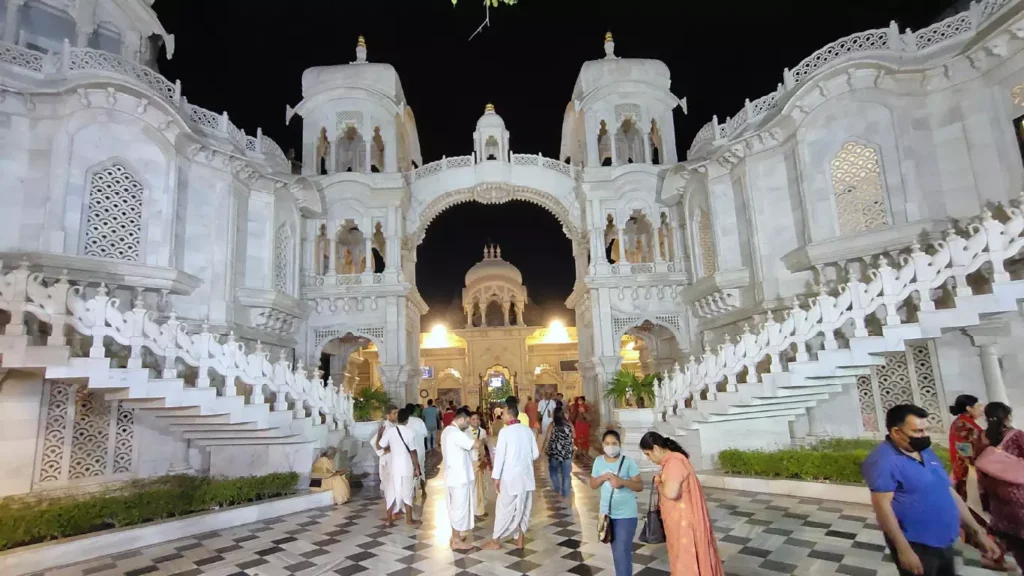
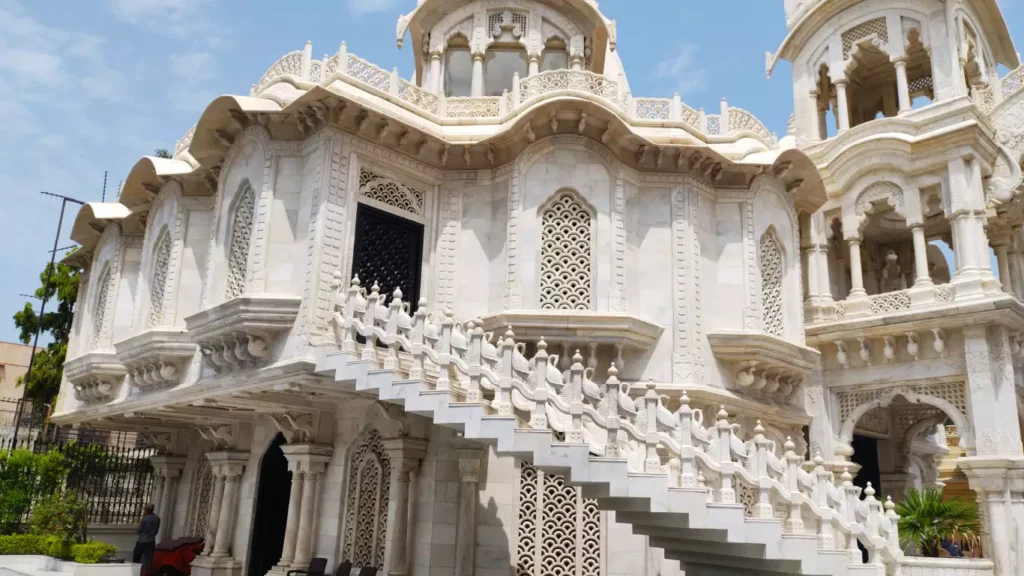
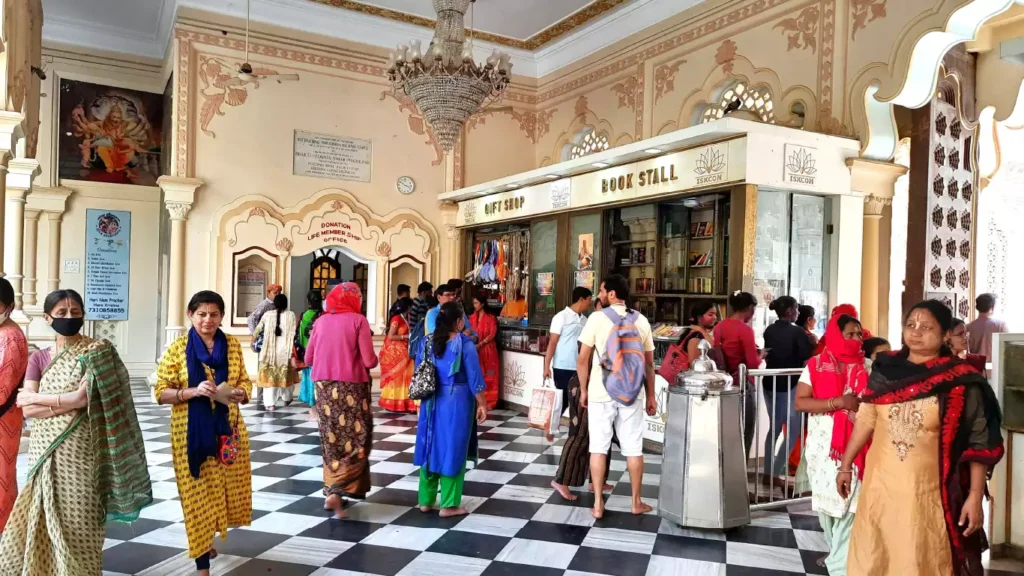
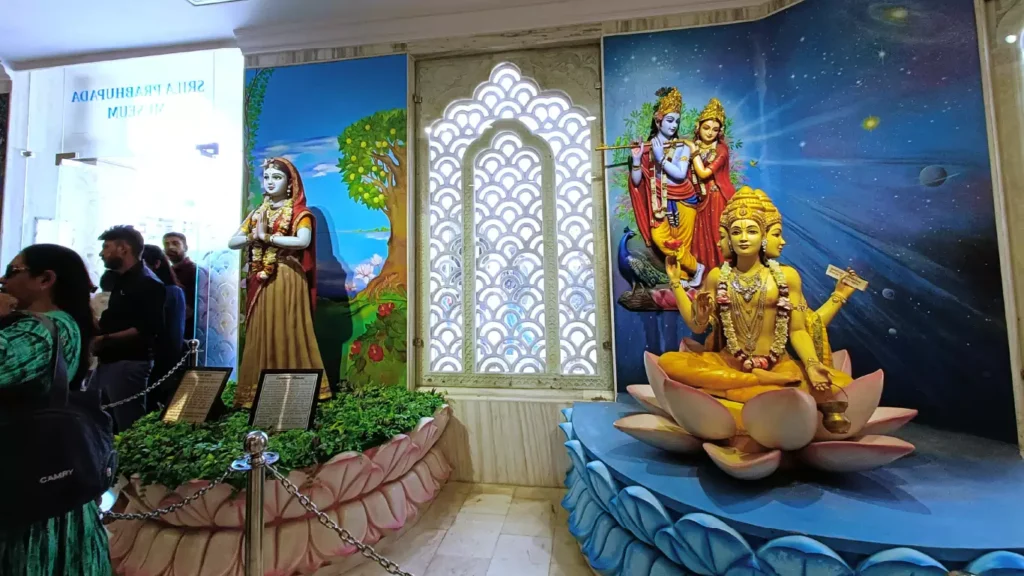
The Sri Krishna-Balaram Mandir — universally known as the ISKCON Temple of Vrindavan — is one of the most recognised Vaishnava temples in the world. Located in the Raman Reti neighbourhood of Vrindavan, this temple was the personal project of A. C. Bhaktivedanta Swami Prabhupada, the founder of the International Society for Krishna Consciousness, who considered its construction the fulfilment of a lifelong spiritual vision. The temple was inaugurated in 1975, and Srila Prabhupada himself was present for the ceremony. For ISKCON devotees worldwide, a visit to Vrindavan and this temple is a pilgrimage of the highest order.
Srila Prabhupada and the Vision Behind the Temple
A. C. Bhaktivedanta Swami Prabhupada was born in Calcutta in 1896 and spent decades in scholarly study and spiritual practice before, at the age of 69, sailing from Bombay to New York in 1965 with almost nothing but his faith and his translations of the Bhagavata Purana. Within a decade, he had established more than 100 temples across the world and initiated thousands of Western disciples into the Gaudiya Vaishnava tradition. His life’s ambition, however, was always to build a temple in Vrindavan — the land where Krishna and Balaram spent their childhood, the very soil that the tradition considers the most sacred on earth.
Prabhupada personally oversaw every stage of the Vrindavan temple’s planning and construction. He chose Raman Reti — the “pleasing sands” where Krishna and Balaram are said to have played as young boys — as the site because of its direct association with the leelas (divine pastimes) of the brothers. He wanted the temple to be not merely a place of worship but a complete spiritual village: a place where people of all nationalities could come, take prasadam, study the scriptures, and experience the authentic flavour of Vaishnava devotion as practiced in Vrindavan for centuries.
Srila Prabhupada passed away in this very temple in 1977, and his samadhi (tomb) is located within the temple complex, making the site doubly sacred for ISKCON devotees.
The Deities
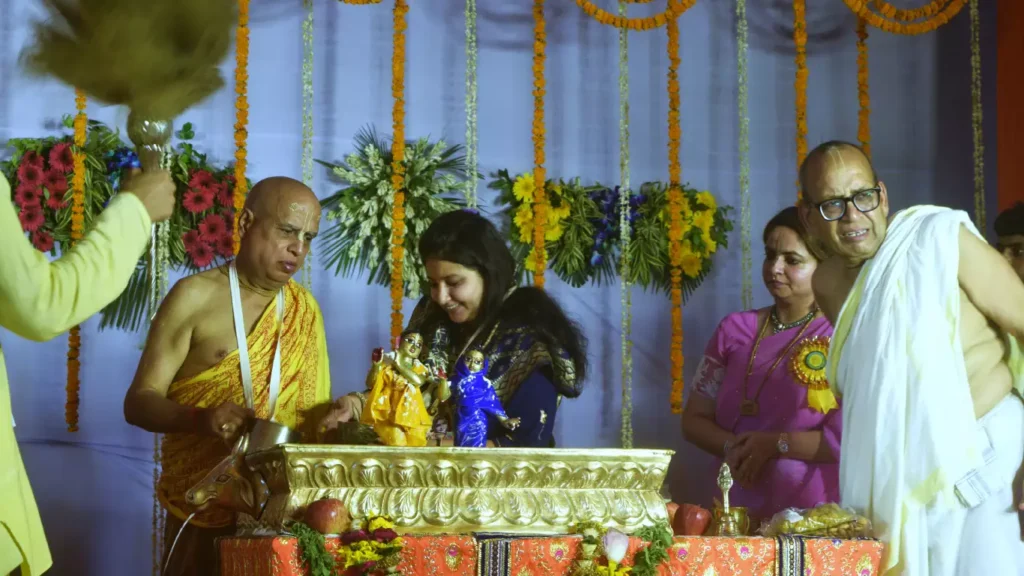
The temple’s central altar houses the magnificent forms of Shri Krishna and Shri Balaram — carved from white and black marble respectively, standing together as they did in their Vrindavan childhood. This is unusual among Vaishnava temples, which more commonly install Krishna with Radha; the specific celebration of the fraternal bond between Krishna and Balaram gives this temple its particular character and theological identity.
On the left altar stands Shri Shyamasundara with Srimati Radharani, and on the right altar is Gaura-Nitai — the forms of Sri Chaitanya Mahaprabhu and Nityananda Prabhu, the 15th-century saint who initiated the Bengali bhakti movement from which Gaudiya Vaishnavism springs. Together, the three altars embody the full theological range of the ISKCON tradition: the original Krishna-Balaram of Vrindavan, the beloved Radha-Krishna of devotional poetry, and the ecstatic bhakti movement of Chaitanya’s Bengal.
The deities are dressed elaborately in silk and gold, with the shringar changing multiple times daily according to the traditional Vaishnava schedule of 64 forms of devotional service.
Daily Programme and Mangala Aarti
The ISKCON Vrindavan temple follows the traditional Gaudiya Vaishnava schedule of eight daily aartis, beginning with Mangala Aarti at 4:30 AM. This pre-dawn aarti is considered the most auspicious of the day and draws a dedicated congregation of resident devotees and visiting pilgrims who rise before dawn to be present. The Srimad Bhagavata class that follows Mangala Aarti is conducted in English and Hindi and is open to all visitors.
The evening Gaura Aarti at 7:00 PM is the most publicly attended service, featuring Gaudiya kirtan (devotional singing with mridanga drums and karatalas) that continues for over an hour. The prasadam hall adjacent to the temple serves free meals to pilgrims at midday and in the evening — the quality and quantity of ISKCON prasadam is legendary among Vrindavan visitors, and the meal programme is open to all without charge.
The Samadhi of Srila Prabhupada
The Prabhupada Samadhi Mandir, built above the spot where Srila Prabhupada’s body was interred, is a separate domed building within the temple complex. The samadhi room itself is serene and intimate, with a lifelike murti of Prabhupada seated in meditation pose, surrounded by flowers and incense. A small museum adjacent to the samadhi documents his life, travels, and the global spread of the Hare Krishna movement, including photographs, original letters, and personal objects. For anyone interested in the modern history of global Hinduism, this museum is genuinely absorbing.
Guest House and Long Stays
The ISKCON Vrindavan complex includes a large guesthouse that accommodates both ISKCON devotees and general visitors. Rooms range from simple dormitory arrangements to private rooms with attached bathrooms, and stays here are a popular option for pilgrims who want to be immersed in the temple’s daily programme. Advance booking is strongly recommended, particularly for Janmashtami (August), Gaura Purnima (March), and the Kartika month (October-November), when the temple is at its most festive.
Getting There
The ISKCON Krishna-Balaram Temple is located in Raman Reti, Vrindavan, approximately 13 km from Mathura Junction Railway Station. From Vrindavan town centre, it is 2-3 km by e-rickshaw (₹30-50). The temple is well signposted and all local transport operators know it. The complex has a parking area for private vehicles. Entry to the temple is free; there is a nominal charge for the museum. Modest dress is required; shorts and sleeveless clothing are not permitted.
For a full guide to Vrindavan’s temples, accommodation, and seasonal visits, see our Vrindavan teerth-sthal guide. To experience the ISKCON temple as part of a curated pilgrimage, our Mathura-Vrindavan 4N/5D tour package includes an evening aarti at Krishna-Balaram Mandir, prasadam, and time to explore the complex at your own pace.