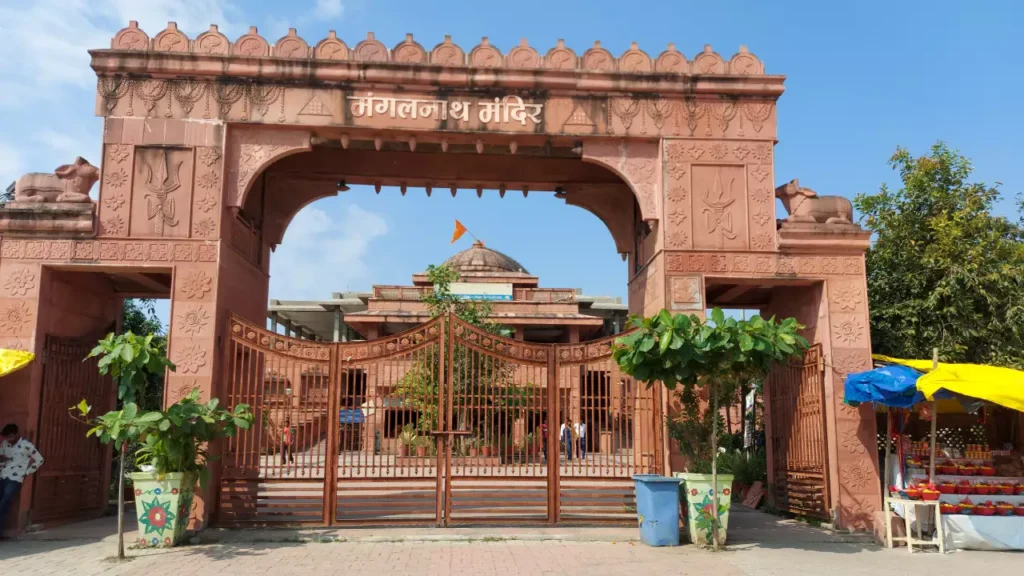
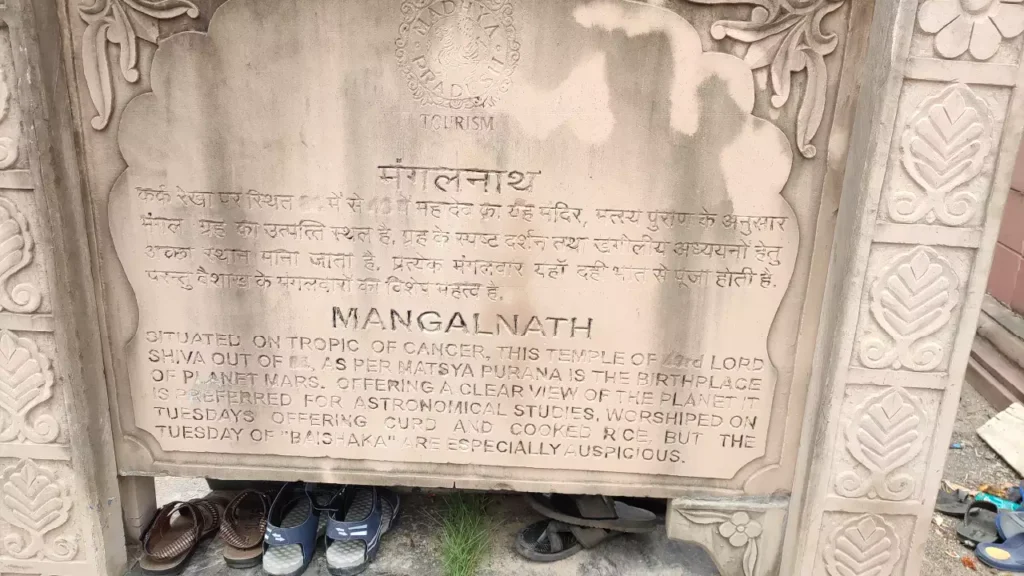
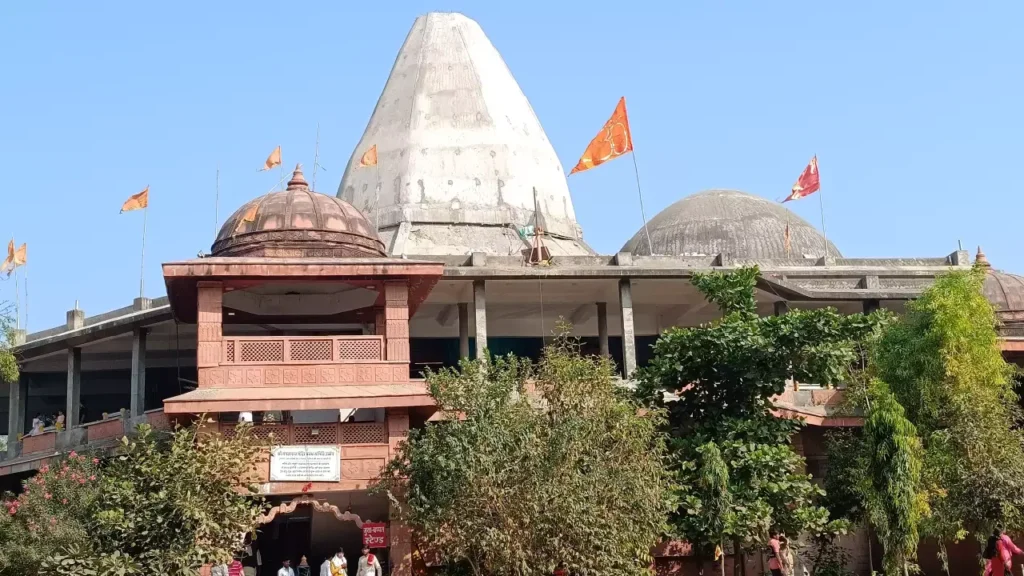
Mangalnath Temple in Ujjain occupies a position in Hindu astronomy that no other temple on earth can claim: it is the site where the planet Mars — called Mangal or Angaraka in Sanskrit — is believed to have been born. This belief is recorded in the Matsya Purana, one of the eighteen principal Puranas, which identifies Ujjain as the birthplace of Mangal and this temple as the precise point of that origin. As a result, Mangalnath Temple is the single most important site in India for Mangal Shanti puja — the propitiation of Mars to mitigate its malefic influence in a person’s birth chart.
Mars and Ujjain: An Astronomical Tradition
Ujjain’s connection to astronomy runs deep. The city sits on the Tropic of Cancer and was historically the reference meridian for ancient Indian astronomy — Ujjain’s longitude (approximately 75.8°E) was used as the zero meridian, or the Prime Meridian, in classical Hindu astronomical texts (siddhantic astronomy) before the adoption of the Greenwich meridian. The astronomical observatory, Jantar Mantar, built by Maharaja Jai Singh II in the 18th century, is still standing in Ujjain and continues to track celestial movements.
Within this tradition of Ujjain as the centre of astronomical knowledge, the association of Mangalnath with the planet Mars has both mythological and observational dimensions. The Matsya Purana states that Mars (Mangal) was born from the earth (Bhumi) at this location after a drop of Lord Shiva’s sweat fell to the ground during his battle with the demon Andhakasura and formed the Shiva Linga. This origin story also explains why Mars is sometimes called Bhauma (son of Bhumi, the earth) in Sanskrit texts.
Mangal Dosha and Mangal Shanti Puja
In Vedic astrology, Mars is one of the more feared planets in terms of its potential malefic effects, particularly the condition known as Mangal Dosha (also called Manglik Dosha). This occurs when Mars is placed in the 1st, 4th, 7th, 8th, or 12th house of a person’s natal horoscope, and it is traditionally believed to create obstacles in marriage, conflicts in relationships, and in severe cases, harm to the spouse. Millions of Indians consult astrologers before marriage specifically to check for Mangal Dosha.
Because Mangalnath Temple is the birthplace of Mars, it is considered the single most potent location for performing Mangal Shanti puja — the ritual that is prescribed to reduce the negative effects of Mars in one’s horoscope. Pandits at Mangalnath are highly experienced in these rituals, and the temple receives a steady stream of pilgrims throughout the year who come specifically to have Mangal Shanti performed, often before a marriage. On Tuesdays, which are the day of the week sacred to Mars, the number of pilgrims increases substantially.
The Shiva Linga: Origin Story from the Matsya Purana
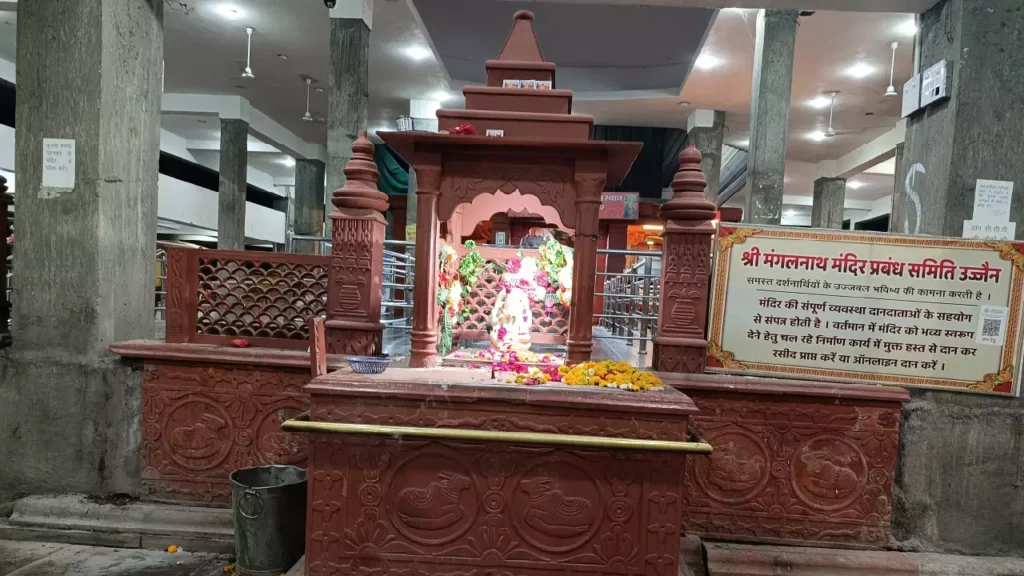
The presiding deity at Mangalnath is a Shiva Linga rather than an anthropomorphic idol of Mars. This reflects the Puranic narrative: during Shiva’s fierce combat with the demon Andhakasura, a drop of sweat from Shiva’s forehead fell to the ground at this location and spontaneously formed a Linga. This self-manifested Linga (Swayambhu Linga) is considered especially powerful in the Shaiva tradition because it was not created by human hands.
The temple is set on the banks of the Shipra River at Mangalnath Ghat, adding to its sanctity. The riverbank setting and the ancient trees on the temple premises give it a serene atmosphere quite different from the busier temples in Ujjain’s main city area.
Tuesdays and Special Observances
Tuesday (Mangalwar) is the weekday governed by planet Mars and is the most important day for worship at this temple. Every Tuesday, especially in the weeks before major Hindu festivals and in the auspicious months of Shravan and Kartik, the temple sees significantly higher footfall. A special Mangal abhishek (ritual bathing of the Linga with milk, honey, curd, and water) is performed by the temple priests, and individual devotees can arrange for personalised Mangal Shanti havan with specific gotra (lineage) mantras chanted by the resident pandits.
Mangalnath and the Simhastha Kumbh Mela
During the Simhastha Kumbh Mela, pilgrims performing the Kshipra snan (sacred bath) often combine it with a visit to Mangalnath Ghat, which sits on the same river. The Ghat at Mangalnath is one of several ritual bathing points designated during the Kumbh, and the temple complex becomes a base for pilgrims arriving for the snan during the main bathing dates. The next Simhastha Kumbh Mela in Ujjain is expected in 2028.
How to Reach Mangalnath Temple
The temple is approximately 6 km from Ujjain Junction. Auto-rickshaws and taxis are available from the station and from the city centre. The route takes visitors through Ujjain’s older residential areas and down to the Shipra riverbank. The temple is open throughout the day, with the most auspicious time for darshan being the morning abhishek hours and just after sunset on Tuesdays.
Plan your Ujjain pilgrimage including Mangalnath using our Ujjain travel guide with complete routes and timings. Book our Ujjain 4N/5D Mahakal tour package which covers Mangalnath alongside the major shrines. Also read our guide to the top temples of India for more on India’s most significant sacred sites.