
Performing Shradh in Varanasi is believed to guarantee “Moksha” (liberation) for the departed soul. It is the ultimate remedy for Pitru Dosha (ancestral karmic debts), ensuring your forefathers break free from the cycle of rebirth.
In the journey of Hindu spiritual life, performing the complete set of rituals for our departed ancestors is considered one of our highest duties. For those seeking the ultimate spiritual peace for their forefathers, performing Shradh in Varanasi holds a highly revered place. Known specifically as the Kashi Homa-Shrardham, conducting this Shradh in Varanasi is a profound way to express immense gratitude to our ancestors. If you are planning to undertake this sacred duty and organize a Shradh in Varanasi, here is a complete, detailed guide on everything you need to know about this ceremony.
Why is this Pooja Done?
According to Vedic scriptures, performing Shraddha is a fundamental Dharma (moral duty) of the descendants. A complete Shradh in Varanasi, especially the Kashi Homa-Shrardham, is performed to appease the souls of departed ancestors (Pitrus), clear any Pitru Dosha (ancestral curses or karmic debts), and help them attain supreme peace in the afterlife. Kashi (Varanasi) is the spiritual capital of India and the earthly abode of Lord Shiva. It is a deep-rooted belief that choosing to do Shradh in Varanasi guarantees spiritual emancipation (Moksha) for departed souls, ensuring they break free from the cycle of rebirth.
Where is it done?
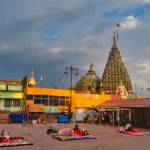
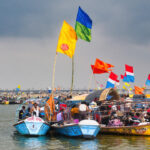
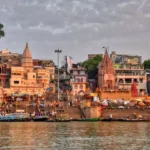
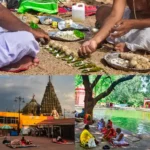
When planning your Shradh in Varanasi, you must know the sacred locations where it takes place. While the preliminary rites of the Shradh in Varanasi, such as holy dips in the Ganges and Pinda Pradhanam (offering of rice balls), are performed at sacred spots like Hanuman Ghat or Manikarnika Ghat, the actual Homa-Shrardham is typically conducted indoors. It takes place at a traditional Vedic Matha, a Prasad-Bhavan, or the residence of a local Vaideeka Brahmana (Vedic priest) near the ghats.
Whom should it be Done With?
Traditionally, Shradh in Varanasi is performed by the son(s) of the departed ancestors. It is highly mandated that it be performed alongside one’s spouse. The presence of the wife (Sahadharmini) is crucial, as she often helps in preparing the Havis-Annam (the sacred food offered) and sits together with her husband to take the Sankalpam (sacred vow). If a person has brothers, all brothers and their spouses can perform the rituals together under the guidance of the head priest.
What Should be Worn?
Purity is the most essential aspect of any Shradh in Varanasi, and your attire must reflect that.
- Men must wear traditional Madi-Vastram—a freshly washed, clean white cotton Dhoti and an Angavastram (shoulder cloth). Clothes stitched together like shirts or trousers are strictly prohibited.
- Women attending the Shradh in Varanasi must wear a traditional Saree, signifying purity, modesty, and respect for the solemnity of the occasion.
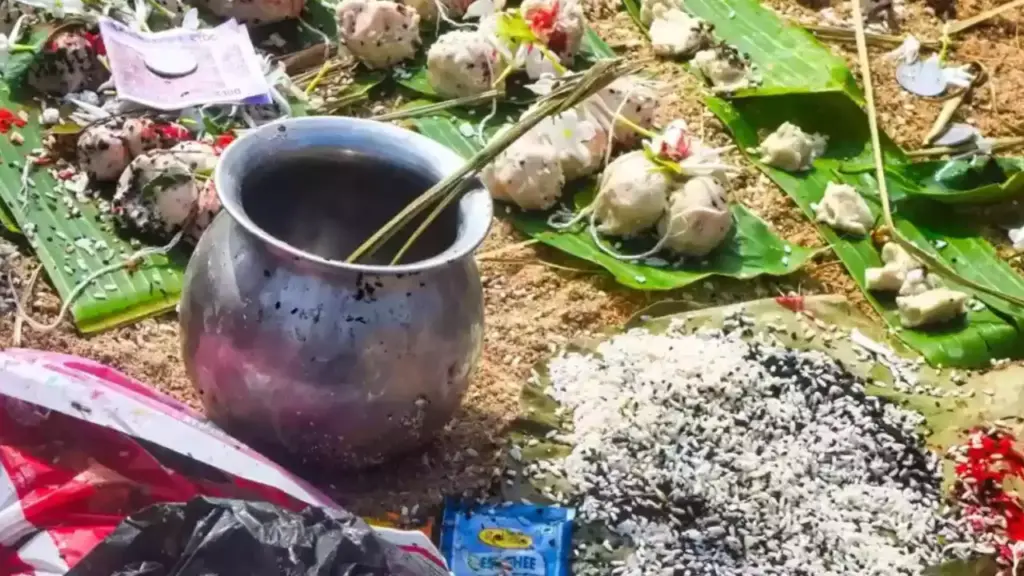
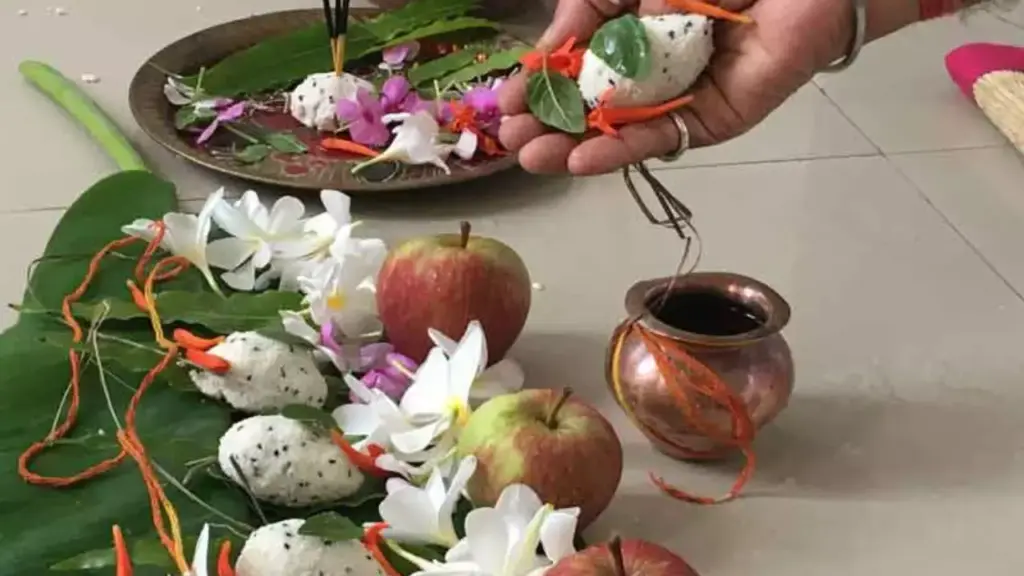
What Should be Eaten?
Dietary discipline is critical for the success of your Shradh in Varanasi. Participants must consume strictly Satvik food (pure vegetarian, completely devoid of onion, garlic, or outside spices) in the days leading up to the pooja. On the day of the Shradh in Varanasi, the couple fasts until the rituals are fully completed. Afterward, they partake in the sacred Havis-Annam or Prasadam that has been offered to the deities, ancestors, and the priests.
Complete Details of Shradh in Varanasi (Kashi Homa-Shrardham)
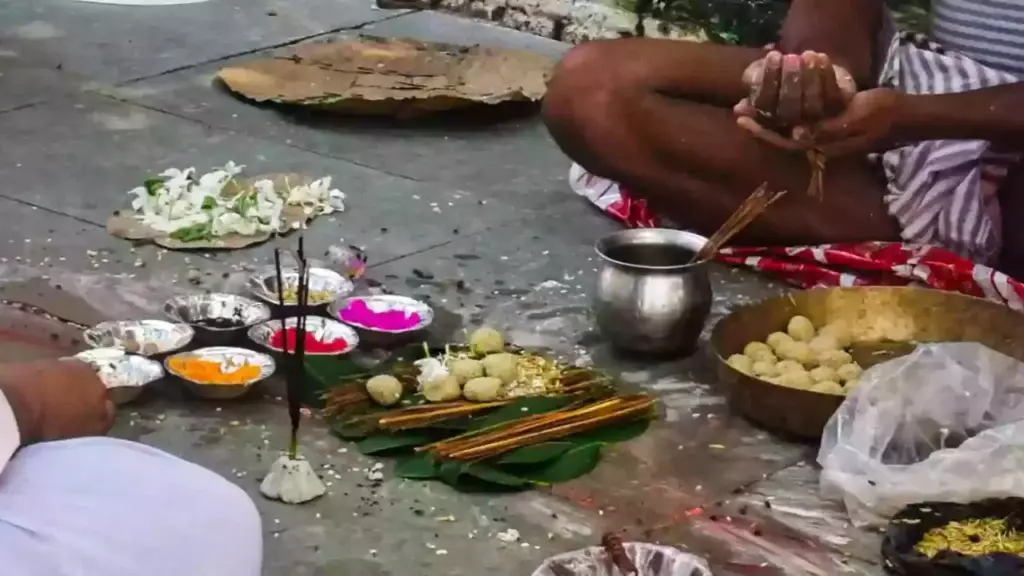
The Kashi Homa-Shrardham is an elaborate ritual centered around the sacred fire (Agni).
- Articles/Requirements: The primary requirement is arranging high-quality, pure food to feed either 2 or 5 Vaideeka-Brahmanas. These Brahmanas are highly learned Vedic scholars who represent the ancestors during the ritual. Providing them with a hearty, respectful meal is spiritually equivalent to feeding the ancestors directly.
- Dasa Daanam (10 Items): Following the Shrardham ceremony, it is highly auspicious to perform Dasa Daanam (though it remains optional). This involves donating ten specific items to the priests, which generally include: a Cow (or its equivalent value in gold/money), Land (or equivalent), Sesame seeds, Gold, Ghee, Clothes, Grains, Jaggery, Silver, and Salt.
- Pancha Daanam (5 Items): You can also optionally perform Pancha Daanam, giving away five sacred items, which typically include a Bell, a Holy Book, a Lamp, Clothes, and a Water vessel (or items like footwear and umbrellas for the priests).
What are the Benefits?
The benefits of completing your Shradh in Varanasi are life-changing. It brings immense peace of mind to the performer, ensuring harmony, health, and prosperity for future generations. By removing ancestral blockages (Pitru Dosha), it clears paths in your personal and professional life. Above all, it fulfills your highest karmic duty, earning you the timeless blessings of your forefathers and the divine grace of Lord Vishwanath.
Guidelines for Kashi Shradh
Essential rules for the Kartas (performers).
Can I perform Shradh if my parents are alive?
No. Shradh is performed only for deceased ancestors. However, those with living parents can perform other rituals like Rudrabhishek or Ganga Pooja.
Why must the wife be present?
The wife (Sahadharmini) is crucial for the Sankalp. She assists in preparing the Havis–Annam (sacred food) and shares the spiritual merit of the ritual.
Where exactly is the ritual performed?
While Pinda Daan happens at the Ghats, the Homa–Shrardham (Fire Lab) is conducted indoors at a Vedic Matha or a Priest‘s residence to maintain sanctity.