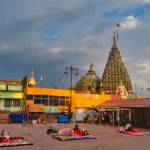
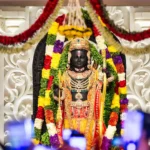
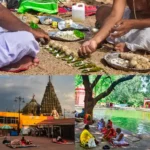


The temple sanctum houses a 40-cm long footprint of Lord Vishnu imprinted on solid basalt rock. It is believed that Lord Vishnu placed His foot here on the chest of the demon Gayasur, granting the land the unique power to absolve all ancestral debts instantly.
In the vast and profound spectrum of Hindu rituals—often referred to collectively as the universe of “All Pooja”—each ceremony holds a specific key to cosmic harmony. While some poojas are performed for wealth, health, or marital bliss, there is one paramount ritual dedicated strictly to those who came before us. This is the sacred Pinda Pradhanam, widely known and searched as the Vishnupad Temple Gaya Pind Daan.
If you are planning to perform this ultimate act of ancestral devotion, here is a complete, detailed guide explaining every facet of the Vishnupad Temple Gaya Pind Daan.
Why is the Vishnupad Temple Gaya Pind Daan Done?
In Hindu tradition, our spiritual duties extend beyond the living to our departed ancestors. The Vishnupad Temple Gaya Pind Daan is a vital Shraddha ritual performed to facilitate the journey of ancestral souls toward Moksha (liberation). It is believed that souls can remain bound to earthly attachments until their descendants perform these rites. By offering Pindams (spherical offerings of sacred food), the performer pays off the “Pitru Rina” (debt to ancestors), thereby liberating them from the cycle of rebirth and ensuring their eternal peace.
Where is it performed?
While ancestral rites can be done in various holy cities, performing the Vishnupad Temple Gaya Pind Daan holds the highest spiritual magnitude in Hinduism. The temple sanctum houses a sacred, 40-centimeter-long footprint of Lord Vishnu imprinted into solid basalt rock, surrounded by a silver-plated basin. According to ancient scriptures, Lord Vishnu placed His foot on the chest of the demon Gayasur here, blessing the land with the unique power to grant instant salvation to any ancestor whose rites are performed on this soil.
The 17 Pindams Ritual Process
A step–by–step guide to the “Havis-Annam” offering.
- Preparation: Cooking the Havis-Annam (Rice, Black Sesame, Ghee, Honey, Milk) and rolling exactly 17 Pindams.
- The Corridor Offering: The first offering is made in the temple corridor under the guidance of a Gayawal Panda, invoking the Gotra.
- The Sanctum Offering: The Pindams are collected and carried into the inner sanctum to be offered directly onto the Vishnu-Paadam.
- Moksha Prapti: The final act that seals the salvation of the ancestors and clears the Pitru Rina.
The Core Ritual of Vishnupad Temple, Gaya Pind Daan: Havis-Annam and the 17 Pindams
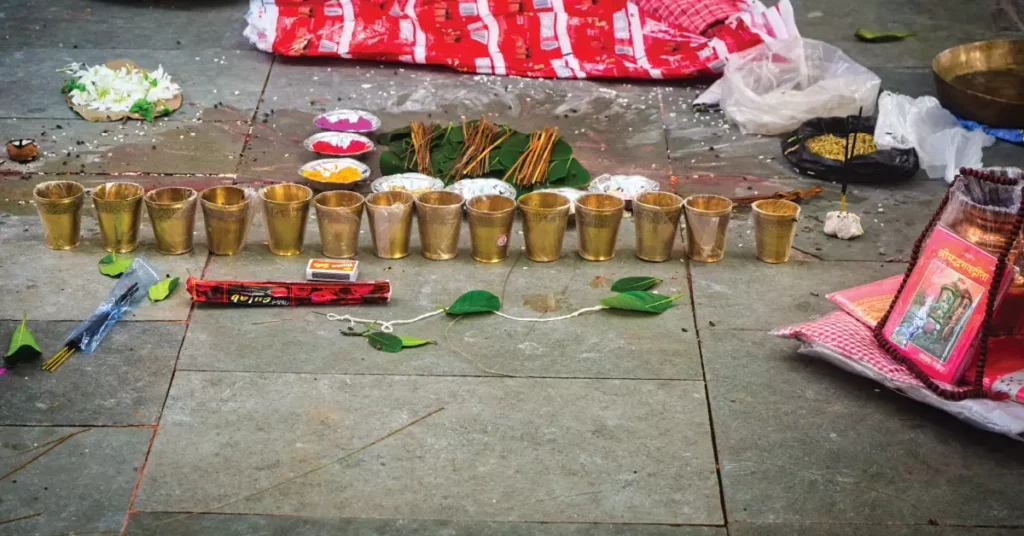
This pooja involves highly specific requirements and methodical devotion. The primary article required for the Vishnupad Temple Gaya Pind Daan is Havis-Annam, a sacred preparation of cooked rice mixed with black sesame seeds, pure cow’s ghee, honey, and milk.
From this freshly prepared Havis-Annam, exactly 17 Pindams are meticulously rolled and prepared by the devotee.
The ritual unfolds in a deeply symbolic sequence:
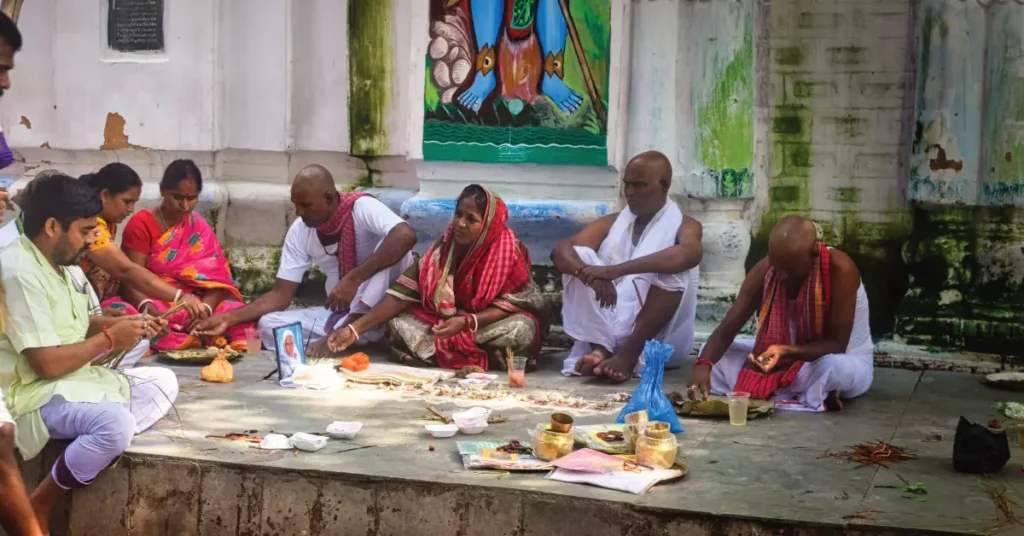
- The Corridor Offering: Initially, the 17 Pindams are offered in the temple corridor under the strict guidance of local priests (Gayawal Pandas) who chant the specific Vedic mantras invoking your ancestral lineage (Gotra).
- The Sanctum Offering: After this initial consecration is complete, these 17 Pindams are carefully collected back up. The devotee then carries them into the inner sanctum and offers them directly onto the sacred Vishnu-Paadam (the footprint of Lord Vishnu). This direct offering at the feet of the Supreme Lord is what seals the salvation of the ancestors during the Vishnupad Temple Gaya Pind Daan.

Who Can Perform the Vishnupad Temple Gaya Pind Daan?
Traditionally, the Vishnupad Temple Gaya Pind Daan is performed by male descendants, typically the eldest son, on behalf of his parents or forefathers. However, it is highly recommended to perform it alongside your spouse. The presence of the wife (Dharmapatni) completes the spiritual eligibility for major Vedic rites. The ritual must strictly be done alongside a qualified temple priest (Panda), as they hold the ancestral registers and know the exact procedural mantras.
What to Wear?
Purity of the physical body is as important as purity of mind when undertaking the Vishnupad Temple Gaya Pind Daan.
- Men: Must wear traditional, unstitched clothing. A clean, white cotton Dhoti and an Angavastram (upper cloth) draped over the shoulder are mandatory. The chest usually remains bare for the offering.
- Women: Should wear traditional, modest attire such as a pure cotton or silk Saree. Auspicious colors like yellow, red, or white are highly recommended. Black clothing or leather items (belts, wallets) must be strictly avoided by all participants.
What to Eat?
Dietary discipline (Vrata) is a crucial element of this pooja.
- Before the Pooja: The performer must strictly fast on the morning of the ritual, avoiding even a drop of water until the Vishnupad Temple Gaya Pind Daan is completed.
- General Diet: The day prior, and for the entirety of the ritual day, the diet must be completely Satvik. This means eating simple, pure vegetarian food strictly devoid of onion, garlic, eggs, mushrooms, and heavy spices. Post-ritual meals should consist of simple rice, dal, and vegetables to maintain physical and spiritual purity.
The Profound Benefits
Performing the Vishnupad Temple Gaya Pind Daan offers unparalleled spiritual rewards. It completely nullifies Pitru Dosh (ancestral curses or karmic blockages) in the performer’s astrological chart. Families who perform this pooja often report the sudden clearing of long-standing obstacles related to health, financial debt, or childbirth. Most importantly, it brings immense psychological and spiritual peace, knowing you have fulfilled your ultimate earthly duty, allowing your ancestors to bless you abundantly from the divine realms.
Conclusion
The Vishnupad Temple Gaya Pind Daan is not merely a ritual; it is a profound act of love, gratitude, and cosmic surrender. By placing the 17 Pindams of Havis-Annam at the feet of Lord Vishnu, you create an eternal bridge of grace, ensuring salvation for your lineage and boundless blessings for your future generations.
Practical Guide for Devotees
Answers to common questions about the Gaya Shradh.
Can women perform Pind Daan?
While traditionally performed by the eldest male son, women can participate. In fact, it is highly recommended for the wife (Dharmapatni) to sit beside the husband to complete the Vedic rites.
What is the rule for fasting?
The performer (Karta) must fast completely (no food or water) on the morning of the ritual until the Pinda Daan is completed. The previous day’s diet must be strictly Satvik.
Why are 17 Pindams offered?
The number 17 represents specific lineages and deities invoked to clear the path for the ancestors. It is a unique requirement of the Vishnupad temple ritual.
Ready to perform these sacred rites? Our Gaya Pind Daan Tour Package includes pandit arrangements, accommodation, and all ritual logistics.