

Welcome to Jaipur, the magnificent Pink City and a global masterpiece of 18th-century grid-based urban planning. Far more than a collection of historic walls, Jaipur’s monuments are vibrant, physical manifestations of Rajput power, courtly elegance, and celestial alignment. To ensure your experience is completely seamless and inspiring, we design your journey around “Geometric Pacing”—expertly managing your travel times between the rugged, martial majesty of the Aravalli hillside forts and the delicate, aesthetic luxury of the Walled City palaces to keep your energy high and your comfort absolute. Get ready to step into a royal narrative where history is brought to life, beautifully curated to give you an exclusive, zero-friction immersion into the true heart of Rajasthan.
Master Analysis of Jaipur’s Architectural Heritage: The Warrior-Scholar Narrative
Jaipur, the Pink City, stands as a masterpiece of 18th-century grid-based urban planning. Its monuments are not merely defensive structures; they are profound manifestations of Rajput power, celestial alignment, and courtly aesthetics. For inbound travel operations, the curation challenge lies in managing the vast distances between the rugged hillside forts and the delicate city-center palaces while maintaining a seamless ‘Royal’ narrative.
To ensure elite operational execution, Jaipur’s monuments must be sold as a dual experience: the martial majesty of the Aravalli hills and the aesthetic delicacy of the Walled City. This requires mastering “Geometric Pacing”—optimizing travel time between these disparate zones to keep the client’s energy high and the narrative thread unbroken. Below is the comprehensive, deeply detailed analysis of Jaipur’s five premier monuments.
Jaipur historical monuments
Monument 1: Amer Fort – The Pinnacle of Rajput Martial Majesty
1. In-Depth History and Royal Lineage
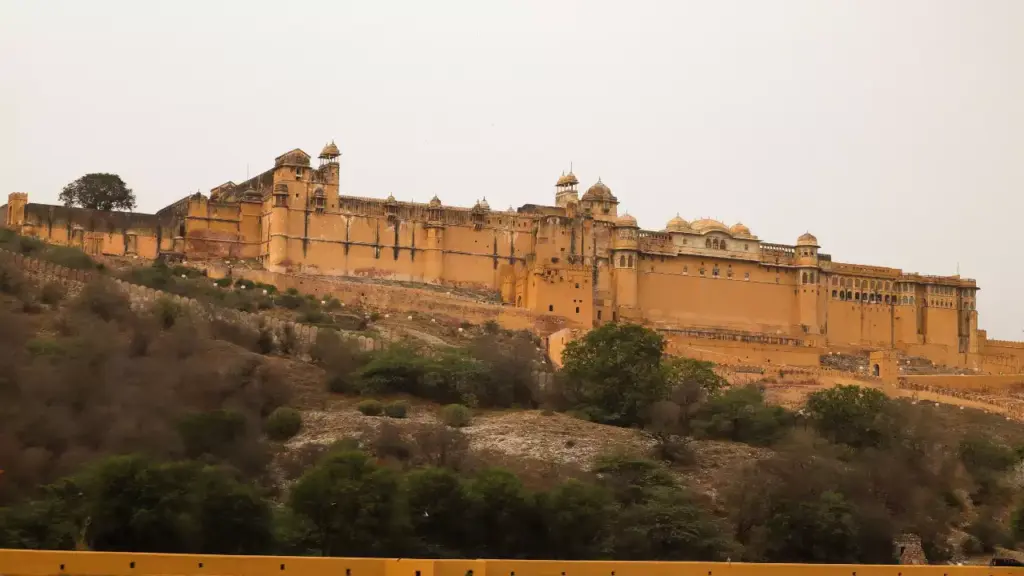
Amer Fort (often called Amber Fort) represents the original seat of power for the Kachwaha Rajput dynasty before the establishment of Jaipur city. Construction of the grand stone fortress we see today began in 1592 under the reign of Raja Man Singh I, a trusted general in the army of the Mughal Emperor Akbar.
Because of the Kachwaha dynasty’s close political and marital alliances with the Mughals, Amer Fort is a stunning, physical manifestation of cultural syncretism. It represents a flawless fusion of traditional Rajput (Hindu) architectural elements and Mughal (Islamic) design philosophies. The fortress was expanded continuously over the next 150 years by successive rulers, most notably Mirza Raja Jai Singh I, who added some of the most exquisite marble pavilions.
The fort was strategically perched dramatically above Maota Lake on the rugged Aravalli hills, providing both a vital water source and a formidable natural defense against invading armies. It remained the capital of the Kachwaha Rajputs until 1727, when a growing population and water scarcity forced Maharaja Sawai Jai Singh II to shift the capital to the newly built city of Jaipur.
2. Comprehensive Operational Parameters & Metrics
- Geographic Location: Devisinghpura, Amer, Jaipur, Rajasthan 302028 (approximately 11 kilometers from Jaipur city center).
- Daily Operating Hours: 8:00 AM to 5:30 PM (Day Tourism).
- Night Tourism: 6:30 PM to 9:15 PM (The fort is beautifully illuminated, offering a completely different aesthetic experience).
- Standard Ticketing:
- Indian Nationals: INR 50
- Foreign Nationals: INR 500
- Estimated On-Site Duration: 2.5 to 3 hours to traverse the steep ramps and four primary courtyards.
3. Spatial, Architectural, and Engineering Parameters
Amer Fort is divided into four main courtyards, each separated by massive gates and serving a specific function in the royal hierarchy:
- Jaleb Chowk & Suraj Pol: The primary entry point, the Suraj Pol (Sun Gate), faces east to catch the rising sun. This massive courtyard (Jaleb Chowk) was used for returning armies to display their war booty to the populace.
- Diwan-i-Aam (Hall of Public Audience): Located in the second courtyard, this pavilion features a double row of columns, utilizing elephant-head capitals. It was here the Maharaja would hear the petitions of the public.
- The Sheesh Mahal (Mirror Palace): Also known as Jai Mandir, this is the fort’s crowning jewel. The walls and ceilings are embedded with thousands of convex mirrors and colored glass imported from Belgium. When illuminated by a single candle, the entire chamber reflects the light to resemble a starry night sky.
- Sukh Niwas (Hall of Pleasure): Located opposite the Sheesh Mahal, this chamber features an ancient, ingenious cooling system where water flowed through a channeled channel over a marble screen, acting as a 16th-century air conditioner.
- The Zenana (Women’s Quarters): The fourth courtyard features a labyrinthine layout designed so the King could visit any of his queens in their private chambers without the others knowing.
4. Strict Field Operational Intelligence & Protocols
- The “Early Access” Mandate: Amer Fort is vast and highly prone to extreme overcrowding by mid-morning. Operations must secure an early-access 8:00 AM slot.
- The Sheesh Mahal Rush: Guides must immediately steer clients straight to the Sheesh Mahal (Mirror Palace) the moment they enter the gates. This strategic pacing beats the massive tour-bus rush to the fort’s most famous room, allowing clients to photograph the mirrors in peace before moving backward to the quieter, more scenic courtyard zones.
- Energy Preservation & Transit: Transit to Amer requires navigating steep mountain roads; agencies must strictly utilize professional drivers and avoid unreliable public jeep systems. Furthermore, the excessive walking requires a strict “Monument-to-Rest” ratio, mandating a midday sanctuary period in an air-conditioned boutique or hotel following the visit.
Monument 2: Nahargarh Fort – The Hilltop Sentinel
1. In-Depth History and Royal Lineage
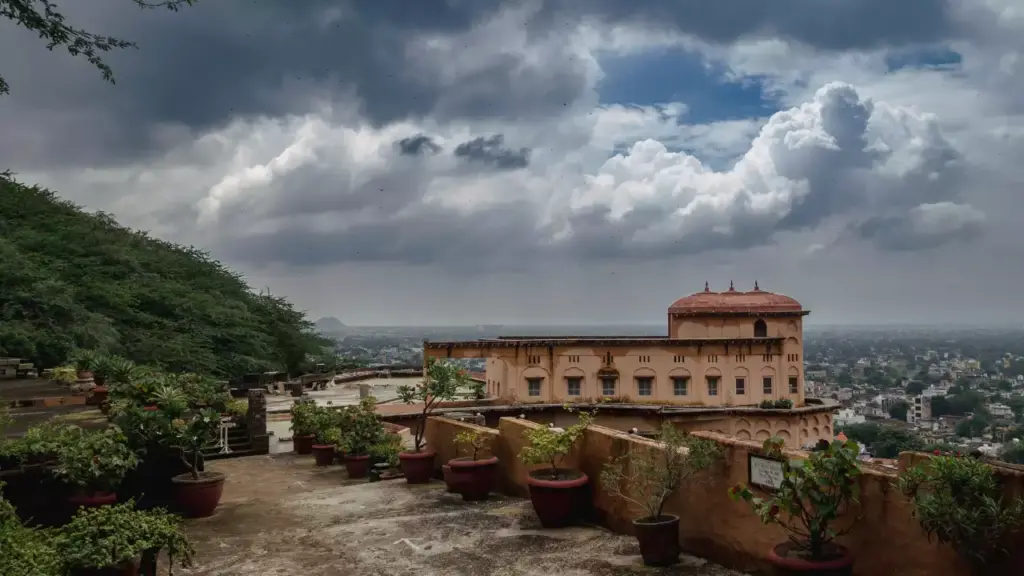
Perched on the rugged ridge of the Aravalli Hills, Nahargarh Fort forms a formidable defensive ring around the city of Jaipur, alongside Amer and Jaigarh forts. Built in 1734 by Maharaja Sawai Jai Singh II, its primary purpose was to serve as a defensive fortress for the newly founded city below.
Originally named Sudarshangarh, the fort was later renamed Nahargarh, which translates to “Abode of Tigers.” Local legend states that the construction of the fort was repeatedly disrupted by the restless spirit of a Rathore prince, Nahar Singh Bhomia. To appease the spirit, a temple was built within the fort in his honor, and the fort was named after him.
While never seeing major siege warfare, the fort played a vital role in local diplomacy and safety. During the Indian Rebellion of 1857, the Maharaja of Jaipur moved the region’s Europeans, including the British Resident’s wife, to Nahargarh for their protection. In the late 19th century, Maharaja Sawai Madho Singh transformed the rugged military outpost into a luxurious royal summer retreat, adding exquisite palatial suites.
2. Comprehensive Operational Parameters & Metrics
- Geographic Location: Krishna Nagar, Brahampuri, Jaipur, Rajasthan 302002.
- Daily Operating Hours: 10:00 AM to 5:30 PM.
- Standard Ticketing:
- Indian Nationals: INR 50
- Foreign Nationals: INR 200
- Estimated On-Site Duration: 1.5 to 2 hours.
3. Spatial, Architectural, and Engineering Parameters
- Madhavendra Bhawan: The crowning architectural achievement of the fort, this palace was built by Sawai Madho Singh for his royal ladies. It consists of nine identical, highly decorated, two-story suites for the nine queens.
- The Royal Corridors: The suites are connected by a labyrinth of beautifully frescoed corridors designed specifically so the Maharaja could visit one queen’s suite without the others realizing.
- Water Harvesting: The fort features advanced stepwells (baoris) carved directly into the rock face to harvest rainwater during the monsoon, an engineering necessity for a hilltop military garrison in the desert.
4. Strict Field Operational Intelligence & Protocols
- The Premier Sunset Protocol: Nahargarh is the premier sunset site of Jaipur. Operational strategy dictates scheduling this exclusively for the final afternoon of the trip.
- The Farewell Briefing: The high terrace cafes offer an unparalleled vantage point overlooking the vast grid of the Pink City. Guides should utilize this location for a “Farewell Briefing” of the Golden Triangle journey as the city lights up below, providing high emotional resonance for the client.
- Mountain Transit Rules: Like Amer, the winding, steep ascent to Nahargarh requires high-end logistical standards, relying solely on agency-vetted professional drivers.
Monument 3: The City Palace – The Walled City Palatial Core
1. In-Depth History and Royal Lineage
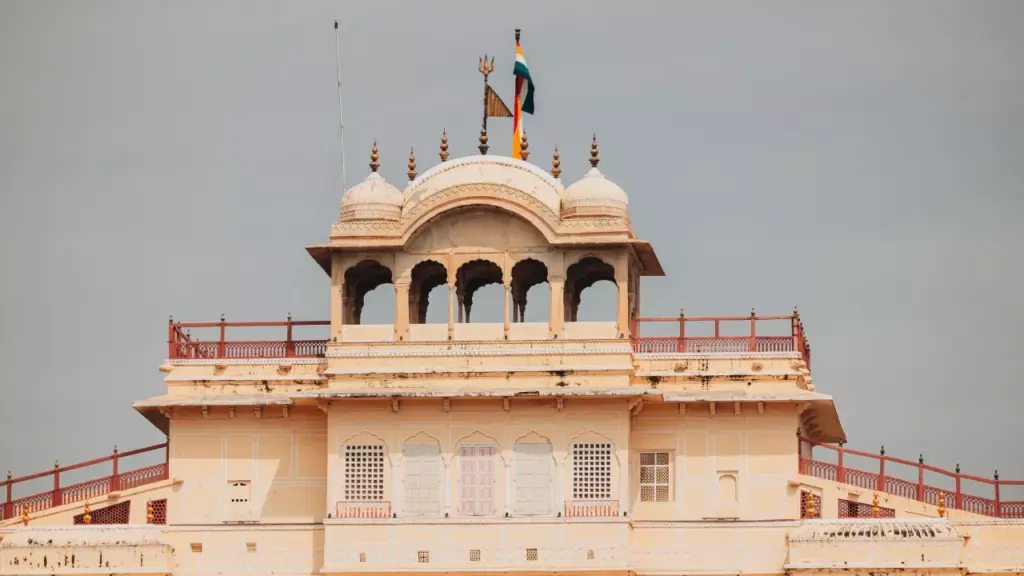
The City Palace lies at the absolute center of Jaipur’s perfectly planned grid. When Maharaja Sawai Jai Singh II decided to move his court from the mountainous Amer Fort in 1727, he commissioned the brilliant Bengali architect Vidyadhar Bhattacharya to design a new capital based on Vastu Shastra (traditional Hindu architecture).
The City Palace became the administrative, cultural, and residential heart of this new capital. It represents a dramatic shift in Rajput history—from the defensive, rugged necessity of hill forts to the sprawling, peacetime luxury of a valley city. The complex was expanded over centuries by various Maharajas, resulting in an exquisite architectural tapestry integrating Mughal, Rajput, and European architectural influences.
Today, it remains the seat of the Maharaja of Jaipur. A significant portion of the palace continues to serve as the private residence of the modern Jaipur royal family (the descendants of the Kachwaha Rajputs), while the outer courtyards and pavilions have been converted into the Maharaja Sawai Man Singh II Museum.
2. Comprehensive Operational Parameters & Metrics
- Geographic Location: Tulsi Marg, Gangori Bazaar, J.D.A. Market, Pink City, Jaipur, Rajasthan 302002.
- Daily Operating Hours: 9:30 AM to 5:00 PM (Day Museum) | 7:00 PM to 10:00 PM (Night Viewing).
- Standard Ticketing (Museum Only):
- Indian Nationals: INR 300
- Foreign Nationals: INR 700
- Private Rooms (Chandra Mahal) Premium Ticketing: ~INR 3,500 – INR 4,000 (Subject to seasonal B2B rates).
- Estimated On-Site Duration: 2 to 3 hours (depending on access levels).
3. Spatial, Architectural, and Engineering Parameters
- Mubarak Mahal (Palace of Welcome): Built in the late 19th century by Maharaja Madho Singh II to receive foreign dignitaries, this pavilion is an architectural marvel blending Islamic, Rajput, and European styles. It now houses the textile museum.
- Diwan-i-Khas (Hall of Private Audience): An open pavilion featuring two massive, solid silver urns (Gangajalis). Maharaja Madho Singh II commissioned these to carry holy Ganges water on his voyage to England in 1902, as he refused to drink European water. They hold the Guinness World Record as the world’s largest sterling silver vessels.
- Pritam Niwas Chowk (The Four Gates): The inner courtyard leading to the royal residence features four stunningly painted gates representing the four seasons and dedicated to different Hindu gods (The Peacock Gate for Autumn, The Lotus Gate for Summer, etc.).
- Chandra Mahal (Moon Palace): The towering, seven-story main residence of the royal family. Each floor is lavishly decorated with specific themes, such as the Chhavi Niwas (painted entirely in blue and white) and the Shobha Niwas (The Hall of Beauty, dripping in gold leaf and mirrors).
4. Strict Field Operational Intelligence & Protocols
- The “Behind the Scenes” Mandate: Standard tourist tickets only allow access to the outer museums. For premium inbound clients, the agency must book the Private Rooms tour.
- Exclusive Access: This premium access brings clients directly into the Chandra Mahal, providing a highly exclusive view of the royal living quarters, the blue rooms of the Chhavi Niwas, and specialized costume galleries that the general public never sees. This is the ultimate differentiator for luxury itineraries.
Monument 4: Hawa Mahal – The Palace of Winds
1. In-Depth History and Royal Lineage
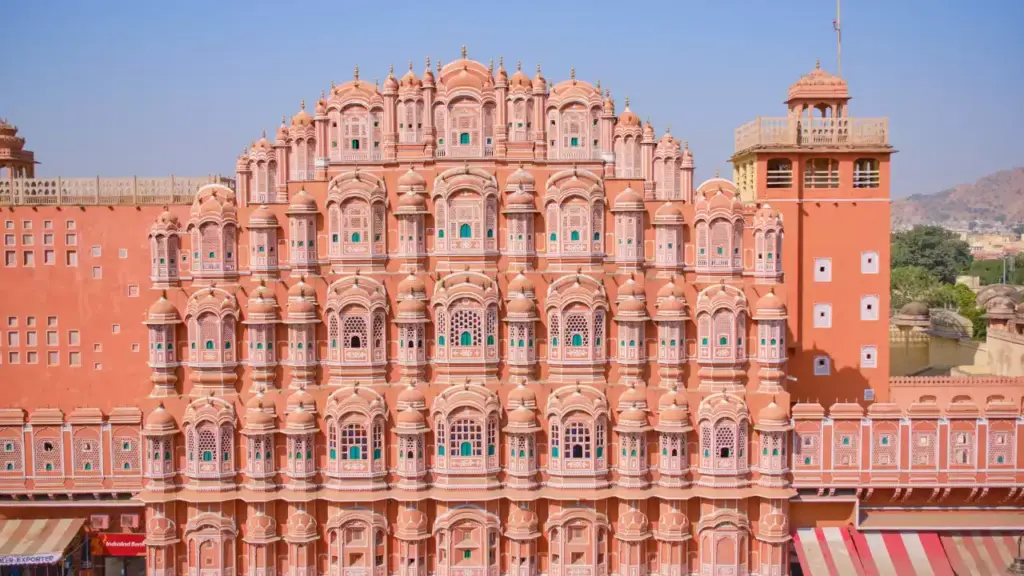
The Hawa Mahal is globally recognized as the iconic symbol of Jaipur. It was constructed in 1799 by Maharaja Sawai Pratap Singh, a ruler known for his deep devotion to art, poetry, and religion. Designed by the architect Lal Chand Ustad, the building’s striking exterior was explicitly designed to resemble the crown of Lord Krishna.
The architectural brilliance of the Hawa Mahal is rooted in the strict societal customs of the 18th-century Rajput court. The royal women adhered strictly to the purdah system, which forbade them from appearing in public or being seen by strangers. The Hawa Mahal was built as a grand, highly decorated viewing gallery. It allowed the royal ladies to sit behind the intricate stone screens and observe the lively street festivals, royal processions, and daily city life on the streets below without violating their strict codes of privacy.
2. Comprehensive Operational Parameters & Metrics
- Geographic Location: Hawa Mahal Rd, Badi Choupad, J.D.A. Market, Pink City, Jaipur, Rajasthan 302002 (Located on the edge of the City Palace complex).
- Daily Operating Hours: 9:00 AM to 5:00 PM.
- Standard Ticketing:
- Indian Nationals: INR 50
- Foreign Nationals: INR 200
- Estimated On-Site Duration: 30 to 45 minutes (Facade viewing and photography).
3. Spatial, Architectural, and Engineering Parameters
- The Facade: Built from brilliant red and pink sandstone, the five-story exterior is akin to a giant honeycomb. It features 953 small windows known as jharokhas, each decorated with intricate latticework, finials, and tiny domes.
- The Venturi Effect: The building is an engineering marvel of natural air conditioning. The 953 windows were designed to utilize the Venturi effect—forcing air through the narrow openings to increase its speed and cool the air as it entered the chambers, keeping the palace perfectly comfortable during the brutal Rajasthani summers.
- The Interior Structure: The back of the building is surprisingly plain compared to the front. There are no stairs leading to the upper floors; instead, ramps were built to allow the royal women to be carried up in palanquins.
4. Strict Field Operational Intelligence & Protocols
- The Facade-Only Protocol: Operationally, the Hawa Mahal is effectively a facade-monument. Guides should not waste valuable operational time on a hot, cramped interior tour unless specifically requested by the client.
- The Premium B2B Value: The best aesthetic and experiential value is found in the private rooftop cafes located directly across the street. Tour managers should secure premium seating here, allowing clients to capture iconic, unobstructed photo opportunities of the entire facade while relaxing and enjoying a traditional Rajasthani high-tea.
Monument 5: Jantar Mantar – The Scientific Heritage
1. In-Depth History and Royal Lineage
While most kings built forts and palaces, Maharaja Sawai Jai Singh II was a brilliant scholar, mathematician, and astronomer. Dissatisfied with the inaccuracies of the brass and metal astronomical instruments of the time, he decided to build massive astronomical tools out of local stone and marble, which would not warp or shift in the extreme desert heat.
Between 1724 and 1734, he built five observatories across Northern India, with the Jantar Mantar in Jaipur being the largest and most complete. The site represents a profound intersection of ancient Islamic, Greek (Ptolemaic), and Hindu astronomical texts. Jai Singh II gathered scholars from across the globe, translating European and Arabic manuscripts into Sanskrit to ensure his observatory was at the cutting edge of 18th-century science.
Today, it is a UNESCO World Heritage site and remains one of the most accurate pre-modern observatories in the world.
2. Comprehensive Operational Parameters & Metrics
- Geographic Location: Gangori Bazaar, J.D.A. Market, Pink City, Jaipur, Rajasthan 302002 (Located directly adjacent to the City Palace).
- Daily Operating Hours: 9:00 AM to 4:30 PM.
- Standard Ticketing:
- Indian Nationals: INR 50
- Foreign Nationals: INR 200
- Estimated On-Site Duration: 1 to 1.5 hours.
3. Spatial, Architectural, and Engineering Parameters
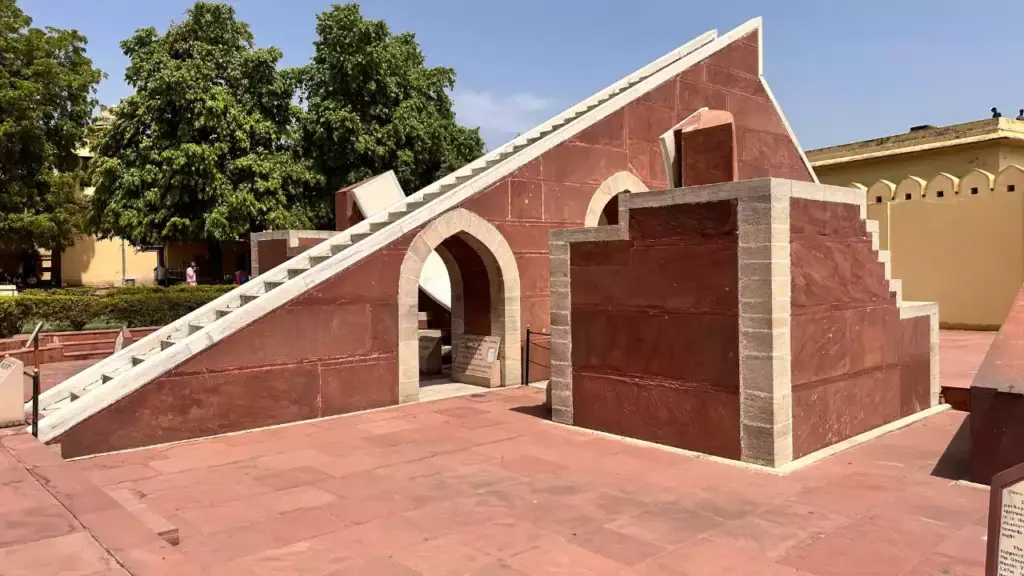
The complex houses 19 major architectural astronomical instruments (yantras).
- The Samrat Yantra: The absolute highlight of the complex. This is the world’s largest stone sundial, standing 27 meters (88 feet) tall. Its shadow moves visibly at a speed of 1 millimeter per second, capable of measuring local time to an astonishing accuracy of just 2 seconds.
- Jai Prakash Yantra: Two hemispherical bowl-based sundials that map the inverted image of the sky, allowing astronomers to track the precise position of celestial bodies.
- Rasivalaya Yantra: A unique set of 12 instruments, each measuring the coordinates of celestial bodies when they pass through the 12 signs of the zodiac.
4. Strict Field Operational Intelligence & Protocols
- The Scientific Guide Mandate: Jantar Mantar cannot be navigated by a standard historical guide. This site requires a highly specialized “Scientific Heritage” guide.
- Avoiding Client Boredom: Without a specialized expert vetted to explain the complex astronomical purpose of the tools in engaging layman’s terms, the site appears as nothing more than a hot field of giant, confusing stone shapes, severely risking client boredom.
| Monument | Primary Material | International Fee | Security Fee / Extra | B2B Strategy | Core Narrative Focus | Optimal Arrival Slots |
| Amer Fort | Red Sandstone & Marble | ~₹500 – ₹1,000 | ~₹1,200 (Elephant Ride / Transport) | The Sheesh Mahal Rush & Early Access | Martial Majesty & Rajput/Mughal Fusion | 8:00 AM (Mandatory) |
| Nahargarh Fort | Sandstone & Plaster | ~₹200 | None | The Farewell Briefing / Sunset Vantage | Defensive Citadel turned Royal Retreat | Late Afternoon / Sunset |
| The City Palace | Sandstone & Marble | ~₹700 – ₹4,000 | ~₹50 (Camera) / ~₹150 (Golf Cart) | Behind the Scenes Private Rooms Tour | The Seat of the Maharaja & Urban Power | Mid-Morning |
| Hawa Mahal | Pink & Red Sandstone | ~₹200 | Cafe/High-Tea Costs | Rooftop High-Tea Photography / Skip Interior | Courtly Aesthetics & Royal Privacy | Afternoon |
| Jantar Mantar | Local Stone & Marble | ~₹200 | ~₹300 – ₹500 (Scientific Guide) | Specialized Scientific Guide Mandate | World-Class Scientific Heritage | Pre-Noon |