


Rameswaram holds an unparalleled and highly revered space in Hindu tradition, particularly for rites honoring our ancestors. Among the most profound and vital rituals performed on this holy island is the Thila Homam in Rameswaram. Often undertaken as a deeply personal spiritual duty, the Thila Homam in Rameswaram serves as a bridge of gratitude between the living and the departed.
If you or your family are planning to perform a Thila Homam in Rameswaram, here is everything you need to know—from the profound purpose behind it to the precise rules of attire and diet.
Why is this Pooja Done?
In Hindu tradition, it is believed that we carry a debt to our ancestors (Pitru Rina). The Thila Homam in Rameswaram is a specialized ancestral ritual that combines a Homam (sacred fire ceremony) with Shraddham (offerings to the departed).
It is performed to appease the souls of deceased ancestors, ensuring their peaceful transition into the afterlife and aiding them in attaining Moksha (liberation). Furthermore, a Thila Homam in Rameswaram is a powerful remedy to clear Pitru Dosha (ancestral curses or karmic blockages in the family lineage), which can manifest as persistent life struggles, health issues, or delays in marriage and childbirth.
Where and When is it Performed?
While Rameswaram is famous for the Ramanathaswamy Temple, the Thila Homam in Rameswaram is not performed inside the main temple precincts.
Typically, a pilgrimage to Rameswaram spans two days. On the first day, pilgrims take holy dips (Snanam) in the Agni Theertham (the sea) and the 22 sacred temple wells. The Thila Homam in Rameswaram is performed on the second day. To ensure strict purity, privacy, and an uninterrupted environment for your Thila Homam in Rameswaram, this ritual takes place at the Vadyar’s (priest’s) home or a designated mutt.
Thila Homam is a “Shanti” ritual and is strictly NOT allowed inside the main Ramanathaswamy Temple. It is traditionally performed at private halls near the temple or at Dhanushkodi (Vibhishana Theertham).
With Whom Should it be Performed?
The primary performer of the Thila Homam in Rameswaram is the Karta (usually the eldest son or authorized male descendant of the deceased). However, the Karta should not do this alone if he is married. It is strictly recommended that he perform this ritual alongside his wife (Dharmapatni), as her presence is required to complete the spiritual and Vedic dynamic of the ceremony. The entire process is guided step-by-step by an experienced Vadyar (Vedic priest).
The Core Requirement: Feeding the Brahmanas
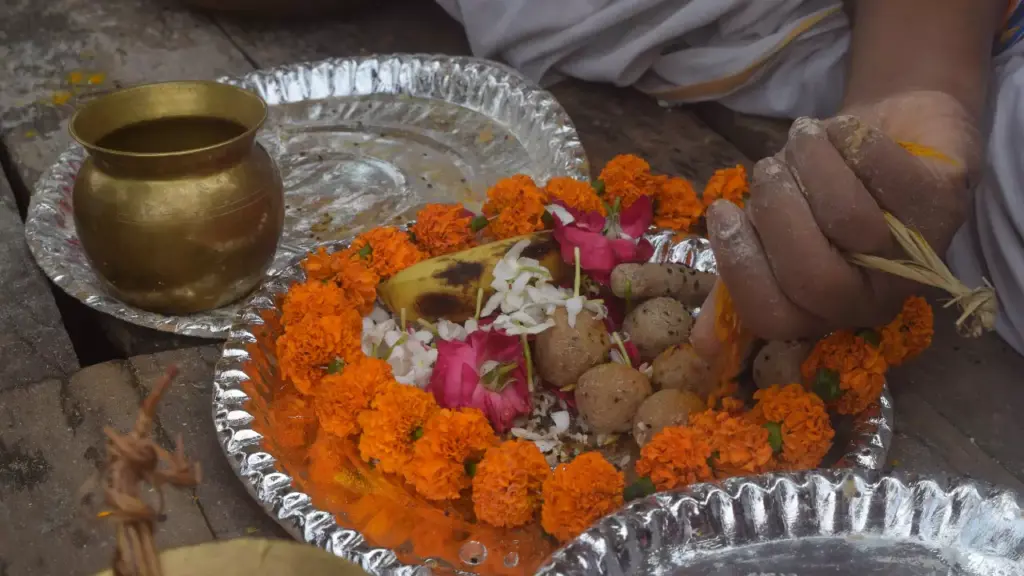
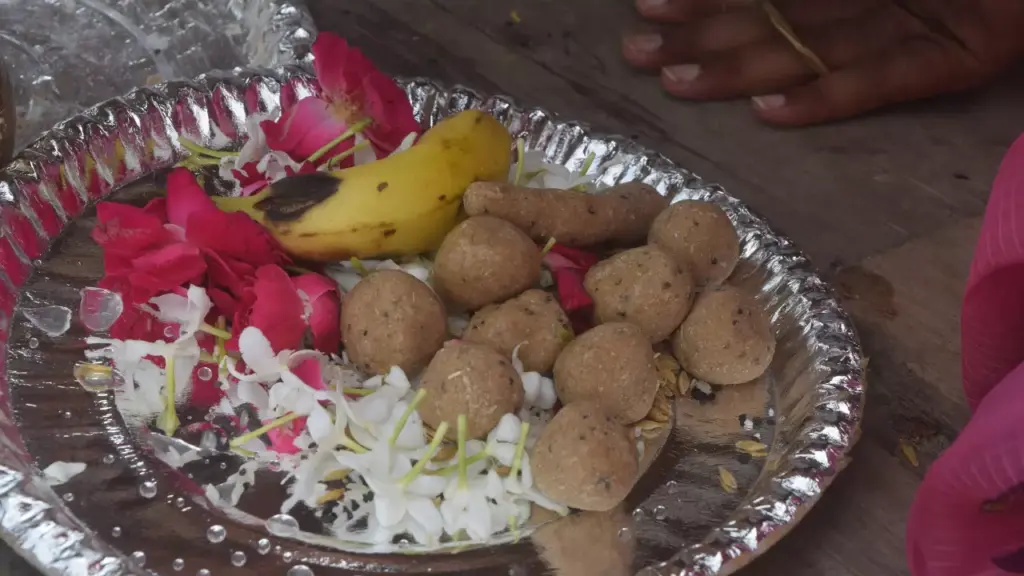
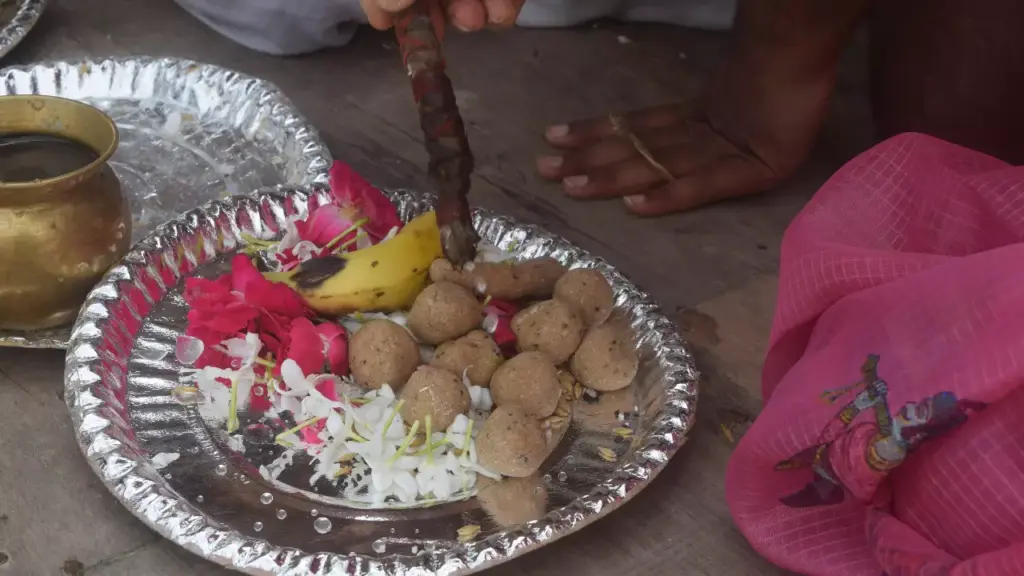
The most vital article and requirement for the Thila Homam in Rameswaram is the food and meals for feeding the Brahmanas. During the ritual, invited Brahmanas are seated and treated as the living representatives of the ancestors. The Karta provides them with an elaborate, freshly cooked feast. Offering food (Brahmana Bhojanam), along with Dakshina (monetary donation) and Vastram (clothes), is symbolic of feeding and satisfying the hunger of one’s ancestors.
What Should be Worn?
Purity in attire is non-negotiable for a Thila Homam in Rameswaram:
- For Men: The Karta must wear a traditional, unstitched white cotton Veshti (dhoti) and an Angavastram (shoulder cloth). The upper body is typically kept bare so the sacred thread (Yajnopavitam) can be easily shifted during the ancestral rites.
- For Women: The Karta’s wife must wear a traditional saree. For strict followers, a 9-yard saree (Madisar) is worn, but a regular silk or cotton saree is perfectly acceptable. Hair must be neatly tied up.
Note: Leather items like belts, wallets, or watch straps are strictly prohibited during the ceremony.
What Should be Eaten?
The dietary rules surrounding a Thila Homam in Rameswaram demand immense discipline:
- Fasting: The Karta and his wife must observe a strict fast (Upavasa) on the morning of the second day until the Thila Homam in Rameswaram is completely finished.
- The Meal: Once the ritual concludes and the Brahmanas have been fed, the family partakes in the Prasadam (the same food prepared for the Brahmanas).
- Dietary Restrictions: The food must be 100% Sattvic. It is entirely vegetarian, prepared without any onions, garlic, or heavy spices. Items like black sesame seeds (til), plantain, and specific lentils play a prominent role. Consumption of outside food, alcohol, or non-vegetarian food is a strict taboo during the entire trip.
Who Should Perform Thila Homam?
Indications that this ritual is needed
- Unnatural Deaths: For ancestors who passed away due to accidents, suicide, drowning, or sudden illness.
- Pitru Dosha: If your horoscope indicates severe Pitru Dosha causing marriage delays or childlessness.
- Family Disharmony: Recurring disputes, financial losses, or health issues in the family lineage.
- Psychological Issues: If family members suffer from unexplained anxiety, depression, or fear.
The Benefits of Thila Homam in Rameswaram
The completion of this ritual brings immeasurable peace to both the departed and the living. By satisfying the ancestors, the family receives their boundless blessings. Materially and spiritually, it removes unseen obstacles in career and business, brings harmony to family relationships, ensures the birth of healthy progeny, and grants the Karta a profound sense of mental peace.
Performing the Thila Homam in Rameswaram is not just a ritual; it is the highest expression of love, respect, and gratitude to the roots from which we have grown.
Thila Homam FAQs
Common questions from devotees
Can Thila Homam be done on any day?
While it can be done on any day, Amavasya (New Moon) and Krishna Paksha (waning moon phase) are considered the most auspicious and effective.
What is the dress code?
Rameswaram has a strict dress code. Men must wear a Dhoti (Veshti) and Angavastram (no shirts). Women should wear a Saree.
Can women perform this ritual?
Generally, men perform the last rites. However, if there are no male heirs, women can perform it under the guidance of a priest, or attend while a priest performs the Sankalp.