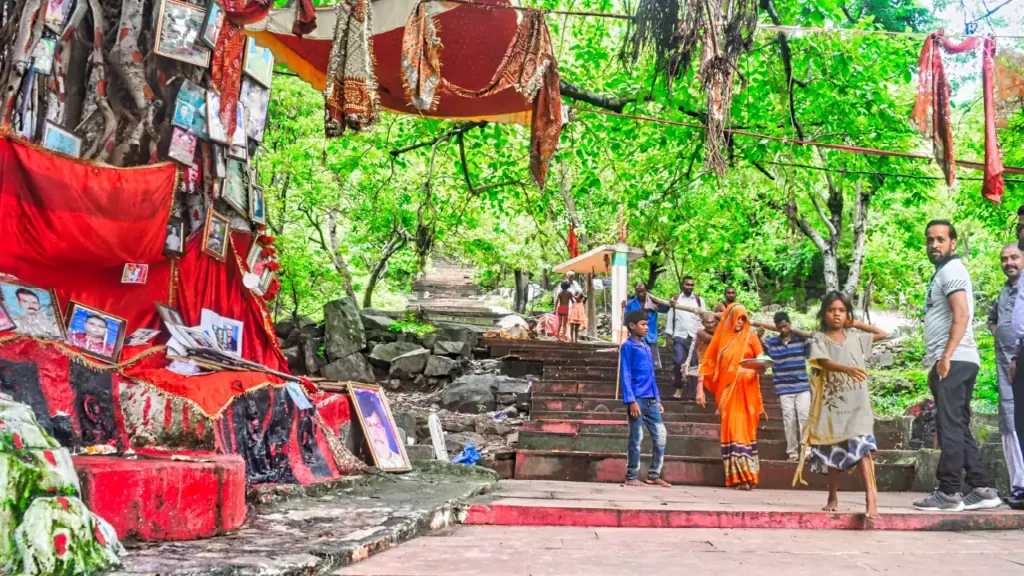
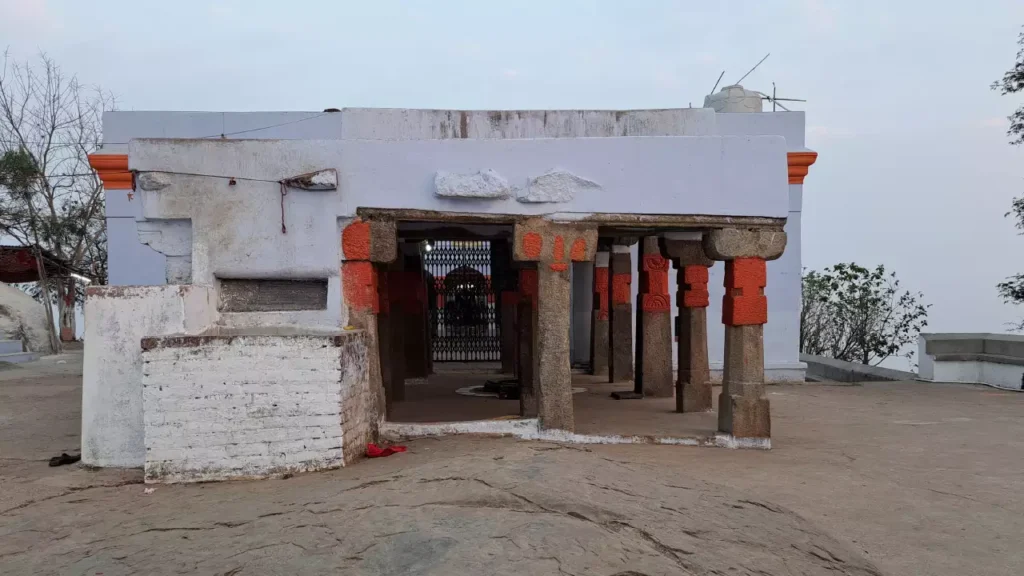
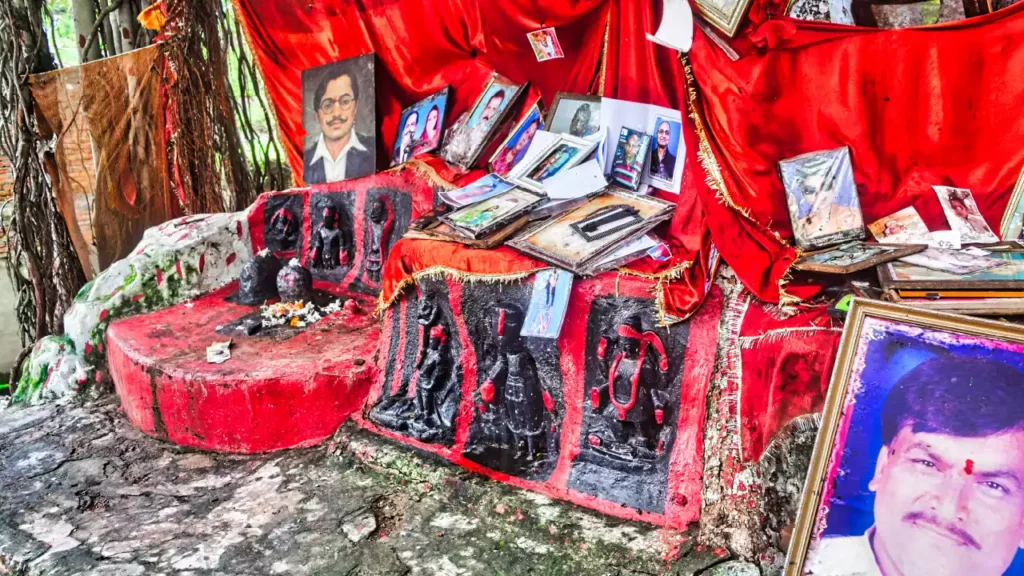
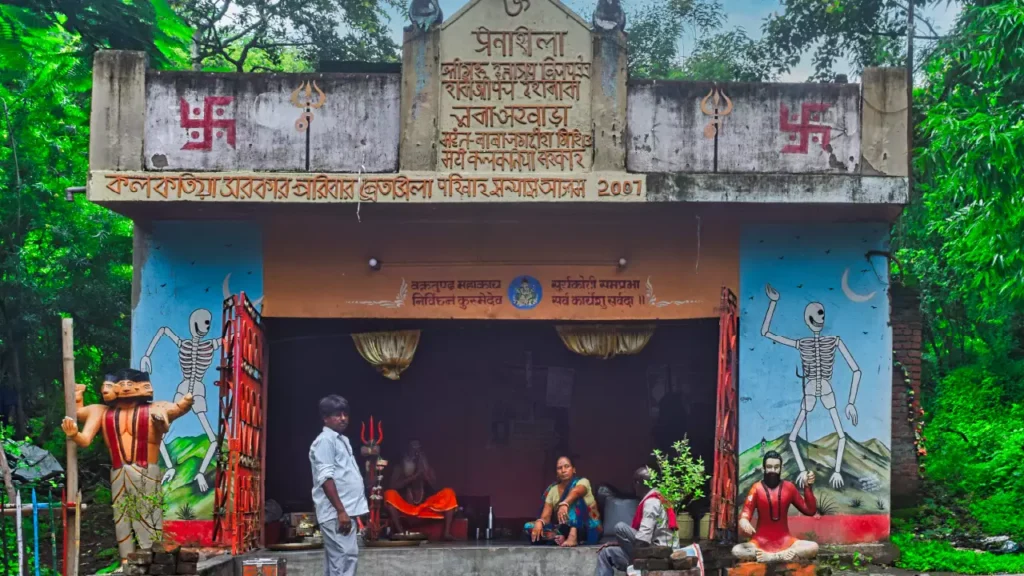
Pretshila — literally “the hill of the pretas” (departed souls) — rises approximately 8 kilometres to the northwest of Gaya city and is one of the most important and atmospherically distinctive sites on the Gaya pilgrimage circuit. At its summit stands a temple dedicated to Lord Yama, the Hindu god of death and the ruler of the realm of the departed, making Pretshila one of the very few places in India where Yama is the primary deity rather than a subordinate figure in a larger pantheon. For pilgrims performing Pind Daan at Gaya, a visit to Pretshila is considered essential — it is the point in the circuit that most directly addresses the departed souls themselves.
Lord Yama — The Judge of the Dead
In Hindu cosmology, Yama is the lord of Dharmaraja — the realm where souls go after death to receive the accounting of their actions (karma) in life. He is described in the Vedas as the first mortal who died and thus the first to traverse the path to the afterlife, making him both the king and the guide of the realm he governs. The Rigveda hymns addressed to Yama are among the oldest religious literature associated with death and the afterlife anywhere in the world.
Yama is depicted in iconography as a powerful figure of dark complexion, holding a mace (danda) and a noose (pasha), riding a buffalo. He is accompanied by his two dogs, Shyama and Shabala, who guard the gates of his realm, and by his scribe Chitragupta, who maintains the record of every soul’s deeds. In his capacity as Dharmaraja — the king of righteousness — Yama is not merely a figure of fear but of impartial justice. The Pind Daan performed at Gaya is directed in part to securing Yama’s mercy for the departed, and a visit to his temple at Pretshila is a direct address to the judge who holds jurisdiction over them.
Rani Ahilyabai Holkar and the Temple
The current temple at the summit of Pretshila was originally built by Rani Ahilyabai Holkar of Indore, one of the most remarkable rulers of 18th-century India. Ahilyabai, who ruled the Holkar kingdom from 1767 to 1795, is remembered not only as an exceptional administrator but as a prolific patron of religious architecture. She funded the construction or restoration of temples across the subcontinent — at Varanasi, Dwarka, Somnath, Gaya, Ujjain, and dozens of other sites. The Pretshila temple was one of her projects at Gaya, where she also funded work at the Vishnupad Temple (the silver-plated footprint of Vishnu) and several ghats along the Falgu.
The temple has been renovated multiple times since Ahilyabai’s era, and the present structure reflects these successive layers of reconstruction. The original architectural character has been partially preserved in the lower courses of the sanctum walls, while the upper sections and the mandap are later work.
The Ramkund — Lord Rama’s Sacred Pond
Near the Yama temple, close to the hilltop, is a pond called Ramkund. According to tradition, Lord Rama bathed in this pond during his visit to Gaya to perform Pind Daan for his father King Dasharatha. The Ramkund is one of several sites in Gaya associated with Rama’s presence, all of which carry the dual significance of the Ramayana narrative and the ancestral rite context that brought Rama to this city. Pilgrims typically offer water at Ramkund — a brief tarpan — before or after visiting the Yama temple.
The Ritual Role of Pretshila in Pind Daan
Gaya’s full Pind Daan circuit traditionally includes 45 sites (known as Gayatirths or the Forty-five Sacred Places of Gaya), each of which provides a different dimension of the ancestral offering. Pretshila occupies a specific position in this circuit: it is where the departed souls (pretas) are understood to wait before their fate is determined. By performing Pind Daan at Pretshila, the pilgrim is not only making an offering at the Vishnupad ghat or the Phalguni riverbank — they are addressing the departed souls at the precise stage in their post-death journey where they are most in need of support.
The ascent of Pretshila is itself considered meritorious. The scriptures associated with Gaya state that salvation is attained by visiting this site and making the climb — a long-standing popular belief that ensures the hill remains in regular use throughout the year and not only during the Pitrupaksha season. Families performing Pind Daan at Gaya typically ascend Pretshila on the second or third day of their ritual circuit, after completing the main offerings at Vishnupad Temple and Phalguni Ghat.
Pitrupaksha — The Fifteen Sacred Days
During the fifteen days of Pitrupaksha (the fortnight in autumn dedicated to ancestral rites, running from Purnima to Sarva Pitru Amavasya), Pretshila Hill becomes one of the most crowded sites in all of Gaya. Thousands of pilgrims make the ascent each day during this period, carrying offerings of sesame, flowers, and water. The atmosphere at the summit during Pitrupaksha — with the view across the Gangetic plain, the sound of conch shells and mantras, and the incense rising from the temple — is one of the most distinctive sensory experiences the Gaya pilgrimage circuit offers.
The Climb and What to Expect
The ascent to the summit is managed via a stone path that winds up the hillside. The climb takes approximately 20 to 30 minutes at a moderate pace. The path passes several smaller shrines and resting platforms where pilgrims can pause. At the summit, in addition to the Yama temple and the Ramkund, there are usually priests available to assist with brief ritual offerings. The view from the top encompasses the Gaya city skyline, the silver thread of the Falgu River, and — on clear days — the distant landscape of rural Bihar stretching to the horizon.
Visiting Information
- Location: 8 km northwest of Gaya city centre; approximately 13 km from Gaya Junction railway station
- Access: Auto-rickshaw or taxi from Gaya; approximately 20–30 minutes by road
- Timings: Accessible from dawn to dusk; Yama temple open approximately 6:00 AM to 7:00 PM
- Entry: No fee; puja materials available from vendors at the foot of the hill
- Climb: 20–30 minutes on a stone path; manageable for most pilgrims; no dangerous sections
- Best time: Early morning for views; Pitrupaksha (September-October) for the full ritual context
- What to carry: Water, comfortable footwear, puja offerings (sesame, flowers, water in a small container)
Pretshila is included in our structured Gaya Pind Daan tour package, which covers all ritual sites with pandit support and handles logistics including transport between sites. For a comprehensive guide to Gaya’s sacred geography and the best sequence for the pilgrimage circuit, see our Gaya travel guide.