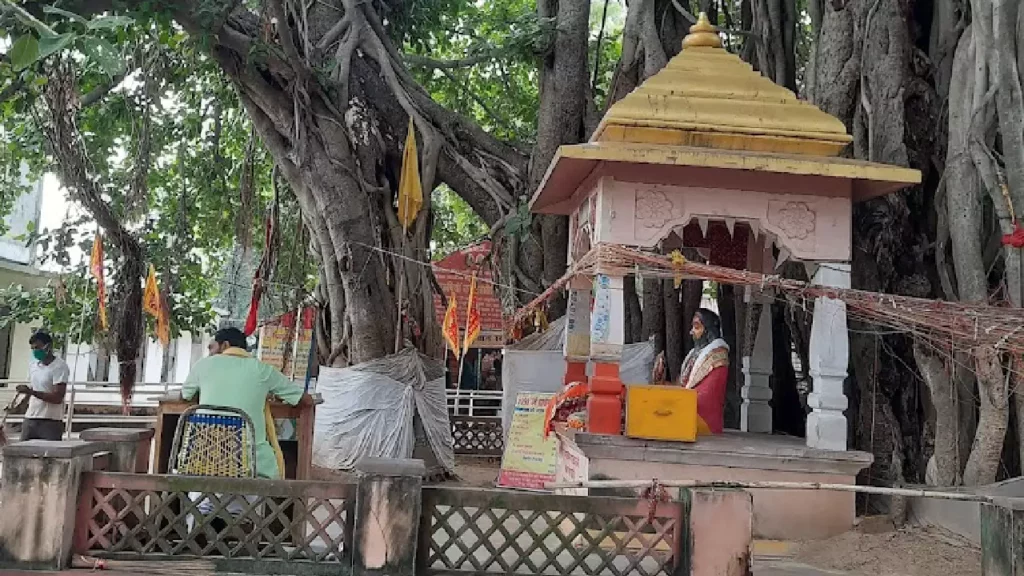
Vyas Gaddi at Naimisharanya stands at the very foundation of Hindu sacred literature. This is the place where Sage Vyasa — Veda Vyasa, the Maharishi who arranged the Vedas into their four classical divisions, authored the Mahabharata, and composed the 18 Mahapuranas — sat and performed the intellectual and spiritual work that shaped the entire written tradition of Hinduism. To visit Vyas Gaddi is to stand at the origin point of texts that have guided the spiritual lives of hundreds of millions of people across three millennia. There is no site in Hindu pilgrimage geography that carries a larger literary heritage.
Veda Vyasa: The Arranger of Sacred Knowledge
The very name “Veda Vyasa” means “the one who divided the Vedas” — vyasa in Sanskrit means to arrange or divide. Before Vyasa’s intervention, the Vedic knowledge that had been passed down orally through the Guru-Shishya (teacher-student) tradition existed as a single undifferentiated body. Vyasa saw that the age of Kali Yuga was approaching — an age of shortened human lifespan, diminished memory, and reduced capacity for the intense sustained study that the full Vedic tradition demanded. He understood that without systematic organisation, this knowledge would be lost.
Working at Naimisharanya, Vyasa divided the single Veda into four: the Rig Veda (hymns to the gods), the Sama Veda (musical chants), the Yajur Veda (ritual formulas), and the Atharva Veda (hymns for everyday life). He then transmitted each division to a specific student for further teaching and preservation: Paila received the Rig Veda, Vaishampayana the Yajur Veda, Jaimini the Sama Veda, and Sumantu the Atharva Veda. This act of systematic division and transmission through dedicated lineages is what preserved the Vedic tradition intact to the present day.
The seat at Naimisharanya from which Vyasa performed this work — the Vyas Gaddi — is therefore the conceptual birthplace of the organised Vedic tradition. It is not a metaphor. This is where the four Vedas, as separate texts with separate teaching lineages, came into existence.
The Mahabharata: Written at Naimisharanya
After organising the Vedas, Vyasa composed the Mahabharata — all 100,000 verses of it — at Naimisharanya. The Mahabharata is the longest poem ever composed in any language, and it contains within it not just the narrative of the Kuru-Pandava conflict but the Bhagavad Gita (the philosophical centrepiece of Hindu ethics and spirituality), the Anushasana Parva (on governance and duty), the Shanti Parva (on peace and liberation), and hundreds of subsidiary narratives covering every aspect of dharmic life. The Mahabharata describes itself as a fifth Veda — the Veda accessible to those who cannot master the technical language and ritual detail of the four classical Vedas.
Vyasa composed the Mahabharata in a state of divine inspiration and then faced a problem: the text was too vast and complex to be committed to writing without an equally gifted scribe. At this point, according to tradition, Lord Brahma suggested that Ganesh — the deity of wisdom and the remover of obstacles, who is also considered the patron of scribes — be engaged as the writer. Ganesh agreed, on the condition that Vyasa dictate without pause. Vyasa agreed, on the counter-condition that Ganesh not write a word whose meaning he had not understood. The two then worked together at Naimisharanya until the entire text was completed. The occasional complex verse in the Mahabharata that gives even scholars difficulty is said to be the result of Vyasa inserting deliberately abstruse passages to slow Ganesh down and give himself time to formulate the next section.
The 18 Mahapuranas: The Encyclopedia of Hindu Tradition
Vyasa’s third great work at Naimisharanya was the composition of the 18 Mahapuranas — the Vishnu Purana, the Bhagavata Purana, the Shiva Purana, the Devi Bhagavata Purana, the Brahma Purana, the Agni Purana, the Garuda Purana, the Brahmaanda Purana, and ten others. These texts are the popular scriptures of Hinduism — they encode in narrative form the cosmology, theology, mythology, ethics, ritual, and devotional practices that constitute everyday Hindu religious life. Every major festival, every major deity, every major pilgrimage site, every major ritual has its scriptural basis in the Puranas.
The Bhagavata Purana, which Vyasa composed as the culmination of his entire literary output (advised by his own teacher Narada that his previous works, for all their greatness, had not yet given sufficient emphasis to pure devotion to Vishnu), is the most widely read of the Puranas today. It is the source of the Krishna narrative that has inspired the Bhakti movement across India, the devotional songs of the Alvars and the Nayanmars, the art and literature of Rajasthan and Mathura, and the philosophical framework of Vaishnavism in all its forms.
The Gaddi: Physical Seat of Cosmic Composition
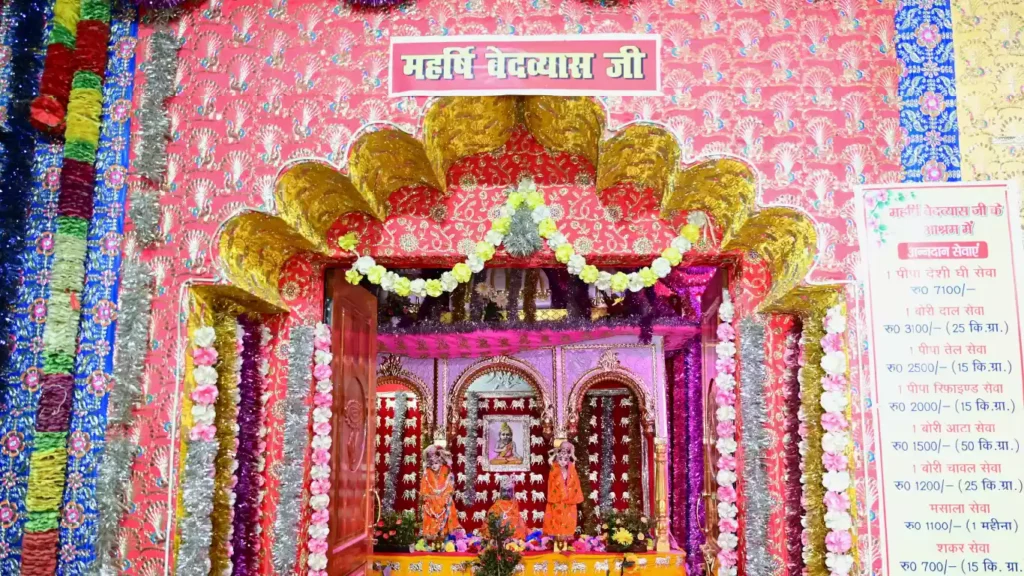
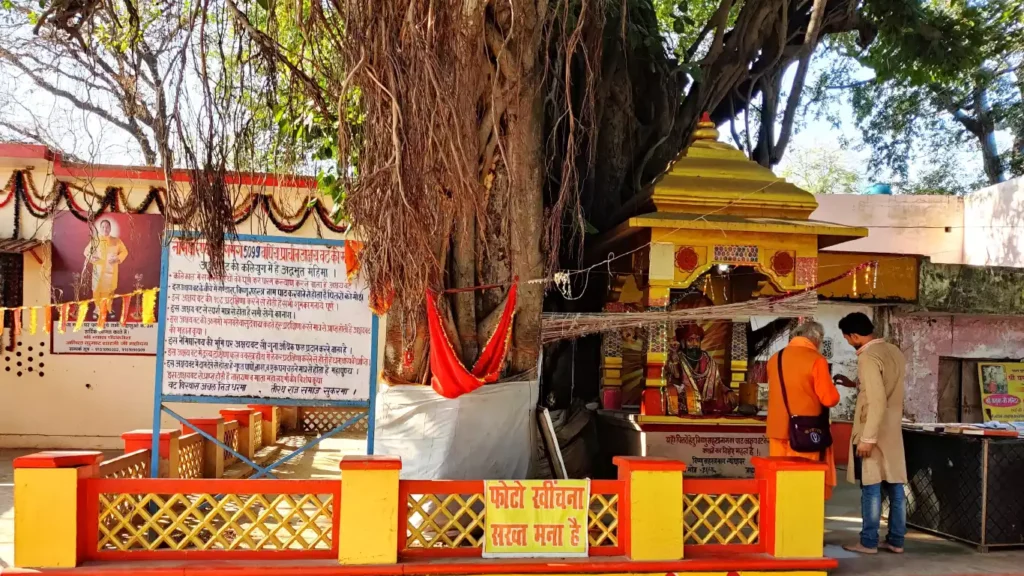
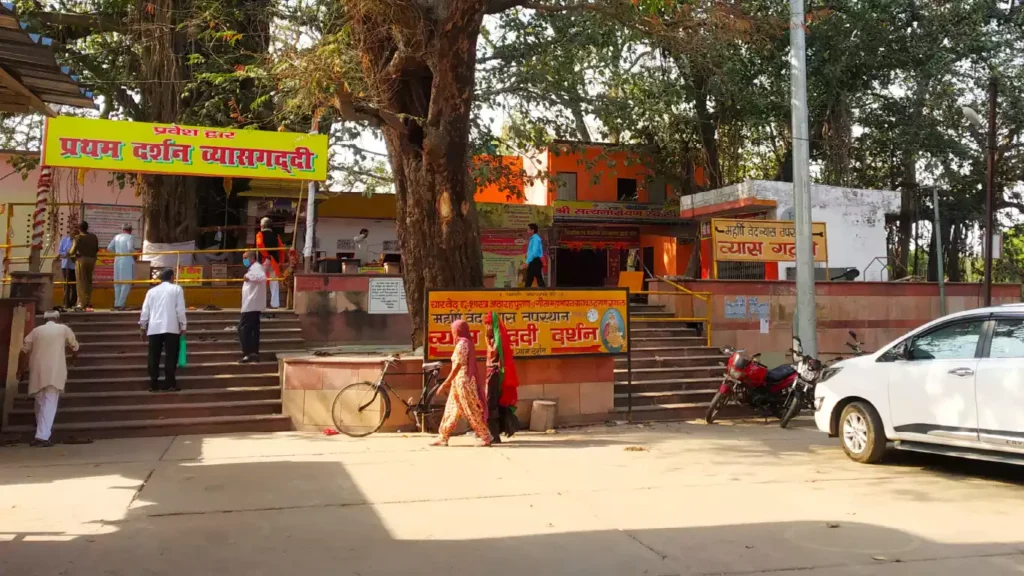
The Vyas Gaddi today is a raised platform with a shrine to Vyasa — depicted as an elderly sage with matted hair, seated in contemplation. The atmosphere at the gaddi is one of extraordinary quiet, given that this is a site of immense reputed significance. The elevated position of the platform gives a view of the surrounding forest and temple complex, reinforcing the sense of the sage having sat here in a position that was both physically elevated and cosmically central.
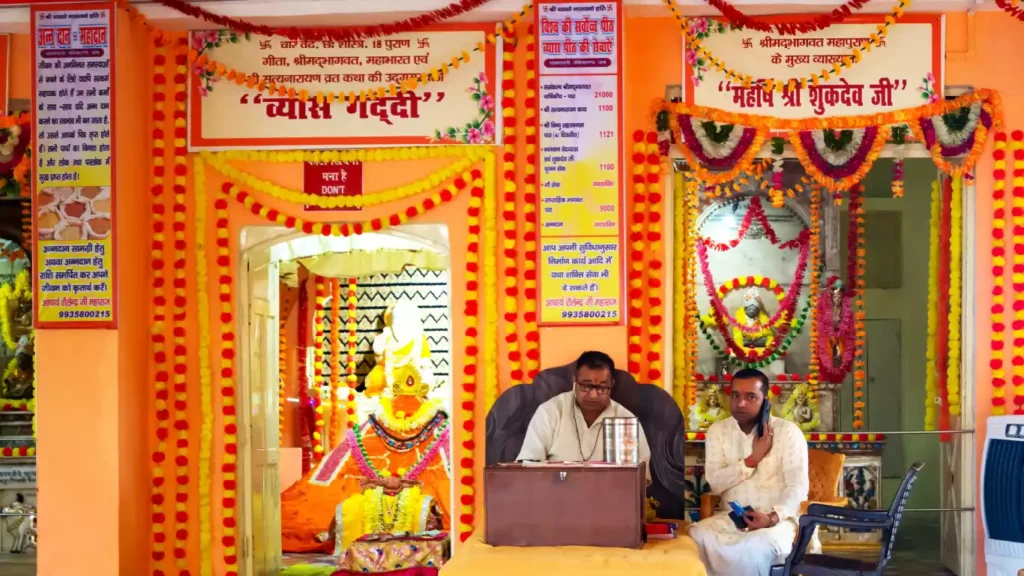
Devotees who visit Vyas Gaddi typically offer flowers and lamp (deepa) at the shrine to Vyasa and sit in quiet prayer or meditation before moving through the rest of the Naimisharanya circuit. Many come specifically on the occasion of Guru Purnima — the full moon in the month of Ashadha (June-July) — which is the day traditionally associated with Vyasa and observed across all Hindu traditions as a day to honour one’s teacher. On Guru Purnima, Vyas Gaddi sees its largest gathering of the year, with recitations from the Bhagavata and Mahabharata and discourses on Vyasa’s life and contribution.
Vyas Gaddi and Suta Gaddi: Two Ends of a Transmission
Vyas Gaddi and Suta Gaddi together form the most significant literary-transmission complex in the Hindu pilgrimage world. Vyasa composed the texts; Suta narrated them publicly to the assembled rishis. The two gaddis are within the same sacred precinct of Naimisharanya, and pilgrims typically visit both on the same day as part of the core Naimisharanya circuit. The juxtaposition makes a profound point about knowledge: composition alone is not enough. Transmission — the act of one human being receiving from another, through voice and presence and relationship — is what keeps knowledge alive. Naimisharanya embodies both ends of that process.
Planning Your Visit to Vyas Gaddi
Vyas Gaddi is located within the Naimisharanya pilgrimage complex in Sitapur district, Uttar Pradesh, approximately 90 kilometres from Lucknow. It forms part of the standard Naimisharanya circuit alongside Chakra Teerth (the sacred pond at the heart of the forest), Suta Gaddi, Dadhichi Kund, Lalita Devi Temple, and Hanuman Garhi. The best season to visit is October through February, when the forest is at its most beautiful and the temperature is comfortable for walking between sites. Guru Purnima (June-July) and Kartik Purnima (October-November) are the two most significant festival occasions if you want to experience the site at its most devotionally alive.
See our Naimisharanya travel guide for a complete plan of the pilgrimage circuit, practical transport information from Lucknow, accommodation options in and around the forest, and the best time to visit for different types of pilgrim. Our UP Pilgrimage tour package covers the full sacred circuit of North India including Naimisharanya, Prayagraj, Ayodhya, and Varanasi in a single well-organised journey.