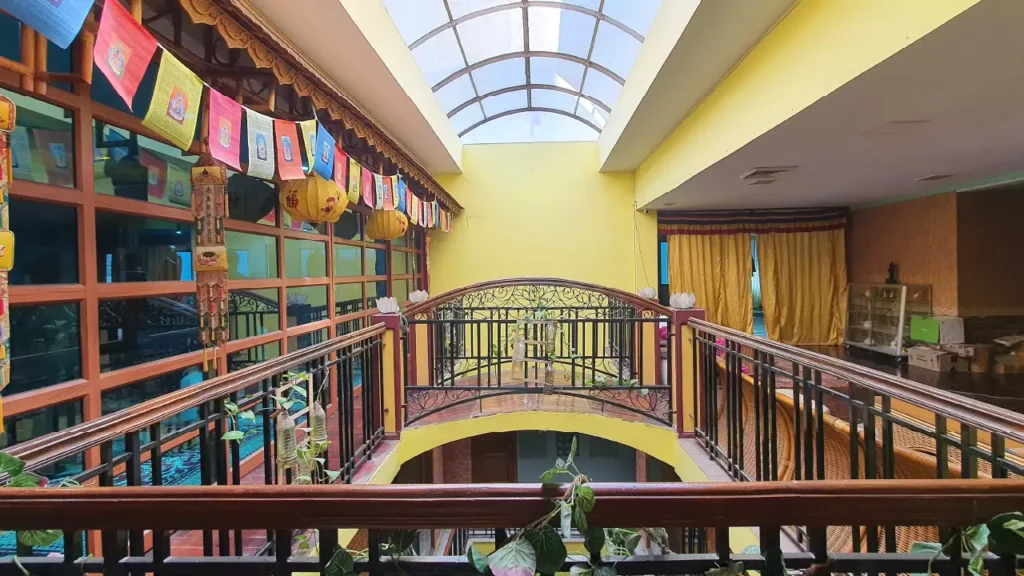
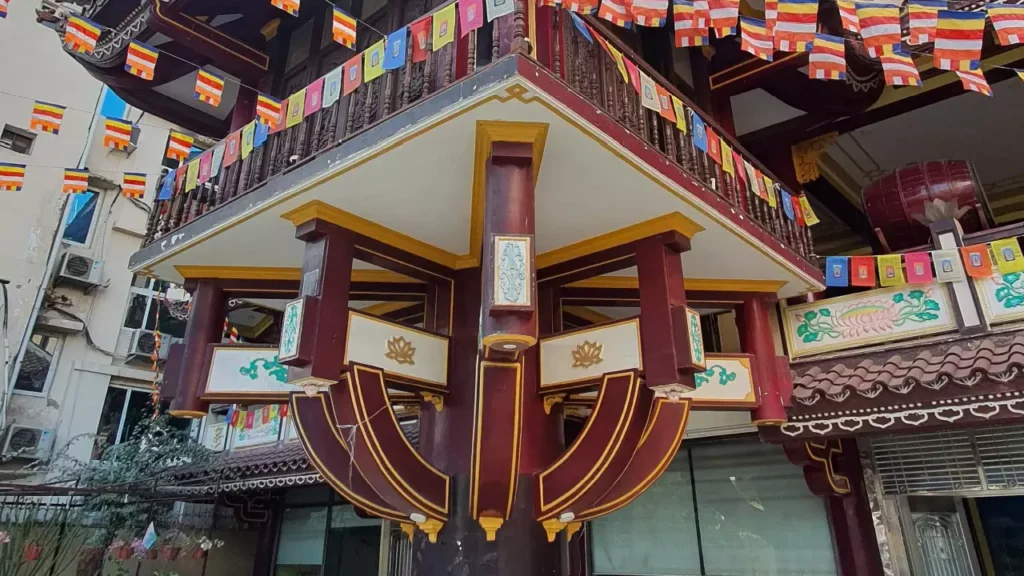
The Vietnamese Temple — formally known as the Vietnam Phat Quoc Tu — is one of the younger international monasteries in Bodh Gaya, constructed in 2002 by the Vietnamese government as a permanent marker of Vietnamese Buddhism at the site of the Buddha’s enlightenment. Located 500 metres from the Mahabodhi Temple and 1 km from Bodh Gaya Bus Station, it sits next to Kalachakra Maidan and belongs to the cluster of Southeast and East Asian monasteries that define the international character of modern Bodh Gaya.
Why Vietnam Built a Temple Here
Buddhism arrived in Vietnam in the first and second centuries CE through two routes: directly from India via sea trade, and southward from China after its own transformation of Indian Buddhist teachings. Vietnamese Buddhism absorbed influences from both Theravada (common in mainland Southeast Asia) and Mahayana (dominant in China and East Asia), creating a distinctive syncretic practice that remains central to Vietnamese cultural and spiritual life.
The construction of a permanent monastery at Bodh Gaya in 2002 was part of a broader Vietnamese Buddhist revival after the economic reforms of the late 1980s and 1990s that allowed religious institutions to function more openly. By establishing a temple at the Buddha’s enlightenment site, Vietnamese Buddhism was asserting its direct connection to the original source of the teachings — an important symbolic gesture for a tradition that had weathered centuries of political turbulence.
Architecture — Vietnamese Buddhist Style
The Vietnamese Temple’s architecture is immediately distinctive from the other international monasteries nearby. While the Chinese Temple uses a traditional Han Chinese monastery layout and the Bhutanese monastery reflects Himalayan dzong design, the Vietnamese temple draws on the architectural vocabulary of Vietnamese pagodas — a style that blends Chinese imperial influences with local Vietnamese sensibilities developed over fifteen centuries of temple building.
The entrance gate is multi-tiered, with upturned eaves at each level and decorative ridge finials in the form of mythological sea-dragons (rồng), a symbol of protection and auspiciousness in Vietnamese culture. The colour palette is more restrained than the Chinese Temple — predominantly ochre and terracotta with gold accents — giving the building a warm, grounded quality. The surrounding grounds are landscaped with tropical plants and small reflecting pools, creating a sense of enclosure and peace that sets the temple apart from the busier areas nearby.
The Avalokitesvara Statue
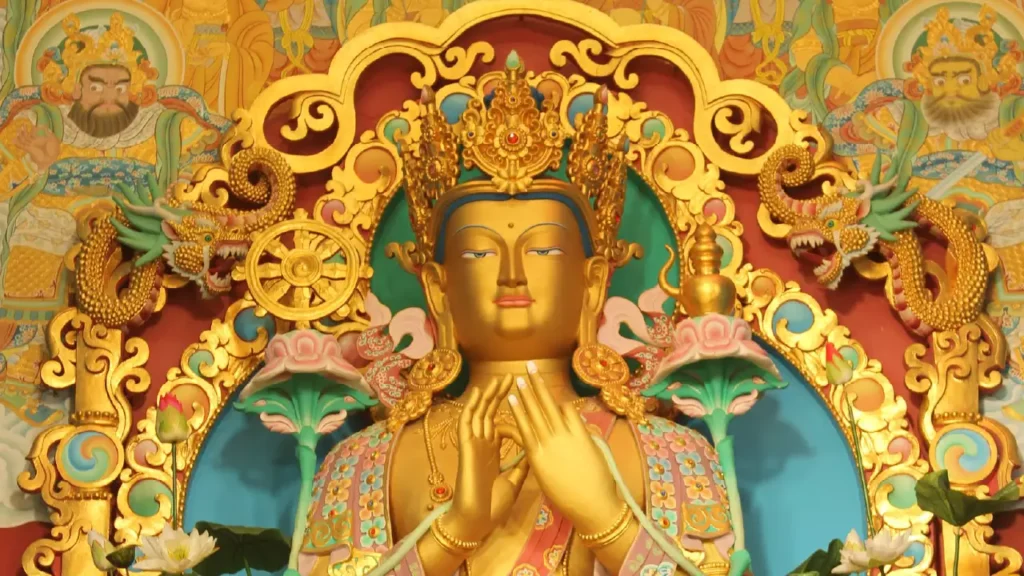
The temple’s most celebrated feature is a large figure of Avalokitesvara — the Bodhisattva of Compassion — depicted in the Vietnamese artistic tradition as the smiling “Maitreya” or “Happy Buddha” form. This figure, which visitors sometimes refer to as the Avalokiteswara statue, is placed in the main courtyard where it is visible immediately upon entering the temple compound. The expression on the statue’s face — open, gentle, with a quality of unhurried goodwill — creates a strong first impression that many visitors find unexpectedly moving.
In Vietnamese Buddhist practice, Avalokitesvara (known as Quan Am in Vietnamese) is one of the most widely venerated figures, regarded as the embodiment of compassionate action in the world. The statue at Bodh Gaya represents this figure in a form that Vietnamese Buddhists immediately recognise and feel spiritually connected to.
The Main Shrine and Prayer Hall
Inside the main building, the prayer hall follows the standard Vietnamese pagoda layout: a sequence of progressively more sacred spaces, from an outer hall for general visitors through to the inner sanctuary where the primary Buddha image is enshrined. The central figure is a gilded Shakyamuni Buddha in the traditional meditation posture, flanked by Avalokitesvara and Ksitigarbha (the Bodhisattva associated with the afterlife and the liberation of those in difficult states of existence — a particularly significant figure for Buddhist communities that perform ancestral rites).
The walls of the prayer hall are decorated with lacquered panels in the Vietnamese style, depicting scenes from the life of the Buddha and key moments in the transmission of Buddhism to Vietnam. These are not purely decorative — they serve an educative function for Vietnamese pilgrims who may be visiting Bodh Gaya for the first time and want to understand the site’s relationship to the tradition they practice at home.
Meditation and Retreat
The temple offers facilities for meditation practice and short retreats, particularly during the main pilgrimage season between November and February. Vietnamese Buddhist monks and nuns who reside at the temple can arrange guidance sessions for practitioners familiar with Vietnamese Zen (Thiền) and Pure Land Buddhist methods. The temple’s courtyard garden is open for walking meditation throughout visiting hours.
Visiting Information
- Location: Adjacent to Kalachakra Maidan, 500 m from Mahabodhi Temple, Bodh Gaya
- Timings: 7:00 AM to 12:00 PM and 2:00 PM to 6:00 PM
- Entry: Free; donations accepted
- Dress code: Modest clothing required; footwear off at the entrance
- Photography: Permitted in the courtyard and garden; restricted inside the prayer hall
- Best time to visit: November to February, when the temple hosts special programs during peak Buddhist pilgrimage season
See our Bodh Gaya travel guide for a complete overview of the temple circuit, practical logistics, and the best way to structure a day visiting the international monasteries alongside the Mahabodhi complex. For pilgrims pairing Bodh Gaya with ancestral rites in Gaya, our Gaya Pind Daan tour package covers both cities in a single organised itinerary.