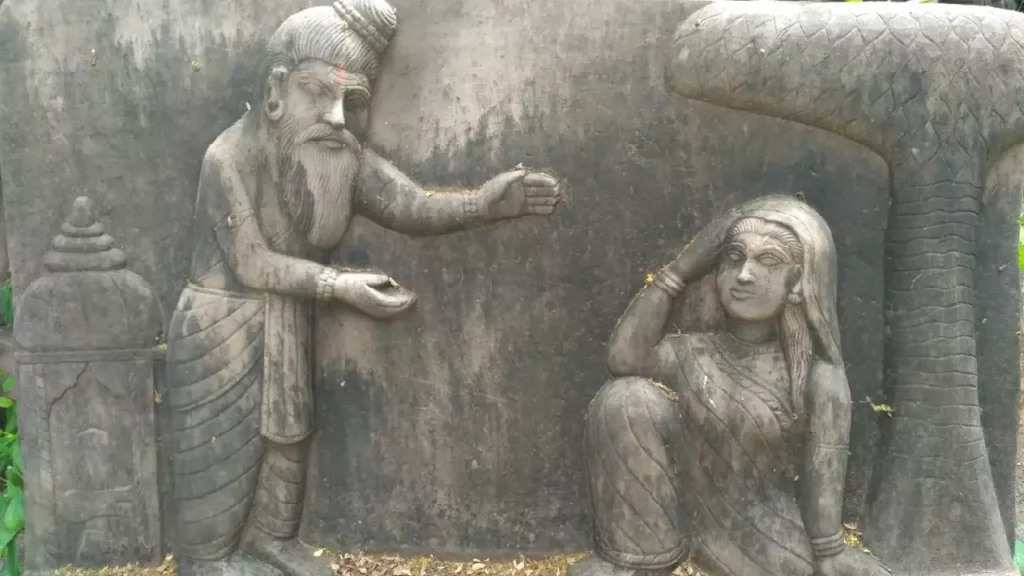
Valmiki Ashram in Chitrakoot is one of the most layered sacred sites in all of Hindu pilgrimage tradition. This is not just a place associated with the Ramayana — it is the place where the Ramayana itself was written. Sage Valmiki, the Adikavi (first poet) of Sanskrit literature, composed the Valmiki Ramayana here, giving the story of Ram its first written form and setting in motion one of the most influential literary and religious traditions in human history. Beyond its literary significance, this ashram is the birthplace of Luv and Kush, the twin sons of Ram and Sita, which makes it a site of extraordinary personal importance in the Ram story.
Valmiki: The Adikavi of Sanskrit Literature
Valmiki’s own story before he became a sage is one of the most celebrated transformation narratives in Hindu tradition. Born as Ratnakar, he was a highway robber before an encounter with the divine sage Narada led him to a profound spiritual awakening. Narada asked him whether his family would share the burden of his sins — and when Ratnakar discovered they would not, he renounced his former life, performed intense tapasya (austerity), and emerged transformed. During his meditation, an anthill (valmika in Sanskrit) grew over his body — which is how he received his name, Valmiki, the one born from an anthill.
This transformation story is important context for the ashram. Valmiki was not a Brahmin born into learning — he was a man who had lived on the margins of dharma and found his way back through sincere spiritual effort. His ashram in Chitrakoot, therefore, carries the possibility of transformation for all who visit: the message being that the path to the sacred is open regardless of one’s past.
The Composition of the Ramayana
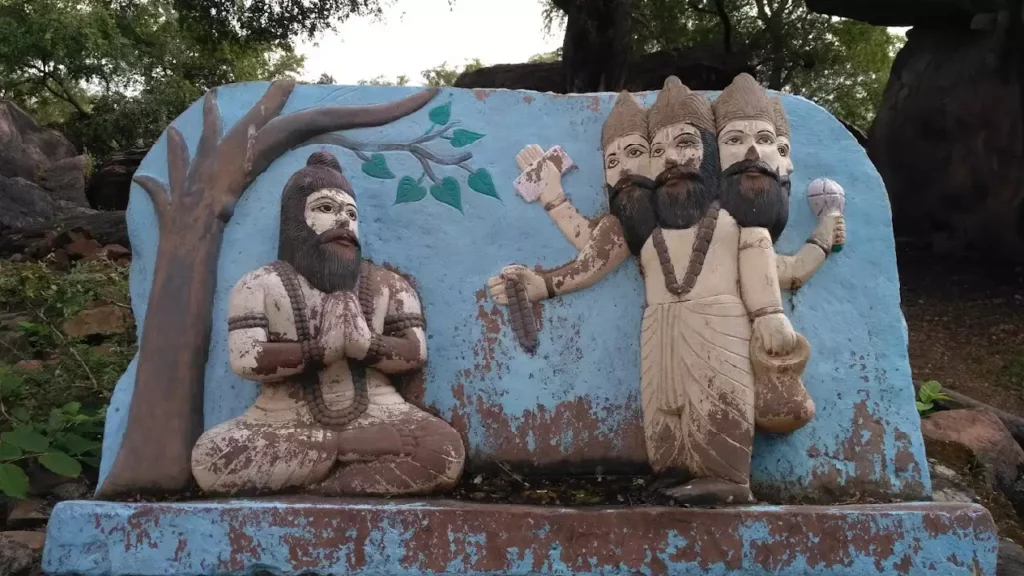
The Valmiki Ramayana opens with a remarkable scene: Valmiki witnesses the killing of a Krauncha bird by a hunter while the bird is in the act of mating, and in his anguish, a verse spontaneously emerges from him — the first shloka of Sanskrit poetry. This moment of poetic birth in response to sorrow is called the Adikavya (original poem) moment. The Brahma then appears to Valmiki and instructs him to compose the entire story of Ram, promising that his vision will be true.
Valmiki composed the 24,000 verses of the Ramayana at his ashram. The text he produced is not simply narrative poetry — it is the foundational scripture of one of Hinduism’s major traditions, the source text for every subsequent retelling of Ram’s story, from Tulsidas’s Ramcharitmanas in the 16th century to the countless regional versions across South and Southeast Asia. When you walk the grounds of Valmiki Ashram in Chitrakoot, you are walking where this foundational act of composition happened.
Sita’s Refuge and the Birth of Luv-Kush
After Ram and Sita’s return to Ayodhya, the Uttara Kanda (final section) of the Ramayana describes a deeply painful episode: Ram, responding to public rumours about Sita’s purity during her captivity in Lanka, asks Lakshman to take her to the forest. Sita, pregnant with Ram’s children, is left at the edge of the forest alone. It is to Valmiki’s ashram that she comes for refuge, and it is here that she gives birth to Luv and Kush, her twin sons.
Valmiki and the women of his ashram raised the twins in the forest. They grew up not knowing their identity as Ram’s sons — they knew themselves as Valmiki’s disciples, learning the Ramayana itself from the sage who had composed it. When Ram eventually performed the Ashwamedha Yagna (horse sacrifice), the horse entered the forest near Chitrakoot, and Luv and Kush — not knowing the horse belonged to their father — captured it and defeated the army sent to retrieve it. This episode led to the eventual reunion of Ram and his sons, and Sita’s final act of returning to the earth (her mother) rather than returning to Ayodhya.
The ashram, therefore, is not just a place of composition — it is the stage of this entire final act of the Ramayana, the place where the story of Ram’s family reaches its bittersweet conclusion.
The Ramcharitmanas and Chitrakoot
Six centuries after Valmiki, another poet found spiritual renewal in Chitrakoot. Goswami Tulsidas, the author of the Ramcharitmanas (the Awadhi Hindi retelling of the Ramayana that became the most widely read religious text in North India), is said to have had a vision of Ram and Lakshman at Chitrakoot during a period of spiritual crisis. This vision, at a spot called Kamadgiri, confirmed to Tulsidas the direction of his work. The Ramcharitmanas itself contains extended and beautiful passages on Chitrakoot, and Tulsidas spent significant time in the area composing sections of the text.
The connection between Valmiki and Tulsidas at Chitrakoot — one having composed the Sanskrit original, the other finding divine inspiration for his vernacular retelling at the same location — gives the town a unique double literary-spiritual identity. Visiting Valmiki Ashram, one participates in both traditions simultaneously.
The Ashram Today
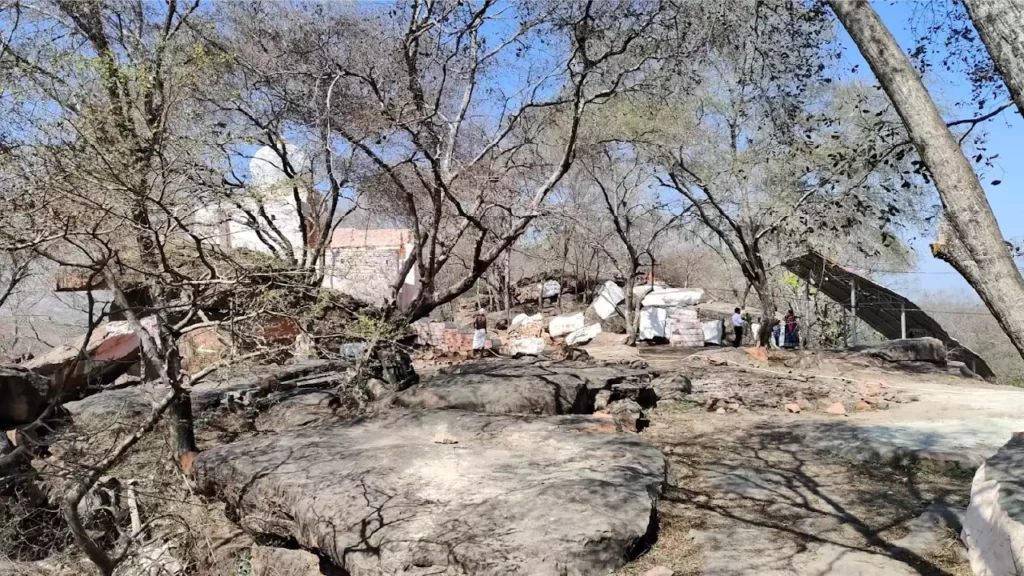
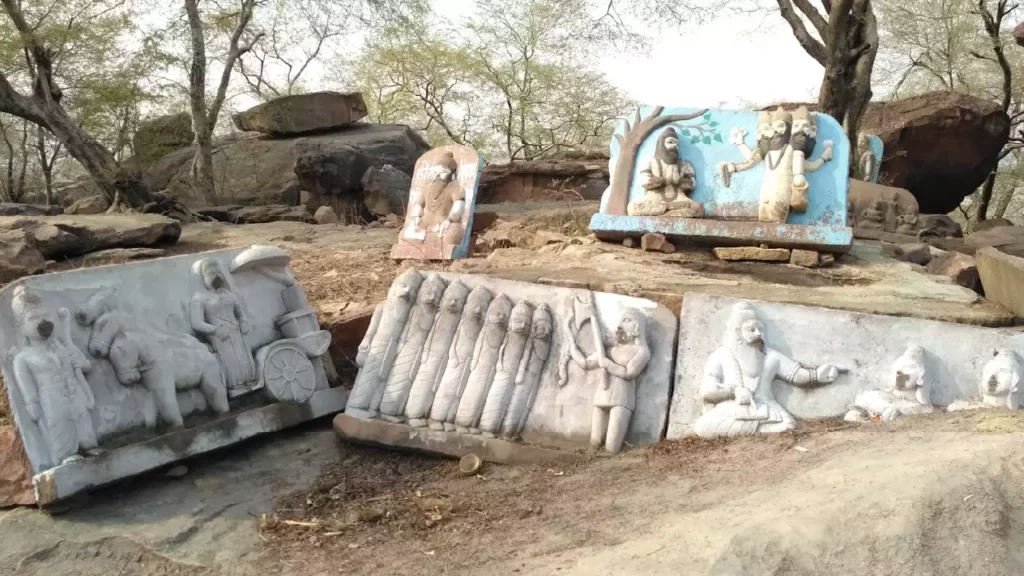
The ashram complex includes shrines to Sage Valmiki himself, to Sita, and to Luv and Kush. The site where Sita is said to have first taken refuge is marked, as is the area associated with the twins’ childhood. The surroundings retain a forested character — the Chitrakoot area is still green and wooded, and the ashram benefits from this setting. There is a quality of deep quiet here that is different from the more crowded ghats and temples in the town centre. Many pilgrims who have done the Kamadgiri Parikrama and visited Ram Ghat and Janki Kund come here in the afternoon when the devotional crowds have thinned, and find the experience of sitting in the ashram grounds to be among the most peaceful moments of their Chitrakoot visit.
Regular recitations of the Valmiki Ramayana are held at the ashram, and during Ram Navami and Vivah Panchami, extended programmes of scripture reading and musical recitation are organised. The ashram also observes the birth anniversaries of Luv and Kush with special ceremonies.
Planning Your Visit
Valmiki Ashram is accessible from Chitrakoot town and forms a natural extension of the main pilgrimage circuit that includes Kamadgiri, Ram Ghat, Janki Kund, and Bharat Milap Temple. For a complete guide to the Chitrakoot pilgrimage, see our Chitrakoot travel guide, which covers the full sacred circuit with practical advice on routes, timing, and accommodation. Our Varanasi-Prayagraj-Ayodhya-Chitrakoot 4N/5D Deluxe tour package includes guided visits to all the major Ram pilgrimage sites of Uttar Pradesh, with ample time built in for Chitrakoot’s many ashrams and ghats.