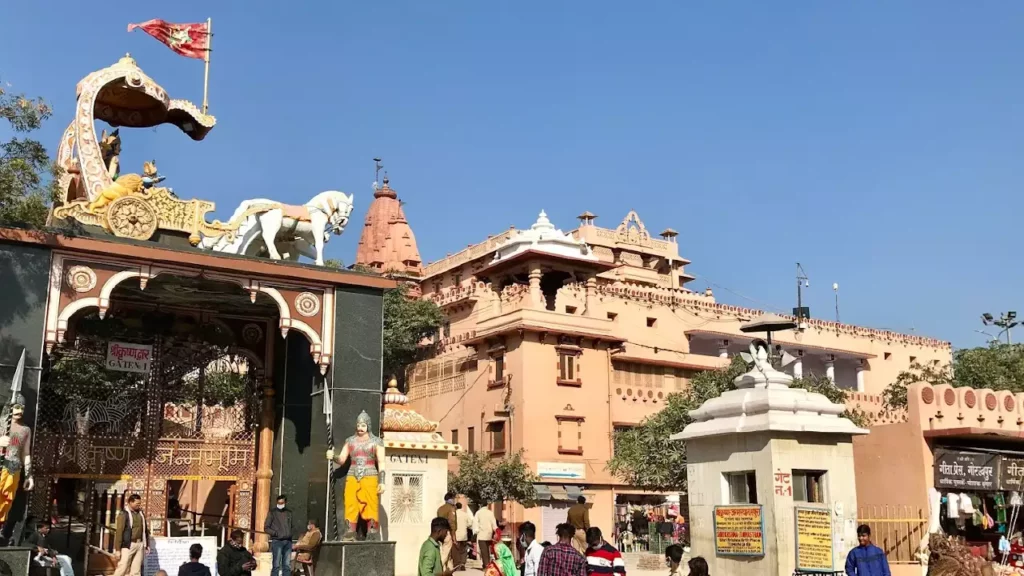
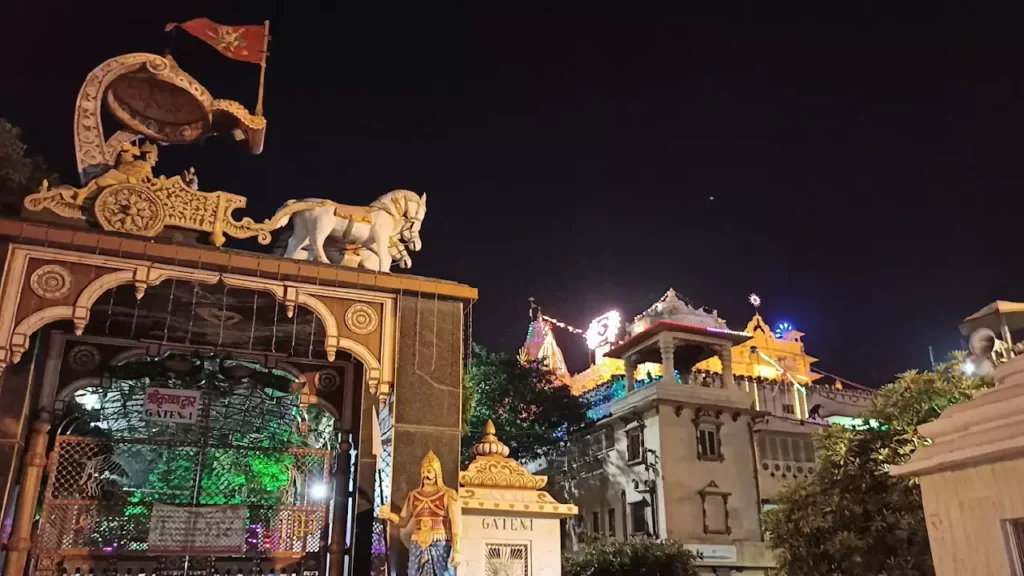
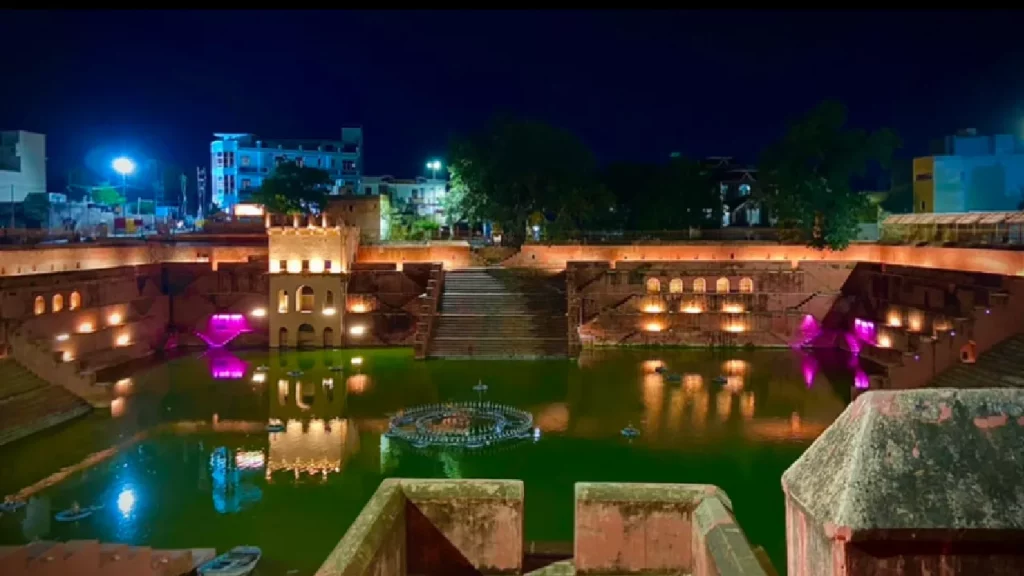
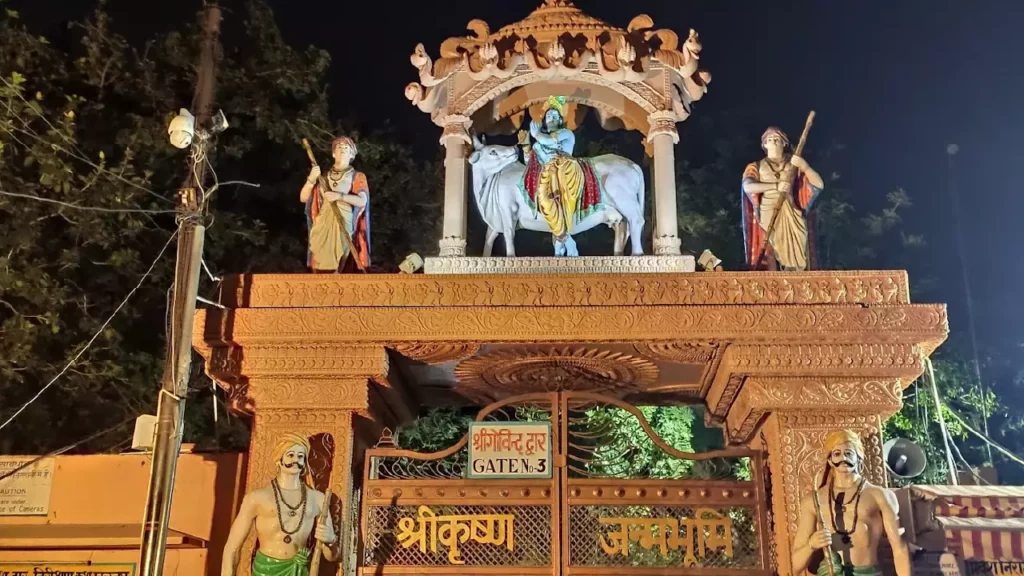
Shri Krishna Janambhoomi is the site that Hindu tradition identifies as the precise birthplace of Lord Krishna — the eighth avatar of Vishnu, and perhaps the most beloved figure in all of Indian devotional culture. Located in the heart of Mathura, this sacred complex draws millions of pilgrims every year. For a devotee, standing at Janambhoomi is an act of profound intimacy with the divine: the belief that the ground beneath your feet is the same ground where Krishna took human birth gives the entire site an almost overwhelming sense of presence.
The Birthplace: Mythology and History
According to the Srimad Bhagavata Purana and the Vishnu Purana, Lord Krishna was born at midnight on the eighth day (Ashtami) of the dark fortnight in the month of Bhadrapada — a date now celebrated worldwide as Janmashtami. His birth took place in the prison of King Kansa, the tyrannical ruler of Mathura, where his parents Devaki and Vasudeva were being held captive. The moment Krishna was born, divine light filled the prison cell, Kansa’s guards fell into a deep sleep, the prison doors opened of their own accord, and Vasudeva carried the infant across the flooded Yamuna to safety in Gokul.
The physical site of that prison cell is what Shri Krishna Janambhoomi marks. The original temple on the site was reportedly built by Vajranabha, Krishna’s great-grandson, sometime in the first centuries of the Common Era. Over the following millennia, the temple was destroyed and rebuilt multiple times — most significantly by the Mughal emperor Aurangzeb in 1669, who demolished the existing structure and built the Shahi Idgah mosque adjacent to the site. The current Janambhoomi complex was constructed in the mid-20th century and opened to the public in 1982.
The Garbha Griha: The Prison Cell
The most sacred spot within the complex is the garbha griha — literally “womb chamber” — which is believed to mark the exact cell where Krishna was born. It is a small, low-ceilinged room that devotees enter in a spirit of complete humility, often falling prostrate on the floor. A marble platform marks the spot of birth, and images of the infant Krishna and his parents are installed here. Despite its small size, the room carries an intensity of devotion that is difficult to describe: the air is thick with incense, the sound of bhajans filters in from outside, and the queue of waiting pilgrims gives you no more than a minute inside — enough for a moment of focused prayer.
Directly behind the main Janambhoomi shrine, through a shared wall, stands the Shahi Idgah mosque built in 1669 during Aurangzeb’s reign. This proximity has made the site one of the most sensitive religious locations in India. The temple trust manages the complex with considerable security, and visitors are required to deposit all electronic items and bags at the entrance before proceeding inside.
The Temple Complex
Beyond the garbha griha, the Janambhoomi complex houses several additional shrines and pavilions. The Bhagavata Bhawan is a large hall decorated with murals depicting scenes from the Srimad Bhagavata Purana, narrating Krishna’s childhood, his time in Vrindavan, the Govardhan episode, and his teachings to Arjuna on the battlefield of Kurukshetra. The paintings are vivid and detailed — worth spending time with even if you are not deeply versed in the stories.
A Kesava Deva shrine within the complex honours an older form of Krishna worship that predates the Janambhoomi temple itself. Kesava Deva is one of the most ancient names for Krishna as worshipped in Mathura, and inscriptions referencing the Kesava Deva temple site have been found dating to the Gupta period (4th-6th centuries CE).
Janmashtami at Janambhoomi
If you visit Mathura during Janmashtami (usually in August), the Janambhoomi complex becomes the epicentre of celebrations that last several days. The midnight hour of Krishna’s birth is marked by an elaborate abhisheka (ritual bathing) of the deity, the sound of conch shells, and an outpouring of song and dance from tens of thousands of gathered devotees. The experience is one of the most powerful collective acts of devotion in India. Book accommodation well in advance if you plan to attend — Mathura’s hotels fill up weeks before Janmashtami.
Apart from Janmashtami, the complex sees high footfall on every Ekadashi, on Holi (celebrated in Mathura for an entire week), and on the full moon days. Early mornings on ordinary days offer the most peaceful darshan.
Visiting Janambhoomi: Practical Information
The Janambhoomi complex is located in the old city of Mathura, about 1.5 km from Mathura Junction Railway Station. Security checks are thorough — no bags, cameras, or mobile phones are allowed inside. The complex is open from early morning to late evening with a midday closure. Entry is free. Dress modestly; remove footwear at the designated area. Guides are available at the entrance and can significantly enrich the visit by pointing out iconographic details in the murals and explaining the historical context of each shrine.
Mathura is well connected by train from Delhi (2 hours on Rajdhani trains), Agra (45 minutes), and Lucknow (4 hours). The closest major airports are Agra (60 km) and Delhi’s Indira Gandhi International (160 km).
For a complete guide to Mathura’s sacred sites, ghats, and travel logistics, visit our Mathura teerth-sthal guide. To visit Janambhoomi as part of an organised pilgrimage, our Mathura-Vrindavan 4N/5D tour package covers this temple along with Vrindavan’s major shrines, Govardhan Parvat, and the Yamuna aarti.