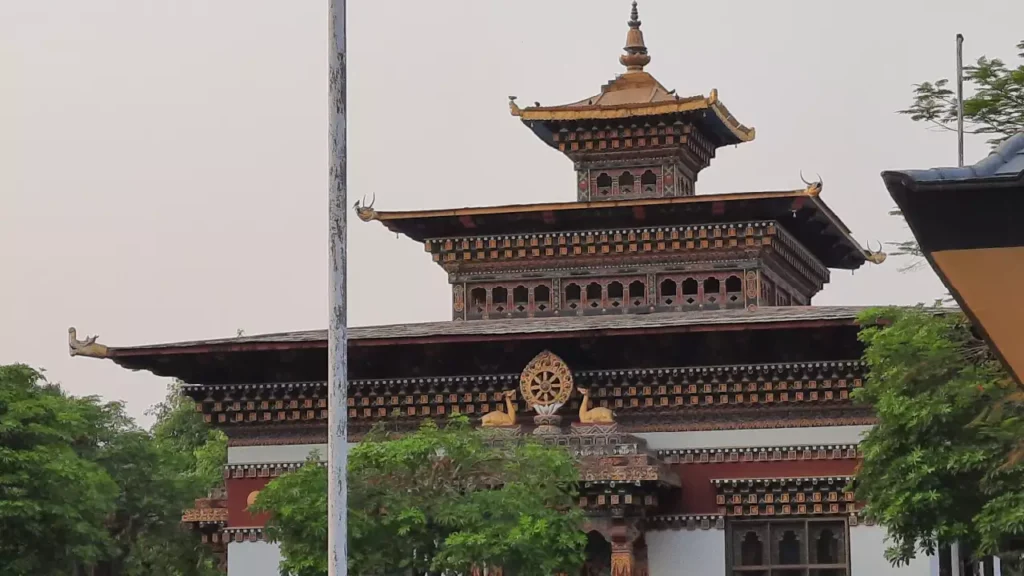
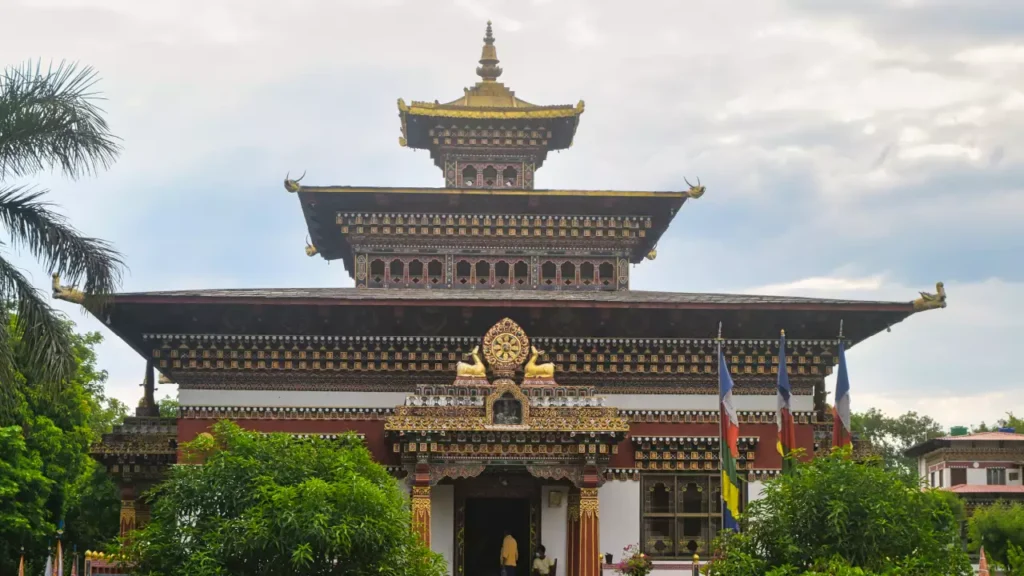
The Royal Bhutan Monastery in Bodh Gaya is one of the most striking examples of traditional Bhutanese dzong architecture outside the Himalayan kingdom itself. Situated 500 metres from the Great Buddha Statue and 1 km from Bodhgaya Bus Station, this monastery was built as a royal gift from the King of Bhutan to honour Lord Buddha at the most sacred site of his enlightenment. It stands next to Wat Thai Buddhagaya and is among the quieter, more contemplative destinations in a town that sees millions of pilgrims each year.
Royal Origins
The monastery was commissioned and funded by the royal family of Bhutan — a nation where Vajrayana Buddhism is not merely a religion but the organising principle of the state. The decision to build a monastery at Bodh Gaya reflects a long tradition among Buddhist kingdoms of maintaining a permanent presence at the site of the Buddha’s enlightenment. Tibet, Sri Lanka, Thailand, Japan, Myanmar, and Cambodia all have monasteries within a short walking distance of the Mahabodhi Temple. The Royal Bhutan Monastery was Bhutan’s formal contribution to this international pilgrimage community.
The monastery is maintained by the Bhutanese government and remains active today, housing a small community of Bhutanese monks who come in rotation to study and practice at Bodh Gaya.
Architecture — Bhutanese Dzong Style
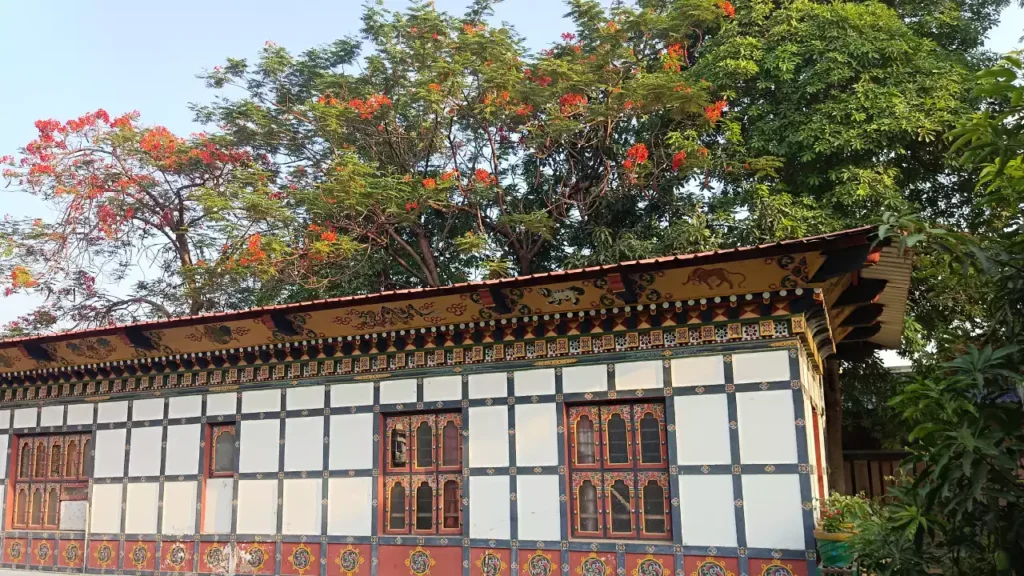
The building follows the traditional Bhutanese dzong design: a fortress-like whitewashed outer wall, inward-sloping facades, a central courtyard, and a main tower (utse) rising from the middle. The exterior is painted in the distinctive Bhutanese combination of white walls with deep red bands running below the roofline — a visual signature that makes the monastery immediately recognisable even from a distance.
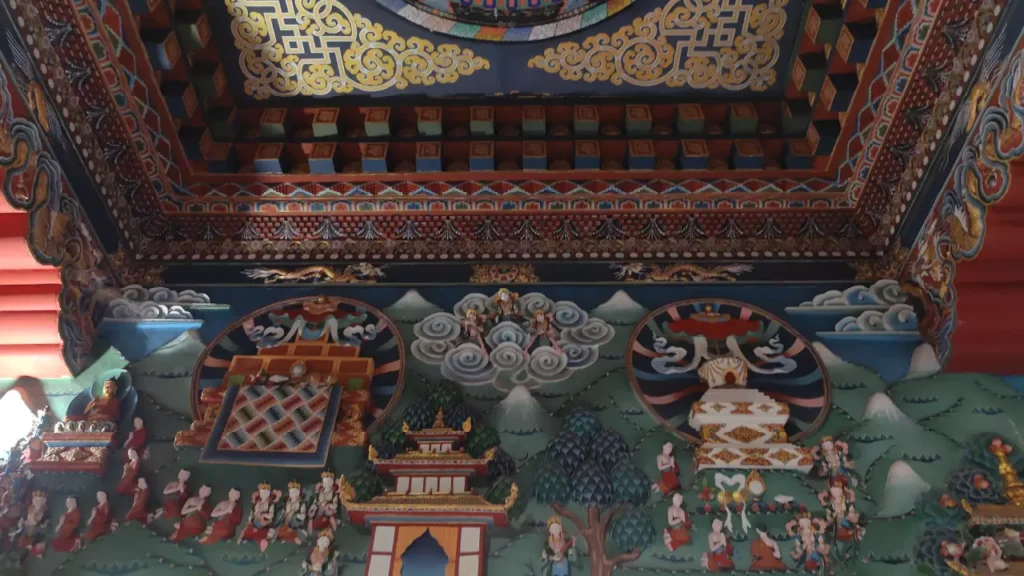
The wooden elements — window frames, lattice screens, cantilevered balconies, and the main doorway — are decorated with intricate painted carvings depicting auspicious Buddhist symbols: the eight-spoked Dharma Wheel, the endless knot, the lotus, and various protective deities from the Vajrayana tradition. The joinery and carpentry techniques used are the same as those employed in Bhutan’s centuries-old dzongs, adapted to Bihar’s climate and available materials.
The Inner Temple
At the heart of the monastery is a temple that houses a 7-foot-high gilded figure of the Lord Buddha. The statue is sculpted with Buddhist symbols etched into its base and throne, and surrounded by smaller devotional images, butter lamps, and thangka paintings brought from Bhutan. The thangkas — painted scroll images on silk — depict Guru Rinpoche (Padmasambhava), the tantric master who brought Buddhism to Bhutan in the 8th century, as well as various wrathful and peaceful deities from the Vajrayana pantheon.
The clay relief carvings that line the monastery’s interior courtyard tell the story of Gautama Buddha’s life from birth in Lumbini through enlightenment at Bodh Gaya, the first teaching at Sarnath, and the final passing at Kushinagar. These carvings were executed by Bhutanese craftsmen and represent some of the finest examples of traditional Himalayan Buddhist art accessible to visitors in India.
Activities and Programs
The monastery organises several kinds of programs for visitors and resident practitioners throughout the year:
- Daily prayers: Morning and evening puja (ritual prayer) conducted by resident monks, following Vajrayana liturgy
- Meditation guidance: Available for serious practitioners by prior arrangement with the monk in charge
- Teachings and lectures: Periodic Dharma talks on the Buddha’s teachings, open to the public
- Peace prayers: Organised during significant Buddhist calendar dates, including Losar (Bhutanese New Year) and Saga Dawa (anniversary of the Buddha’s enlightenment)
- Temple prayers: Visitors are welcome to attend the short prayer sessions that begin each day at dawn
Accommodation
The monastery operates a small hostel with 15 rooms for pilgrims, particularly those from Bhutan, Sikkim, and the Himalayan Buddhist communities of Nepal. Accommodation is simple and clean, oriented toward practitioners rather than general tourists. No charge is levied for staying, though guests are expected to observe monastery rules, participate in early morning prayers if they are able, and make a voluntary contribution toward the monks’ expenses. Booking should be arranged in advance by contacting the monastery administration.
Visiting Information
- Location: International monastery zone, Bodh Gaya — adjacent to Wat Thai Buddhagaya
- Timings: 8:00 AM to 12:00 PM and 2:00 PM to 6:00 PM
- Entry: Free; donations gratefully accepted
- Dress code: Conservative clothing; shoes to be removed before entering the main courtyard
- Photography: Permitted in the courtyard; ask permission before photographing inside the temple
- Best time to visit: November to February — the monastery is most active during peak pilgrimage season
Our Bodh Gaya travel guide provides a full map of the monastery zone and practical advice on planning a half-day or full-day circuit of the international temples. Pilgrims combining Bodh Gaya with ancestral rites in Gaya should look at our Gaya Pind Daan tour package for a structured itinerary across both cities.