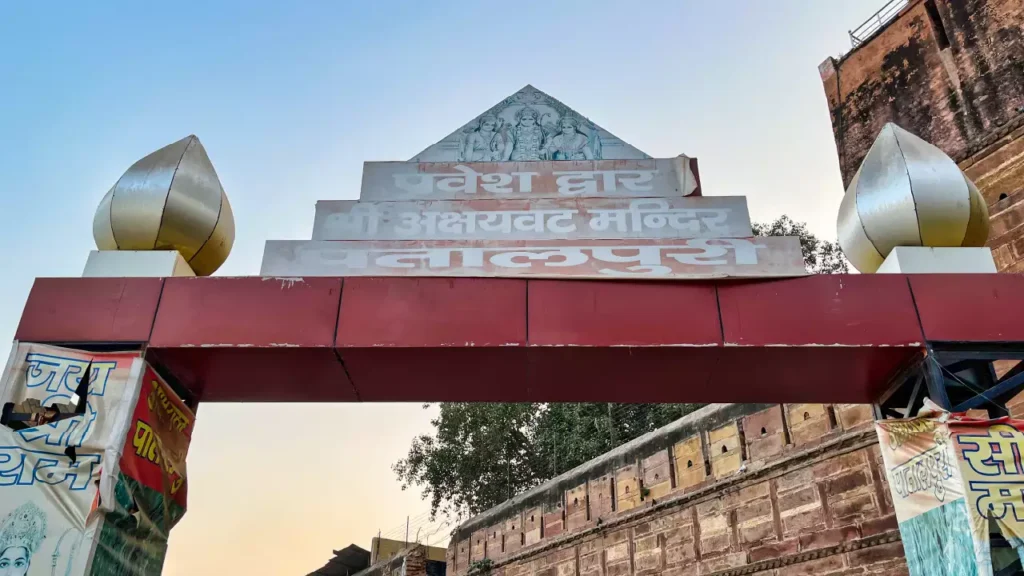
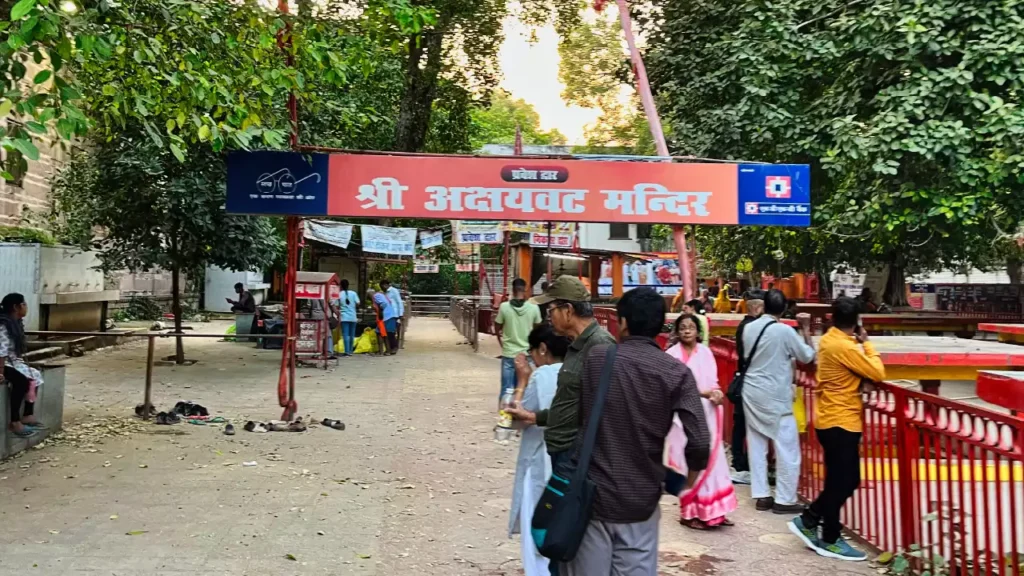
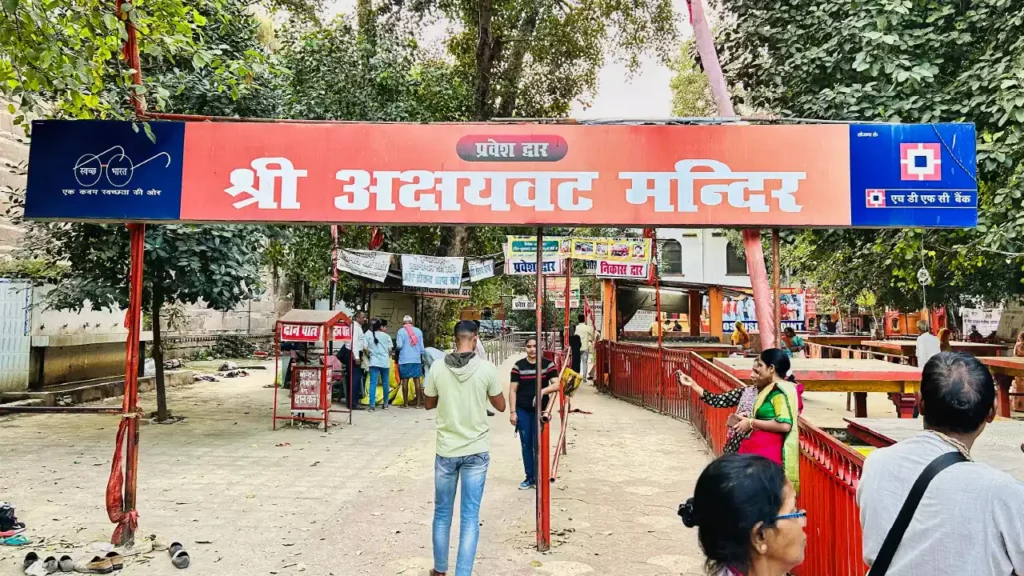
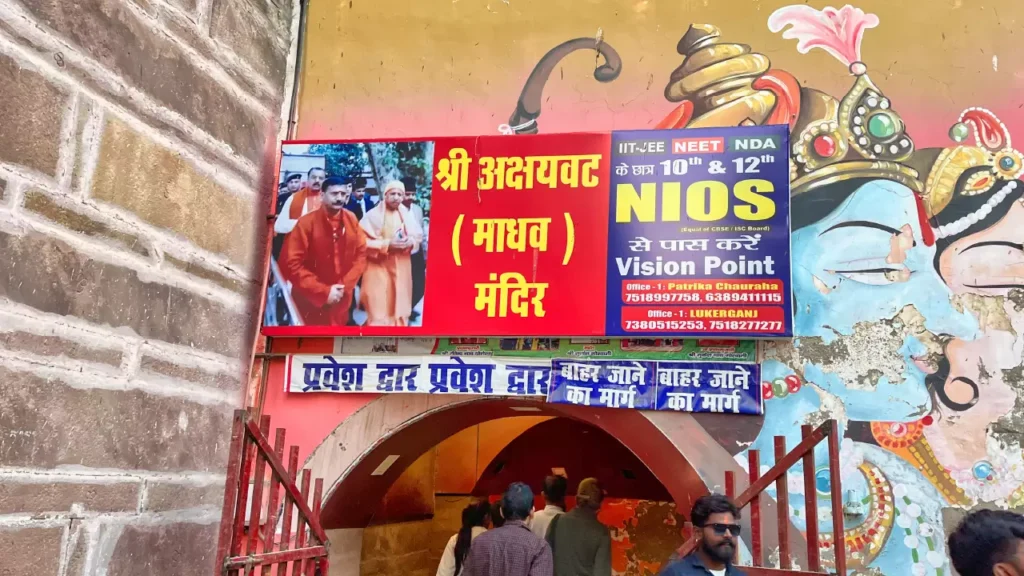
Patalpuri Temple in Prayagraj is among the oldest and most mythologically layered temples in India — a shrine that literally lies underground, beneath the Allahabad Fort, in a subterranean chamber that pilgrims enter by descending a flight of stone steps into the earth. This below-ground location is not merely architectural; it is cosmological. “Patalpuri” means “the city of the underworld” — the realm of Patala, the netherworld described in Hindu cosmology as a place of great serpents, hidden treasures, and ancient mysteries.
The temple complex is located within the Allahabad Fort (built by Emperor Akbar in 1583), which means that access to the temple requires permission from the Indian Army, which controls the fort. The fort is opened to civilians only for certain hours, and the Patalpuri shrine within it is one of the primary reasons thousands of pilgrims seek this access every day. Despite the procedural requirement, the experience of descending into the underground sanctum to worship here is considered one of the most profound in the entire Prayagraj pilgrimage.
The Akshayavat: The Undying Fig Tree
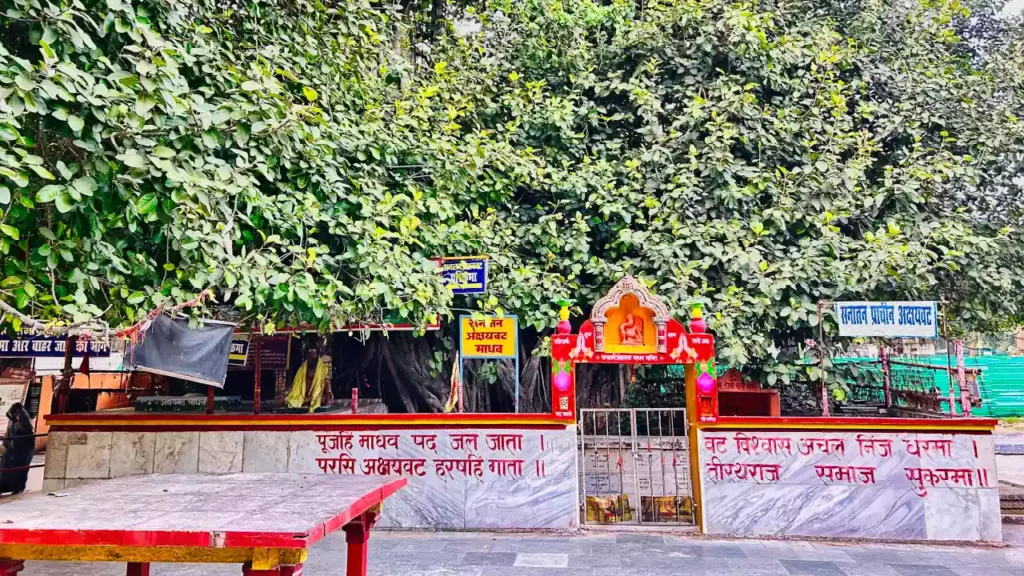
The greatest treasure within the Patalpuri complex is not the underground temple itself but the Akshayavat — the sacred, undying fig tree (Akshaya = imperishable, Vat = banyan/fig tree) that stands within the fort compound. According to the Matsya Purana and the Prayag Mahatmya, the Akshayavat is one of the most sacred trees in all of creation — one of only a handful of trees that will survive even the great dissolution (pralaya) at the end of the cosmic cycle.
The tree is considered an embodiment of Vishnu, specifically in his role as the preserver who sustains creation even when all else is destroyed. The Skanda Purana describes how at the time of universal deluge, a single leaf of the Akshayavat remained floating on the primordial waters, and the infant form of Lord Vishnu (known as Bala Mukunda) lay sleeping on this leaf, sustaining the universe through his divine breath.
For millennia, pilgrims have come to touch the bark of the Akshayavat, to tie a thread around its branches, and to offer prayers. The act of touching this tree is believed to grant liberation from the cycle of rebirth — a belief that, in ancient times, is said to have led ascetics and the terminally ill to come here to fast unto death in its shade, seeking moksha. This practice was eventually discouraged by later religious authorities, but it speaks to the extraordinary sanctity attributed to this tree.
The Underground Temple
The Patalpuri temple proper is a series of small shrines housed in underground chambers. The main deity is Lord Vishnu in his universal form. Surrounding this central shrine are numerous smaller idols — depictions of deities from various Hindu sects, installed over centuries by successive generations of worshippers and patrons. The effect is a dense, somewhat dimly lit space charged with accumulated worship. Many of the idols here are very old, predating the Mughal fort under which they now sit.
The walls of the underground chambers carry inscriptions and carvings in multiple scripts — Sanskrit, Hindi, and older regional scripts — left by pilgrims over the centuries. These inscriptions record vows, thanksgivings, and dedications to deceased ancestors, making the walls themselves a kind of living archive of pilgrimage history.
Connection to the Kumbh Mela
Patalpuri Temple and the Akshayavat are key sites on the Kumbh Mela pilgrimage circuit. Among the prescribed dips at the Sangam during Kumbh, a visit to the Akshayavat is traditionally performed on the day of the royal bath (Amrit Snan). Classical texts on the Kumbh pilgrimage prescribe the sequence: dip at the Sangam, offer prayers at Veni Madhav, visit the Akshayavat at Patalpuri, and complete the circuit at Alopi Devi. Pilgrims who complete this circuit are believed to receive the accumulated merit of the entire Kumbh Mela.
Darshan Timings and Access
Access to Patalpuri Temple is controlled by the Indian Army, which manages the Allahabad Fort. Civilian access is typically granted from 8:00 AM to 12:00 PM and from 2:00 PM to 5:00 PM on most days, though hours may vary and are subject to change during military exercises or security events. During the Kumbh and Ardh Kumbh Mela, special provisions are made for expanded civilian access. Visitors are advised to check current access schedules before planning their visit and to carry a valid government ID.
Nearby Sites
Patalpuri Temple sits within the fort compound, which also contains the Saraswati Koop — the sacred well believed to be the source of the mythical, subterranean Saraswati river. The Sangam Ghat, where pilgrims take their holy dip, is a short walk from the fort’s riverside entrance. The Veni Madhav and Alopi Devi temples are within a few kilometres.
Explore the full sacred geography of Prayagraj, including Patalpuri Temple and the Akshayavat, with our Prayagraj pilgrimage and travel guide. Visit the fort, the Sangam, and the key temples of Prayagraj on our Varanasi-Prayagraj 2N/3D tour package.