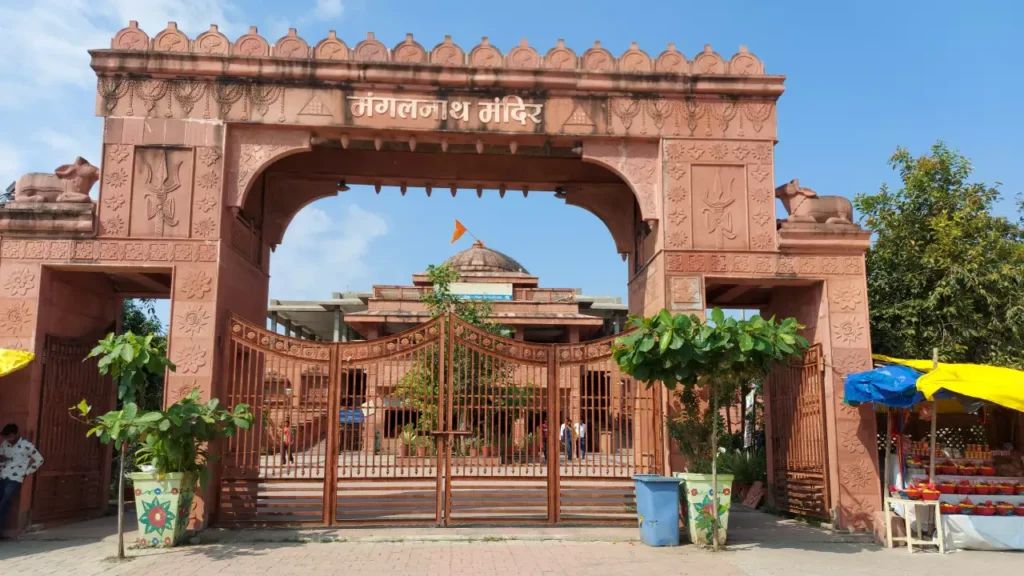
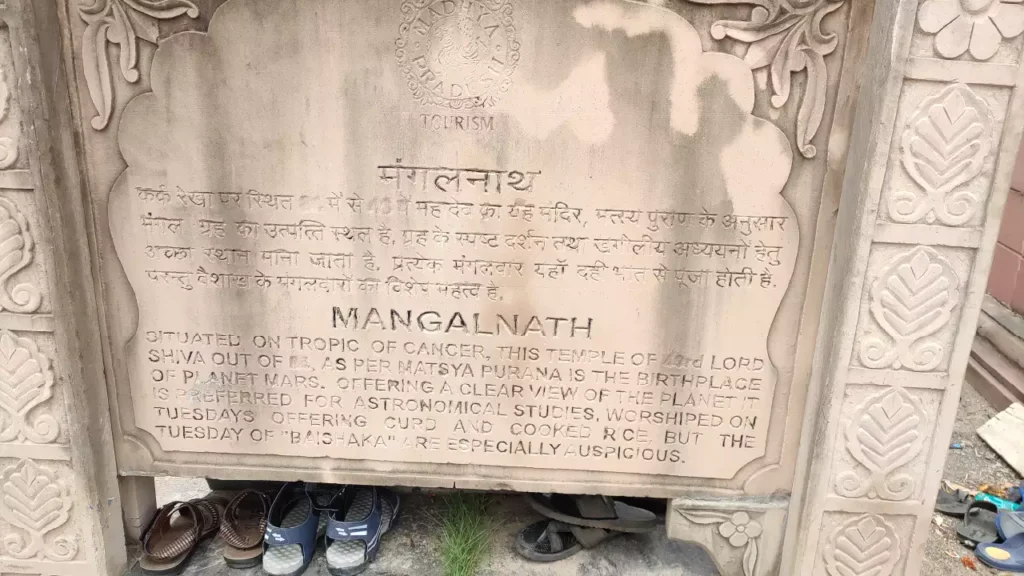
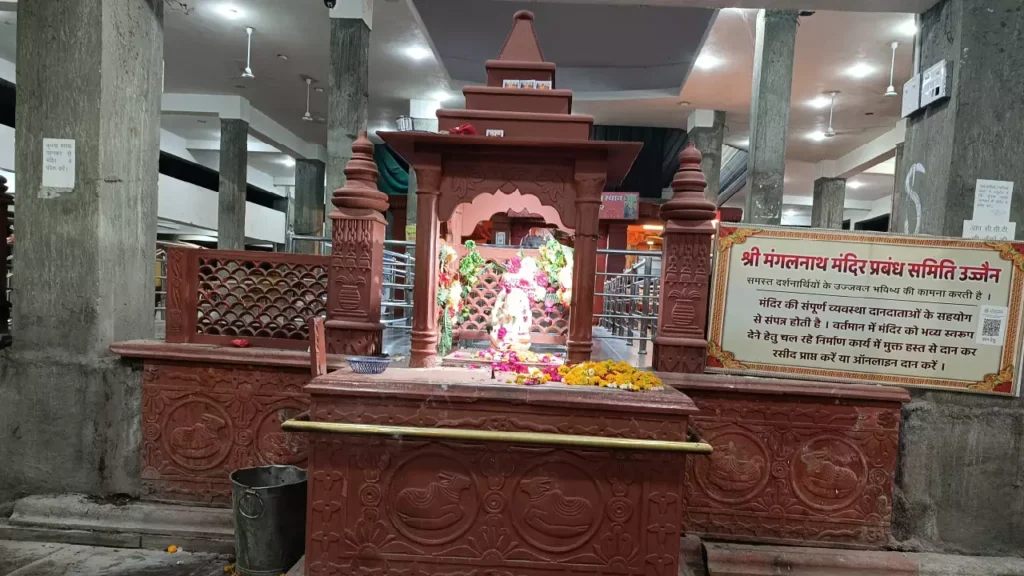
Mangalnath Mandir in Ujjain is the most important pilgrimage site in India for the propitiation of the planet Mars. Known in Sanskrit as Mangal or Angaraka, Mars holds a complex and powerful position in Vedic astrology — capable of bestowing great courage, drive, and determination when well-placed, but linked to conflict, accidents, and obstacles in marriage when afflicted in a person’s birth chart. Ujjain is specifically identified in the Matsya Purana as the birthplace of Mangal, and the Mangalnath Mandir on the banks of the Shipra River marks that precise location.
Ujjain as the Birthplace of Planet Mars
The Matsya Purana — one of the eighteen principal Puranas of Hinduism — records that when Lord Shiva was engaged in fierce combat with the demon Andhakasura, a drop of perspiration fell from Shiva’s forehead to the ground at this location in Ujjain. This drop, infused with Shiva’s divine energy, formed a Swayambhu Shiva Linga (a self-manifested Linga) and simultaneously gave rise to Mars as a cosmic force. This is why Mars in Sanskrit is sometimes called Bhauma (son of Bhumi, the earth) — because it was born from the earth itself at this sacred spot.
This connection between Ujjain and Mars is not incidental to the city’s identity — it is one of the reasons Ujjain was historically considered the astronomical prime meridian of ancient India. Classical Indian astronomical texts (the Siddhantic tradition) used Ujjain’s longitude as the reference point for calculating planetary positions, the equivalent of Greenwich in Western astronomy. The city’s role as the birthplace of one of the Navagrahas fits naturally within this broader framework of Ujjain as the axis of Indian cosmological and astronomical tradition.
Mangal Dosha and Why This Temple Matters
Mangal Dosha — also called Manglik Dosha or Kuja Dosha — is a condition in Vedic astrology that occurs when Mars is placed in the 1st, 4th, 7th, 8th, or 12th house of a natal horoscope. It is one of the most widely known and feared astrological conditions in India, primarily because of its traditional association with difficulties in marriage, conflicts with a spouse, and in severe cases, the premature death of a partner. Before marriage, millions of Hindu families consult astrologers specifically to check whether either prospective partner has Mangal Dosha.
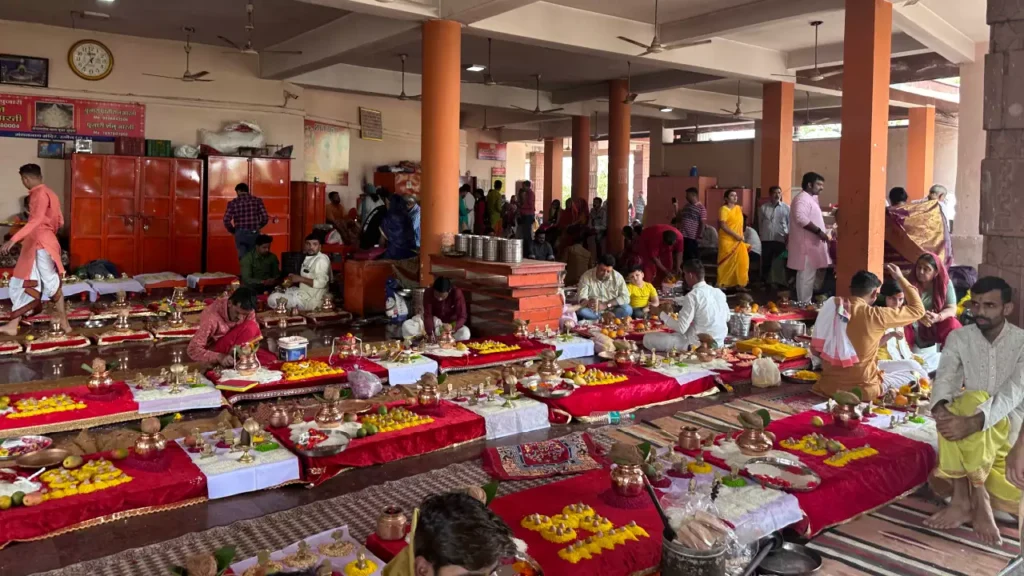
When Mangal Dosha is identified, the prescribed remedy is the performance of a Mangal Shanti puja — a Vedic ritual that propitiates Mars and mitigates its negative influence. The most powerful location for this puja, by scriptural decree, is Mangalnath Mandir in Ujjain, because it is the deity’s birthplace. Just as a havan performed in a deity’s swayambhu kshetra (the place of their self-manifestation) carries greater potency, the Mangal Shanti at Mangalnath is considered more efficacious than the same puja performed anywhere else.
Pandits at the Mangalnath Mandir are trained specifically in these planetary propitiation rituals. They conduct personalised Mangal Shanti havans using the devotee’s name, gotra (lineage), and birth details to recite the specific Mangal mantra 108 or 1008 times with ahutis (oblations) into the sacred fire.
The Shiva Linga and Temple Structure
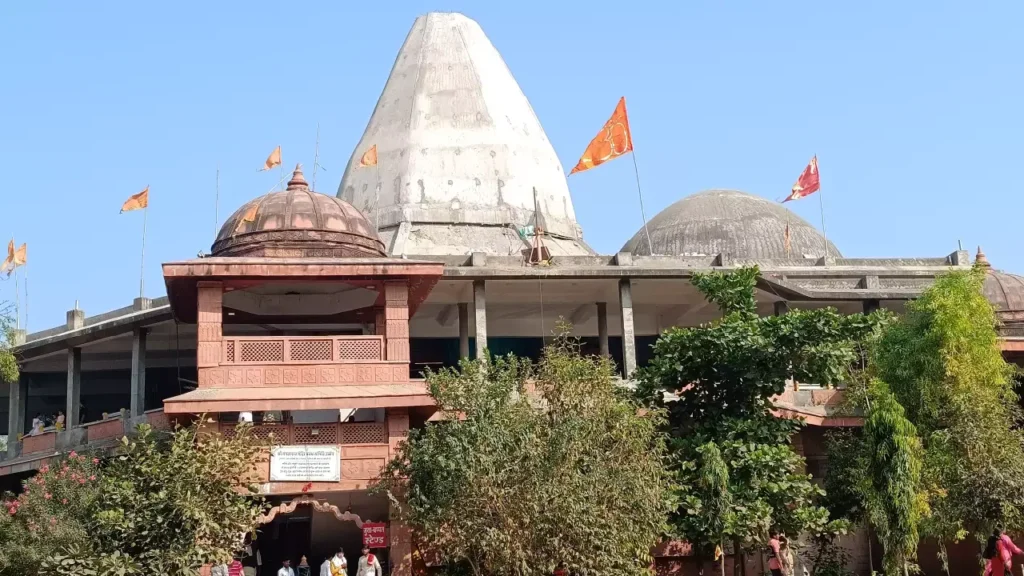
The primary deity at Mangalnath Mandir is a Shiva Linga — specifically the Swayambhu Linga described in the Matsya Purana as having formed from Shiva’s sweat. This Linga represents both Lord Shiva and, by the Puranic account, the origin of Mars. The temple structure itself is relatively simple in its current form, with a modest but well-maintained sanctum, an outer worship area, and space for havan kunds (sacred fire pits) where the Mangal Shanti ceremonies are conducted.
The temple sits directly on the western bank of the Shipra River at Mangalnath Ghat. The combination of a Shiva Linga shrine at a riverbank ghat creates the dual sanctity of both the deity’s presence and the sacred water, which is the standard combination sought by pilgrims performing astrological remedial rituals in the Hindu tradition.
Tuesday: The Most Sacred Day
Mangalwar (Tuesday) is the weekday that falls under the governance of the planet Mars, and it is the principal day of worship at Mangalnath. Every Tuesday, particularly in the mornings, the temple fills with devotees — some performing the simple act of offering red flowers, red cloth, and lal chandan (red sandalwood paste) to the Linga, others arranging for a full Mangal Shanti havan through the temple’s pandit services. During auspicious months — particularly Shravan, Kartik, and the weeks just before Dussehra — Tuesday foot traffic at Mangalnath increases substantially.
For those unable to visit in person, many of the resident pandits also conduct Mangal Shanti rituals on behalf of individuals who send their details remotely, though a personal visit is always considered more powerful in the tradition.
Mangalnath During the Simhastha Kumbh Mela
During the Simhastha Kumbh Mela — the massive gathering of pilgrims on the Kshipra’s banks that takes place in Ujjain every twelve years — Mangalnath Ghat becomes one of the key designated bathing ghats. The next Simhastha Kumbh is expected in 2028, and advance planning is recommended for anyone wishing to combine a Kumbh bath with a Mangal Shanti at this temple. The confluence of the Kumbh’s spiritual energy and the birthplace of Mars creates an unusually charged environment during these periods.
How to Reach Mangalnath Mandir
The mandir is approximately 6 km from Ujjain Junction. Auto-rickshaws connect it to the main city, railway station, and other major temples. The route passes through the older parts of Ujjain before descending to the Shipra riverbank. The temple is open throughout the day, with the early morning abhishek being the most recommended time for darshan and puja.
Plan your complete Ujjain pilgrimage with our Ujjain travel guide, covering all major temples, ghats, and routes. Book our Ujjain 4N/5D Mahakal tour package to visit Mangalnath and other key shrines. Also read about the top temples of India for a broader perspective on India’s most important sacred destinations.