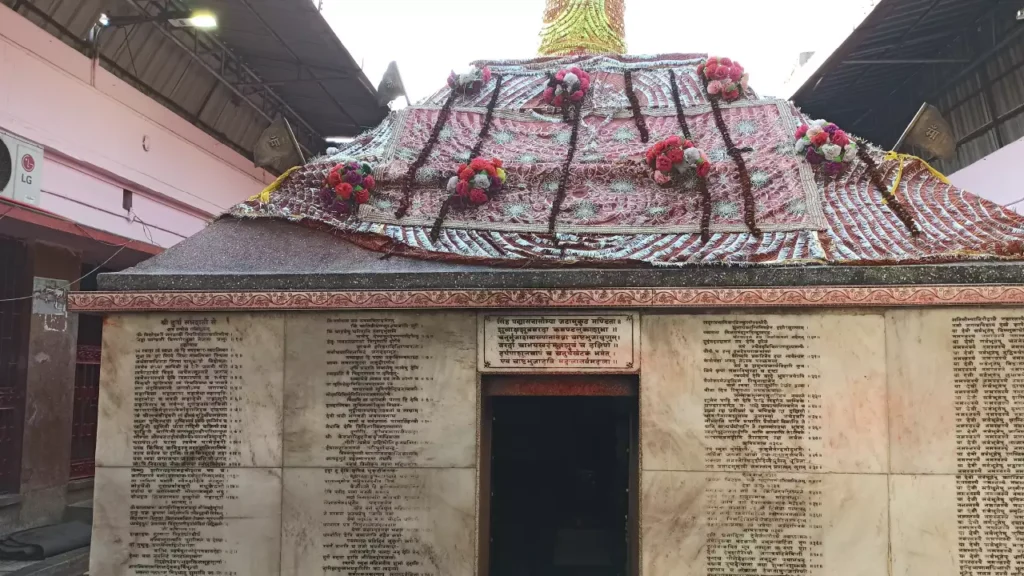
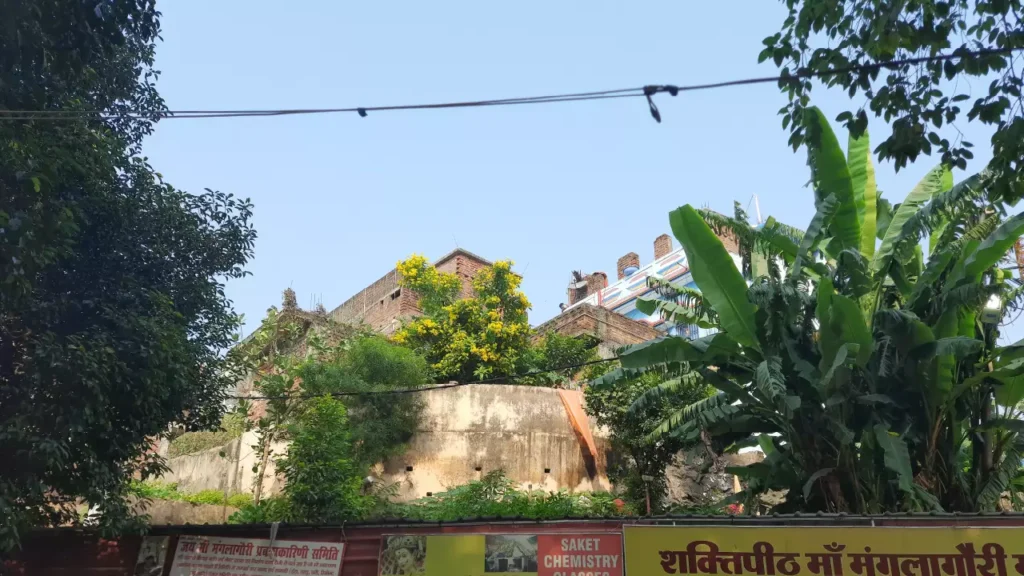
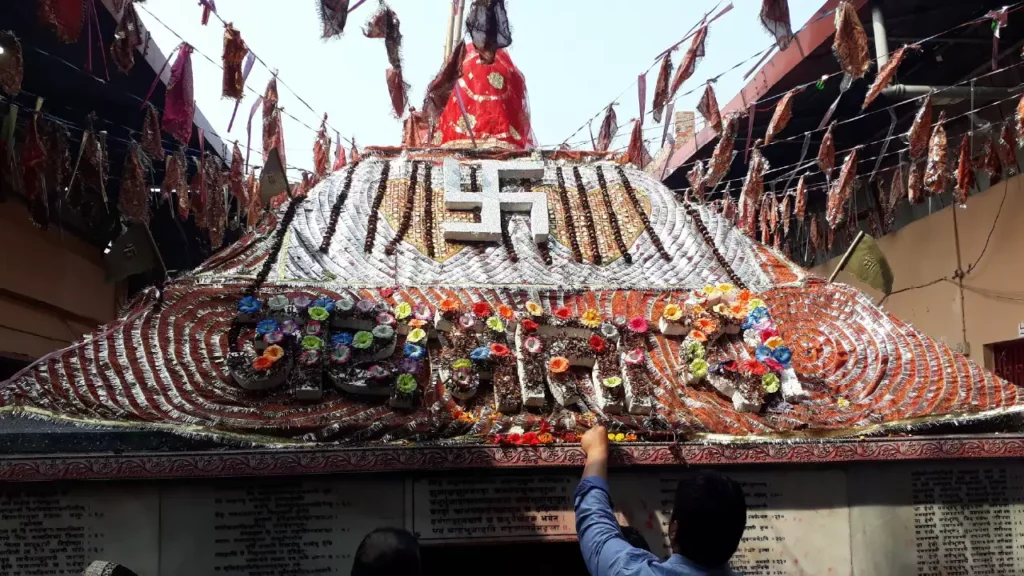
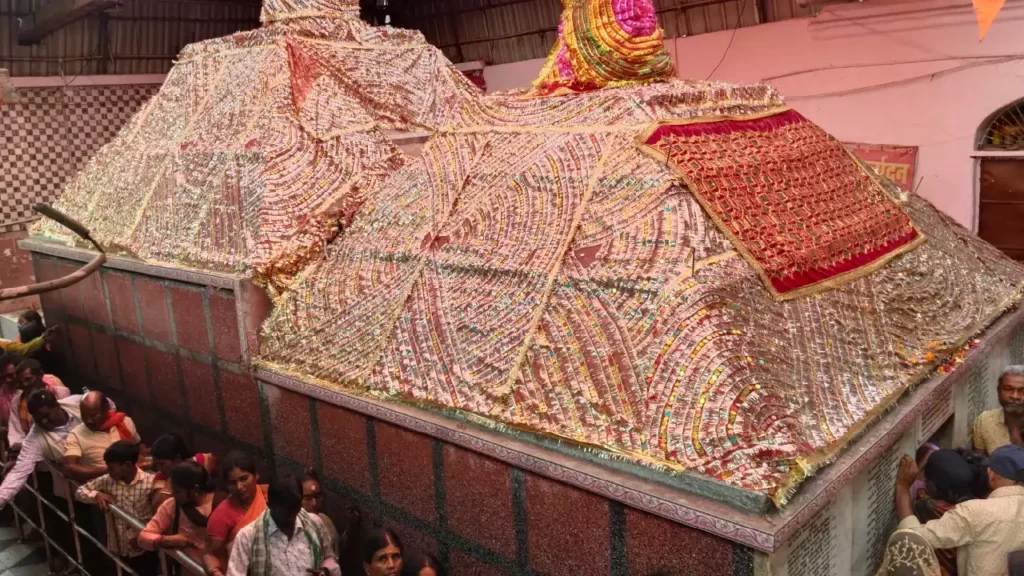
The Mangal Gauri Temple in Gaya is one of the eighteen Shaktipeeths — the most sacred sites in the entire tradition of Shakta worship across the Indian subcontinent. According to the Agni Purana, the Padma Purana, and the Vayu Purana, this is the site where the breast (stana) of Sati Devi fell to earth after Vishnu’s Sudarshana Chakra dismembered her body following her self-immolation at Daksha’s yajna. The temple sits atop Mangla Gauri Hill on the western side of Gaya city, overlooking the Falgu River and the surrounding plains.
The Sati Peetha Legend
The origin myth of the Shaktipeeths begins with the grief of Shiva after the death of his wife Sati, who immolated herself when her father Daksha insulted Shiva by refusing to invite him to a great sacrifice. Overcome by sorrow, Shiva wandered the cosmos carrying Sati’s body, unable to let go. To end his grief and restore cosmic balance, Vishnu used his Sudarshana Chakra to sever Sati’s body into 108 parts (or 51, depending on the tradition) as Shiva walked. Each place where a part fell became a Shaktipeeth — a seat of the Goddess’s power, charged with her presence for all time.
At Mangla Gauri, the body part was the breast (stana), which in the Shakta tradition is associated with nurturing, motherhood, and life-sustaining abundance. The Goddess worshipped here is accordingly Mangla Gauri, a form of the Mother Goddess who is propitious, auspicious (mangala), and nurturing. Devotees come here to seek blessings for fertility, the welfare of children, and the protection of family.
The Temple Structure
The temple was built in the 15th century, though the hill itself is considered sacred since at least the Puranic period. The main sanctum is situated at the summit of Mangla Gauri Hill, reached by a flight of stone steps that ascends through the residential neighbourhood on the hillside. The architecture is in the nagara style typical of north Indian temples — a curvilinear shikhara (spire) rising above the sanctum, with a mandapa (hall) for worshippers in front of the main shrine.
The walls of the sanctum carry relief carvings — older sections dating back centuries, newer additions incorporated during various rounds of renovation. In front of the main temple is a small mandap that is accessible to all pilgrims; the inner sanctum is entered in a regulated flow, particularly during festival seasons when crowds are large.
The Bhimvedi — Connection to the Mahabharata
The path up the steps passes by several smaller shrines, the first of which is dedicated to Bhima, one of the five Pandava brothers. This shrine is known as Bhimvedi Gaya, and according to tradition, Bhima performed Shraddha (ancestral rites) at this spot for his departed forebears. A stone that bears what is described as the knee impression of Bhima is visible at this shrine. The connection between the Mahabharata’s Pandavas and Gaya is consistent across several sites in the city — Gaya has been a centre of ancestral rites since at least the period when the Mahabharata stories were being compiled, and the Pandava connection gives these sites a narrative authority that deepens their significance for pilgrims.
Significance During Pitrupaksha
Gaya is the most important city in all of Hinduism for Pind Daan and Shraddha rituals — the rites performed for the welfare of departed ancestors. The connection between the Mangal Gauri Temple and ancestral rites comes through the Shaktipeeth’s protective power. Many pilgrims who come to Gaya for Pind Daan include a visit to Mangal Gauri as part of their ritual circuit, seeking the Goddess’s blessing for the deceased and for the family performing the rites. During Pitrupaksha — the fifteen-day period in autumn when ancestral rites are performed — the temple sees a significant increase in visitors, with families completing their Pind Daan at Vishnupad Ghat or Phalguni Ghat and then ascending to Mangal Gauri for a closing darshan.
Navaratri Celebrations
The temple is most crowded during the Navaratri festivals — both in spring (Chaitra Navaratri, March-April) and in autumn (Sharad Navaratri, October). During these nine-night celebrations of the Goddess in her various forms, the temple conducts extended hours of worship, elaborate abhishek (ritual bathing) of the deity, havan (fire ritual), and a grand procession on the final day. Pilgrims from across Bihar and the neighbouring states of Jharkhand, West Bengal, and Uttar Pradesh converge on Gaya during these periods.
Visiting Information
- Location: Mangla Gauri Hill, western Gaya city, overlooking the Falgu River
- Timings: 5:00 AM to 12:00 PM and 3:00 PM to 9:00 PM
- Entry: Free; priests at the temple offer paid puja services
- Dress code: Traditional attire preferred; footwear removed on the hillside approach
- Access: Steps from the foot of Mangla Gauri Hill; approximately 10–15 minutes of climbing
- Photography: Allowed in the outer areas; seek permission near the sanctum
- Best time: Early morning darshan; Navaratri and Pitrupaksha seasons for the full festival experience
Gaya’s full pilgrimage circuit — Vishnupad Temple, Phalguni Ghat, Mangal Gauri, Pretshila Hill, and Akshayvat — is best navigated with local assistance. Our Gaya Pind Daan tour package covers all ritual sites with experienced pandit support. For an overview of Gaya’s sacred geography and practical visitor information, see our Gaya travel guide.