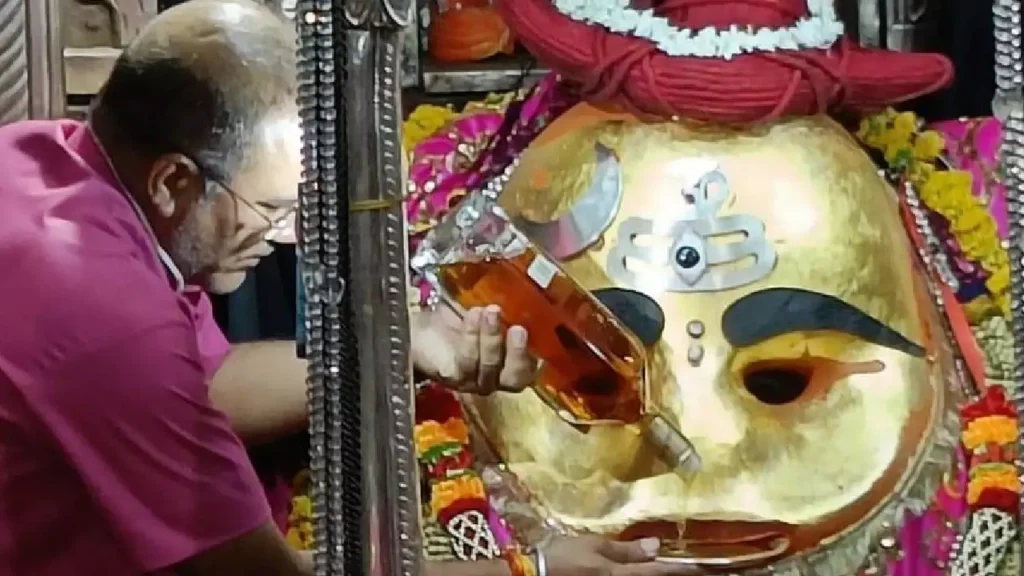
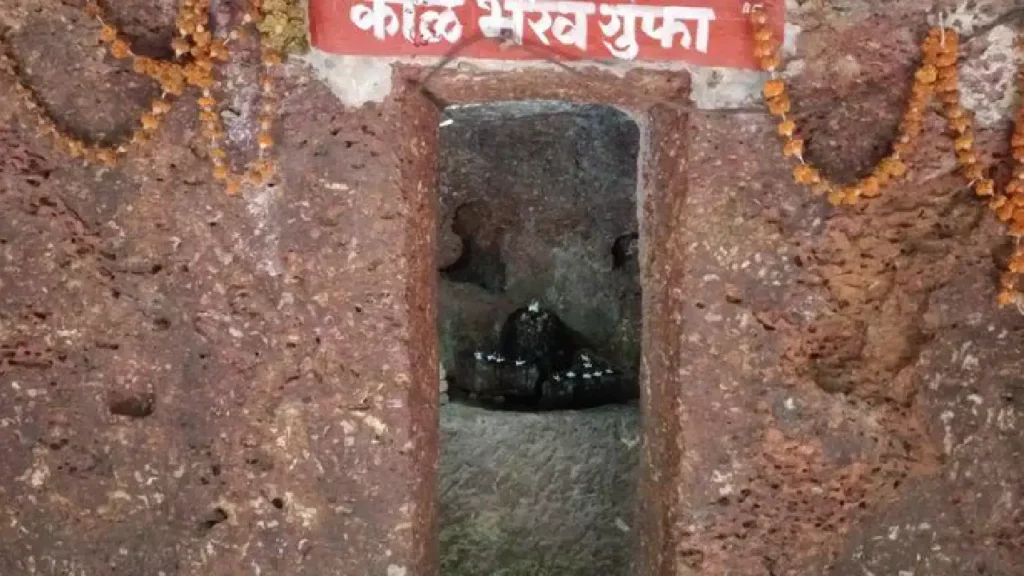
Kaal Bhairav Temple in Ujjain is among the most singular shrines in all of India. Unlike any other temple on the subcontinent, the presiding deity here — Lord Kaal Bhairav, the fierce guardian of Ujjain — is offered liquor as prasad. Devotees line up with small bottles of wine, which temple priests offer to the idol, and the liquid is absorbed directly by the deity’s image. This practice, rooted in Tantric tradition, has been observed for centuries and continues to draw both devout pilgrims and the deeply curious to this ancient city on the Kshipra River.
Who Is Kaal Bhairav?
Kaal Bhairav is one of the eight manifestations of Bhairav, who is himself a fierce form of Lord Shiva. The name combines “Kaal” (time or death) and “Bhairav” (the terrible one) — making Kaal Bhairav the lord who governs time itself and dispels fear, darkness, and negative forces. In the Shaiva tradition, Bhairav is the protector of sacred cities and their boundaries. Each of India’s major pilgrimage cities has a Bhairav as its Kotwal (divine guardian), and in Ujjain — the city of Mahakal — Kaal Bhairav holds this supreme protective role.
According to the Skanda Purana, it was Lord Shiva who appointed Kaal Bhairav as the eternal guardian of Ujjain (then called Avantika), giving him authority over the city’s spiritual protection. This appointment made Kaal Bhairav uniquely powerful here — he is not just a temple deity but the divine administrator of the entire sacred zone of Ujjain.
The Liquor Offering: A Tantric Tradition Unlike Any Other
The most discussed aspect of the Kaal Bhairav Temple is the madira (liquor) offering. Devotees bring small bottles of country liquor or wine — sold at stalls just outside the temple — and these are placed before the idol by the priests. The liquid is pressed to the idol’s lips and disappears, absorbed without any outward mechanism. Scientists, journalists, and curious visitors have attempted to explain this for decades; none have found a satisfying material explanation. For believers, it is simply the grace of Kaal Bhairav accepting his devotees’ offering.
This practice is not mere superstition. It is grounded in the Vamamarga Tantric tradition, which accepts the Pancha Makaras — including madira — as legitimate offerings to certain fierce forms of the divine. Kaal Bhairav is a Tantric deity par excellence, and his temple has historically been associated with the Kapalika and Aghora traditions of Shaivism. The temple remains one of the most important Tantric pilgrimage sites in India.
History and the Legend of King Bhadrasen
The founding of this temple is attributed to King Bhadrasen of Ujjain, an ancient ruler described in Puranic texts as an ardent Shiva devotee. The present structure, however, dates to a more recent period and has been renovated multiple times over the centuries. The temple was a significant centre during the Paramara and Scindia periods of Madhya Pradesh’s history.
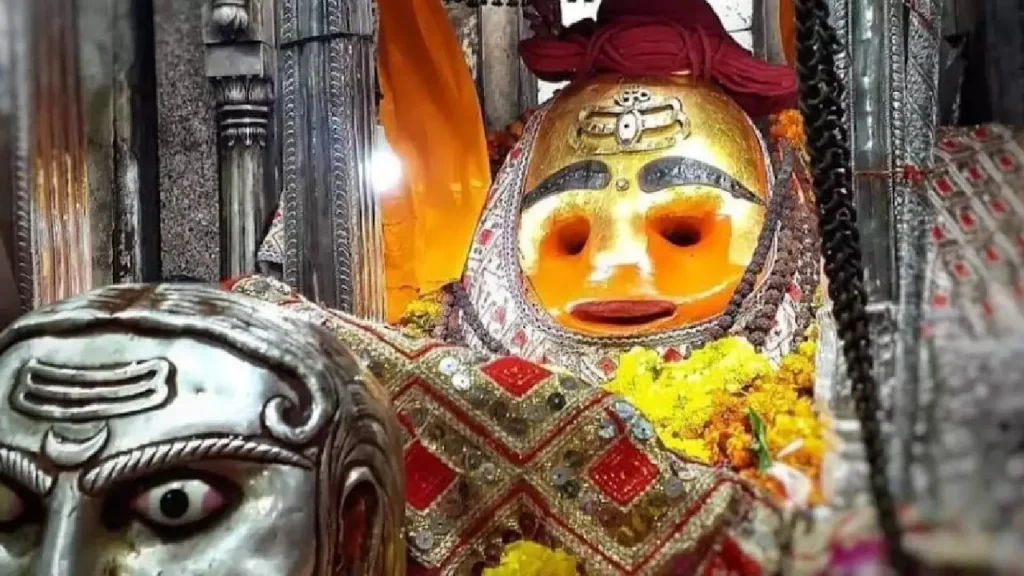
The idol of Kaal Bhairav is of dark complexion, depicted with a fierce expression, large eyes, and adorned with garlands, sacred threads, and traditional insignia including the skull-topped staff (Khatvanga). The image is deeply striking and conveys the dual nature of Bhairav — terrifying to the unrighteous, utterly protective to genuine devotees.
Temple Architecture and Setting
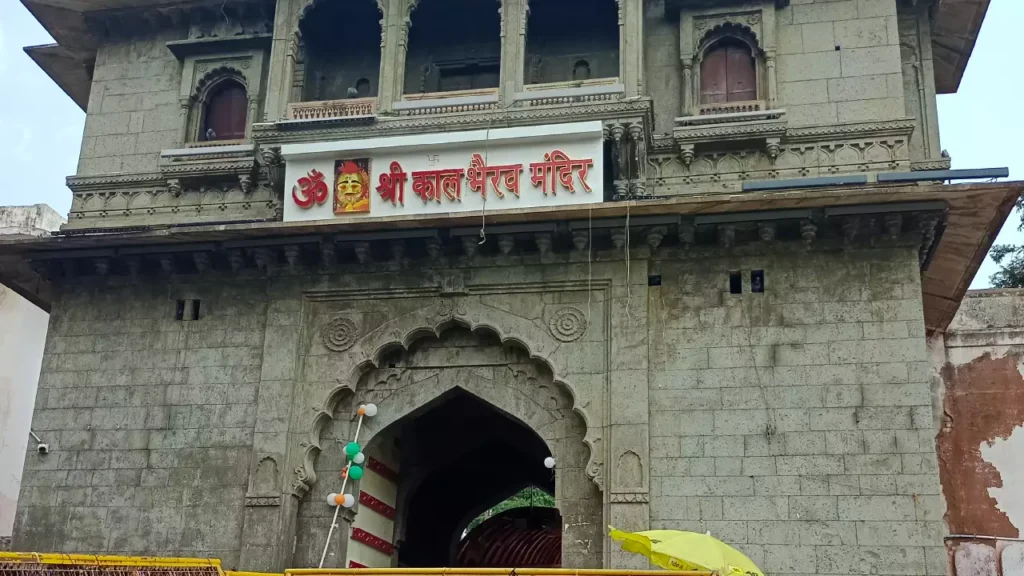
The temple is situated on the banks of the Kshipra River, adding to its spiritual atmosphere. The main shrine complex includes the primary sanctum housing the Kaal Bhairav idol, surrounded by smaller shrines dedicated to other deities. The architecture reflects a traditional North Indian style with some Maratha-period additions. The narrow lane leading to the temple, lined with shops selling madira, flowers, and devotional items, creates a unique pre-entry experience unlike any other temple entrance in India.
Kaal Bhairav and the Simhastha Kumbh Mela
During the Simhastha Kumbh Mela, which returns to Ujjain every twelve years (next in 2028), the Kaal Bhairav Temple becomes an even more significant destination. Pilgrims who come to bathe at Ram Ghat on the Kshipra River also make a mandatory stop at Kaal Bhairav, seeking the guardian deity’s blessings before beginning their sacred duties. Sadhus from Tantric akharas hold special rituals here during Kumbh. The temple is considered incomplete as a pilgrimage to Ujjain if one skips Kaal Bhairav — it is as essential as Mahakaleshwar itself.
How to Visit and What to Expect
The temple is approximately 8 km from Ujjain Junction and well connected by auto-rickshaw and taxi. It is open throughout the day, typically from 6:00 AM to 10:00 PM. The crowds are heaviest on Tuesdays (sacred to Bhairav and Mangal) and Ashtami (the eighth day of each lunar fortnight), which is Bhairav’s principal day of worship. Bhairav Ashtami, observed on the Krishna Paksha Ashtami of Margashirsha month, is the biggest annual celebration at this temple.
Visitors should be prepared for a highly charged atmosphere — devotees are deeply devoted, the rituals are visceral, and the energy of a functioning Tantric shrine is palpable. Those not accustomed to such an environment may find it intense, but it is an authentically ancient and living tradition.
For a complete itinerary covering Kaal Bhairav and all of Ujjain’s major shrines, see our Ujjain pilgrimage travel guide. Book our Ujjain 4N/5D Mahakal tour package which includes a Kaal Bhairav visit. Also read about the top temples of India for context on India’s most important sacred sites.