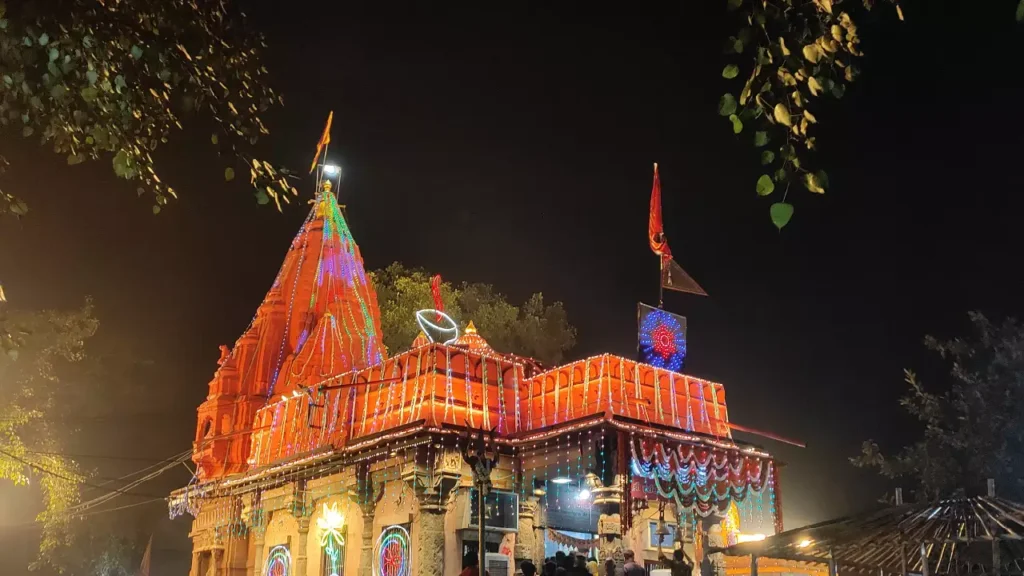
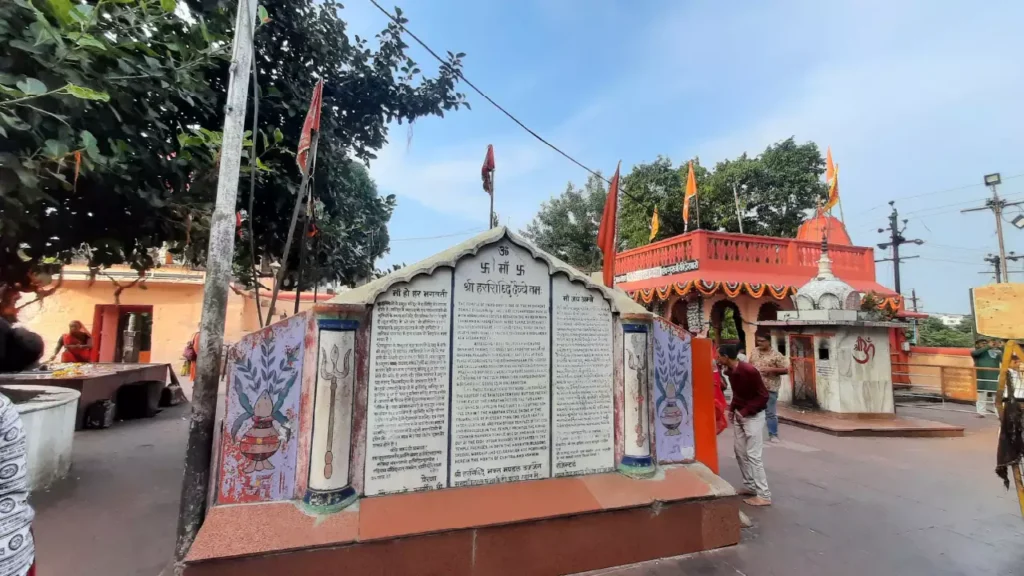
Harsiddhi Temple in Ujjain is one of the eighteen Maha Shaktipeeths of the goddess tradition — sacred sites formed where parts of Sati’s body are said to have fallen after Lord Shiva carried her in grief across the cosmos. At Harsiddhi, it is the goddess’s elbow (some scriptures say the wrist) that fell, making this site charged with the Shakti of Goddess Parvati in her most powerful, victorious form. The word “Harsiddhi” means “one who has attained victory over Har (Shiva)” — a name that signals the goddess’s supreme status in this city of Mahakal.
Mythological Origin: A Shaktipeeth of 51
The Shaktipeeth tradition holds that when Sati, the first consort of Lord Shiva, immolated herself in her father Daksha’s yagna after he insulted her husband, Lord Shiva was consumed by grief and carried her body across the three worlds. To release him from this grief, Lord Vishnu used his Sudarshana Chakra to dismember Sati’s body, which fell at 51 locations across the Indian subcontinent. Each of these sites became a Shaktipeeth, a seat of the goddess’s power. Harsiddhi in Ujjain is counted among these 51 sites, making it a destination of pan-India pilgrimage significance — not just a local Ujjain shrine.
The main deity at Harsiddhi is painted a deep vermillion colour, which is the traditional iconographic representation of fierce goddess energy in the Shakta tradition. Flanking the primary shrine are idols of Goddess Annapurna (provider of nourishment), Mahalakshmi (prosperity), and Mahasaraswati (knowledge) — placing Harsiddhi in the broader context of the Devi tradition that encompasses all forms of the divine feminine.
Architecture: Maratha Pillars and Sacred Sri Yantra
The Harsiddhi Temple complex is entered through four gateways, one facing each cardinal direction, with the primary entrance on the eastern side following the standard Hindu orientation for sacred space. The complex is large enough to accommodate significant numbers of pilgrims comfortably.
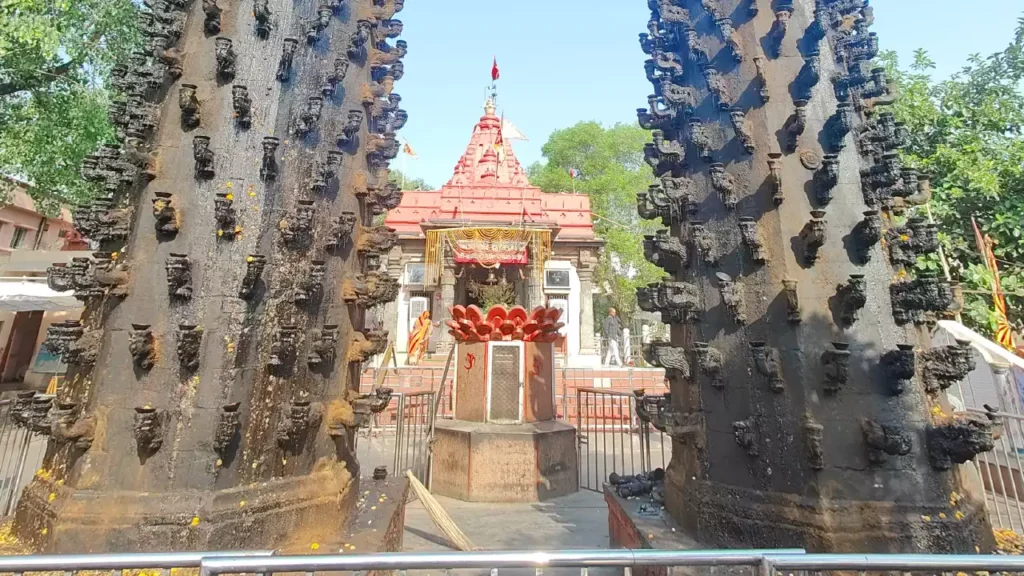
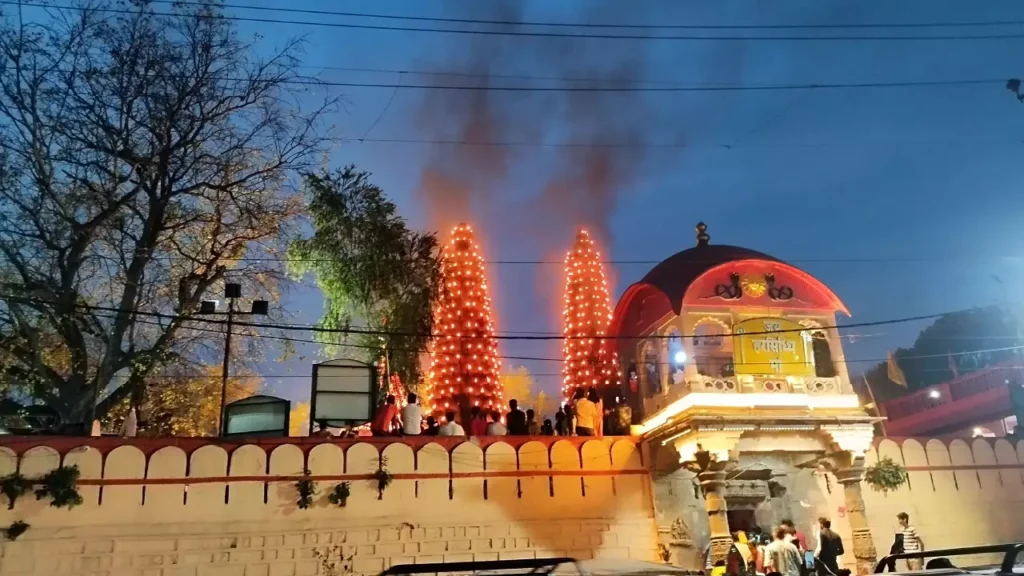
The most visually striking elements of the temple are its two tall lamp pillars (deepstambha), which are finely crafted examples of Maratha-period artistic work. During Navaratri, these pillars are loaded with hundreds of oil lamps and lit at dusk, creating a luminous spectacle that is among the most photographed sights in Ujjain. The sight of these twin pillars burning with thousands of flames against the night sky is described in devotional literature as a vision of divine fire.
Within the complex, there is also a Sri Yantra shrine — a sacred geometric diagram representing the concentrated power of the goddess. The Sri Yantra is one of the most complex and revered of all Hindu yantras, consisting of nine interlocking triangles, and its presence in the Harsiddhi complex underscores the Tantric and Shakta character of this temple. There is also a historic well on the premises, believed to have existed since the temple’s earliest period.
Navratri: The Great Festival of Harsiddhi
The Navratri festival — observed twice a year, in Chaitra (March-April) and Ashwin (September-October) — is the defining celebration of Harsiddhi Temple. For nine nights, the goddess is worshipped in her nine principal forms (Navadurga), with special aartis, havan, and bhajan sessions continuing through the night. The deepstambha pillars are lit throughout, transforming the temple complex into a beacon visible from across Ujjain. Tens of thousands of devotees attend, and the queue for darshan during these nine nights often stretches for hours.
The Ashwin Navratri, falling in the month leading up to Dussehra, is considered particularly powerful at Harsiddhi because of the temple’s direct association with Durga’s victory over Mahishasura, which Dussehra celebrates. Many devotees undertake Navaratri vrat (fasting) for all nine days and break it only after taking darshan at the Harsiddhi sanctum on the final day.
Harsiddhi Within the Ujjain Pilgrimage Circuit
A complete Ujjain darshan traditionally follows a prescribed route that includes Mahakaleshwar (the primary Jyotirlinga), Harsiddhi (the primary Shaktipeeth), Kaal Bhairav (the city’s guardian deity), Gopal Mandir (the Vaishnava pillar), Mangalnath (for planetary propitiation), Chintaman Ganesh (for Ganesha’s blessings at the journey’s start), and the bath at Ram Ghat. Harsiddhi occupies a central position in this circuit — as the Shaktipeeth, it represents the feminine counterpart to Mahakaleshwar’s masculine divine power, and visiting both in a single day is considered spiritually complete in itself.
During the Simhastha Kumbh Mela, Harsiddhi becomes a major gathering point for Shakta sampradayas and women’s pilgrimage groups. The next Simhastha Kumbh in Ujjain is due in 2028.
Visiting Harsiddhi Temple: Practical Details
The temple is situated approximately 2.5 km from Ujjain Junction and easily reached by auto-rickshaw. Darshan is available from approximately 5:00 AM to 12:30 PM and 4:00 PM to 10:30 PM daily, with extended hours during festivals. The complex is near Mahakaleshwar, making it convenient to visit both on the same day. Priests at the temple can arrange for special abhishek and Devi puja on request.
Plan your complete Ujjain pilgrimage with our Ujjain travel guide covering every major shrine and ghat. Book our Ujjain 4N/5D Mahakal tour package to visit Harsiddhi alongside the other sacred sites. Also see our guide to the top temples of India for a broader perspective on India’s most revered destinations.