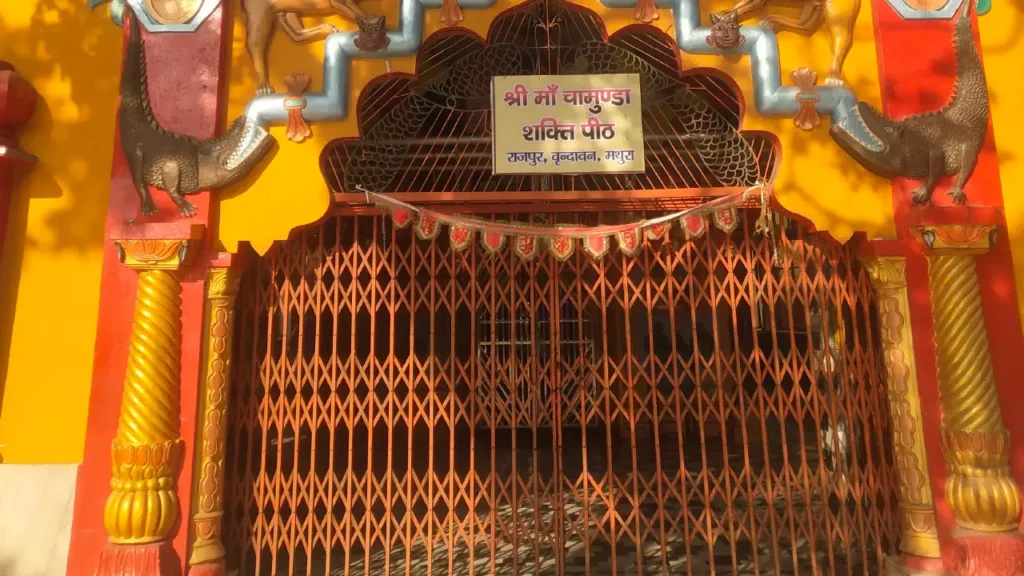
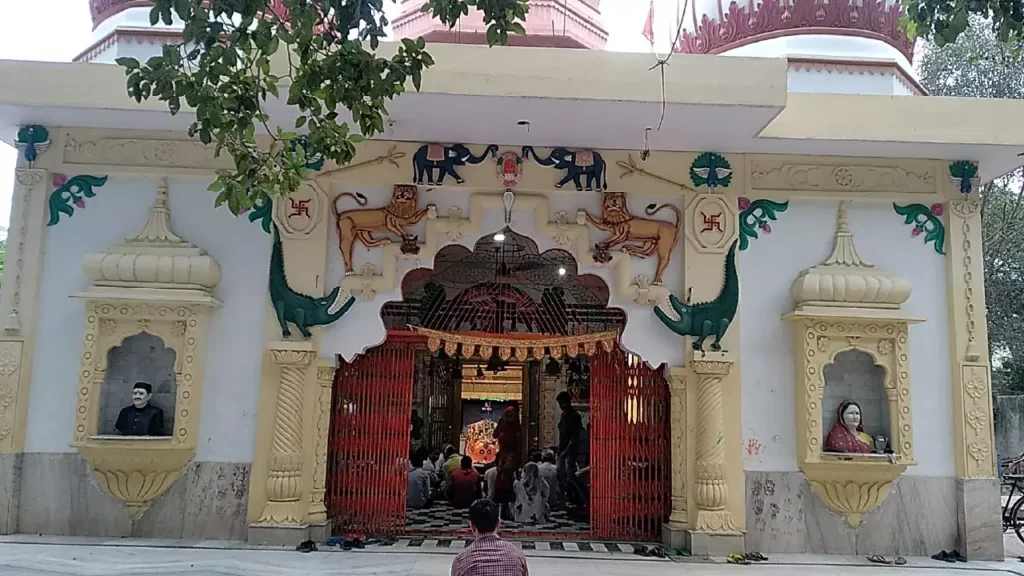
The Chamunda Devi Mandir in Mathura is one of the 51 Shakti Peethas — the network of sacred goddess shrines spread across the Indian subcontinent, each marking a spot where a body part of Goddess Sati (Parvati in her grief-stricken form) is said to have fallen after Lord Vishnu’s Sudarshana Chakra dismembered her body to break Shiva’s mourning. At Chamunda Devi Mathura, tradition holds that the hair of Maa Bhagwati Jagdamba fell at this spot, making it a site of intense Shakta devotion. Located on the Mathura-Vrindavan route, directly opposite the Maa Gayatri Tapobhumi ashram, the temple draws devotees from across Uttar Pradesh, particularly during the Navratri festivals.
Mythological Significance
Chamunda Devi is one of the most powerful forms of the Divine Mother — a manifestation of Durga born to slay the demons Chanda and Munda, from whose names her own name derives. In the Devi Mahatmya (part of the Markandeya Purana), Chamunda is described as the fierce, dark-skinned warrior goddess who stands on a demon corpse, wearing a garland of skulls, her eyes burning with divine fury. This ferocity, however, is understood in Shakta theology not as malice but as the protective force of the universe itself — the destroyer of ego and ignorance.
A particularly interesting piece of local tradition holds that after Lord Krishna slew the serpent Aghasura (one of Kansa’s demon emissaries, sent in dragon form to swallow the cowherds of Braj), Krishna visited the Chamunda Devi shrine — a detail recorded in some versions of the Srimad Bhagavata. This connection between Krishna’s Braj leelas and the Shakti Peetha gives the temple an unusual dual significance: it is revered by both Vaishnava pilgrims completing the Braj parikrama and by Shakta devotees on the Shakti Peetha circuit.
A Temple Without a Chamunda Idol
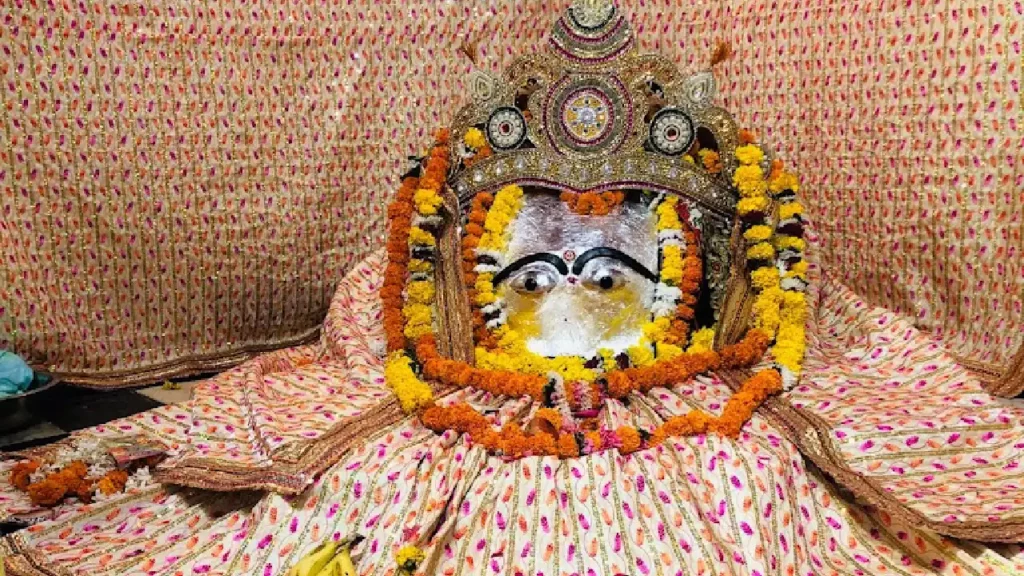
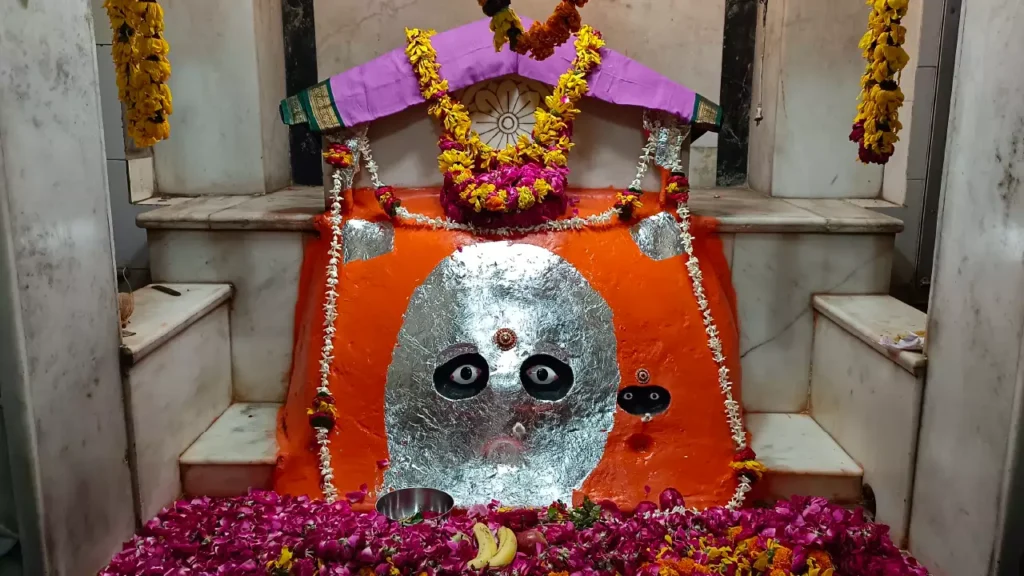
One of the most intriguing features of this temple is that the main sanctum does not house a conventional murti (idol) of Maa Chamunda. Instead, the deity is venerated in an aniconic or symbolic form — the divine presence is believed to be inherent in the Peetha itself, the sacred ground where the Goddess’s hair fell. This is consistent with many Shakti Peethas where the emphasis is on the geographical sanctity of the site rather than an installed image. A sacred yantra and decorative representations of the Goddess are present, and priests perform daily puja with full ritual observance, but the absence of a conventional murti gives the temple a raw, elemental quality that many devotees find particularly powerful.
Associated Sages and Historical Connections
Temple records and local oral tradition attribute the site’s early sanctification to Sage Shandilya, one of the Saptarishis (seven great sages) who is closely associated with Mathura and the Braj region. Shandilya is said to have meditated near this spot for an extended period. Sri Gorakhnath, the great Nath yogi who travelled extensively across northern India establishing shakha centres of the Nath sampradaya, is also said to have received wisdom here during his travels through Braj. These associations with multiple spiritual lineages — Shakta, Vaishnava, and Nath — reflect the syncretic character of the Braj sacred landscape, where traditions that might appear separate in theology often share pilgrimage sites.
Festivals and Pilgrimage Calendar
The temple sees its highest footfall during three festival periods each year. The most important is Navratri (observed twice annually — in Chaitra, March-April, and Sharada, September-October), when nine nights of continuous worship, jagran (night-long devotional singing), and special havan ceremonies draw large crowds. During Navratri the temple area is decorated with lights, flower garlands, and a temporary market of religious goods springs up along the approach road.
Devotthan Ekadashi — the day when Vishnu is believed to awaken from his four-month cosmic sleep — is another major occasion here, tying the Shakta site into the broader Vaishnava festival calendar of Braj. Akshay Navami, observed in the month of Kartika (October-November), is the third major festival, when devotees perform circumambulation of sacred trees and make charitable donations.
Visiting the Temple
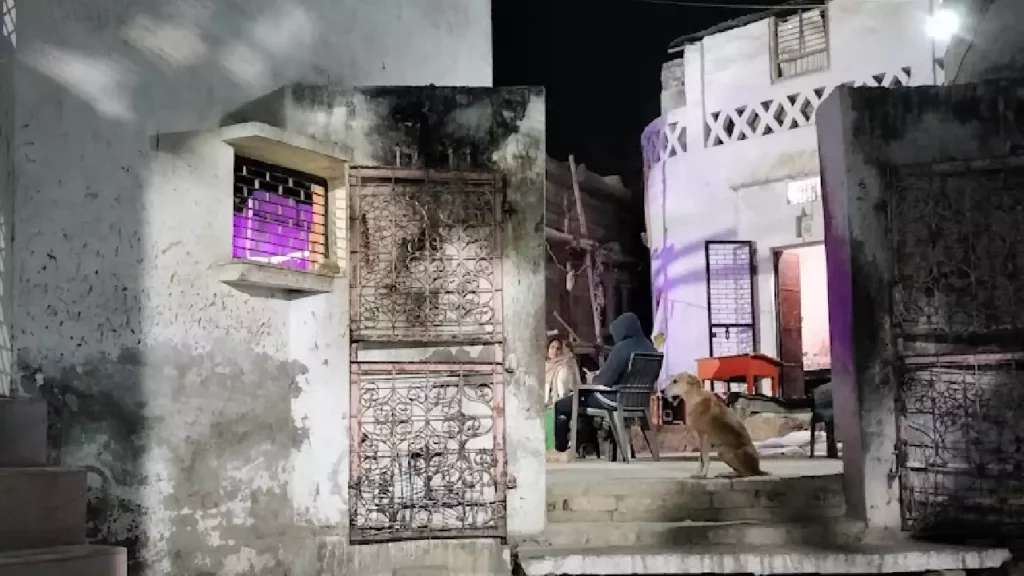
The Chamunda Devi Mandir is located on the main Mathura-Vrindavan road, making it accessible as a standalone visit or as a stop en route between the two cities. From Mathura Junction Railway Station, it is approximately 5-6 km; from Vrindavan’s main bazaar, about 4-5 km. Auto-rickshaws and e-rickshaws ply this route regularly (₹40-80 depending on starting point). The temple opens at sunrise and closes after the evening aarti. Entry is free. Offerings of red chunari (cloth), sindoor, and marigold flowers are traditionally made to the Goddess here.
For a broader guide to Mathura’s pilgrimage circuit — including ghats, major temples, and seasonal travel tips — visit our Mathura teerth-sthal page. The Chamunda Devi Mandir is included as a stop on our Mathura-Vrindavan 4N/5D tour, which covers both the Vaishnava and Shakta sacred sites of the region.