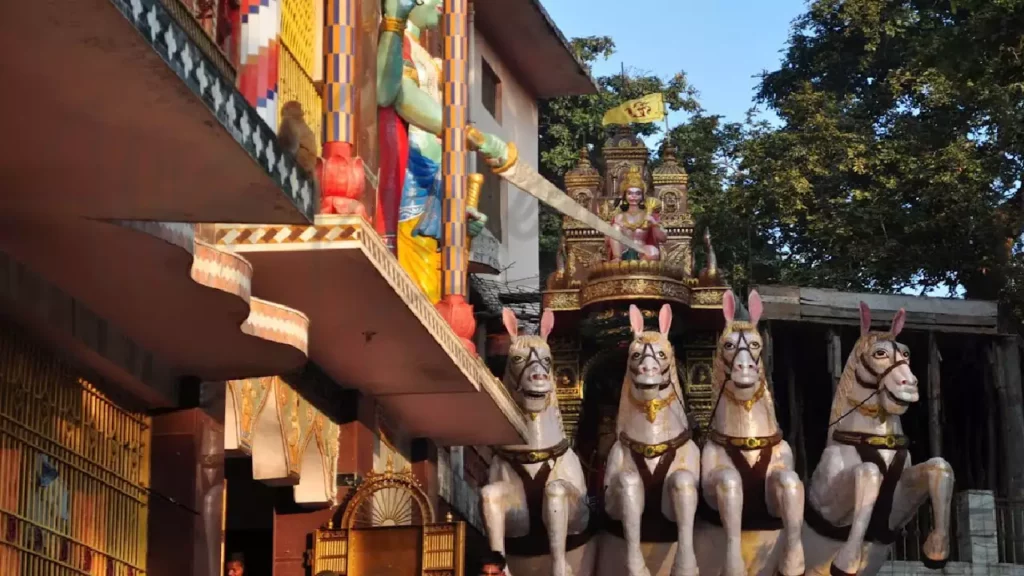
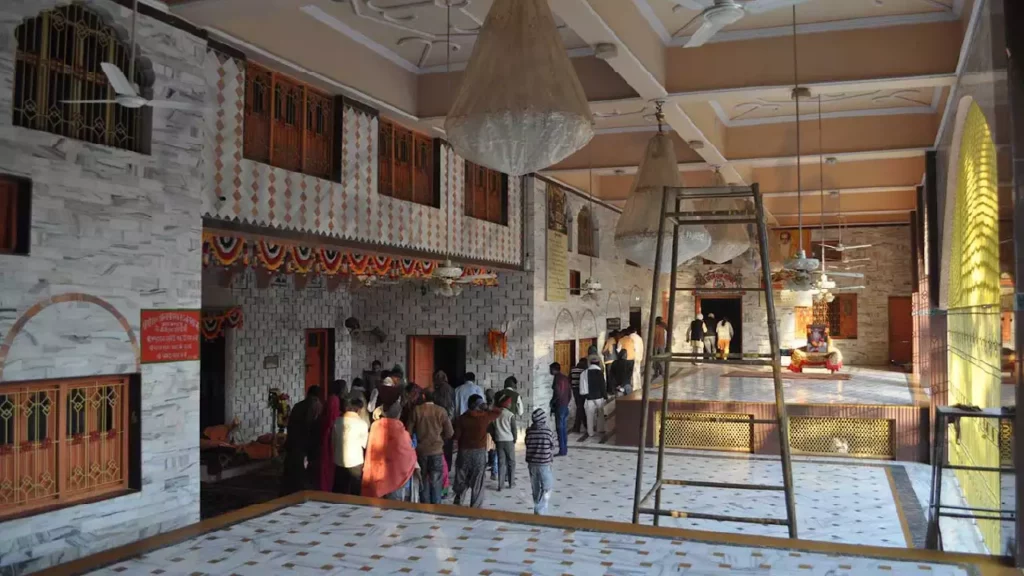
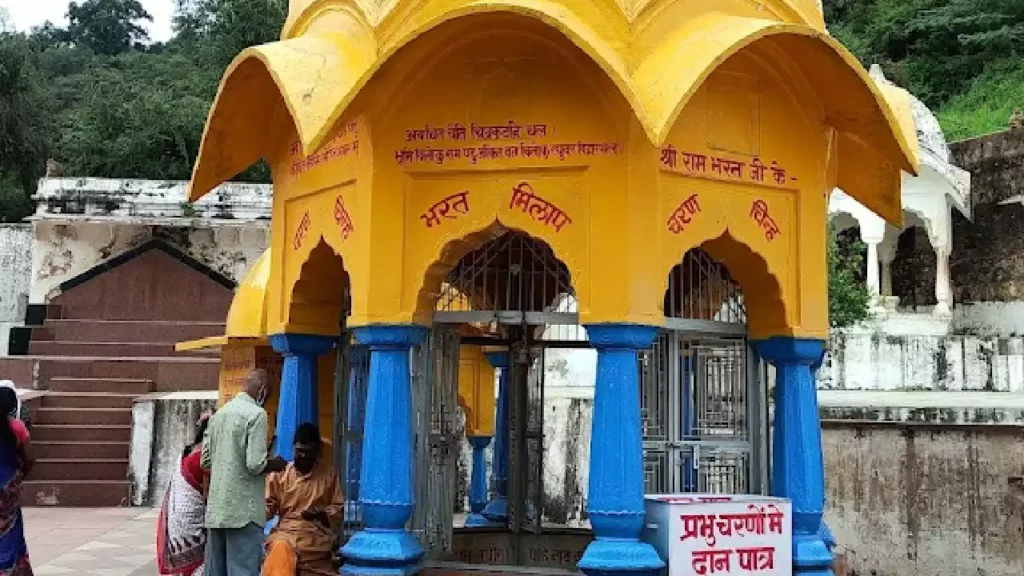
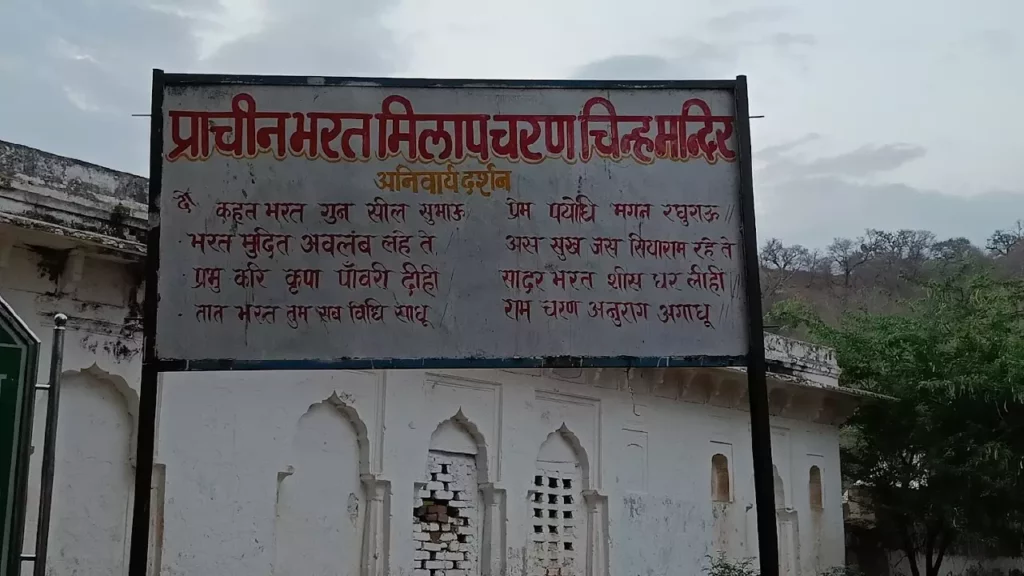
Bharat Milap Temple in Chitrakoot marks the site of one of the most emotionally charged episodes in the entire Ramayana: the moment when Bharat — Ram’s younger brother and the unwilling heir to Ayodhya’s throne — arrived at the forest to find Ram and beg him to return. The meeting of the two brothers here, with all the grief and love and political complexity it carried, is understood in the Hindu tradition not just as a family reunion but as a demonstration of the highest possible human virtue. Both brothers chose dharma over personal desire, and the ground beneath them is said to have recorded that moment permanently.
The Story of Bharat Milap
After Dasharatha’s death and Ram’s departure into exile, Bharat returned to Ayodhya from his maternal uncle’s kingdom, where he had been staying during the events that triggered the exile. He returned to find his father dead, his beloved elder brother in the forest, and himself seated on a throne he had never wanted and would never use. Consumed with grief and anger at his mother Kaikeyi’s actions, Bharat set out for the forest with an army, attendants, and all three queens of Ayodhya — not to stay in power but to find Ram and return the kingdom to its rightful ruler.
The meeting that happened on this hill in Chitrakoot is described in vivid detail in both the Valmiki Ramayana and the Ramcharitmanas of Tulsidas. Bharat fell at Ram’s feet, weeping, and implored him to abandon the exile, which he argued was based on a promise extracted unjustly. Ram refused — not out of stubbornness but out of his commitment to Dasharatha’s word, which he considered binding regardless of the circumstances under which it was given. The exchange between the brothers is a profound dialogue on duty, love, kingship, and the limits of personal grief in the face of dharmic obligation.
In the end, Bharat accepted Ram’s decision. He took Ram’s wooden sandals back to Ayodhya, placed them on the throne as the symbol of Ram’s absent kingship, and ruled Ayodhya as a regent for fourteen years — refusing to sit on the throne himself, living the life of an ascetic, waiting for Ram’s return. Bharat Milap Temple commemorates the exact spot where this agreement was reached.
The Rocks That Wept: Physical Evidence of Divine Emotion
One of the most remarkable claims about Bharat Milap Temple is that the rocks of the hill actually melted partially due to the heat of the emotions generated at the meeting. This is not presented as metaphor — the temple shows what are described as indentations and markings on the rocks that are explained as the physical impressions of the brothers’ feet and the traces of their tears and embrace. Whether one interprets this literally or symbolically, the point the tradition is making is significant: that the emotion of that moment was so intense, so cosmically charged, that even inanimate matter registered it.
Pilgrims who visit can see the footprints of the three brothers — Ram, Bharat, and Lakshman — preserved on the stone surface of the temple. Looking at these impressions, many devotees report being overcome with a range of feelings: sorrow at the separation, admiration for Bharat’s self-sacrifice, reverence for Ram’s steadfastness. The Ramcharitmanas describes even the rocks and trees of Chitrakoot weeping during the Bharat Milap, and the tradition at the temple keeps that memory alive in a tangible form.
Bharat’s Sandals and the Meaning of Padukas
The paduka — the wooden sandal — became the central symbol of Ram’s absent authority during the exile years. Bharat’s act of placing Ram’s padukas on the throne of Ayodhya and ruling in their name rather than his own is considered one of the most extraordinary acts of fraternal devotion in world literature. The padukas said: the throne belongs to Ram, and until Ram returns, no one else will sit on it. This is why the paduka is venerated across Hindu tradition as a symbol of the guru or sovereign’s presence even in absence.
At Bharat Milap Temple, this symbolism is alive. The temple complex includes shrines to Bharat specifically — unusual in the Ramayana circuit where Ram, Sita, Lakshman, and Hanuman dominate. Bharat’s willingness to suffer personally rather than benefit from his mother’s scheming makes him, in the eyes of many devotees, the Ramayana’s most selfless figure. He had what Ram had to give up — the kingdom — and he refused it entirely out of love and principle.
Kamadgiri Parikrama and the Bharat Milap Circuit
Chitrakoot’s most sacred walking ritual is the Kamadgiri Parikrama — a five-kilometre circumambulation of the holy Kamadgiri hill, which is considered the physical embodiment of Ram himself during his time of exile. Bharat Milap Temple is located at the base of Kamadgiri hill, making it a natural stop on the parikrama circuit. Pilgrims completing the parikrama in the early morning typically begin or conclude their walk at Bharat Milap, offering prayers at the footprints before continuing to Ram Ghat and then to Janki Kund.
Every year on the full moon night of Kartik (October-November), a live dramatic re-enactment of the Bharat Milap is performed at the temple. Actors in traditional costume portray the meeting of the brothers, the grief and the dialogue, the handing over of the padukas. Thousands of pilgrims gather to witness this performance, which typically runs through the night with simultaneous kirtan and recitation from the Ramcharitmanas. The combination of moonlight, the forest setting, and the emotional weight of the story creates an experience that participants describe as transformative.
The Temple of Mandavi
Adjacent to Bharat Milap Temple is a smaller shrine dedicated to Mandavi, the wife of Bharat. This is relatively rare in the Ramayana pilgrimage circuit — Mandavi, unlike Sita or Urmila, is not widely celebrated, but her presence here acknowledges the silent sacrifices of the women who accompanied their husbands through the events of the Ramayana. Just as Bharat gave up his throne out of loyalty to Ram, Mandavi gave up the life she might have had as queen of Ayodhya. The small temple beside Bharat Milap honours that quieter form of devotion.
For a complete guide to Chitrakoot’s pilgrimage circuit, see our Chitrakoot travel guide, which includes the Kamadgiri Parikrama route, Ram Ghat, Janki Kund, Sphatik Shila, and all the major temples and ashrams. Our Varanasi-Prayagraj-Ayodhya-Chitrakoot 4N/5D Deluxe tour package covers the full Ram pilgrimage belt of Uttar Pradesh, with guided visits to all major sacred sites.