Varanasi — also called Kashi or Banaras — sits on the west bank of the Ganga in Uttar Pradesh, and has been continuously inhabited for at least 3,000 years. It is one of the oldest living cities on earth. For Hindus, dying in Varanasi is not a tragedy but a liberation: the belief is that Lord Shiva himself whispers the Taraka mantra into the ear of the dying, granting moksha. That belief has drawn pilgrims here for millennia, and it continues to draw them today.
The Ghats: Where the City Meets the River
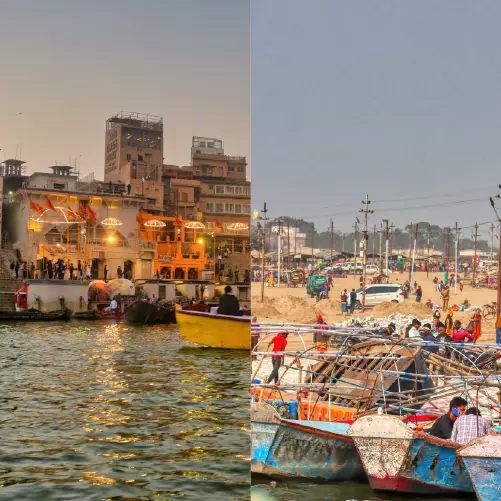
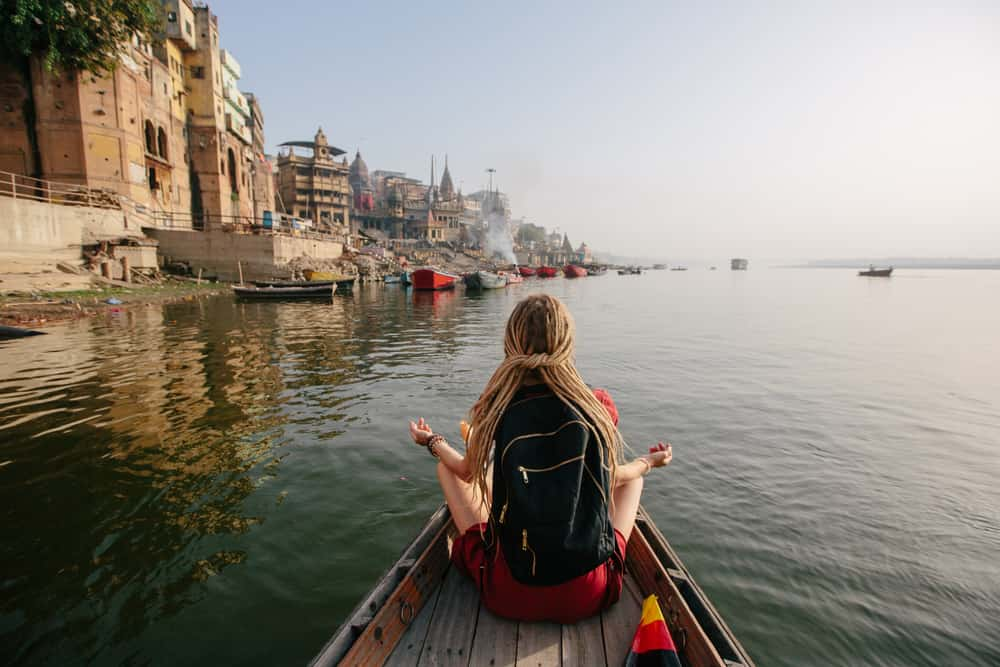
Varanasi has 88 ghats stretching along roughly 6.5 kilometres of the Ganga’s western bank, and walking the entire stretch at dawn is one of the most powerful experiences in India. Each ghat has its own history, its own presiding deity, and its own mood.
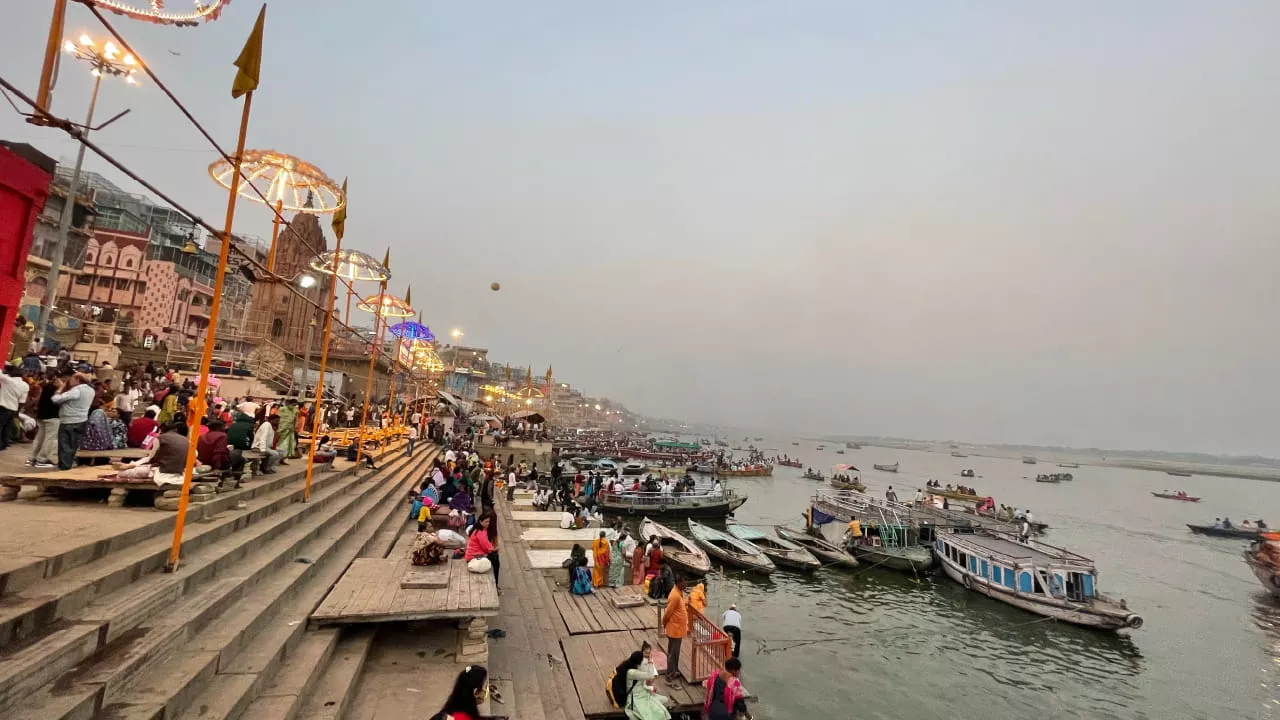
Dashashwamedh Ghat is the social and ritual heart of Varanasi. The name comes from the legend that Brahma performed the Dashashwamedha yajna (ten horse sacrifice) here. Every evening at sunset, five priests perform the Ganga Aarti in perfectly synchronised choreography — conch shells, camphor flames, and dhoop smoke rising together above the river. Thousands gather on the ghat and in boats anchored mid-river to witness it. Arrive by 6:30 PM to get a good spot.
Manikarnika Ghat is the most sacred cremation ground in the Hindu world. Pyres burn around the clock without pause, and have done so, according to tradition, for thousands of years. The atmosphere is solemn rather than morbid — families arrive, priests chant, the Dom caste attendants tend the fires. Photography is not permitted out of respect for the bereaved.
Assi Ghat, at the southern end, is calmer and beloved by students, sadhus, and long-term visitors. The morning aarti here is smaller and more intimate than Dashashwamedh. A peepul tree shelters a large Shivalinga said to be as old as the city itself.
Harishchandra Ghat is the second cremation ghat and is considered older than Manikarnika. Scindia Ghat has a half-submerged Shiva temple that tilted into the river decades ago and now sits at a dramatic angle, its tower visible above the waterline at low water. Panchganga Ghat is where, according to tradition, five sacred rivers meet.
Temples of Varanasi
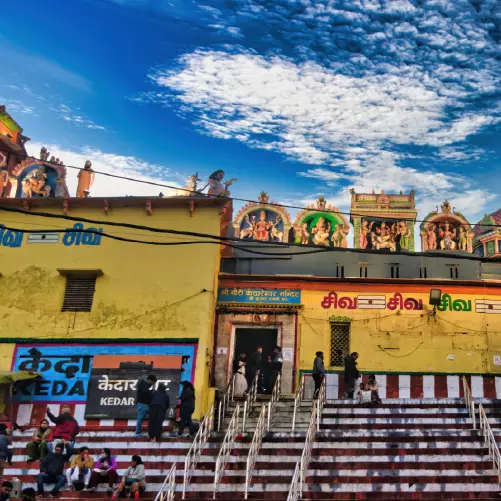
Varanasi has more than 2,000 temples within its old city limits. The most significant among them:
Kashi Vishwanath Temple is one of the 12 Jyotirlingas — the most sacred Shiva shrines in India. The present temple was built by Maharani Ahilyabai Holkar of Indore in 1780 after the original was destroyed. In 2021, a sweeping corridor project opened the temple to a far wider approach from the Ganga. The main linga, known as Vishweshwara or Vishwanath (Lord of the Universe), attracts an estimated 3 lakh visitors on ordinary days and far more during festivals. Entry requires leaving bags and phones at the cloak room on Vishwanath Gali.
Annapurna Temple stands close to Kashi Vishwanath and is dedicated to the goddess of food and nourishment. It is believed that no one goes hungry in Kashi because Annapurna herself feeds the city. The Annapurna Devi mandir is especially crowded during Annakuta, the day after Diwali.
Kaal Bhairav Temple houses the fearsome guardian deity of Kashi. Bhairav is the kotwal (police chief) of the city — tradition holds that no one can reside in Varanasi without his permission. The Kaal Bhairav mandir is unique in that offerings include mahua liquor, poured directly into the deity’s mouth.
Sankat Mochan Temple, dedicated to Hanuman, was founded by the saint-poet Tulsidas in the 16th century. The Sankat Mochan mandir is open all day and is a deeply loved neighbourhood temple, not primarily a tourist site — the music of bhajans fills the courtyard continuously.
Tulsi Manas Temple is a marble temple built in 1964 on the site where Tulsidas is believed to have written the Ramcharitmanas in the 16th century. The walls are inscribed with verses from the Manas. The Tulsi Manas mandir is one of the few temples in Varanasi with no restriction on non-Hindus entering.
The Vishwanath Temple at BHU (Banaras Hindu University) is a white marble temple built by industrialist Birla in 1966. It is separate from the original Kashi Vishwanath and sits inside the tranquil BHU campus — worth visiting for the architecture and the calm it offers after the density of the old city. See the BHU Vishwanath Temple page for details.
Durga Kund Temple, known locally as Durga Mandir, stands beside a tank filled with red fish. The temple’s red-ochre exterior makes it visually striking, and it is one of the most visited temples in the city after Vishwanath. See the Durga Kund Temple page for timings and aarti schedules.
Sarnath: The Deer Park Where Buddha First Taught
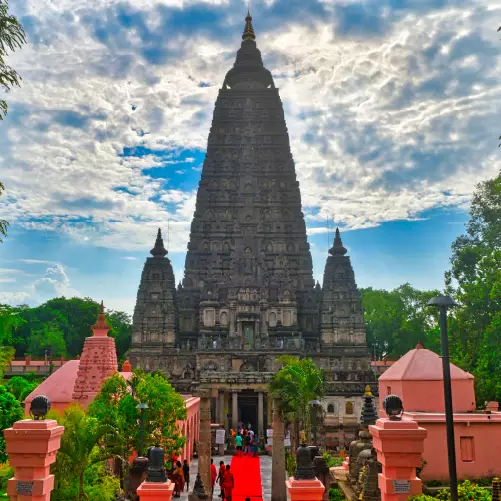
Just 10 kilometres north-east of Varanasi city centre lies Sarnath, where the Buddha delivered his first sermon after attaining enlightenment at Bodh Gaya. The Dhamek Stupa, built in 500 CE and rising 43.6 metres, marks the exact spot. The Ashoka Pillar erected here in the 3rd century BCE carries the Lion Capital that became independent India’s national emblem. The Sarnath Archaeological Museum holds some of the finest Gupta-period Buddhist sculpture in the world, including the polished sandstone Lion Capital. The site takes 2–3 hours to explore properly and is best combined with a half-day in Varanasi.
Banaras Hindu University and the Cultural Life of the City
Founded in 1916 by Pandit Madan Mohan Malaviya, Banaras Hindu University (BHU) is one of Asia’s largest residential universities, with over 30,000 students. The campus houses a remarkable collection of art at the Bharat Kala Bhavan museum — Mughal and Rajput miniatures, textiles, terracotta, and coins dating back to the Mauryan period. Entry is open to visitors; timings are 10:30 AM to 4:30 PM, closed on Sundays and university holidays.
Varanasi is the home of the Banaras Gharana of Hindustani classical music — a tradition of instrumental and vocal performance that traces its lineage back several centuries. The city has historically been a centre for tabla, sarod, and sitar, and informal concerts are held at various venues, including the Sankat Mochan Music Festival each spring.
Varanasi Silk: Banarasi Sarees
Varanasi has produced silk textiles since ancient times. The Banarasi saree — characterised by fine silk, gold and silver zari work, and motifs of Mughal-influenced floral patterns, jalis (lattice work), and kalgas — has a Geographical Indication (GI) tag protecting it. The weaving community is concentrated in neighbourhoods like Madanpura, Adampura, and Lallapura. Reputable showrooms for genuine Banarasi silk are found along Vishwanath Gali, on Lahurabir Road, and at the government-run UP Handloom Corporation outlets. Be cautious of machine-made imitations sold near the ghats at low prices.
Food in Varanasi
Varanasi’s food culture is inseparable from its identity. The city is staunchly sattvic — no meat, fish, or eggs are sold in most of the old city areas near the ghats and temples. What it excels at is the depth of its vegetarian and sweet repertoire.
Kachori Sabzi from Kashi Chat Bhandar on Vishwanath Gali is the classic Banarasi breakfast — crisp, flaky kachoris with spiced potato curry. Tamatar Chaat is unique to Varanasi — a tangy, spicy preparation made from tomatoes, not potatoes or papdi. Seek it out at stalls near Dashashwamedh Ghat. Malaiyo (also called Nimish) is a winter specialty: an extraordinarily light, airy sweet made from milk foam, saffron, and dry fruits — it exists for only a few months each year. Thandai, a spiced milk drink of almonds, cardamom, fennel, and rose petals, is the city’s signature drink and is especially prominent during Mahashivratri and Holi.
Practical Travel Information
Getting there: Varanasi is well-connected by air (Lal Bahadur Shastri International Airport, about 25 km from the city, with flights from Delhi, Mumbai, Bengaluru, Kolkata, and Chennai), rail (Varanasi Junction and Manduadih/Banaras station), and road (NH19 connects it to Prayagraj, about 120 km away).
Getting around: The old city near the ghats is not accessible by car. Auto-rickshaws and e-rickshaws run through the main arteries, but the ghats and temple alleys are best explored on foot. Hiring a cycle-rickshaw for the ghat road between Assi and Rajghat gives a good orientation to the waterfront.
Best time to visit: October to March is the most pleasant period. Summers are brutal (40–45°C). Diwali in Varanasi (Dev Deepawali follows it by 15 days) is spectacular — over a million diyas are lit on the ghats on Kartik Purnima. Mahashivratri draws enormous crowds and is celebrated through the night. Avoid visiting on Mondays if you want a manageable queue at Kashi Vishwanath.
Where to stay: For ghat views, look for heritage guesthouses along Assi Ghat and Dashashwamedh. For comfort and distance from the old city’s density, the cantonment and Sigra areas have most of the larger hotels. Book well in advance for Diwali, Dev Deepawali, and Mahashivratri.
Visiting Varanasi as part of a wider pilgrimage is common — many combine it with Prayagraj (120 km), Gaya (250 km), and Ayodhya (200 km). Our Prayagraj–Ayodhya–Varanasi tour package covers all three in a single itinerary.