






Introduction – Places to visit in Ayodhya in 2024
The historic temple town of Ayodhya in northern India attracts thousands of Hindu pilgrims every year. As the legendary birthplace and capital of Lord Rama, the city brims with important sites linked to the epic Ramayana.
From the sacred spot marking Rama’s birth to ashrams commemorating pivotal events, Ayodhya lets visitors step back in time to the Treta Yuga age when gods walked among humans here. Even ruins and relics exude spiritual power with such profound lore attached.
This guide covers the most significant places allowing you to discover Ayodhya’s living heritage as the cradle of Lord Rama’s reign on earth.
Ram Janmabhoomi

The focal point for arriving pilgrims includes Ram Janmabhoomi, a temple housing a modest shrine said to denote Rama’s exact birth spot. This profoundly holy site sees endless queues of devotees waiting for darshan even though a grander temple is still under construction. Being present at this pinpointed location where Lord Rama manifested in human form resonates deeply for Hindus.
Hanuman Garhi

Perched atop steep stone steps sits this imposing fort-style temple devoted to the revered Ramayana figure, Hanuman. As Rama’s loyal monkey warrior making many heroic contributions in the epic, Hanuman receives packed daily aarti sessions here. His Figure facing the Ram Janmabhoomi reinforces guardianship over the sacred birthplace. Climb to the roof to soak up panoramas over historic Ayodhya.
The Spiritual Core
The heart of your Ayodhya pilgrimage
Ram Janmabhoomi
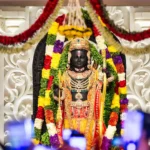
The grand Nagara-style temple. Witness the divine child form of Lord Ram (Ram Lalla) in the sanctum.
Hanuman Garhi
The fortress temple of the city's guardian. Tradition says you must visit here before meeting Lord Ram.
Lata Mangeshkar Chowk
A stunning new intersection featuring a massive 40-ft Veena sculpture dedicated to the legendary singer.
Saryu Ghat (Naya Ghat)
The spiritual lifeline of the city. Perform the evening Aarti here amidst chanting and thousands of lamps.
Kanak Bhawan

Believed to occupy part of King Dasaratha’s original palace grounds, Kanak Bhawan now houses a small shrine containing ancient murtis alongside a temple accommodating larger icons of Lord Rama, Sita and Lakshmana. Its tranquil, divine atmosphere makes this a favourite refuge for meditation and prayer. Don’t miss the shared courtyard’s sacred peepal tree either.
Guptar Ghat
Guptar Ghat Positioned along the Sarayu River two kilometres from central Ayodhya lie the bathing ghats known as Guptar Ghat. Lord Rama himself reportedly prayed and performed water rituals at this spiritually-charged spot which remains an active pilgrimage site today. Seeing holy men offering evening aarti as the sun dips while bats circle and devotees cleanse away sins conjures intense nostalgia for Rama’s presence.
Kanak Bhawan Museum

Dedicated to preserving Ayodhya’s historic Rama connection, this excellent museum adjacent to Kanak Bhawan temple displays rare antiquities plus dioramas depicting the Ramayana timeline. Getting quick context here before touring relevant sites brings deeper insight. Don’t miss the small-scale model of Ayodhya either, accurately showing temple layouts.
Ram ki Paidi Ghat

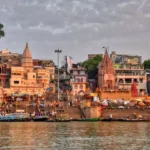
Marking the river-side spot where Lord Rama allegedly paid respects to ancestors while returning from exile, this stepped ghat now draws thousands for stunning nightly aarti. The elaborate ceremonies feature candles floated on the Sarayu River bearing hand-written dedication notes to God. Soak up electric devotion orbiting a 25-foot statue of Rama in the midst also recently installed.
New in Ayodhya
Modern attractions transforming the ancient city
- Surya Stambhs
- Mural Art
- Jatyau River Cruise
- Laser Show
Nageshwarnath Temple

Dedicated to Lord Shiva, this small yet highly sacred temple 2 kilometres from central Ayodhya marks one of 12 ‘Jyotirlingas’ – important Shiva shrines mentioned in the Shiva Purana. Lord Rama himself consecrated the stone lingam figure still receiving fervent prayers today. Visiting such a referenced pilgrimage site completes understanding the area’s multi-faceted spiritual heritage.
Top Places to See in Ayodhya
| Site | Significance |
|---|---|
| Ram Janmabhoomi | Marks Lord Rama’s mythical birthplace with a modest temple |
| Hanuman Garhi | Fortress-like temple dedicated to Lord Rama’s disciple Hanuman |
| Kanak Bhawan | Occupies part of an ancient palace with a temple housing revered figures |
| Guptar Ghat | Sacred bathing ghats on the Sarayu River used by Lord Rama himself |
| Kanak Bhawan Museum | Showcases Ayodhya relics and Ramayana-linked artefacts |
| Ram ki Paidi Ghat | Riverside ghats with nightly worship ceremonies floating lamps |
| Nageshwarnath Temple | One of 12 key Jyotirlinga shrines dedicated to Lord Shiva |
This summary only scratches the surface of mythologically rich things awaiting discovery across Ayodhya related to Lord Rama or reaching back thousands of years. Wandering the city’s living heritage and walking in legendary footsteps makes for an unforgettable and mesmerizing pilgrimage experience like nowhere else in India. Come immerse yourself in holy sights and sounds!
Sightseeing FAQ
Practical tips for visiting the top places
Can we cover all places in one day?
It is tight. We recommend 2 days: Day 1 for the main temples (Ram Mandir, Hanuman Garhi, Kanak Bhawan) and Day 2 for Guptar Ghat, Mani Parvat, and Nandigram.
Is boating available?
Yes, boating is popular at Naya Ghat and Guptar Ghat. A shared boat ride costs approx ₹50-100 per person, while private boats range from ₹500-1500.
Are mobile phones allowed in temples?
Phones are allowed in most places like Kanak Bhawan and Ram Ki Paidi, but are STRICTLY PROHIBITED inside the Ram Janmabhoomi complex. Free lockers are available at the entrance.