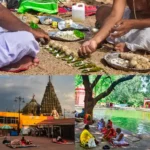


In the spiritual landscape of Sanatana Dharma, paying homage to our ancestors is not just a ritual; it is a profound duty known as Pitru Rina (ancestral debt). Among the many sacred rites performed for departed souls, Hiranya Shrardham and Pinda Pradhanam in Gaya hold an exalted place, especially when performed at the revered Akshaya Vatam in Bihar.
If you are planning to undertake this sacred journey, here is a complete, detailed guide on everything you need to know about preparing for and performing Pinda Pradhanam in Gaya.
Where in Gaya was Pinda Pradhanam performed?
This specific ritual is performed in Gaya, Bihar, an ancient city universally recognized as the most auspicious place for ancestral rites. The climax of your Pinda Pradhanam in Gaya concludes at the Akshaya Vatam, the immortal, indestructible banyan tree. According to scriptures, Lord Rama, Goddess Sita, and Lakshmana performed the Shrardham for King Dasharatha here. Placing offerings at the feet of this very tree during Pinda Pradhanam in Gaya ensures that the merits of the ritual last for eternity.
Purity is non-negotiable. Men must wear a white Dhoti (unstitched). Women should wear a Saree/Salwar in subdued colors (Yellow/White). A strict fast is required until the ritual is complete, followed only by Sattvic food (No onion/garlic).
Why is this Pooja Done?
The primary purpose of Hiranya Shrardham and Pinda Pradhanam in Gaya is to help departed ancestors (Pitrus) attain Moksha (liberation) from the cycle of birth and death. It provides them with spiritual nourishment for their onward journey in the afterlife. “Hiranya” means gold or wealth, and “Hiranya Shrardham” traditionally involves the offering of cash or gold (Dakshina) in place of certain elaborate food preparations, making it practical yet highly potent when combined with the traditional Pinda Pradhanam in Gaya (the offering of rice balls).
Who Should Perform It and With Whom?
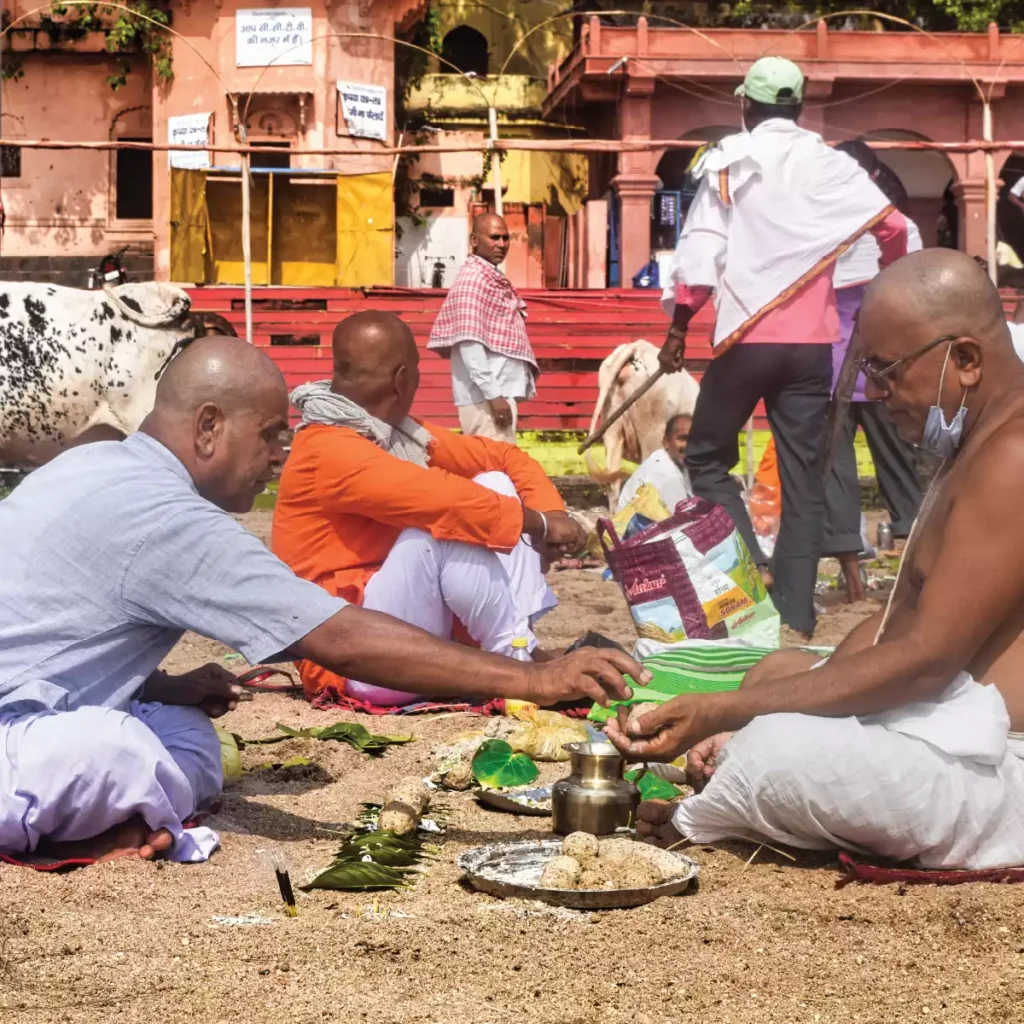
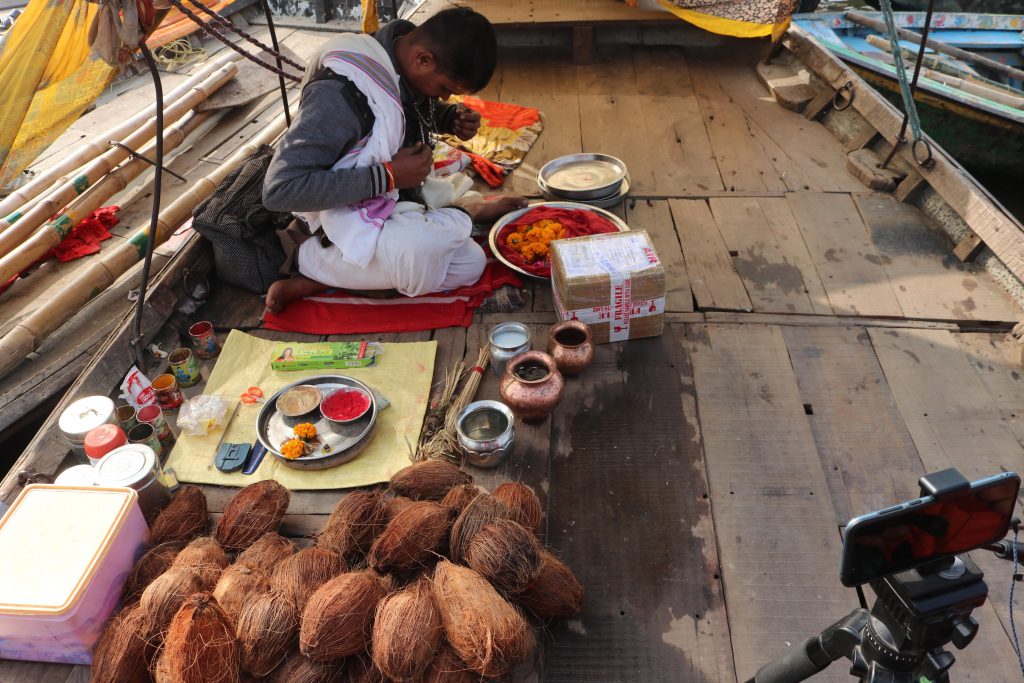
Traditionally, Pinda Pradhanam in Gaya is performed by the eldest son or male descendants of the family. However, in the absence of male heirs, widows or daughters can also perform the rites under the guidance of a learned priest. The ritual must be performed alongside a local Gayawal Panda (a specialized Brahmin priest of Gaya) who acts as the spiritual guide for your Pinda Pradhanam in Gaya and the representative of your ancestors during the ceremony. Family members usually sit together to offer their collective prayers.
What Should You Wear?
Purity is paramount when attending Pinda Pradhanam in Gaya.
- Men: Must wear traditional, unstitched clothing. A clean, white cotton Dhoti is mandatory. The upper body is usually kept bare or covered with an Angavastram (a simple white cotton cloth). Silk is often avoided for this specific mourning-related rite.
- Women: Should wear modest, traditional attire such as a saree or a salwar kameez. Bright, flashy colors are usually avoided; simple, subdued colors like yellow, white, or light shades are preferred.
What Should Be Eaten?
Dietary discipline is critical for anyone performing Pinda Pradhanam in Gaya.
- Before the Ritual: The person performing the rite must observe a strict fast from morning until the ritual is completed.
- After the Ritual: Once the Pooja is over, the family must consume only pure Sattvic food. This means a strict vegetarian diet completely devoid of onion, garlic, mushrooms, and heavy spices. Meals usually consist of simple rice, dal, and mild vegetables.
What is Required for the Ritual?
We arrange all necessary Samagri and the Priest.
- Gayawal Panda: A specialized local Brahmin priest who has the hereditary right to perform rites in Gaya.
- Havis-Annam: Sacred cooked rice mixed with black sesame, ghee, and milk for the Pindams.
- Hiranya (Dakshina): The offering of cash or gold to the priest, representing wealth and substitute for elaborate meals.
- The Venue: Access to the sacred Akshaya Vatam tree complex for the final offering.
The Ritual Details and Requirements
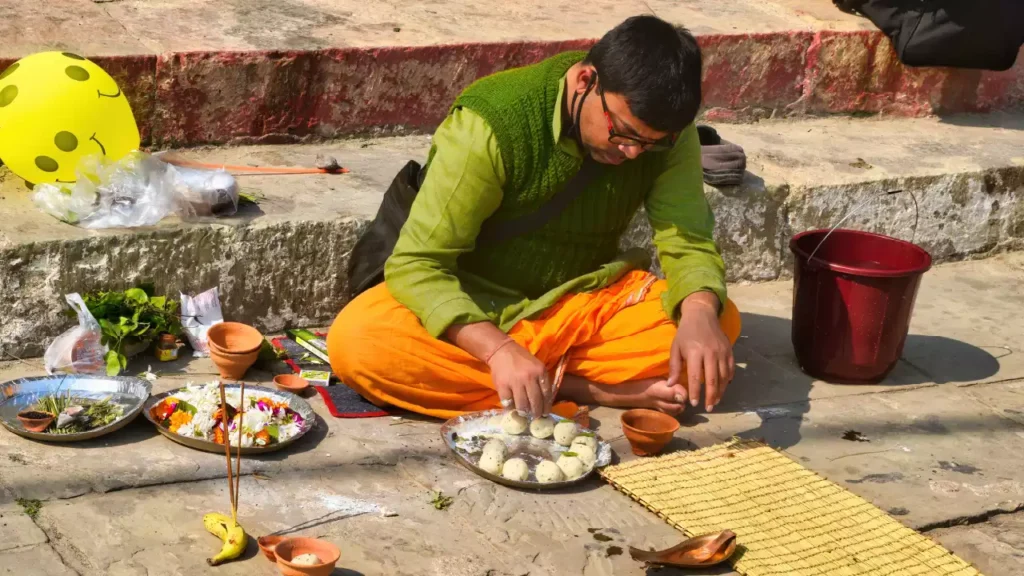
To perform this profound ceremony, the primary articles required for Pinda Pradhanam in Gaya are Havis-Annam (sacred, pure cooked rice mixed with black sesame seeds, ghee, and milk) for exactly 64 Pindams, along with Dakshina (cash offerings).
The ritual unfolds beautifully at the base of the Akshaya Vatam. The devotee molds the Havis-Annam into 64 Pindams (rice balls). These 64 Pindams represent various generations of ancestors from both the paternal and maternal sides, as well as forgotten souls who may have no one else to pray for them.
The priest asks if the ancestors are satisfied with the offerings. The priest, channeling the blessings of the Pitrus, replies in the affirmative. Finally, the devotee offers Dakshina (cash) to the sitting Panda as a gesture of gratitude, concluding the cosmic transaction of energy and blessings.
The Benefits of the Pooja
Performing the Hiranya Shrardham and Pinda Pradhanam in Gaya yields immense spiritual benefits:
- Liberation for Ancestors: It grants eternal peace to restless souls, helping them cross over to the spiritual realm.
- Removal of Pitru Dosha: Pinda Pradhanam in Gaya eradicates ancestral curses or karmic blockages (Pitru Dosha) in the family lineage, which often cause unexplained hardships.
- Prosperity and Peace: With the ancestors satisfied, they shower their descendants with blessings of good health, harmonious marriages, career growth, and healthy progeny.
By performing this sacred rite at Akshaya Vatam, you are not just executing a ritual; you are bridging the physical world with the divine, honoring the roots that gave you life, and ensuring peace for generations past and future.
Pinda Pradhanam Queries
Clearing doubts about eligibility and process.
Can women perform Pinda Pradhanam?
Yes. In the absence of male heirs, daughters or widows can perform the rites under the guidance of our learned priests.
What is "Hiranya Shrardham"?
Hiranya means gold/wealth. It is a form of Shraddha where raw food materials (Sidha) or cash (Dakshina) are offered to the priest instead of cooked food, making it practical for travelers.
Do I need to bring the Pooja materials?
No. Prayag Samagam arranges the Havis-Annam (Rice), Sesame seeds, Dhoti, and all other Pooja Samagri. You only need to bring yourself.
Ready to perform these sacred rites? Our Gaya Pind Daan Tour Package includes pandit arrangements, accommodation, and all ritual logistics.