

Planning the Kashi-Rameshwaram Yatra is one of the most spiritually significant decisions a Hindu devotee can make. This pilgrimage — connecting the northernmost and southernmost Jyotirlingas of India — is not a weekend trip. It requires thoughtful preparation across routes, rituals, timings, packing, and logistics. This Kashi-Rameshwaram Yatra Planning Guide covers everything a first-timer needs to know: how many days to allocate, which temples to visit and in what order, what rituals to perform, how to get there, what to pack, and what to expect on the ground.
If you are looking for cost breakdowns, see our detailed Kashi-Rameshwaram tour package cost guide. If you want a head-to-head comparison of DIY vs. guided travel, our Kashi-Rameshwaram Yatra package vs DIY comparison has the numbers. This guide focuses on the planning fundamentals that apply regardless of how you travel.
What Is the Kashi-Rameshwaram Yatra?
The Kashi-Rameshwaram Yatra is a pilgrimage that connects two of the twelve Jyotirlingas: Kashi Vishwanath in Varanasi (Uttar Pradesh) and Ramanathaswamy in Rameswaram (Tamil Nadu). The distance between them is roughly 3,000 kilometres — essentially the entire length of peninsular India.
The yatra is built around a single, continuous ritual act. You collect holy Ganga Jal (sacred Ganges water) from Varanasi — or the Triveni Sangam in Prayagraj — carry it southward to Rameswaram, and pour it over the Ramanathaswamy Lingam as an Abhishekam. Then you collect three handfuls of sand from Agni Theertham (the sacred sea at Rameswaram) and bring it back north to dissolve in the Ganga or Sangam. This exchange — water from the north to the south, sand from the south to the north — is what makes this a complete spiritual circuit, not just two separate temple visits.
The tradition is rooted in the Ramayana: after defeating Ravana, Lord Rama is said to have performed prayaschitta (atonement for killing a Brahmin) by worshipping Shiva at Rameswaram. He sent Hanuman to Kashi to bring a Shivalinga, and when Hanuman was delayed, Goddess Sita fashioned a Lingam from sand — the Ramalingam. Both Lingas (the Ramalingam and the Vishwalingam brought by Hanuman) are worshipped at Rameswaram to this day. Completing this yatra is considered one of the most powerful acts of spiritual merit in Hindu tradition, capable of washing away accumulated karma across lifetimes.
The Traditional Kashi-Rameshwaram Yatra Route
There are two broad approaches to the route: the direct two-city version and the extended pilgrimage circuit. Most devoted pilgrims prefer the extended route, which layers additional sacred stops between Kashi and Rameswaram.
The Extended Traditional Route (Recommended)
Varanasi (Kashi) — The yatra begins here. Visit Kashi Vishwanath, collect Ganga Jal at the ghats, and take a formal Sankalp (spiritual vow) declaring your intent to complete the circuit. The Sankalp is traditionally taken at the ghats with a priest as witness.
Prayagraj (Triveni Sangam) — Many pilgrims stop at the Sangam to collect Ganga Jal here as well, since the confluence of Ganga, Yamuna, and the mythical Saraswati is considered supremely sacred. This is also a common place to perform Pind Daan for ancestors before departing for the south.
Ayodhya — The birthplace of Lord Rama. Pilgrims pay respects at Ram Janmabhoomi and seek blessings before undertaking a yatra that follows in Rama’s footsteps. A half-day stop is typical. See our Prayagraj-Ayodhya-Varanasi tour package if you want to combine these northern stops efficiently.
Chitrakoot — Where Lord Rama spent eleven years of his exile. A deeply revered stop for devotees of Rama, particularly those undertaking the Ramayan circuit. Kamadgiri parikrama (circumambulation of the sacred hill) is the primary ritual here.
Nasik / Trimbakeshwar — Some pilgrims include Trimbakeshwar (one of the twelve Jyotirlingas) on the way south, particularly those travelling by road through Maharashtra.
Madurai / Kanyakumari — Optional stops in Tamil Nadu before reaching Rameswaram. Meenakshi Amman Temple in Madurai is one of the most magnificent temple complexes in India. Kanyakumari, the southernmost tip of India, is a powerful spiritual spot where three seas meet.
Rameswaram — The centrepiece of the yatra. Spend at least two full days here to complete all the rituals properly. Pour the Ganga Jal at Ramanathaswamy, bathe in the 22 Theerthams (sacred wells), visit Dhanushkodi, and collect sand from Agni Theertham.
Return to Prayagraj / Kashi — Dissolve the Rameswaram sand in the Ganga or Sangam to complete the ritual circuit. The cycle is only considered complete when the sand reaches the sacred northern waters.

How Many Days Do You Need for This Yatra?
This is the question every first-timer asks first. The honest answer: the minimum is 8 nights / 9 days to do it with any sense of calm. Anything shorter means you are running from temple to temple without space to absorb what you are doing. Here is how each duration plays out in practice.
5–7 Days: The Express Yatra
This version covers Varanasi and Rameswaram only, with flights between them. You can technically complete the primary rituals — Kashi Vishwanath darshan, Ganga Jal collection, Rameswaram Abhishekam, Theertham baths, Agni Theertham sand — but you will be exhausted. A 5-day itinerary typically looks like: Day 1 fly to Varanasi, Day 2 Varanasi rituals, Day 3 fly to Madurai + transfer to Rameswaram, Day 4 full day Rameswaram, Day 5 Dhanushkodi + fly home. There is no buffer for anything going wrong — a delayed flight, a long queue at the temple, or a health issue on the road completely disrupts the plan.
Who this works for: Young, physically fit travellers with very limited leave. Not recommended for families, seniors, or those undertaking the yatra for the first time as a deeply spiritual act.
8–9 Days: The Comprehensive Yatra (Most Recommended)
This is the format Prayag Samagam’s most popular package is built around. It allows you to include Prayagraj and Gaya alongside Kashi and Rameswaram, which many pilgrims consider essential — particularly those whose primary purpose is ancestral Pind Daan in Gaya. A typical 8N/9D structure: Days 1–2 Varanasi, Day 3 Prayagraj Sangam, Day 4 Gaya Pind Daan, Day 5 fly to Rameswaram, Days 6–7 full Rameswaram rituals, Day 8 Dhanushkodi, Day 9 fly back and dissolve sand.
The 8–9 day window gives you one rest afternoon (usually in Rameswaram on Day 7), which makes an enormous difference to how you feel by the final day. Families consistently report this as the sweet spot. Browse the full 8N/9D Kashi-Rameshwaram itinerary to see how the days are structured.
10–12 Days: The Relaxed Yatra
The format recommended for pilgrims over 60, anyone with health considerations, or families travelling with young children. The extra days are used as buffer and rest time: an extra day in Varanasi to take the Ganga Aarti at leisure, a half-day rest in Rameswaram before the main rituals, and an unhurried morning at Dhanushkodi. You can also add Ayodhya and Chitrakoot within this duration.
Senior-specific planning considerations — wheelchair accessibility, ground-floor rooms, minimal walking distances — are covered in detail in our Kashi-Rameshwaram yatra packages for senior citizens and NRIs.
If you are travelling from South India and want to design the route in reverse (starting from Rameswaram, ending in Kashi), our Kashi-Rameshwaram yatra guide for South India pilgrims covers the specific logistics for that approach.
Best Time to Visit: A Month-by-Month Kashi-Rameshwaram Yatra Planning Guide
The yatra spans two very different climate zones. Varanasi in the north is cold in winter and scorching in summer. Rameswaram in the south is coastal and humid year-round, with temperatures rarely dropping below 25°C even in December. You need a time window that works reasonably for both.
October to March: Prime Season
This is the window most experienced pilgrims recommend. Varanasi is at its most atmospheric — cool mornings at the ghats, clear skies, the Ganga flowing steadily. Rameswaram is warm but bearable, with sea breezes keeping the coastal heat manageable. Temperatures in Varanasi range from 10°C to 25°C in winter; in Rameswaram, expect 22–32°C throughout. The 22 Theertham baths at Rameswaram are far more pleasant when the air is not baking.
October and November are particularly good: the monsoon has cleared, the roads are clean, and the post-harvest festive energy across North India adds to the experience. Book flights and accommodation at least 3–4 months in advance for this window, as both Varanasi and Rameswaram see high tourist volumes.
Maha Shivaratri (February/March)
Performing darshan at both Kashi Vishwanath and Ramanathaswamy on Maha Shivaratri is considered one of the most auspicious acts possible. The challenge: both temples are at peak crowds simultaneously, queues at Kashi Vishwanath can exceed 6–8 hours on the night of Shivaratri, and accommodation in both cities becomes scarce. If you have the stamina and the right logistical support, it is a once-in-a-lifetime experience. If you are a first-timer, the week before or after Shivaratri gives you the spiritual proximity with significantly less physical strain.
April to June: Hot but Manageable with Planning
Varanasi in May can reach 45°C. Rameswaram in April is humid and around 34°C with strong coastal sun. This is not the right window for elderly pilgrims or families with children. That said, flights and accommodation are at their cheapest in this period, and temple queues are noticeably shorter. If you are young, fit, and budget-conscious, it is viable with proper hydration, midday rest, and early morning temple visits. All the major rituals are done by 9 AM in this case.
July to September: Monsoon Season
Avoid if possible. The coastal road to Dhanushkodi becomes inaccessible in heavy rain. Varanasi ghats flood during peak monsoon (August). Train and flight delays are common. The lush greenery along the route is beautiful, but the logistics risk is not worth it for a spiritual journey that requires reliable temple access.
Key Temples and Rituals at Each Stop
Varanasi (Kashi)
Varanasi is the spiritual starting point for every Kashi-Rameshwaram pilgrimage. The city runs on temple time — darshans begin before sunrise, and the most auspicious hours are the Brahma Muhurta (roughly 4:00–5:30 AM) and the Mangala Aarti at Kashi Vishwanath (begins around 3:00 AM). Most visiting pilgrims attend the 3 AM Mangala Aarti if they have the energy.
Kashi Vishwanath Darshan: Book the VIP darshan ticket (currently ₹300) online in advance at the Kashi Vishwanath Temple official portal. General queue darshan during peak season can take 2–5 hours. The sanctum is small; your time inside is about 30–60 seconds, but the approach and the prayers at the outer mandap are the actual spiritual act.
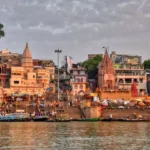
Ganga Jal Collection: Dasaswamedh Ghat or Assi Ghat are the most common collection points. Use a copper kalash or a sealed glass/plastic container. Collect 2–3 litres minimum — enough for a full Abhishekam at Rameswaram, with some left over for the return journey. The Sankalp (formal vow) should be taken here with a priest.
Evening Ganga Aarti: The Dasaswamedh Ghat Aarti begins at sunset (6–7 PM in winter, 7–8 PM in summer). Plan your first evening in Varanasi around this. See our guide on the Varanasi ghats for a complete map of the important ghats and their significance.
Sarnath: The site of Buddha’s first sermon, 10 km from Varanasi. Many pilgrims add a half-day visit, especially on the extended 10–12 day itinerary. Optional but worthwhile.
Prayagraj (Triveni Sangam)
The confluence of Ganga, Yamuna, and Saraswati at Prayagraj is considered the most sacred bathing spot in all of Hinduism. Many pilgrims travelling on the extended Kashi-Rameshwaram circuit stop here for a Sangam bath and, importantly, for Pind Daan (ancestral rites). If performing Pind Daan is a part of your yatra’s purpose, Prayagraj is the preferred site for most North Indian families.
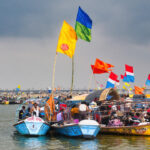
A boat ride to the Sangam point (where the rivers visibly meet) takes 20–30 minutes from the main ghats. Priests are readily available at the ghat for a Sankalp and basic Tarpan rituals. Allow a full half-day minimum; a full day if performing complete Pind Daan ceremonies.
Ayodhya
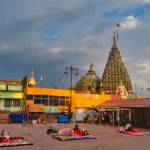
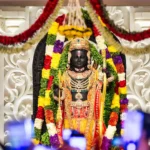
Ayodhya is approximately 200 km from Varanasi and 160 km from Prayagraj — easily doable as a road stop in either direction. The Ram Janmabhoomi temple (opened January 2024) is the primary destination. Hanuman Garhi, Kanak Bhawan, and Saryu Ghat are the other major stops. Saryu Ghat for a dip in the river is considered auspicious before heading south on a Ramayana-connected yatra like Kashi-Rameshwaram.
Rameswaram: The Heart of the Yatra
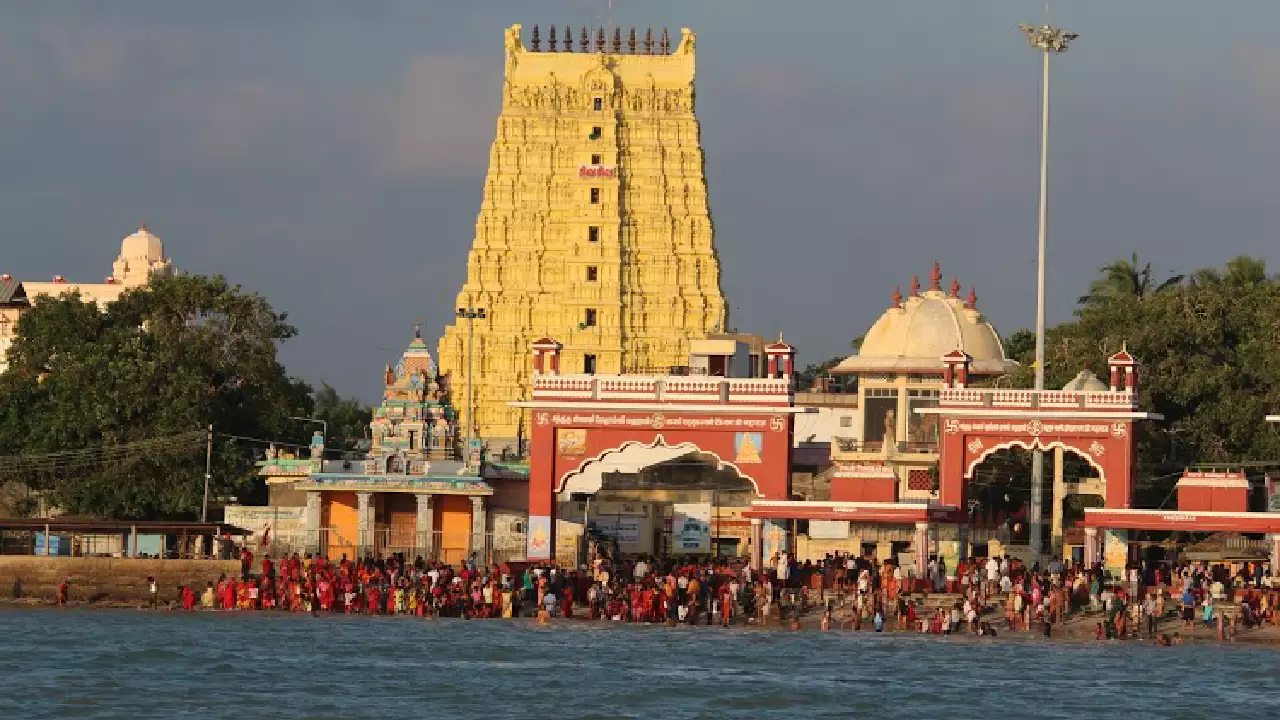
Allocate at least two full days here. The Ramanathaswamy Temple is one of the largest temple complexes in India — its outer corridor (the longest temple corridor in the world at 1,220 metres) requires significant walking. Here is the ritual sequence in the correct order:
Day 1 at Rameswaram:
- Early morning (4–5 AM): Arrive at the temple for the first darshan. The queue is shortest at this hour.
- Abhishekam of Ramanathaswamy with the Ganga Jal you carried from Kashi. Inform the temple priest in advance — there is a designated counter for Ganga Jal Abhishekam.
- Complete the 22 Theertham baths (sacred wells within and around the temple complex). This takes 3–4 hours for the full circuit. You change into dry clothes after each set. Many pilgrims complete this in two sessions — morning and evening.
- Agni Theertham: The sacred beach adjacent to the temple. Bathe in the sea here, then collect three handfuls of sand from below the waterline to bring back to Kashi/Prayagraj.
Day 2 at Rameswaram / Dhanushkodi:
- Morning darshan at Ramanathaswamy for any remaining rituals.
- Drive to Dhanushkodi (18 km from Rameswaram). The last 8 km is a rough sand track that requires a specially permitted 4WD vehicle — these are available for hire at the Rameswaram bus stand. Dhanushkodi is where the Ram Setu (Adam’s Bridge) is believed to start; the confluence of the Bay of Bengal and the Indian Ocean is visible from the shore. The ruined old town (destroyed by a 1964 cyclone) adds to the haunting, sacred quality of the place.
Use a sealed copper kalash or a high-quality leak-proof container for the Ganga Jal. You will be travelling across 3,000 km — carry at least 2 litres and double-seal the container. A spill is considered inauspicious and you may need to collect fresh Jal, which is not always possible mid-journey. Airlines allow sealed copper containers with liquid in checked baggage, but verify this with the airline 48 hours before departure.
Transportation: Getting Between Kashi and Rameswaram
This is where most first-timers underestimate the planning required. The distance between Varanasi and Rameswaram is roughly 3,000 km. There is no direct flight or train. You will always need at least one connecting stop. Here are the main options:
Option 1: Full Train Journey
The Rameswaram Express runs from Varanasi (via Allahabad/Prayagraj and Chennai) to Rameswaram. The total journey time is approximately 38–44 hours. Budget travellers and those who prefer not to fly use this route. The advantage: you see the country pass by, and it is significantly cheaper than flying. The disadvantage: 38 hours of continuous travel is exhausting before you have even begun the temple circuit. AC 2-Tier or AC 3-Tier sleeper berths are strongly recommended over general or sleeper class for a journey of this length. Book through IRCTC at least 60 days in advance for confirmed berths.
Option 2: Flight to Madurai or Chennai, Then Train/Cab
The most practical option for families and senior pilgrims. Fly from Varanasi or Prayagraj to Madurai (IXM) — flight time is around 3 hours with a connection. From Madurai, Rameswaram is 170 km — roughly 3.5 hours by road or by the Madurai-Rameswaram Express train (4 hours). This cuts the travel time to Rameswaram from 40+ hours to under 8 hours total.
Option 3: Flight to Chennai, Then Overnight Train to Rameswaram
Varanasi to Chennai has more frequent direct flights than Varanasi to Madurai. From Chennai, the Chennai-Rameswaram Express is an overnight journey (10–12 hours). This is a good option when Varanasi-Madurai flight prices spike around festival periods.
Departure Cities for South Indian Pilgrims
South Indian pilgrims most commonly begin this yatra from Chennai, Bangalore (Bengaluru), Hyderabad, or Coimbatore. From Chennai, the most direct rail connection is the Chennai-Rameswaram Express. From Bangalore and Hyderabad, the fastest approach is to fly to Madurai and continue by road or rail to Rameswaram. From Coimbatore, many families prefer to drive to Madurai (about 3 hours) and catch the rail connection from there.
For the return leg — dissolving the Rameswaram sand in the Ganga or Sangam — flying from Madurai into Varanasi (via Chennai or Delhi) or Prayagraj works well. These routes are operated by IndiGo, Air India, and SpiceJet with reasonable frequency. Book the return leg at the same time as your onward tickets to avoid price spikes.
Intra-City Travel Within the North
Varanasi, Prayagraj, Ayodhya, and Gaya are all within 250–350 km of each other. The most comfortable way to cover this circuit is by private cab (Innova or Tempo Traveller for groups). Road conditions on the Varanasi-Prayagraj and Prayagraj-Gaya highways have improved considerably with the expressway network. Trains are available on each of these routes but involve more coordination for pilgrims carrying luggage and ritual materials.
Accommodation at Each Stop
Varanasi
Accommodation ranges from basic ashrams and dharamshalas (₹300–₹800/night) to heritage hotels on the Ganga ghats (₹3,000–₹8,000/night). For the yatra, staying within walking distance of Dasaswamedh or Assi Ghat is strongly preferred — it makes the 3–4 AM temple visits manageable without an auto-rickshaw at that hour. Dharamshalas near Kashi Vishwanath are functional and clean but come with thin walls and communal bathrooms. Mid-range hotels in Godowlia (the area near Kashi Vishwanath) offer private rooms with AC for ₹1,200–₹2,500/night.
Rameswaram
This is an island town (connected by bridge) with a limited supply of quality accommodation. The Tamil Nadu Tourism Development Corporation (TTDC) Hotel Tamil Nadu is a reliable, government-run option close to the temple. Private hotels range from basic lodges (₹600–₹1,200/night) to the better-maintained mid-range properties (₹1,800–₹3,000/night). There are no luxury 5-star options on the island. Book at least 2–3 months in advance for the October–March season; availability tightens significantly around festival dates.
Prayagraj and Gaya
Both cities have grown considerably in accommodation supply post-Kumbh Mela. Prayagraj now has several well-maintained 3-star hotels near the Civil Lines area. Gaya’s accommodation is concentrated near Vishnupad Temple and Falgu River — quality is variable; book through a tour operator who has pre-vetted properties rather than booking independently on aggregators.
What to Pack for the Kashi-Rameshwaram Yatra
Religious Items
- Copper kalash or sealed container for Ganga Jal (minimum 2 litres)
- A separate small box or pouch for the Rameswaram sand (to carry back north)
- Rudraksha mala for daily prayers
- Dhoti/Dupatta (traditional attire for temple entry — especially required at Ramanathaswamy)
- Small puja kit: camphor, agarbatti, flowers (these can be bought at all major temples, but having your own is convenient)
- A copy of the Shiva Sahasranama or relevant stotras if you recite during darshan
Clothing
- Cotton kurta-pyjamas or salwar suits — breathable and appropriate for temple entry at both sites
- At least 3–4 changes of clothes (you will get wet at Rameswaram from the 22 Theertham baths)
- A light jacket or shawl for Varanasi mornings in winter (December–January mornings are cold)
- Slip-on footwear — you will be removing shoes dozens of times. Avoid laced shoes entirely.
- White or light-coloured clothing is traditional and appropriate, though not mandatory at most temples
- For South Indian pilgrims observing madi (ritual purity): bring your traditional Madisar (for women) and Pancha-Kacham (for men). You will wear these for the formal Sankalpam and specific rituals — having your own ensures you are not dependent on what is locally available.
Health and Practical Essentials
- ORS packets and electrolyte tablets (essential for Rameswaram heat)
- Personal prescription medications — carry double the required amount
- Antacids and basic digestive aids (diet changes and temple prasad can upset the stomach)
- Waterproof bag or cover for the Ganga Jal container
- Portable water bottle (filtered/bottled water is safest throughout the journey)
- Power bank for your phone (temple queues are long; maps and phone payments are essential)
- Printed copies of all bookings and train/flight tickets — phone batteries die at the worst moments
- A small first-aid kit: bandages, antiseptic, Dettol (wet temple floors can cause cuts)
Food and Dietary Considerations
The Kashi-Rameshwaram Yatra is a sattvic pilgrimage. The traditional practice is strict vegetarianism throughout the journey — no meat, no eggs, no alcohol, no onion, no garlic. This is not enforced by anyone, but most pilgrims observe it as part of the spiritual commitment. The good news: both Varanasi and Rameswaram have excellent vegetarian food options, and the coastal areas around Rameswaram serve outstanding South Indian vegetarian meals.
In Varanasi, the kachori-sabzi at Kachori Gali near Godowlia is a famous morning breakfast. Lassi shops near Dasaswamedh are legendary. In Rameswaram, the thali meals served at temple-adjacent restaurants — typically idli, sambar, rasam, rice, and curd — are inexpensive (₹80–₹150) and filling. Avoid street food and raw cut fruit during summer months; the combination of heat and transit makes stomach issues more likely.
South Indian pilgrims undertaking the yatra with strict ritual purity requirements (madi Sapadu) should note that pure veg South Indian meals — cooked without onion and garlic — are available in Varanasi near the Shiva Matam where South Indian Vadyars (priests) operate. Authentic filter coffee is available at select South Indian restaurants in Varanasi, particularly in areas frequented by pilgrims from Tamil Nadu, Karnataka, and Andhra Pradesh.
Keep meal timings aligned with temple schedules. Heavy meals before a 4 AM temple visit are not practical. Most experienced pilgrims eat light dinners, sleep early, and eat a proper breakfast after the morning darshan.
Health and Safety Tips for Pilgrims
This is a physically demanding journey regardless of the itinerary you choose. These are not generic cautions — they address specific risk points on this particular yatra.
For Senior Pilgrims
The 22 Theertham baths at Rameswaram involve walking a significant distance across wet stone floors, standing in queues, and pouring well-water over your head multiple times. For pilgrims with knee problems, vertigo, or cardiac conditions, this is the highest-risk part of the yatra. The temple does have wheelchair facilities and assistants available for differently-abled pilgrims — arrange these in advance through the temple’s official counter. Pilgrims with severe mobility issues can complete a symbolic version of the Theertham ritual with the help of a designated temple priest.
See the dedicated guide on Kashi-Rameshwaram packages for senior citizens for specific accommodation, transport, and medical preparedness advice.
Sun Exposure at Rameswaram
The coastal sun in Rameswaram is intense even in November. The combination of the Theertham baths (wet skin) and subsequent sun exposure while walking between temple sections can cause sunburn and dehydration faster than expected. Carry an umbrella or a thin cotton head covering. Avoid the 11 AM–3 PM window for outdoor activities at Dhanushkodi.
Water Safety
The Theertham water is sacred but not potable — do not drink it. Stick to sealed bottled water throughout the journey. In Varanasi, avoid direct Ganga water consumption; the river is sacred for ritual purposes but not safe for drinking.
Valuables and Security
Temples across this circuit are crowded. Use a small anti-theft pouch worn close to the body for cash and travel documents. Most temples have free locker facilities for bags and shoes; use them. Carry only the cash you need for the day; leave extra cash and cards locked in the hotel room or hotel locker.
Is It Compulsory to Visit Rameswaram After Kashi?
This question comes up often, and it deserves a clear answer. Strictly speaking, neither pilgrimage is compulsory in isolation. You can visit Kashi without going to Rameswaram, and you can visit Rameswaram without going to Kashi. Both temples receive millions of independent visitors every year.
However, the Kashi-Rameshwaram Yatra as a ritual cycle — the Sethu Bandh pilgrimage — is only complete when both halves of the exchange are fulfilled. The Skanda Purana, which forms the scriptural basis for this pilgrimage, is explicit: the yatra is a continuous act. The Ganga Jal from the north must reach the south; the sand from the south must reach the northern waters. Without the return journey, the ritual cycle remains open.
Most priests who advise pilgrims at Kashi Vishwanath’s ghats will tell you the same thing: collecting the Ganga Jal and taking the Sankalp without completing the Abhishekam at Rameswaram is like making a promise and not keeping it. The spiritual merit is substantially incomplete. Conversely, pilgrims who start from Rameswaram and perform the Maha Sankalpam at Dhanushkodi have taken a vow to complete the circuit — not fulfilling it creates an unfulfilled ritual debt.
That said, practical life intervenes. Many pilgrims complete the yatra in two stages — Kashi and the north in one year, Rameswaram in the following year — when health or finances do not allow a single continuous journey. This is widely accepted and considered spiritually valid, provided the intent to complete the full circuit remains.
If you are planning the combined circuit, the 8N/9D Kashi-Rameshwaram Yatra package is structured around completing the full ritual cycle — Ganga Jal collection, Abhishekam at Rameswaram, sand collection, and dissolution at the Sangam — in a single, spiritually coherent journey.
The Kashi Rameshwaram Yatra Procedure: Step-by-Step Ritual Sequence
Understanding the correct sequence of rituals is essential. Many pilgrims, particularly those undertaking the yatra for the first time, are unsure of which act comes before which — and errors in sequence can undermine the spiritual validity of the pilgrimage. The procedure below reflects the traditional South Indian Vedic approach as described in the Skanda Purana, but the ritual steps are observed across all communities undertaking the full circuit.
Phase 1: Beginning at Rameswaram and Dhanushkodi
The pilgrimage begins at the southern end. At Dhanushkodi — the tip of the Rameswaram island where the Bay of Bengal and the Indian Ocean meet — pilgrims take the formal Maha Sankalpam (grand vow) declaring their intent to complete the full circuit. This is done in traditional attire, guided by the Vadyar (priest).
Key rituals at this stage: the Sand Lingam Pooja, in which three Lingams are fashioned from wet sea sand. Two are dissolved at the shore; the third — the Veni Madhava — is wrapped in wet cloth and carried carefully all the way to Prayagraj. This act of carrying the southern sand northward is the physical expression of the pilgrimage’s purpose.
After the Sankalpam, pilgrims visit Ramanathaswamy Temple for darshan and complete the 22 Theertham baths. A Homa-Shrardham (ritual fire offering) for ancestors is performed before departing north.
Phase 2: At Prayagraj (Triveni Sangam)
Arriving in Prayagraj, pilgrims take the Prayaga-Kshetra Sankalpam at the Shiva Matam before heading to the Sangam. The Veni-Lingam brought from Rameswaram is immersed in the Triveni Sangam along with the Veni Daanam (a ritual involving a small portion of the wife’s hair). This is the moment the southern sand meets the northern waters — one of the most emotionally significant acts in the entire pilgrimage.
Hiranya Shrardham (an ancestral offering) is performed at the Sangam. South Indian families performing Pind Daan at Prayagraj do so here as well, with a Vadyar who understands their regional traditions.
Phase 3: At Kashi (Varanasi)
In Kashi, the Kashi Maha Sankalpam is taken at the Vadyar’s house before proceeding to the ghats. The Pancatirtha circuit — bathing at Asi Ghat, Dasaswamedha, Padodaka Tirtha, Pancanada, and Manikarnika — is performed. At Manikarnika Ghat, the couple applies the sacred mud to the body and takes the ritual dip in the Ganga.
Key rituals here include the Kashi Homa-Shrardham (feeding Brahmanas), Dampati Pooja (worship of a learned couple), and Gho-Daanam (donation of a cow and calf to a Vedic pundit). The Ganga Jal for the return journey is collected at this point — sealed carefully for transport back to Rameswaram.
Phase 4: At Gaya
Gaya is the most powerful site for ancestral deliverance in Hindu tradition. At the Phalguni River and Vishnupad Temple, Pinda Pradhanam (offering of rice balls) is performed for ancestors from both maternal and paternal lineages. The ritual at the Akshaya Vatam (immortal banyan tree) — where 64 Pindams are placed at the roots — is believed to permanently satisfy ancestral spirits.
Phase 5: Return to Rameswaram — Completing the Circle
Back in Rameswaram, the Ganga Jal collected in Kashi is consecrated through a Sri Rudram chanting ceremony. The grand finale of the pilgrimage is the Ramanathaswamy Abishekam — the priests pour the Ganga water over the Ramanathaswamy Lingam while mantras are chanted. This act — water from the Ganga bathing the Southern Lord — completes the ritual cycle. The spiritual circuit is closed; the yatra is fulfilled.
Special Considerations for South Indian Pilgrims
South Indian families — Tamil, Telugu, Kannada, and Malayalam-speaking communities — have maintained a distinct tradition of undertaking this pilgrimage according to Vedic procedures that have been preserved in their lineages for generations. Several practical needs arise that general travel guides do not address.
Language and Priest Availability
A Sankalpam is only meaningful when you understand what you are vowing. At Kashi, the Shiva Matam has Vadyars who conduct rituals in Tamil and Sanskrit for South Indian pilgrims. In Prayagraj and Gaya, South Indian-tradition priests (familiar with Apasthamba Sutra rituals) are available but must be arranged in advance — walk-in coordination rarely guarantees the right priest. If you are travelling independently, contact the Matam or a local tour coordinator at least 2 weeks before arrival to confirm priest availability.
Ritual Attire Requirements
For Pind Daan rituals in Gaya, men are required to wear a Dhoti or Vesti. Women observing madi wear Madisar. If you are not accustomed to tying a Pancha-Kacham or Madisar, practice at home before departure — attempting to learn this for the first time at 5 AM on the Ganga ghat is not recommended. Most Pooja Samagri (ritual materials) can be purchased locally in Varanasi and Gaya; there is no need to carry it all from South India.
Cultural Comforts in North India
For South Indian families used to early morning filter coffee, pure veg food, and familiar temple customs, North India can feel unfamiliar. The good news: in areas around the Shiva Matam in Kashi and at South Indian pilgrim lodges in Prayagraj, authentic South Indian meals — idli, dosa, sambar, filter coffee — are reliably available. After the formal rituals are done, Kashi’s own local street food (Dal Kachori, Tamatar Chaat, Lassi) is excellent and hygienically served at the well-established stalls near Godowlia.
First-Timer Checklist for the Kashi-Rameshwaram Yatra Planning Guide
3–4 Months Before Departure
- Fix your travel dates and duration (8–9 days minimum)
- Book flights (Varanasi/Prayagraj to Madurai or Chennai)
- Book return train from Rameswaram to Chennai if needed
- Reserve accommodation in Varanasi (near Godowlia), Rameswaram (near the temple), and any intermediate stops
- If booking through a tour operator, confirm the full itinerary in writing
1–2 Months Before Departure
- Medical check-up (especially for pilgrims over 55)
- Book Kashi Vishwanath VIP darshan ticket online
- Arrange for a priest for the Sankalp ceremony at the Ganga ghats (your tour operator or accommodation can arrange this)
- Arrange for Pind Daan rituals at Gaya or Prayagraj if this is part of your purpose
- Purchase your Ganga Jal container — copper or high-quality sealed plastic
- South Indian pilgrims: confirm Vadyar / Tamil-speaking priest availability in Varanasi and Prayagraj
1 Week Before Departure
- Print all booking confirmations, itinerary, and hotel addresses
- Pack ritual items, clothing, and medicine kit
- Download offline maps of Varanasi and Rameswaram (Google Maps offline works well)
- Save emergency contact numbers: your tour coordinator, hotel front desks, and a local contact at each destination
- Inform your bank of travel to Tamil Nadu to avoid card blocking
🛕 Kashi-Rameshwaram Yatra Tour Package — 8 Nights / 9 Days
Prayag Samagam handles all logistics: flights, accommodation, priests, and private transfers. You focus on the spiritual journey.
- Varanasi, Prayagraj, Gaya + Rameswaram circuit covered
- Flights + private road transfers included
- Experienced priests for Sankalp, Abhishekam, and Pind Daan
- 3-star accommodation throughout, early temple access arranged
What Our Yatra Travellers Say
The best sense of what this yatra involves comes from those who have completed it. These are real accounts from travellers who undertook the Kashi-Rameshwaram circuit with Prayag Samagam.
“My 68-year-old mother had tears in her eyes after the darshan. The team handled her needs so well — it felt like we were travelling with family.”
Aarti Sharma, Lucknow
“We poured Ganga water on the Shivling in Rameshwaram — what a feeling! Thank you Prayag Samagam for making this spiritually powerful and logistically smooth.”
Manish Patel, Surat
“I was nervous about travelling alone — but felt safe and supported throughout. The group, the staff, the poojas — everything felt just right.”
Kavita Iyer, Bengaluru
“I have done many yatras, but this one was next level. From Ganga Aarti in Varanasi to the abhishekam at Rameshwaram, everything was divine and well-managed.”
Raghav Desai, Ahmedabad
“We were a group of 22. Not one complaint. That says it all. Perfect planning, comfortable hotels, pure food, and good darshan everywhere.”
Suman Raj, Delhi
Frequently Asked Questions: Kashi-Rameshwaram Yatra Planning Guide
Kashi-Rameshwaram Yatra Planning FAQs
Answers to the most common planning questions
What is the correct order — should I start from Kashi or Rameswaram?
Traditionally, pilgrims start from Kashi, collect Ganga Jal, and carry it to Rameswaram. However, many South Indian pilgrims do it in reverse — starting from Rameswaram, then heading north to Kashi with the sand. Both approaches are spiritually valid. The key requirement is that the Ganga Jal and Rameswaram sand exchange must occur: water from the north poured in the south, sand from the south dissolved in the north.
What is the significance of the Kashi-Rameshwaram Yatra?
It is a sacred pilgrimage to two Jyotirlingas — Kashi Vishwanath in the north and Ramanathaswamy Temple in Rameswaram in the south — completing a full moksha-oriented darshan. The Skanda Purana details the ritual cycle as the supreme remedy for Pithru Dosha and accumulated karmic debt across lifetimes. Completing the full circuit — Ganga Jal carried south, Rameswaram sand dissolved in the north — is considered one of the most meritorious acts in Hindu tradition.
Is it true that Ganga water from Kashi is offered at Rameswaram?
Yes, and this is the very heart of the pilgrimage. You collect Ganga Jal at Varanasi or the Triveni Sangam in Prayagraj, carry it sealed across the journey, and pour it over the Ramanathaswamy Lingam as an Abhishekam. Without this exchange, the Kashi-Rameshwaram circuit remains spiritually incomplete.
Can I carry Ganga Jal on a flight?
Yes, sealed containers with liquid are permitted in checked baggage on domestic Indian flights. Copper kalash or leak-proof sealed plastic containers work. Do not place the Ganga Jal in cabin baggage as liquids over 100ml are not allowed. Carry a note explaining the contents if you anticipate questions at security, though in practice this is rarely an issue on domestic routes.
Are your packages suitable for senior citizens?
Absolutely. Our tours are slow-paced, senior-friendly, and we offer wheelchair support, porters, and doctor-on-call services wherever possible. For pilgrims with severe mobility issues, the temple has provisions for a symbolic version of the Theertham ritual conducted with the assistance of a designated temple priest.
Is it necessary to perform all 22 Theertham baths at Rameswaram?
Traditionally yes, and most able-bodied pilgrims complete all 22. Each Theertham (sacred well) is believed to wash away a specific type of sin or karma. For elderly or unwell pilgrims, a symbolic version — bathing in a representative selection with the assistance of a temple priest — is accepted. The temple administration has provisions for this. Discuss with the priest at the counter when you arrive.
Can I customize the itinerary based on my preferences?
Absolutely. We offer customizable packages — whether you want extra rest days, temple-specific visits, luxury stays, or extensions to Madurai, Kanyakumari, or Ayodhya. Contact us and we will design an itinerary around your schedule and spiritual priorities.
What is the mode of travel between Kashi and Rameswaram?
We offer flight-based travel between North and South India for comfort — it cuts the transit time from 40+ hours by train to under 8 hours. Surface travel by train (the Rameswaram Express from Varanasi via Prayagraj and Chennai) is available for larger group packages or those with no time constraint.
Do you provide pandit services for special poojas?
Yes. We coordinate with local, authentic priests — including Tamil and Telugu-speaking Vadyars for South Indian families — for abhishekams, snan, Sankalpam, and personalized rituals. All priest arrangements are made in advance so there are no last-minute scrambles.
Can I do the yatra without a tour operator?
Yes, but it requires significant advance preparation. You need to independently coordinate 4-5 cities, arrange priests at each location, manage multiple train and flight bookings, and handle any disruptions on the road. Our comparison guide breaks down the real cost difference between a guided package and DIY: the gap is smaller than most people expect once you factor in the time, stress, and risk of overpaying for unvetted priests independently.
What happens if I spill the Ganga Jal before reaching Rameswaram?
This is a genuine concern for many pilgrims. The traditional response is to collect fresh Ganga Jal if you are still in the northern part of the journey. If you are already far south and no Ganga water is accessible, consult with a priest at Rameswaram — there is a provision for the ritual to be performed using water from the 22 Theerthams as a substitute. The spiritual intention behind the act is what matters most.