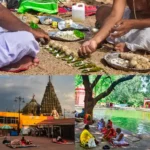

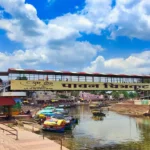

Unlike crowded public ghats, we recommend performing Homa Shrardham at “Prasad-Bhavan” in Gaya. It offers a sanctified, distraction-free environment essential for the deep concentration required during the fire rituals.
Among the many ceremonies performed for the departed, Homa Shrardham in Gaya stands out as an incredibly potent and deeply spiritual rite. When performed at this holy city—specifically at the renowned Prasad-Bhavan—this ritual transcends an ordinary prayer and becomes a profound act of clearing karmic debts.
If you are planning to perform this sacred ritual, here is a complete, detailed guide covering everything you need to know about Homa Shrardham in Gaya.
Why is Homa Shrardham in Gaya Performed?
The ritual of Homa Shrardham in Gaya is performed to offer spiritual nourishment, peace, and liberation (Moksha) to departed ancestors (Pitrus). “Homa” refers to the sacred fire ritual (Havan), and “Shrardham” is the act of making offerings with absolute devotion and faith. According to the Garuda Purana, souls wandering in the afterlife look toward their descendants for spiritual elevation. Performing Homa Shrardham in Gaya helps clear Pitru Dosh (ancestral curses or imbalances), ensuring that the departed souls cross over to the divine realm peacefully.
Where Should You Perform Homa Shrardham in Gaya?
While Shraddha can be done in various holy cities, Gaya in Bihar is considered the ultimate Moksha Dham (abode of salvation) for ancestors. For the most authentic and peaceful experience, performing Homa Shrardham in Gaya is specifically recommended to be held at Prasad-Bhavan. Prasad-Bhavan serves as a dedicated, sanctified venue where families can conduct elaborate rituals in peace. It is equipped with the right environment, pure ingredients, and learned priests required to perform the complex fire rituals and subsequent feeding ceremonies without worldly distractions.
Spiritual Benefits of Homa Shrardham
Why families perform this powerful fire ritual.
- Ancestral Salvation (Moksha): Frees departed souls from lower realms, guiding them to the divine abode.
- Pitru Dosh Nivaran: Clears ancestral karmic debts that may be causing obstacles in your current life.
- Family Harmony: Resolves unexplained struggles and brings peace, health, and righteous progeny.
- Spiritual Merit (Punya): The Karta and participating family members earn immense good karma.
With Whom Should It Be Performed?
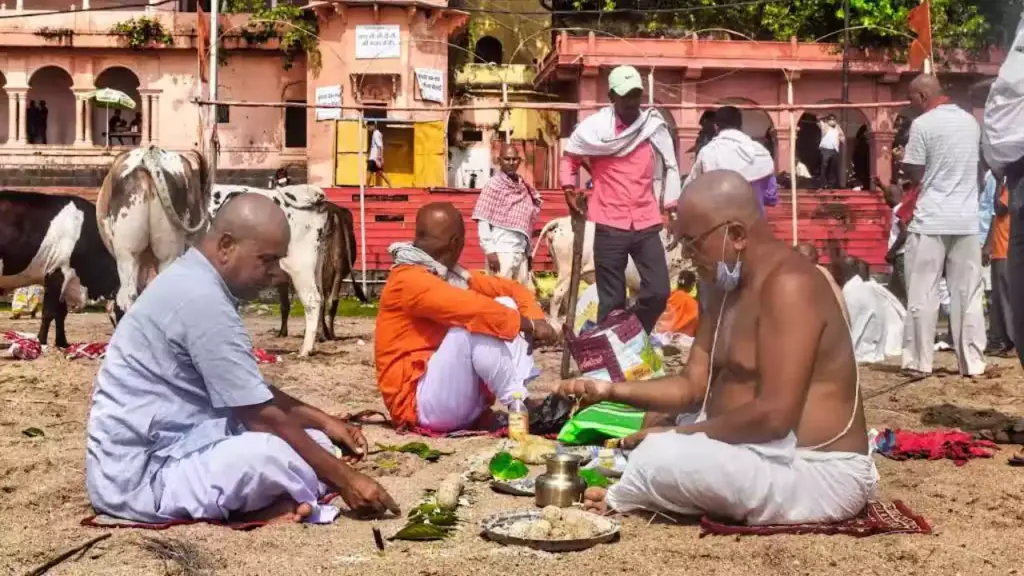
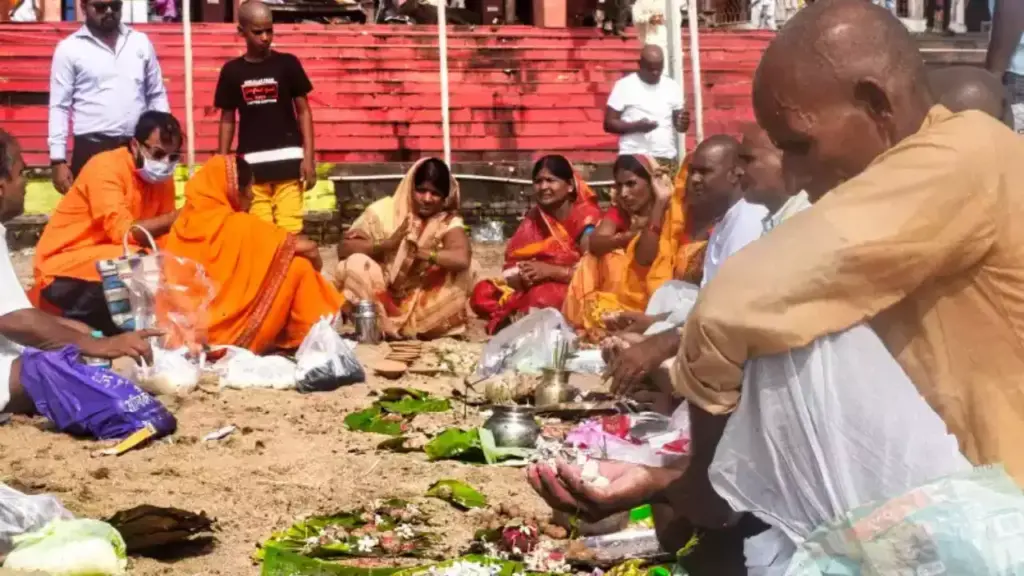
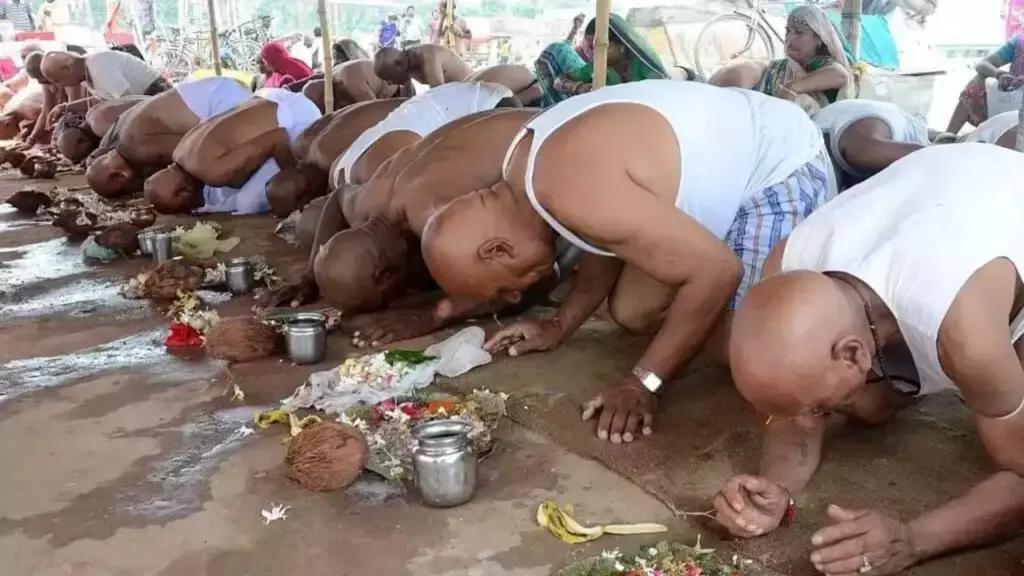
Traditionally, the Karta—the eldest son or the primary male descendant of the family—performs the Homa Shrardham in Gaya. However, he does not do it alone. The ritual is most potent when the Karta sits with his wife (as she is his Saha-Dharmini, sharing in his spiritual duties). It is highly encouraged that all surviving children, siblings, and close family members gather together. The collective prayers and united intention of the entire lineage significantly amplify the spiritual merit of the pooja.
What Should Be Worn?
Purity of the body is as crucial as the purity of the mind.
- For Men: The Karta and other participating men must wear a traditional, unstitched white cotton Dhoti. During the core fire rituals and Tarpan, men are usually required to be bare-chested with a sacred upper cloth (Angavastram).
- For Women: Participating women should wear traditional, modest attire, preferably a cotton Saree or Salwar Kameez in light, auspicious colors like yellow, pale orange, or white. Black and dark, overly bright colors are strictly avoided, as this is a solemn ritual of remembrance and peace.
What Should Be Eaten?
Before and during the day of your Homa Shrardham in Gaya, the family must adhere to a strict, pure Sattvic diet. The Karta usually fasts from the morning until the ritual concludes. Even after the pooja is over, the food consumed must be strictly vegetarian, devoid of onion, garlic, mushrooms, and heavy spices. The focus is on keeping the body light and the mind pure.
Articles & Requirements: Food for Feeding Brahmanas
The most vital component of Homa Shrardham in Gaya, alongside the fire ritual, is the Brahmana Bhoj (feeding of the Brahmanas). The core requirement here is pure, sanctified food for feeding the priests.
Why is this done? It is believed that the food consumed by the learned, pure-hearted Brahmanas directly reaches and satisfies the ancestors. The meal prepared at Prasad-Bhavan typically includes rice, dal, pure cow ghee, a variety of sabzis (vegetables like pumpkin and ridge gourd), puris, and a sweet dish like Kheer (rice pudding). Serving this food with utmost respect, humility, and generous Dakshina (monetary donation) is what seals the completion of the ritual.
The Benefits of Homa Shrardham in Gaya
The benefits of performing this sacred ritual are multifold:
- Salvation for Ancestors: It grants the ultimate peace to the departed, freeing them from the cycles of lower realms.
- Eradication of Pitru Dosh: It removes obstacles, chronic struggles, and unexplained hurdles in the family caused by ancestral dissatisfaction.
- Prosperity and Progeny: Families experience a harmonious life, improved health, and the blessing of healthy children.
- Spiritual Merit: The Karta and the participating family members earn immense Punya (good karma), ensuring their own spiritual progress.
In conclusion, participating in Homa Shrardham in Gaya at Prasad-Bhavan is not merely a custom; it is a beautiful expression of eternal love and gratitude toward those who gave us life. By following these disciplines of attire, diet, and profound charity through feeding the Brahmanas, a family secures blessings that last for generations.
Ritual Guidelines & Common Questions
Preparing for your Homa Shrardham.
Who is the "Karta"?
The Karta is typically the eldest son or primary male descendant. He performs the ritual, ideally accompanied by his wife (Saha-Dharmini) to share the spiritual duties.
What is the significance of the "Brahmana Bhoj"?
It is believed that food eaten by learned Brahmins reaches the ancestors. We serve a traditional meal (Rice, Ghee, Kheer, Pumpkin) to satisfy the priests and complete the ritual.
Can we eat before the Pooja?
Ready to perform these sacred rites? Our Gaya Pind Daan Tour Package includes pandit arrangements, accommodation, and all ritual logistics.