


India is a land of profound spiritual traditions, and the holy city of Kashi (Varanasi) is its beating heart. Among the myriad of soul-cleansing rituals performed here, the Ganga Pooja and Arghyam hold a deeply revered place. Often performed alongside the beautiful Sari Pooja offering, completing the Ganga Pooja and Arghyam is an absolute must for anyone planning a spiritual journey to Kashi. Here is a comprehensive guide detailing everything you need to know about this divine experience.
Why is the Ganga Pooja and Arghyam Done?
This beautiful act of devotion is a powerful rite of gratitude and spiritual surrender. During the Ganga Pooja and Arghyam, a vibrant, new saree is typically offered to Goddess Ganga alongside the holy water. Mother Ganga is believed to be the sustainer of life and the ultimate purifier of human sins. By performing this ritual, devotees acknowledge the river not just as a water body, but as a living goddess who nurtures the universe.
Where is the Ganga Pooja and Arghyam Performed?
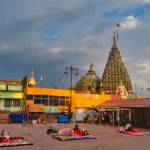
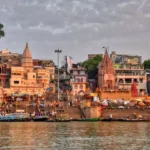
This sacred ritual is performed at the holiest of riverfronts in Varanasi: the Manikarnika Ghat and the adjacent Chakra-Theertham. According to Hindu mythology, Chakra-Theertham is a sacred pond that was dug by Lord Vishnu using his Sudarshana Chakra even before the river Ganga descended to Earth. It is considered an epicenter of cosmic energy.
With Whom Should the Ganga Pooja and Arghyam be Done?
The Ganga Pooja and Arghyam are strictly a couple-oriented ritual. It must be performed with your spouse. The husband and wife must participate together, holding hands throughout the entire process. This physical link symbolizes the eternal bond between the couple, tying their karmic destinies together in the presence of the Divine.
Located at Manikarnika Ghat, this sacred pond is believed to have been dug by Lord Vishnu using his Sudarshana Chakra even before the Ganga descended to Earth. Applying its mud is considered to cleanse the body of all impurities.
What are the Benefits of Ganga Pooja and Arghyam?
The spiritual and worldly benefits of this Pooja are immense:
- Marital Harmony & Longevity: Performing the Ganga Pooja and Arghyam hand-in-hand with your spouse invokes divine blessings for a long, healthy, and harmonious married life.
- Spiritual Liberation: Taking a dip at Manikarnika Ghat washes away lifetimes of accumulated bad karma, paving the way for Moksha (liberation from the cycle of rebirth).
- Physical and Mental Purification: The sacred mud of Chakra-Theertham is believed to possess divine purifying properties that cleanse the physical body and calm the mind.
What Should be Worn for the Ganga Pooja and Arghyam?
Purity of attire is essential.
- Men should wear a traditional, unstitched cotton dhoti and remain bare-chested during the bath.
- Women must wear a traditional, modest saree.
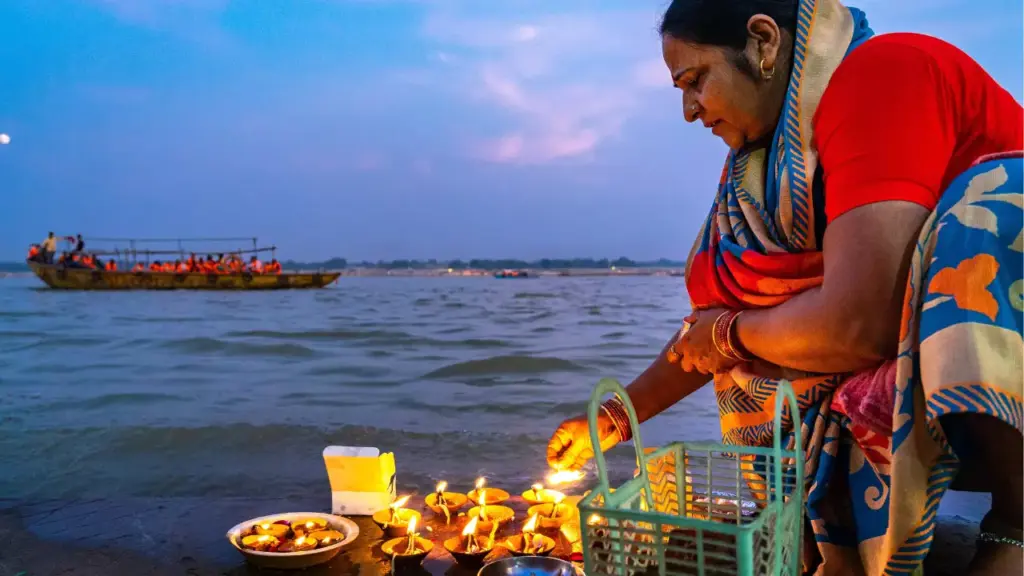
The most critical aspect of this attire rule is that the final offering must be done in wet clothes. After taking the holy dip in the river, you must not change or dry off immediately; the entire Ganga Pooja and Arghyam must be completed while you are soaking wet, representing absolute purity and vulnerability before the Goddess.
What Should be Eaten?
Before the ritual, couples must observe a strict fast to maintain internal purity. Do not consume anything other than water. After the Pooja is completed, you should break your fast with a pure, Sattvic meal. This includes simple vegetarian food prepared without any onion, garlic, or heavy spices. It is highly recommended to eat simple Prasadam or a traditional meal prepared by the local Vadyar (priest).
Complete Details and Requirements for Ganga Pooja and Arghyam
To perform the Ganga Pooja and Arghyam seamlessly, here is the exact step-by-step breakdown:
Articles/Requirements:
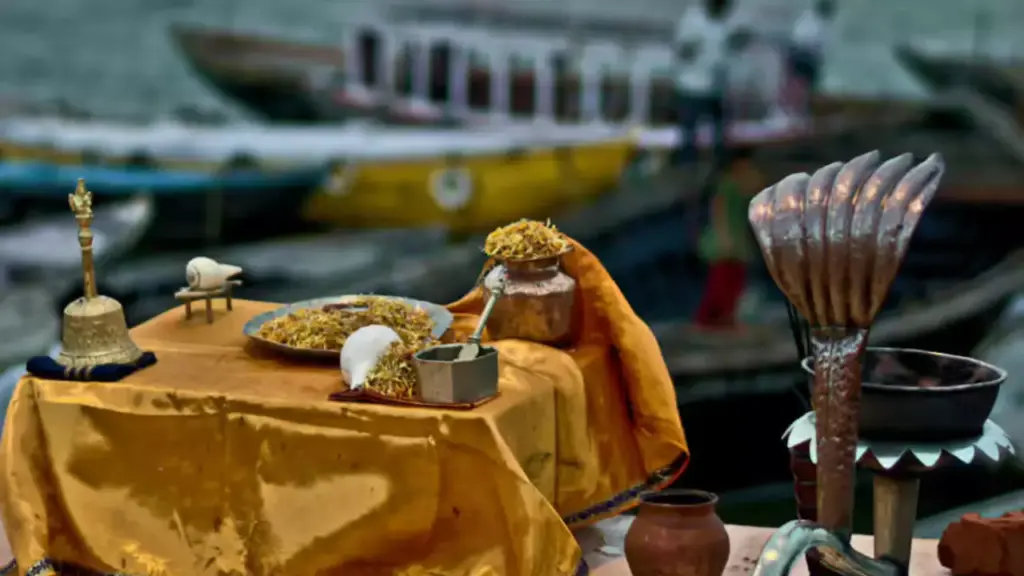
- Mud from Chakra-Theertham
- Flowers (fresh marigolds or roses)
- Water for the offering
- A New Saree (for the Sari Pooja aspect)
- Cash (Rs. 100 for Daanam)
The Ritual Details:
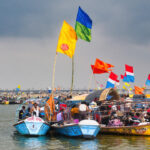
- Arrive at the Manikarnika Ghat, usually by boat, and climb the 50-odd steps to the Chakra-Theertham (which is historically dry).
- Apply the dry mud of Chakra-Theertham on the body, reverently covering yourselves with the sacred earth.
- Walk down to the riverbank and take a holy dip, holding your spouse’s hand in the sacred waters of the Ganges.
- Emerging from the water, perform the Sari Pooja by offering the new saree to Mother Ganga.
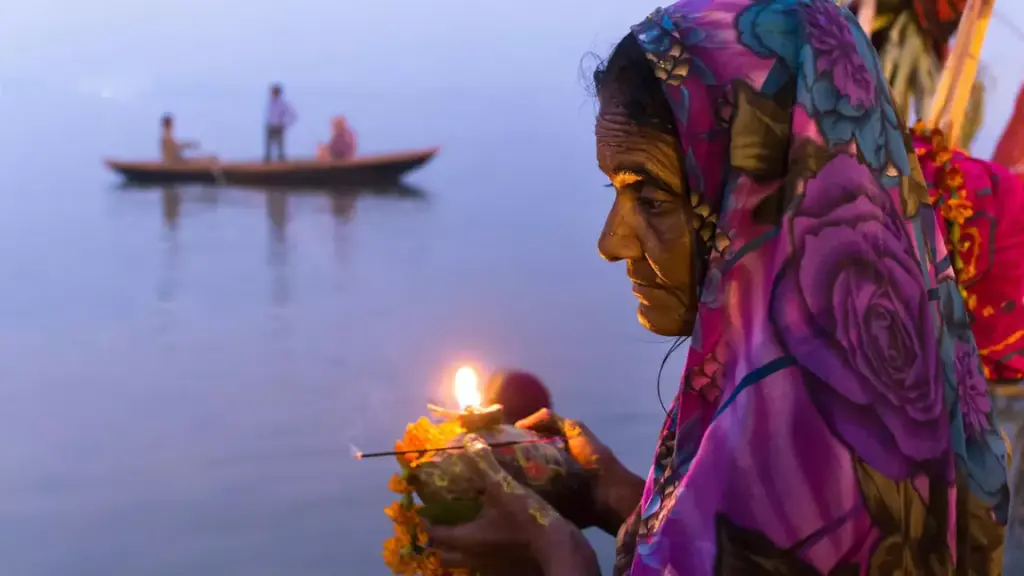
- Next, offer the holy water and flowers to Goddess Ganga in wet clothes, showing deep devotion.
- Finally, conclude the ceremony and give Daanam to the two Pandas there (handing over the cash donation of Rs. 100 to the local priests).
This beautiful tradition is more than just a sequence of steps; dedicating yourself to the Ganga Pooja and Arghyam is a profound journey of love, faith, and spiritual awakening on the sacred banks of Kashi.
Guidelines for Couples
Essential preparation for the Ganga Pooja.
Can we perform this ritual individually?
No. This is strictly a couple-oriented ritual. The husband and wife must hold hands throughout the process to bind their karmic energies.
What is the dress code?
Men must wear an unstitched cotton Dhoti and remain bare-chested. Women must wear a modest, traditional Saree. Remember, these clothes will get wet.
What are the fasting rules?
You must fast (water only) from the morning until the Pooja is complete. Afterwards, break your fast with a Satvik meal (No onion/garlic).
Combine Kashi rituals with Gaya and Prayagraj in our Prayagraj-Varanasi-Gaya Teerth Shradh Tour — a complete ancestral rites pilgrimage.