



A Kashi Yatra is considered one of the most profound spiritual journeys in Sanatana Dharma. However, this sacred pilgrimage does not merely end with a dip in the Ganges or a darshan of Lord Kashi Vishwanath. The ultimate and most beautiful culmination of this journey is the Dampati Pooja Kashi Yatra ritual, a heartfelt ceremony that seals the spiritual merit of your pilgrimage.
If you are planning to perform this sacred rite, here is a complete, detailed guide on the Dampati Pooja Kashi Yatra—why it is done, where to do it, what to wear, eat, and the profound benefits it brings to your life.
Why is the Dampati Pooja Kashi Yatra Done?
The word Dampati means “a married couple.” In Hindu philosophy, a harmonious couple is the earthly embodiment of Lord Shiva and Goddess Parvati. The Dampati Pooja Kashi Yatra tradition is performed as the grand finale to express deep gratitude to the divine. By honoring a living, breathing couple as the divine entities themselves, the pilgrims seek blessings for a long, peaceful, and prosperous married life. It is the ultimate act of Dana (charity) and Bhakti (devotion), marking the successful conclusion of your Dampati Pooja Kashi Yatra.
Where is it performed?
As the name suggests, the concluding ritual of the Dampati Pooja Kashi Yatra is performed in Kashi (Varanasi). It is typically conducted on the final day of the yatra, often in a sacred Mutt, a traditional Vedic ashram, or a specialized Mandapam near the holy ghats of the River Ganga, after the pilgrims have completed their ancestral rites (Pind Daan) and temple visits.
Who Performs the Dampati Pooja Kashi Yatra and With Whom?
The pooja is performed by the pilgrim couple (the husband and wife undertaking the yatra). They perform this worship for a carefully chosen guest couple—usually a senior Ghanapaati (a highly learned Vedic scholar) and his wife. The senior couple is seated on a special pedestal and treated not as humans, but as the direct representatives of Lord Vishwanath and Goddess Annapurna.
What Should Be Worn for the Dampati Pooja Kashi Yatra?
The dress code for this highly traditional ritual is strictly ethnic and pure.
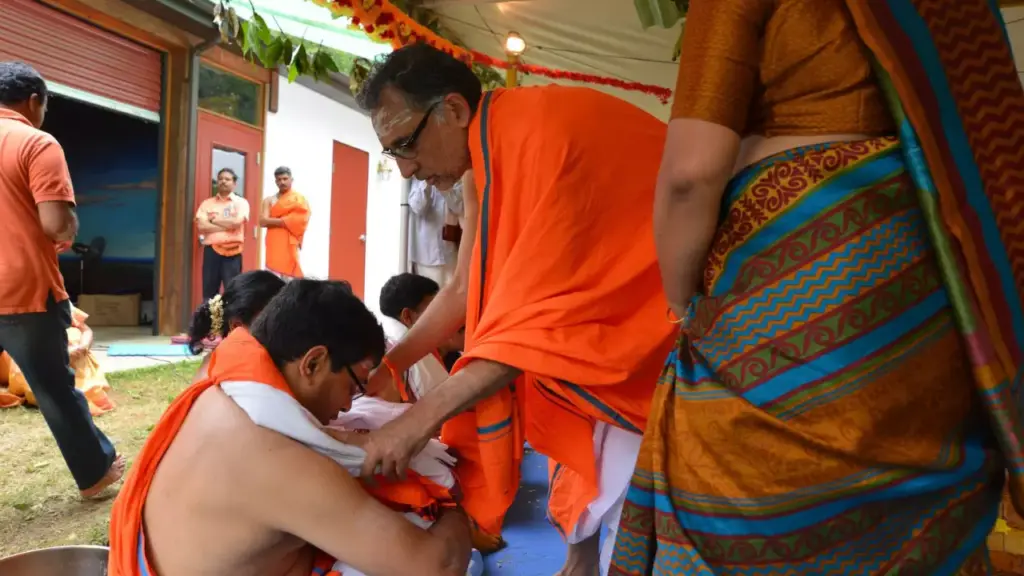
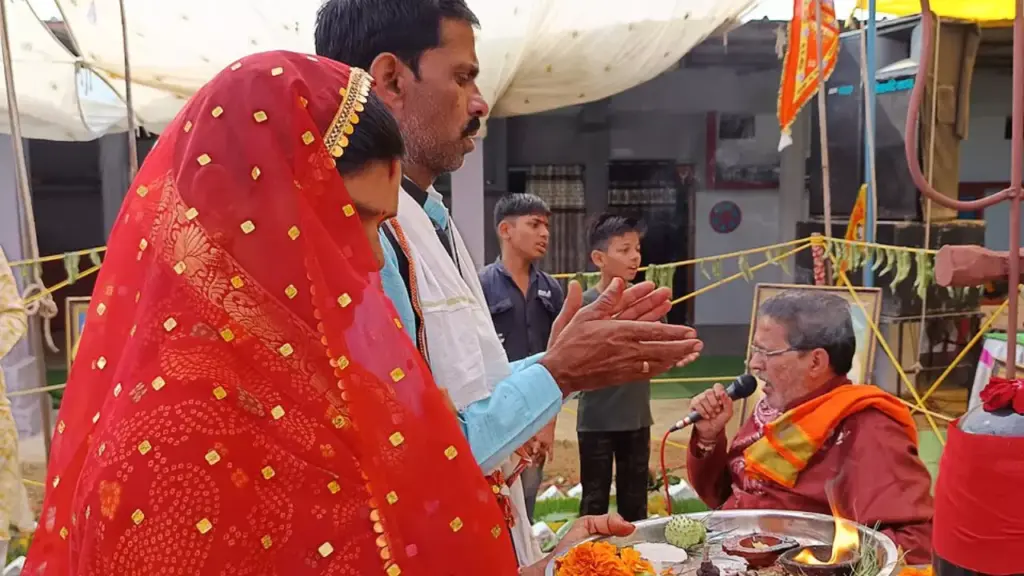
- For the Hosts (Pilgrims): The husband must wear a traditional unstitched Dhoti (often a Pancha) and an Angavastram (shoulder cloth), typically in white or a sacred color. The wife should wear a traditional silk Saree in auspicious colors like red, yellow, pink, or green. Black and pure white sarees are strictly avoided.
- For the Guests: The Ghanapaati couple will also arrive in pure, traditional attire, ready to receive the worship.
What Should Be Eaten?
Diet plays a crucial role in maintaining the purity of the Dampati Pooja Kashi Yatra. The hosting pilgrim couple must observe a strict, Sattvic fast before the pooja. They may consume only water, milk, or fruits. No onions, garlic, or outside food is permitted.
Once the pooja concludes, the host couple serves a grand, traditional Sattvic feast (Brahman Bhojan) to the senior Ghanapaati couple. Only after the guests have eaten and given their blessings does the pilgrim couple break their fast by partaking in the Prasadam (the blessed food).
The Sacred Ritual: Complete Details of the Dampati Pooja Kashi Yatra
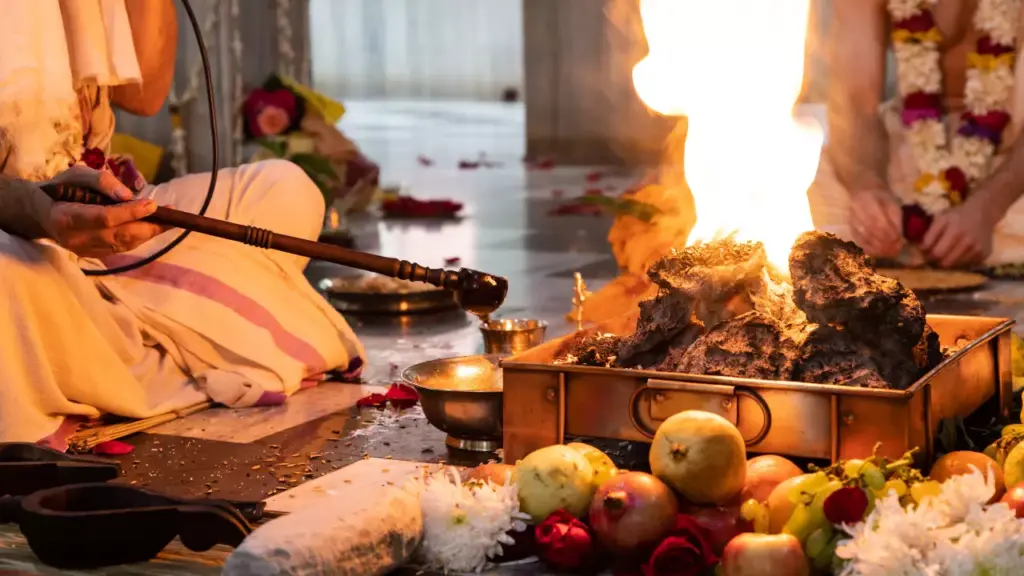
The Dampati Pooja Kashi Yatra ceremony is a beautiful, elaborate process involving the Shodashopachara (the 16 steps of traditional Vedic worship).
- Welcoming & Washing Feet: The pilgrim couple respectfully washes the feet of the senior Ghanapaati couple, symbolizing the washing of the divine feet of Shiva-Parvati, and seats them comfortably.
- The 16 Upacharas: The hosts offer 16 forms of hospitality, including chanting mantras, offering aarti, incense (dhoop), and sandalwood paste (chandan).
- The Sacred Offerings: The core of the pooja lies in the specific, highly auspicious items gifted to the senior couple:
- Saree & Dhoti: A new, beautiful Saree for the lady and a Dhoti for the Ghanapaati.
- Metti (Toe Rings) & Thirumangalyam (Mangalsutra): These are the most sacred symbols of marriage. Gifting these invokes eternal marital protection.
- Sumangali-Dravya: An assortment of auspicious items for the lady, including turmeric (haldi), kumkum, glass bangles, a mirror, and a comb.
- Tamboolam: Betel leaves, betel nuts, coconuts, bananas, and a generous Dakshina (monetary offering).
The Spiritual Benefits of the Dampati Pooja Kashi Yatra
Once the items are gifted, the senior couple recites powerful Vedic mantras and showers the pilgrims with Akshata (turmeric-coated rice). The benefits of this pooja are immense:
- Deergha Sumangali Bhava: It blesses the wife with a long-lasting marriage and the husband with a long, healthy life.
- Marital Harmony: It clears karmic blockages, bringing peace, love, and understanding between the partners.
- Spiritual Fulfillment: It washes away past sins and ensures that the immense spiritual merit (Punya) earned during your Dampati Pooja Kashi Yatra is permanently sealed and accepted by Lord Shiva.
Through the completion of the Dampati Pooja Kashi Yatra, pilgrims leave Kashi not just with holy water, but with the ultimate blessing of a spiritually awakened and divinely protected life.
Combine Kashi rituals with Gaya and Prayagraj in our Prayagraj-Varanasi-Gaya Teerth Shradh Tour — a complete ancestral rites pilgrimage.