











The distance from Ayodhya Junction (now officially Ayodhya Dham Junction) to Ram Mandir is approximately 1 kilometre — a 15 to 20-minute walk or a 5 to 10-minute e-rickshaw ride. If you just stepped off a train and are wondering how to reach Ram Mandir from the station, the answer is simple: the temple is right there. This complete guide covers every transport option with actual 2026 fares, the step-by-step walking route, what to expect at the station, facilities for senior citizens and differently-abled pilgrims, nearby accommodation options, and the best times to make this journey without battling the heaviest crowds.
Distance: ~1.3 km via Ram Path | Walking: 15–20 mins, free | E-Rickshaw (shared): Rs. 10–20 per person, 5–10 mins | Auto-Rickshaw: Rs. 50–100, 5 mins | Taxi/Cab: Rs. 100–150, 5 mins | City Shuttle: Rs. 5–15, 10–15 mins
Ayodhya Junction to Ram Mandir Distance: The Exact Numbers
Ayodhya Dham Junction sits at the western edge of the city. Ram Mandir — the Ram Janmabhoomi complex on Ramkot Hill — is roughly 1 kilometre to the south-east as the crow flies, and 1.2 to 1.5 kilometres by road depending on which exit you use from the station.
The main pedestrian route follows Ram Path — the wide, stone-paved boulevard built specifically for the post-consecration surge in pilgrim footfall after January 2024. This route begins directly opposite Gate 1 of the station and ends at the outer security perimeter of the Ram Janmabhoomi complex. It is completely flat with no stairs or slopes, which makes it accessible to most pilgrims including those with limited mobility.
A secondary route cuts through the older Ramkot neighbourhood and is about 100 metres shorter, but involves narrow lanes that get congested during peak hours. For first-time visitors, Ram Path is clearly the better option — well-lit, clearly signed in Hindi and English, and with continuous police presence throughout.
Route Distances at a Glance
- Via Ram Path (recommended): 1.3 km, fully flat, stone-paved, clear signage from station to gate
- Via Ramkot old lanes: ~1.0 km, narrow streets, best for those who know the area well
- Via vehicle road (Naya Ghat Road): 1.6 km, the route used by autos and taxis

All Transport Options from Ayodhya Junction to Ram Mandir
Six transport options are available for the Ayodhya Junction to Ram Mandir distance. Each is described below with 2026 fares, estimated journey times, and practical advice on which suits different types of pilgrims.
1. Walking — Free and the Most Common Choice
Cost: Free | Time: 15–20 minutes | Best for: Able-bodied pilgrims without heavy luggage
Walking is how the majority of pilgrims cover the Ayodhya Junction to Ram Mandir distance, and Ram Path makes the experience genuinely worthwhile. The boulevard is lined with speakers playing devotional music, stalls selling marigold garlands and prasad, and regular police checkpoints that keep the crowd orderly. The approach feels like a proper pilgrimage rather than a city commute.
Exit through Gate 1 (the main gate facing north onto the main road), cross at the pedestrian crossing, and join Ram Path heading south-east. Direction boards pointing to Ram Janmabhoomi appear within 100 metres of leaving the station. The terrain is entirely flat, with partial canopy shade along the boulevard providing relief during summer months of April through June.
One important note: the path gets very dense on Sunday mornings, full moon days (Purnima), Ram Navami (March/April), and around Diwali. If you are travelling with elderly relatives or young children on those dates, the Rs. 10–20 e-rickshaw fare is worth every rupee.
2. E-Rickshaw — Best Value for Most Pilgrims
Cost: Rs. 10–20 per person (shared), Rs. 60–80 (private full vehicle) | Time: 5–10 minutes | Best for: Families, elderly pilgrims, anyone carrying a bag
E-rickshaws queue up outside both the main gate and the side exits of Ayodhya Dham Junction. They operate on a shared basis — you pay per seat, not per vehicle. The standard shared fare for the Ayodhya Junction to Ram Mandir distance is Rs. 10 per person, occasionally rising to Rs. 15–20 during major festivals when demand exceeds supply.
E-rickshaws drop passengers close to the outer security check area on Ram Path, from where you walk the final 200 metres to the gate. They cannot enter the full pedestrian zone — that last stretch is always on foot. For a private e-rickshaw (no other passengers), expect Rs. 60–80. Settle the fare before boarding and confirm the driver knows the general public entry gate — not the VIP or differently-abled entry points, which are in slightly different locations.
3. Auto-Rickshaw
Cost: Rs. 50–100 (flat negotiated rate) | Time: 5 minutes | Best for: Small groups with luggage or mobility concerns
Auto-rickshaws are available in good numbers outside the station. Because the Ayodhya Junction to Ram Mandir distance is short, most drivers prefer a flat rate over the meter. A fair negotiated rate is Rs. 50–80; anything above Rs. 100 for this route is an overcharge. The prepaid auto booth near the main station exit sets an official fixed rate — use it to avoid negotiation, especially if you arrive late at night or during a festival when prices tend to climb. Autos seat up to three passengers; larger groups will need two autos or a taxi.
4. Taxi or App Cab
Cost: Rs. 100–200 | Time: 5–8 minutes | Best for: Large families, pilgrims with significant luggage or health concerns
Ola and Uber both operate in Ayodhya as of 2026, though availability gets inconsistent during very high-footfall periods like Ram Navami and Diwali. Local taxi operators outside the station offer fixed-price rides starting at Rs. 100–150 for this route. Cabs cannot approach the Ram Janmabhoomi gate directly due to vehicle exclusion zones — they drop you on the outer road, from where you walk 300–400 metres on Ram Path to the security gate.
For the return journey, ask your driver to wait at the drop-off point rather than booking a fresh cab from the temple side. Getting a cab near the temple during peak hours can take 15–20 minutes, especially when app connectivity is poor.
5. City Bus or Pilgrim Shuttle
Cost: Rs. 5–15 | Time: 10–15 minutes | Best for: Budget travellers comfortable with public transport
UPSRTC and the Ayodhya Development Authority run shuttle services between Ayodhya Dham Junction and major temple zones, especially during peak seasons. Fares are Rs. 5–15. Timings are not fixed year-round — check with the information counter inside the station or the bus stand near the south exit. On regular days, shuttle frequency is low; e-rickshaws are faster and almost as affordable for this short distance.
6. Cycle Rickshaw
Cost: Rs. 20–50 | Time: 10–15 minutes | Best for: Pilgrims who prefer a slower, traditional pace
Cycle rickshaws are still available near the station exit, though their numbers have reduced since e-rickshaws took over. For pilgrims who have time and want to observe the street scenes of Ayodhya without rushing, a cycle rickshaw provides a close-up experience of the city’s daily life. Negotiate the fare before boarding — Rs. 30–40 is fair for the Ayodhya Junction to Ram Mandir distance.
Ayodhya Junction to Ram Mandir: Walk vs. E-Rickshaw
The two most popular options compared side by side
Walking (Most Popular)
- Free of cost
- 15–20 minutes via Ram Path
- No vehicle queues or waiting
- Full pilgrimage atmosphere on foot
E-Rickshaw (Most Practical)
- Rs. 10–20 per person (shared)
- 5–10 minutes door to security gate
- Ideal for elderly and families
- Walk last 200m to the gate on foot
Step-by-Step Directions: Ayodhya Junction to Ram Mandir on Foot
Here is the exact walking route from Ayodhya Dham Junction to the Ram Janmabhoomi security gate, described step by step so you can follow it confidently without needing a map application.
- Exit through Gate 1 (Main Gate). Gate 1 faces north onto the main station road. It is the busiest exit and is staffed by Railway Protection Force (RPF) personnel. Porters operate here if you need help with bags. There is a prepaid auto booth immediately to the left as you exit.
- Cross the road at the pedestrian crossing. Traffic police manage this crossing during busy hours. Use the designated crossing rather than cutting across mid-road, especially during peak pilgrim hours when traffic does not stop easily.
- Join Ram Path heading south-east. Ram Path begins directly opposite Gate 1. It is a wide, stone-paved boulevard with a central divider. Direction boards marked “Ram Janmabhoomi” and “Ram Mandir” in Hindi and English are visible within 100 metres. The path is fully pedestrian from this point — no vehicles.
- Pass the Hanuman Garhi area (approximately 600 metres from the station). You will see the entrance to Hanuman Garhi Temple on your right as you continue south-east on Ram Path. Most pilgrims visit Hanuman Garhi first before proceeding to Ram Mandir — it takes 30–45 minutes for darshan depending on the queue.
- Continue on Ram Path toward the Kanak Bhawan signage. After Hanuman Garhi, the path continues for roughly another 400 metres through the market and stall zone. Kanak Bhawan Temple signage appears on the right shortly before the Ram Janmabhoomi security area. You can visit Kanak Bhawan before or after Ram Mandir.
- Reach the outer security perimeter (approximately 1 km from the station). About 12–15 minutes at a moderate walking pace, you will reach the first security check barrier. Queue up here. Security personnel direct pilgrims to the correct lane — those with bags go to the locker deposit area first, those without bags join the main darshan queue directly.
- Deposit bags and prohibited items. Bags, large mobile phones (enforcement varies by day and zone), leather belts, tobacco, and electronic devices are not permitted inside the sanctum. Free locker facilities are available right at the security perimeter. Collect a numbered token. This step adds 5–15 minutes depending on how long the locker queue is — it is always shorter in the early morning.
- Proceed to the Ram Janmabhoomi gate. After security clearance, it is another 200 metres to the formal gate of the Ram Mandir complex. Darshan lines are segregated by gender for most of the queue inside. Follow signs for “Samagra Darshan” (general darshan) unless you have a VIP or special needs entry pass.
Total walking distance from Gate 1 of Ayodhya Dham Junction to the Ram Janmabhoomi entry gate: approximately 1.2–1.3 km. Total time: 15–20 minutes without stops on regular days; plan for 30–45 minutes on festival dates and high-crowd Sundays.
What to Expect at Ayodhya Dham Junction
Ayodhya Dham Junction was extensively renovated and renamed after the Ram Mandir consecration in January 2024. The station now handles substantially higher footfall than before. Here is what you will find that is directly relevant to your journey to Ram Mandir.
Cloak Room (Luggage Storage)
The cloak room is located on Platform 1, near the main waiting hall. It operates 24 hours a day, 7 days a week. Charges are Rs. 20–30 per bag per day (subject to Indian Railways revisions). This is the recommended option if you arrive with luggage and plan to go directly to the temple before checking into a hotel — bags are not permitted inside the Ram Mandir complex anyway, so depositing them at the station is the practical choice. Numbered tokens are issued; keep yours safely for retrieval.
During major festivals — particularly Ram Navami and Diwali — the cloak room often reaches full capacity by mid-morning. If you anticipate this, arrive early or proceed to your hotel first to drop luggage before heading to the temple.
Prepaid Auto and Rickshaw Booth
A prepaid rickshaw and taxi booking booth operates near the main exit on the Platform 1 side. This sets a fixed official rate for common routes including the Ayodhya Junction to Ram Mandir distance. The booth staff give you a printed slip with the fare amount, which you hand to the driver at journey end — no negotiation, no overcharging. Use this whenever possible, particularly if you are arriving for the first time or visiting during a high-footfall period.
Tourist Information Counter
A tourist assistance counter inside the station concourse (near the main hall exit) can provide Ayodhya maps, current darshan timings for Ram Mandir, and information about shuttle services and local accommodation. Counter staff are most reliably present between 6 AM and 10 PM. Outside those hours, the railway enquiry counter (open round the clock) can provide basic orientation and answer common questions about getting to the temple.
Wheelchairs and Accessibility
Wheelchairs are available at the station free of charge, managed by RPF personnel near Gate 1. Request one at the assistance point. Availability is limited during festival peak days — if travelling with a differently-abled family member, contact the Indian Railways Divyaang helpline (139) at least 24 hours before travel to arrange in-advance assistance. The Ram Mandir complex also has a dedicated differently-abled entry with ramp access — inform the security personnel at the outer perimeter when you arrive.
Drinking Water and Food at the Station
The station has multiple food stalls and packaged water kiosks. Fill your water bottle before heading out — the walk on Ram Path has some water points but they can be crowded. Prasad items and offering materials are sold in large quantity along Ram Path itself, so there is no need to carry them from the station.
Landmarks Along the Route from Ayodhya Junction to Ram Mandir
The stretch between the station and Ram Mandir passes by or near several significant sites. Knowing what you will encounter along the way helps you decide whether to stop before or after your Ram Mandir darshan.
Hanuman Garhi Temple
Hanuman Garhi is approximately 600 metres from the station and sits just off Ram Path on a slight rise. The temple of Lord Hanuman — considered the eternal guardian of Ayodhya and protector of Ram Janmabhoomi — is visited by most pilgrims before proceeding to Ram Mandir. The tradition holds that Hanuman’s blessings are sought first before approaching Lord Ram’s birthplace.
The main sanctum requires climbing 76 steps. A ramp on one side serves pilgrims who cannot manage stairs. Darshan at Hanuman Garhi typically adds 30–45 minutes to your plan on regular days; on festival days, queue time can extend to 1–2 hours. The prasad here — particularly the boondi laddoo — is considered sacred and is widely distributed by devotees.
Kanak Bhawan
Roughly 200 metres from the Ram Janmabhoomi entry gate, Kanak Bhawan (also called Sone ka Ghar) is a temple housing golden-crowned idols of Ram and Sita. According to tradition, this palace was gifted by Queen Kaikeyi to Sita after her marriage to Ram. The temple’s golden spires are visually striking and the inner shrine is comparatively less crowded than Ram Mandir, giving pilgrims a calmer, longer darshan experience if they choose to stop here.
Dashrath Bhawan (Dashrath Mahal)
Dashrath Mahal, associated with King Dashrath (Lord Ram’s father in the Ramayana), is a short detour from the Ram Janmabhoomi gate. It is managed by a temple trust and open for darshan throughout the day. The complex includes shrines to all four sons of Dashrath — Ram, Lakshman, Bharat, and Shatrughan — and the architecture gives a sense of the royal heritage of ancient Ayodhya.
Ram Path Promenade
Ram Path itself is worth experiencing unhurriedly if time allows. The boulevard is decorated with large murals depicting scenes from the Ramayana, sculptures of key characters, and lighting installations that are particularly striking after sunset. Evening visits along Ram Path — after completing darshan at Ram Mandir — are highly recommended for first-time visitors to Ayodhya. The atmosphere shifts from the purposeful morning rush to a more contemplative, festive character as the day ends.
Best Time to Travel from Ayodhya Junction to Ram Mandir
When you travel matters as much as how you travel, given that Ram Mandir is now one of India’s most visited religious sites. Choosing the right time of day and the right season significantly affects your darshan experience.
Best Time of Day
Early morning (5:30 AM – 8:00 AM) is consistently the best window. The crowd on Ram Path is thin, the weather is pleasant across all seasons, locker queues are short, and the darshan queue inside the temple moves faster. The first aarti (Mangala Aarti) happens at 4:30 AM; if you can make it for this, the atmosphere is particularly special. Reaching the station and beginning your walk by 5:30 AM gives you the most comfortable experience of the Ayodhya Junction to Ram Mandir distance.
Late morning to early afternoon (10:00 AM – 2:00 PM) is the busiest window on most days. This is when train arrivals peak and the largest volume of same-day visitors make the station-to-temple walk. Avoid this window if you have a choice.
Evening (4:30 PM – 7:00 PM) is a good secondary option. The Sandhya Aarti draws large crowds to the temple, but the Ram Path walk itself becomes scenic and enjoyable in the cooler evening air. Security queues ease off slightly compared to peak mid-morning.
Season-Wise Guide
October to March is the best season overall. Temperatures are comfortable (10–25°C), the walk is pleasant, and weather does not add to the difficulty of the journey. December and January see high footfall around Makar Sankranti and the Ram Mandir consecration anniversary (January 22), so plan accordingly if travelling in those weeks.
April to June (Summer) is the most challenging season for the walk. Temperatures in Ayodhya regularly exceed 40°C in May and June. If visiting in summer, start your station-to-temple walk before 7 AM, carry water, and strongly consider taking an e-rickshaw rather than walking the full distance in peak heat. Light cotton clothing and a cap are essential.
July to September (Monsoon) is moderate in terms of crowd levels but brings humidity and occasional heavy rain. Ram Path has drainage, but heavy downpours can make the walk uncomfortable. Carry a compact umbrella or raincoat. The monsoon season has one significant upside: crowd levels at Ram Mandir are lower than in winter or festival periods, so darshan is often faster.
Ram Mandir Darshan Timings (2026)
Ram Mandir is open for darshan from 4:30 AM to 11:00 PM daily. The five aartis are the most sought-after moments: Mangala Aarti at 4:30 AM, Shringar Aarti at 8:00 AM, Rajbhog Aarti at 12:00 PM, Sandhya Aarti at 6:00 PM, and Shayan Aarti at 10:30 PM. For regular darshan (not aarti), the smoothest entry is between 5:30 AM and 8:00 AM or between 2:00 PM and 4:30 PM. Always verify timings via the official Shri Ram Janmabhoomi Teerth Kshetra Trust website before your visit, as special days may alter the schedule.
Tips for Senior Citizens and Differently-Abled Pilgrims
Ram Mandir and the route from Ayodhya Junction have specific provisions for senior citizens and differently-abled pilgrims that make this journey more manageable than many assume.
- Wheelchair access at the station: Request a wheelchair at the RPF assistance point near Gate 1. They are provided free of charge. During festival peaks, availability can be limited — call Indian Railways helpline 139 in advance to pre-book.
- E-rickshaw to the security gate: This is the best transport option for elderly pilgrims or those with walking difficulties. The Rs. 10–20 shared ride takes you to within 200 metres of the security gate, cutting the walking distance to a manageable stretch.
- Differently-abled entry at Ram Mandir: A dedicated entry for differently-abled pilgrims is available at the Ram Janmabhoomi complex, with ramp access to avoid steps. Inform security personnel at the outer perimeter and they will direct you to the correct gate.
- No steep slopes on Ram Path: The main walking route from the station is entirely flat. Senior citizens who can walk slowly for 15–20 minutes should be comfortable on this route on non-peak days.
- Medical assistance points: Ayodhya has set up first aid stations along Ram Path and within the Ram Mandir security zone. In a medical emergency, alert the nearest security or police personnel.
- Best time for elderly pilgrims: Early morning (before 8 AM) is strongly recommended. Thinner crowds mean less jostling, and the cooler temperatures make the walk significantly easier.
- Seating areas: Rest areas with seating are available along Ram Path and within the outer security zone. These are marked and accessible without joining a queue.
Tips for Families Travelling with Young Children
Visiting Ram Mandir with children requires some additional planning, but the short Ayodhya Junction to Ram Mandir distance makes it far less demanding than most major pilgrimage routes in India.
- Take an e-rickshaw, not walk: On busy days, the crowd density on Ram Path can be disorienting for young children. A shared e-rickshaw for Rs. 10–20 per person keeps the family together and reduces the time spent in the street crowd.
- Start early: Families with children consistently report a much smoother experience when arriving before 8 AM. Shorter queues, calmer atmosphere, and cooler temperatures all make the visit easier for young ones.
- Carry water and a snack: The darshan queue can take 30–90 minutes inside the complex depending on the day. Children get restless and hungry in queues. A water bottle and a light snack (dry prasad items or biscuits) help manage this.
- Prams and pushchairs: The Ram Path walk can accommodate prams on the main stone-paved section, but the crowd on peak days makes pram movement difficult. Consider using a baby carrier instead if travelling on a busy day.
- Stroller-friendly: The Ram Janmabhoomi complex has ramps alongside most steps inside the security zone, which helps with pram access. Check with security at the entrance about the current stroller/pram policy before joining the main queue.
- Children are not required to deposit mobile phones: The phone restriction inside the temple is enforced inconsistently for children — check with security on arrival for the current guideline.
Where to Stay Near Ram Mandir and Ayodhya Junction
Accommodation in Ayodhya has expanded enormously since the January 2024 consecration. Staying within walking distance of Ram Mandir means the daily Ayodhya Junction to Ram Mandir distance becomes irrelevant — you simply walk out of your hotel and you are already on Ram Path. Here is an overview of the accommodation landscape.
Hotels on and Near Ram Path
Several mid-range and premium hotels have opened on or just off Ram Path since 2024. Staying here puts you less than 500 metres from the Ram Mandir security gate. These hotels typically charge Rs. 2,000–6,000 per night during regular season and substantially more during Ram Navami or Diwali. Properties in this zone fill up weeks in advance for festival dates — book early if your visit coincides with a major religious date.
Hotels near the station (Ayodhya Dham Junction area) are slightly further from the temple — 1.0–1.3 km — but are convenient if you have early morning or late night trains. These tend to be more budget-friendly, running Rs. 800–2,500 per night for decent mid-range accommodation.
Dharamshalas
Ayodhya has a long tradition of dharamshalas (pilgrim rest houses) run by religious trusts. These provide basic but clean accommodation at nominal charges — typically Rs. 100–400 per night or sometimes free for genuine pilgrims. The Ram Janmabhoomi Teerth Kshetra Trust and several other religious organisations maintain dharamshalas within walking distance of the temple. Booking is usually first-come, first-served, though some trusts now have advance booking through their offices or representatives.
Budget Guest Houses
Numerous family-run guest houses have opened in the residential lanes around Ramkot and adjacent to Ram Path. These offer private rooms at Rs. 500–1,500 per night with basic amenities. The quality varies significantly — check reviews on booking platforms before confirming. The advantage is location: most of these guest houses are 5–10 minutes from Ram Mandir on foot, eliminating the need to think about transport from Ayodhya Junction every day.
Complete Ayodhya Darshan Package
Includes Ram Mandir darshan, Hanuman Garhi, Kanak Bhawan, Saryu Aarti, and guided city tour with accommodation and transport.
- Ram Janmabhoomi Darshan
- Hanuman Garhi and Kanak Bhawan
- Dashrath Mahal Visit
- Saryu River Aarti
- Accommodation and All Transfers
- Expert Local Guide Included
About Ram Mandir, Ayodhya
Ram Mandir is the main temple at the Ram Janmabhoomi complex — the site traditionally revered as the birthplace of Lord Ram, the seventh avatar of Vishnu and the central figure of the Valmiki Ramayana. The current temple, inaugurated in January 2024 after decades of legal proceedings culminating in the Supreme Court’s 2019 verdict, is built in the Nagara style of Hindu temple architecture with three floors and a main spire (shikhara) rising to approximately 161 feet.
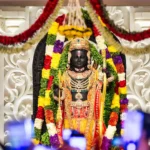
The sanctum sanctorum (Garbha Griha) houses the idol of Ram Lalla — Lord Ram as a child — in black stone. The idol was consecrated with full Vedic rites on January 22, 2024, in a ceremony attended by millions across India who watched via live broadcast. Since consecration, the temple has become one of the highest-footfall religious sites in India, with daily visitor counts ranging from 50,000 on regular days to over 2 lakh on major festival dates.
The significance of this short journey from Ayodhya Junction to Ram Mandir is therefore not merely logistical — it is the final approach to a site that carries centuries of devotion and a very recent chapter of Indian history. The 1.3-kilometre walk on Ram Path is, for millions of pilgrims, one of the most anticipated short walks of their lives.

Planning Your Full Ayodhya Visit
Most pilgrims visiting Ram Mandir combine it with at least one overnight stay to cover the full range of sacred sites in Ayodhya. If you are planning a broader Uttar Pradesh pilgrimage circuit, Ayodhya connects naturally with Varanasi and Prayagraj — all three cities are among the most sacred in Hinduism and are within reasonable travel distance of each other.
For a structured itinerary covering all three cities with accommodation, transport, and guided darshan, see our Varanasi–Prayagraj–Ayodhya 3 Night 4 Day Tour Package. For a deep-dive guide to everything Ayodhya has to offer beyond Ram Mandir, read our complete Ayodhya teerth guide and our overview of the Ram Mandir history and architecture. For a broader list of what to see in the city, our guide to tourist places in Ayodhya covers all major sites with visiting hours and tips.
For rail travellers planning the journey from a different starting point, the official IRCTC website has updated train schedules to Ayodhya Dham Junction, which now has significantly more direct trains than before the 2024 renovation.
Frequently Asked Questions
What is the exact distance from Ayodhya Junction to Ram Mandir?
The distance from Ayodhya Dham Junction to Ram Mandir (Ram Janmabhoomi) is approximately 1 kilometre as the crow flies and 1.2 to 1.3 kilometres by the recommended walking route via Ram Path. The vehicle route via Naya Ghat Road is about 1.6 kilometres.
How long does it take to walk from Ayodhya Junction to Ram Mandir?
Walking via Ram Path takes 15 to 20 minutes at a moderate pace on regular days. On high-footfall days such as Ram Navami, Diwali, or peak Sunday mornings, allow 30 to 40 minutes due to crowd density on the boulevard.
What is the auto-rickshaw fare from Ayodhya Junction to Ram Mandir?
A shared e-rickshaw costs Rs. 10 to Rs. 20 per person for this route. A private auto-rickshaw costs Rs. 50 to Rs. 100 for the full vehicle. Use the prepaid auto booth outside the station main exit to get the fixed official rate and avoid overcharging.
Is wheelchair facility available from the station to Ram Mandir?
Yes. Wheelchairs are available free of charge at Ayodhya Dham Junction near Gate 1, managed by Railway Protection Force personnel. For advance arrangement, call the Indian Railways Divyaang helpline at 139. The Ram Mandir complex also has a dedicated differently-abled entry with ramp access.
Can I walk to Ram Mandir with luggage from the station?
You can walk with luggage to Ram Mandir, but bags are not permitted inside the temple complex. Deposit your luggage at the station cloak room on Platform 1 (Rs. 20 to Rs. 30 per bag per day, open 24 hours) before heading to the temple. This saves you the trouble of managing bags at the locker facility near the temple gate.
What is the best time to visit Ram Mandir after arriving at Ayodhya Junction?
The best time to make the Ayodhya Junction to Ram Mandir journey is early morning between 5:30 AM and 8:00 AM. Crowds are thinnest, the locker queue is short, and the darshan queue inside the temple moves faster. The October to March season is the most comfortable overall. Avoid peak mid-morning (10 AM to 2 PM) on weekends and festival dates.
Are mobile phones allowed inside Ram Mandir?
The policy varies by zone within the complex and is enforced differently on different days. In the outer courtyard, phones are generally permitted. Inside the main sanctum sanctorum, photography and phones are restricted. Confirm the current policy with security personnel at the perimeter on the day of your visit. Free locker facilities at the security perimeter can store your phone if required.
Prayag Samagam — Trusted Pilgrimage Planners
Plan Your Complete Ayodhya Pilgrimage
From Ayodhya Junction to Ram Mandir and every sacred site in between — let our local experts handle your complete Ayodhya tour including darshan assistance, accommodation, transport, and guided visits.
Free consultation · Custom itineraries · Best-price guarantee