

Bharat Milap Temple
Spot where Lord Ram & Bharat met during Vanvaas
Listed hours
5 am–12 pm
Timings change on festivals; confirm with us before you go.
Our tours include regular darshan, as per the itinerary. Special darshan is extra, by our quote.
- Deity
- Lord Rama & Bharat
- Known as
- Shaktipeeth
- Address
- 5R8R+XJG, Kamta Mohalla, Sitapur, Chitrakoot, Uttar Pradesh 210204
Going with parents? Add a question for our desk
Tours that include Chitrakoot
Private departures, planned to your dates.
 Yatra4N / 5D · Private4N / 5D · Yatra
Varanasi Prayagraj Ayodhya Chitrakoot Tour Package 4N/5D
- Varanasi
- Prayagraj
- Chitrakoot
- Ayodhya
Starting from ₹17,999per person · 6 Pax MinimumTravellers
Four cities on the Ramayana trail in 5 daysAsk us on WhatsApp
- Private departure
- Planned to your dates
- We'll send you a plan and a price
 Yatra7N / 8D · Private7N / 8D · Yatra
Varanasi Prayagraj Ayodhya Chitrakoot Gaya Tour Package 7N/8D
- Varanasi
- Bodh Gaya
- Prayagraj
- Chitrakoot
- Ayodhya
Starting from ₹27,000per person · 6 Pax MinimumTravellers
A 5-city pilgrimage through Varanasi, Prayagraj, Ayodhya, Chitrakoot and GayaAsk us on WhatsApp
- Private departure
- Planned to your dates
- We'll send you a plan and a price






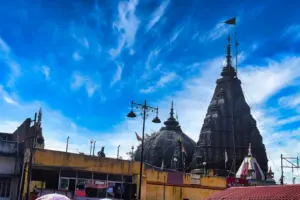
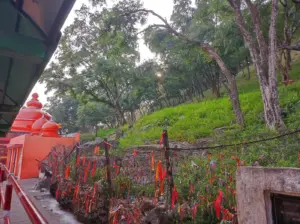
Bharat Milap Temple in photos


About Bharat Milap Temple
Our guide to the temple.
Bharat Milap Temple is known to everybody who has been to Kamadgiri and walked around the hill there. It is one of Chitrakoot's most revered locations and holds a particular place in the hearts of its followers. This sacred monument, like others in the neighbourhood, was the scene of a significant Ramayana event.
Bharat Milap Temple in Chitrakoot marks the site of one of the most emotionally charged episodes in the entire Ramayana: the moment when Bharat — Ram's younger brother and the unwilling heir to Ayodhya's throne — arrived at the forest to find Ram and beg him to return. The meeting of the two brothers here, with all the grief and love and political complexity it carried, is understood in the Hindu tradition not just as a family reunion but as a demonstration of the highest possible human virtue. Both brothers chose dharma over personal desire, and the ground beneath them is said to have recorded that moment permanently.
The Story of Bharat Milap
After Dasharatha's death and Ram's departure into exile, Bharat returned to Ayodhya from his maternal uncle's kingdom, where he had been staying during the events that triggered the exile. He returned to find his father dead, his beloved elder brother in the forest, and himself seated on a throne he had never wanted and would never use. Consumed with grief and anger at his mother Kaikeyi's actions, Bharat set out for the forest with an army, attendants, and all three queens of Ayodhya — not to stay in power but to find Ram and return the kingdom to its rightful ruler.
The meeting that happened on this hill in Chitrakoot is described in vivid detail in both the Valmiki Ramayana and the Ramcharitmanas of Tulsidas. Bharat fell at Ram's feet, weeping, and implored him to abandon the exile, which he argued was based on a promise extracted unjustly. Ram refused — not out of stubbornness but out of his commitment to Dasharatha's word, which he considered binding regardless of the circumstances under which it was given. The exchange between the brothers is a profound dialogue on duty, love, kingship, and the limits of personal grief in the face of dharmic obligation.
In the end, Bharat accepted Ram's decision. He took Ram's wooden sandals back to Ayodhya, placed them on the throne as the symbol of Ram's absent kingship, and ruled Ayodhya as a regent for fourteen years — refusing to sit on the throne himself, living the life of an ascetic, waiting for Ram's return. Bharat Milap Temple commemorates the exact spot where this agreement was reached.
The Rocks That Wept: Physical Evidence of Divine Emotion
One of the most remarkable claims about Bharat Milap Temple is that the rocks of the hill actually melted partially due to the heat of the emotions generated at the meeting. This is not presented as metaphor — the temple shows what are described as indentations and markings on the rocks that are explained as the physical impressions of the brothers' feet and the traces of their tears and embrace. Whether one interprets this literally or symbolically, the point the tradition is making is significant: that the emotion of that moment was so intense, so cosmically charged, that even inanimate matter registered it.
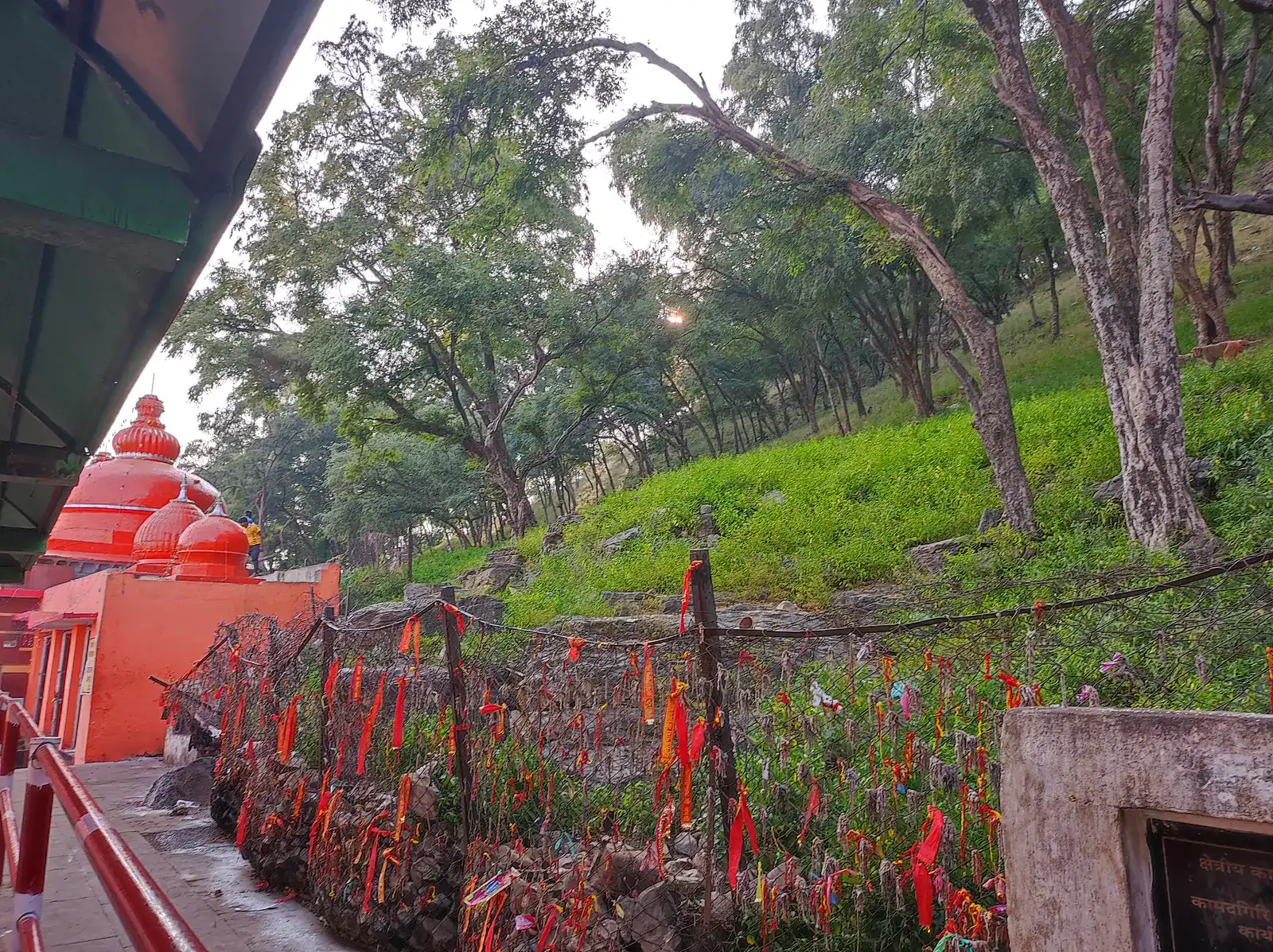
Pilgrims who visit can see the footprints of the three brothers — Ram, Bharat, and Lakshman — preserved on the stone surface of the temple. Looking at these impressions, many devotees report being overcome with a range of feelings: sorrow at the separation, admiration for Bharat's self-sacrifice, reverence for Ram's steadfastness. The Ramcharitmanas describes even the rocks and trees of Chitrakoot weeping during the Bharat Milap, and the tradition at the temple keeps that memory alive in a tangible form.
Bharat's Sandals and the Meaning of Padukas
The paduka — the wooden sandal — became the central symbol of Ram's absent authority during the exile years. Bharat's act of placing Ram's padukas on the throne of Ayodhya and ruling in their name rather than his own is considered one of the most extraordinary acts of fraternal devotion in world literature. The padukas said: the throne belongs to Ram, and until Ram returns, no one else will sit on it. This is why the paduka is venerated across Hindu tradition as a symbol of the guru or sovereign's presence even in absence.
At Bharat Milap Temple, this symbolism is alive. The temple complex includes shrines to Bharat specifically — unusual in the Ramayana circuit where Ram, Sita, Lakshman, and Hanuman dominate. Bharat's willingness to suffer personally rather than benefit from his mother's scheming makes him, in the eyes of many devotees, the Ramayana's most selfless figure. He had what Ram had to give up — the kingdom — and he refused it entirely out of love and principle.
Kamadgiri Parikrama and the Bharat Milap Circuit
Chitrakoot's most sacred walking ritual is the Kamadgiri Parikrama — a five-kilometre circumambulation of the holy Kamadgiri hill, which is considered the physical embodiment of Ram himself during his time of exile. Bharat Milap Temple is located at the base of Kamadgiri hill, making it a natural stop on the parikrama circuit. Pilgrims completing the parikrama in the early morning typically begin or conclude their walk at Bharat Milap, offering prayers at the footprints before continuing to Ram Ghat and then to Janki Kund.
Every year on the full moon night of Kartik (October-November), a live dramatic re-enactment of the Bharat Milap is performed at the temple. Actors in traditional costume portray the meeting of the brothers, the grief and the dialogue, the handing over of the padukas. Thousands of pilgrims gather to witness this performance, which typically runs through the night with simultaneous kirtan and recitation from the Ramcharitmanas. The combination of moonlight, the forest setting, and the emotional weight of the story creates an experience that participants describe as transformative.
The Temple of Mandavi
Adjacent to Bharat Milap Temple is a smaller shrine dedicated to Mandavi, the wife of Bharat. This is relatively rare in the Ramayana pilgrimage circuit — Mandavi, unlike Sita or Urmila, is not widely celebrated, but her presence here acknowledges the silent sacrifices of the women who accompanied their husbands through the events of the Ramayana. Just as Bharat gave up his throne out of loyalty to Ram, Mandavi gave up the life she might have had as queen of Ayodhya. The small temple beside Bharat Milap honours that quieter form of devotion.
For a complete guide to Chitrakoot's pilgrimage circuit, see our Chitrakoot travel guide, which includes the Kamadgiri Parikrama route, Ram Ghat, Janki Kund, Sphatik Shila, and all the major temples and ashrams. Our Varanasi-Prayagraj-Ayodhya-Chitrakoot 4N/5D Deluxe tour package covers the full Ram pilgrimage belt of Uttar Pradesh, with guided visits to all major sacred sites.
Questions pilgrims ask about Bharat Milap Temple
What is the historical significance of Bharat Milap Temple in Chitrakoot?
The Bharat Milap Temple in Chitrakoot holds great historical significance, especially for devotees of the Hindu religion. This is because it is believed to be the site where the legendary reunion between Lord Rama and his brother Bharata took place. Bharata, after discovering that Rama was exiled for 14 years, came to Chitrakoot to return the rightful claim of the throne to Rama. However, Rama declined as he wanted to honour their father's orders. This reunion, referred to as 'Bharat Milap', is a symbol of love, devotion, and brotherhood.
- The temple marks the site of the historical Bharat Milap.
- This event signifies the profound love and devotion between brothers.
- It also demonstrates Rama's dedication to fulfilling his father's wish.
What is the architectural style of Bharat Milap Temple?
The Bharat Milap Temple showcases traditional Hindu temple architecture, often called the Nagara style. It is adorned with intricate carvings and statues depicting various scenes from the Ramayana. The main shrine houses the footprints of Lord Rama and Bharata, which the devotees deeply revere. Additionally, the temple complex has a large courtyard and open spaces for congregational prayers and rituals.
- The temple follows the Nagara style of Hindu architecture.
- It contains detailed carvings and statues from the Ramayana.
- The main shrine holds the sacred footprints of Lord Rama and Bharata.
When is the best time to visit the Bharat Milap Temple?
The best time to visit the Bharat Milap Temple in Chitrakoot is during the months of October to March when the weather is quite pleasant. However, the temple is particularly lively during the annual Ramayana Mela, a festival that takes place in February. During this period, devotees and tourists throng the temple to participate in the grand festivities, making it an ideal time for those interested in experiencing cultural immersion.
- October to March is the optimal period for a visit due to pleasant weather.
- The annual Ramayana Mela in February brings additional vibrancy to the temple.
- This festival period offers a unique opportunity for cultural immersion.
What are the nearby attractions to the Bharat Milap Temple?
In addition to the Bharat Milap Temple, Chitrakoot is home to several other noteworthy attractions. These include the Hanuman Dhara, a temple dedicated to Lord Hanuman, the Sati Anusuya Ashram, an ancient hermitage, and the Gupt Godavari, a pair of caves with a fascinating legend attached. Each site offers unique experiences and insights into Hindu mythology and history.
- Hanuman Dhara is a revered temple dedicated to Lord Hanuman.
- Sati Anusuya Ashram is an ancient hermitage with historical significance.
- Gupt Godavari is a pair of caves known for their mythical connections.
How can one reach the Bharat Milap Temple in Chitrakoot?
Chitrakoot is well-connected by road, rail, and air. The nearest railway station to the Bharat Milap Temple is the Chitrakoot Dham Karwi Railway Station, around 12 kilometers away. For those preferring to travel by air, the nearest airport is the Khajuraho Airport, approximately 190 kilometers away. Regular taxis and local transport services are available from these points to reach the temple.
- The nearest railway station is Chitrakoot Dham Karwi Railway Station.
- Khajuraho Airport is the closest air connectivity point.
- Regular taxis and local transportation options are available for temple access.
What are the timings of the Bharat Milap Temple?
The Bharat Milap Temple is open to devotees and visitors throughout the year. The temple generally opens early in the morning around 5 AM and closes around 9 PM. However, it's advisable to check the exact timings beforehand as they may vary slightly during special occasions and festivals.
- The temple is open from early morning around 5 AM until 9 PM.
- It's open throughout the year for devotees and visitors.
- Timings may vary during special occasions and festivals.
Are there any specific rituals or ceremonies performed at the Bharat Milap Temple?
Yes, there are specific rituals and ceremonies performed at the Bharat Milap Temple. Regular prayer services, known as 'Aarti', take place daily, and offerings are made to the deities. The most significant event is the celebration of the 'Bharat Milap' during the annual Ramayana Mela. During this festival, the epic reunion of Lord Rama and Bharata is re-enacted, attracting a large number of devotees.
- Daily Aarti and offerings are a regular part of the temple rituals.
- The Bharat Milap event is celebrated grandly during the Ramayana Mela.
- The reunion of Lord Rama and Bharata is re-enacted during this festival.
What facilities are available for visitors at the Bharat Milap Temple?
The Bharat Milap Temple provides a range of facilities for visitors. These include clean drinking water, restrooms, and shoe storage facilities. For those wishing to offer prayers, there are shops nearby where one can buy religious offerings and other necessary items. Some local vendors also provide simple vegetarian food and snacks.
- Clean drinking water, restrooms, and shoe storage facilities are available.
- Shops nearby provide religious offerings and necessary items for prayers.
- Simple vegetarian food and snacks are offered by local vendors.
Can foreigners visit the Bharat Milap Temple?
Absolutely, foreigners are welcome to visit the Bharat Milap Temple. The temple is not just a religious site but also a place of historical and cultural interest, making it a popular destination for tourists from around the world. Visitors are advised to respect the local customs and traditions while visiting.
- Foreigners are allowed and welcomed to visit the temple.
- The temple is a site of historical and cultural interest, attracting global tourists.
- Visitors are advised to respect local customs and traditions.
Is photography allowed inside the Bharat Milap Temple?
Typically, photography is permitted in the outer areas of the Bharat Milap Temple. However, photography inside the main shrine, especially where the sacred footprints are placed, might be restricted. It's recommended to confirm the specific rules with temple authorities or signage before taking photographs.
- Photography is generally allowed in the outer areas of the temple.
- It may be restricted inside the main shrine.
- It's advised to confirm the rules with the temple authorities or refer to signage.
More temples in Chitrakoot
From our temple guide.


Read before you go
Our Chitrakoot guides.
A postcard from a family
Watch before you plan
Group from MumbaiTheir tour, in their words.
Planned in Prayagraj · since 2018Tell us your dates. We'll send you a plan and a price.
Our planners reply during desk hours, with a plan and a price for your dates.
Namaste, I'm your name. We'd like to visit Chitrakoot. Please suggest the right tour and how to reach me.
Request sent, ji
It's with our planning desk in Prayagraj. A planner replies on WhatsApp during desk hours: Mon–Sat 11 AM–9 PM · Sun 12–8 PM (IST).
Open WhatsAppPrefer to talk now? +91 77540 97777