








Before you visit
- Address
- 5VC3+F76, kamta nath giri mandir, chitrakoot, Rammohalla, Laxman Bhiar Colony, Kamta Mohalla, Sitapur, Chitrakoot, Madhya Pradesh 485334
- City
- Chitrakoot
- Primary idol
- Shri Kamtanath Ji
- Speciality
- Main Deity of Chitrakoot
- Listed hours
- Monday-Sunday, 06:00-21:00Hrs
- Timings change on festivals; confirm before you go.


One of the most revered locations in the state of Uttar Pradesh is Kamadgiri Hill. Many visitors to this holy place walk around it in order to obtain blessings. It is the most sacred location in Chitrakoot Dham, which is located in the southern region of the state. It is connected to various legendary narratives, like the majority of the sacred locations in India.
It is a Sanskrit term that translates to "one who satisfies all desires." This hill is surrounded by a pilgrimage route that is approximately 5 kilometres long. According to devotees, the holy sites, or teerthas, are all located along the path of religion. Lord Kamtanath is Chitrakoot's main god. In addition to the primary temple, there are numerous other temples devoted to Lord Kamtanath.
A number of mythical tales centre on this shrine. One of them claims that Kamadgiri Mountain is of the utmost significance since Lord Brahma performed the initial yagna here prior to the creation of life (shristi). Several legendary sources claim that this is where Lord Rama and Goddess Sita spent their twelve years of exile.
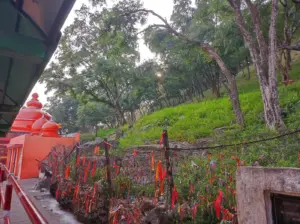
This well-known tourist spot in Uttar Pradesh is said by visitors to have a spiritual vibe. The wonderful scenery of this location, which is characterised by lush trees and plants, can also be held in large part responsible for this.
Visitors to Kamadgiri, one of Uttar Pradesh's most well-known tourist destinations, frequently go barefoot around this hill. It is said that doing so will bring luck and atone for one's misdeeds. The tunnel that is used for circumambulation was built by Bundelkhand monarchs, according to historical sources.
It takes devotees about three to four hours to complete the parikrama. In addition to its religious significance, this location is also known for its tranquilly and ambience. Visit this spiritual site in Chitrakoot if you want to spend the day in absolute tranquilly and meditation.
Located in Chitrakoot, this temple is part of a rich pilgrimage circuit. Explore our Chitrakoot travel guide. Visit on our Chitrakoot 4N/5D tour. Read: Chitrakoot: Immersed in Ramayana.
Questions pilgrims ask about Kamtanath Temple
What is the Kamtanath Temple, Chitrakoot?
The Kamtanath Temple is one of the most important pilgrimage sites in Chitrakoot, dedicated to Lord Rama in his aspect as Kamtanath — "the Lord who fulfills desires." The temple sits at the base of the Kamadgiri Hill, which is itself considered so sacred that circumambulating it (the Kamadgiri Parikrama) is treated as equivalent to visiting all the sacred sites of India in a single act of devotion.
The temple complex sits near the starting point of the 5 km Kamadgiri Parikrama path that circles the hill. Most pilgrims perform the barefoot circumambulation of the hill before entering the temple for darshan — a combination that forms the core pilgrimage act of Chitrakoot.
The temple is significant because Chitrakoot is the place where Lord Rama, Sita, and Lakshmana spent the first 11.5 of their 14 years in exile, according to the Valmiki Ramayana. The entire hill of Kamadgiri is believed to be the embodiment of Lord Rama himself — touching the soil of the hill in circumambulation is considered equal to touching the feet of the Lord.
Kamtanath Temple receives pilgrims from across the Hindi-speaking belt of India, particularly from Madhya Pradesh, Uttar Pradesh, and Bihar. The footfall is substantial year-round, with peaks during Ram Navami, Vivah Panchami (the divine marriage of Ram and Sita), and Diwali. Chitrakoot is less commercially developed than Ayodhya or Varanasi, giving the pilgrimage here a more contemplative and less crowded character for most of the year.
The temple is open from 5:00 AM to 9:00 PM. There is no entry fee.
What is the historical significance of Kamtanath Temple?
The historical significance of the Kamtanath Temple is inseparable from the broader sacred status of Chitrakoot in the Ramayana narrative.
The Valmiki Ramayana describes Chitrakoot as the first extended forest retreat of Lord Rama, Sita, and Lakshmana during their 14-year exile. The sages of Chitrakoot — led by Valmiki himself, who is said to have had his hermitage in these forests — welcomed the exiles and provided them guidance. Sage Bharadwaj in Prayagraj directed Rama to Chitrakoot specifically, calling it an ideal place for forest dwelling: beautiful, full of wildlife, and dotted with sacred spots.
The Kamadgiri Hill, at the base of which the Kamtanath Temple stands, is described in the Ramcharitmanas of Tulsidas as the place of Rama's residence. Tulsidas writes: "Chitrakoot ke ghat par, bhai sant ki bhir" — "At the ghats of Chitrakoot, a great gathering of saints occurred." This verse refers to the occasion when the sage Bharata came to Chitrakoot to persuade Rama to return to Ayodhya after King Dasharatha's death.
The meeting of Rama and Bharata at Chitrakoot — the Bharata Milap — is one of the most emotionally charged episodes of the Ramayana. The spot where this meeting is believed to have occurred is enshrined in the Bharat Milap Temple nearby. The Kamtanath Temple complex, at the center of the Kamadgiri Parikrama, commemorates the full period of Rama's forest life in this region.
The temple's antiquity is hard to date precisely — like many sacred sites in India, it has been rebuilt and renovated multiple times. The current structure reflects late-medieval North Indian temple architecture, with earlier layers of stone suggesting a much older foundation.
What is the architectural style of Kamtanath Temple, Chitrakoot?
The Kamtanath Temple is built in the North Indian Nagara architectural style, which has been the dominant temple-building tradition across the Gangetic plains and central India for over a thousand years. Within the Nagara style, the temple's design falls into the Panchayatana subtype — a central shrine surrounded by four subsidiary shrines at the cardinal directions, creating a balanced, hierarchical composition.
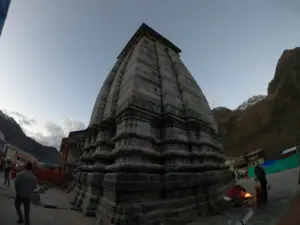
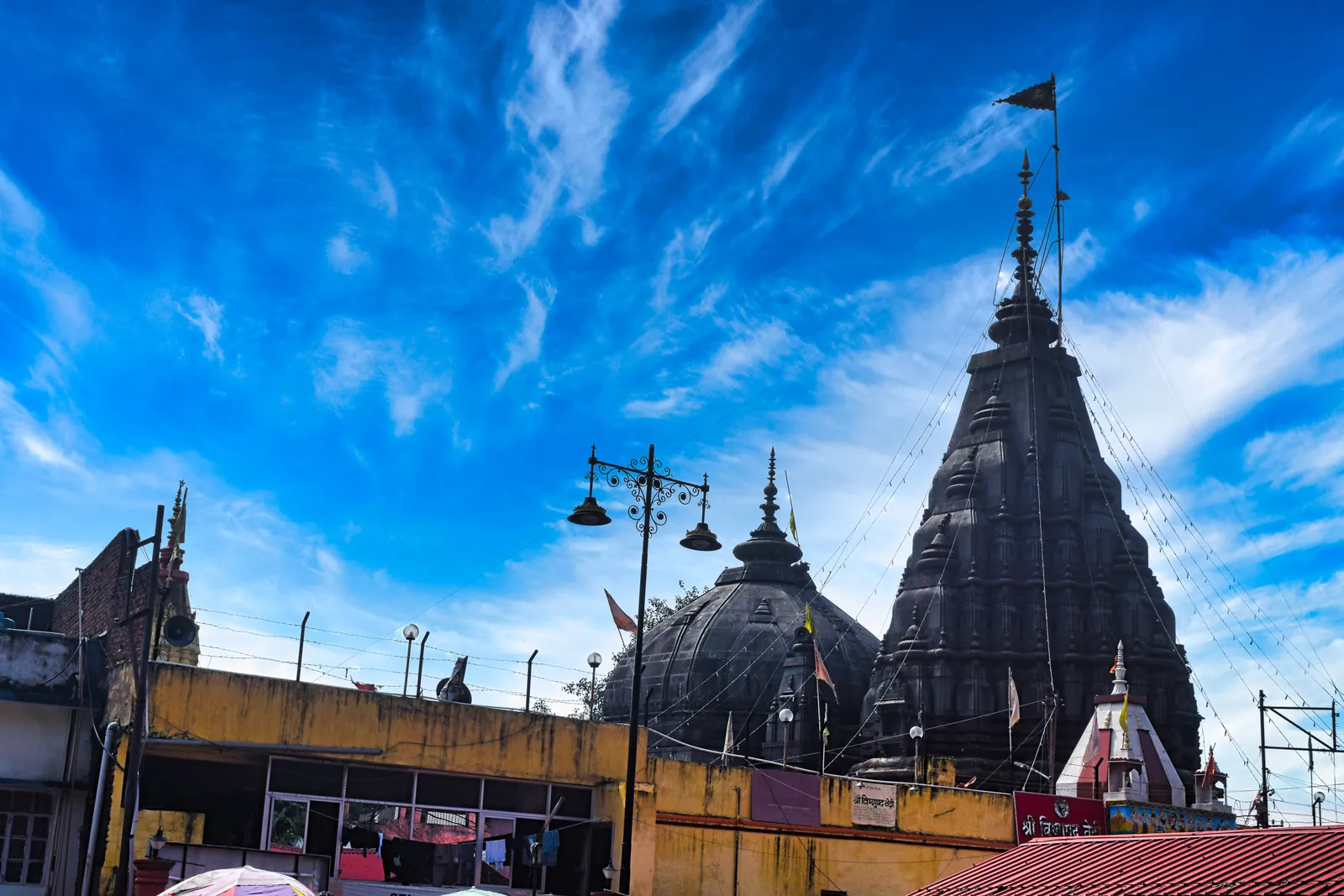
The Shikhara: The most distinctive feature is the curvilinear tower (shikhara) rising above the main shrine. In the Nagara style, this tower is designed to represent Mount Meru, the cosmic mountain at the center of the universe. The shikhara tapers as it ascends and is capped by an Amalaka (a ribbed circular disc symbolizing the lotus) and a Kalash (water pot finial) at the very top. The overall silhouette — wide at the base, narrowing to a point — is immediately recognizable as a North Indian temple form.
Carved pillars and facade: The temple's exterior walls and pillars feature carved relief panels depicting deities, celestial beings (apsaras), and mythological scenes from the Ramayana. This sculptural program is standard in Nagara temples — the entire structure is conceived as a sacred mountain covered in divine beings.
The Mandapa (assembly hall): A pillared hall precedes the main shrine, providing space for congregational prayer and the performance of aarti. The ceiling of the mandapa typically features elaborate geometric and floral patterns carved in the local stone.
The current structure is a medieval reconstruction, with the carved stonework suggesting craftsmanship from the late-medieval period of the Bundela kingdom, which ruled much of the Vindhya region and sponsored significant temple construction in Chitrakoot and neighboring areas.
When is the best time to visit Kamtanath Temple?
October to March is the best time to visit the Kamtanath Temple and Chitrakoot. The weather is cool and dry, making the 5 km barefoot Kamadgiri Parikrama (circumambulation of the sacred hill) genuinely comfortable. Morning temperatures in December–January drop to around 8–12°C, so carry a light jacket, but the days warm up to 22–25°C — ideal for outdoor pilgrimage.
Festival periods within this window:
- Ram Navami (March–April): The peak pilgrimage time in Chitrakoot. Hundreds of thousands of devotees arrive for the celebration of Lord Rama's birth. If you want to experience Chitrakoot at its most devotional intensity, this is the time — but book accommodation well in advance and expect queues for darshan.
- Vivah Panchami (November–December): Celebrates the divine marriage of Ram and Sita. A festive and beautiful time to visit.
- Diwali (October–November): The return of Lord Rama to Ayodhya is celebrated across all Ram temples, including Kamtanath. Oil lamps illuminate the Kamadgiri Parikrama path on the night of Diwali.
Summer (April–June): Temperatures can reach 42°C. The Parikrama in bare feet on a hot day is genuinely uncomfortable. If you must visit in summer, start the circumambulation before 7:00 AM and be back at the temple before 9:00 AM.
Monsoon (July–September): The forests around Chitrakoot are beautiful in the rains, but the Parikrama path can be muddy and slippery. The river routes around Chitrakoot are more scenic in this season. The caves at Gupt Godavari can be partially flooded. If you don't mind rain and mud, the monsoon has its own character.
What festivals are celebrated at the Kamtanath Temple?
Kamtanath Temple celebrates the full range of Ram-related festivals, with Chitrakoot's deep connection to the Ramayana giving each celebration particular depth and authenticity.
Ram Navami (March–April): The biggest festival of the year in Chitrakoot. Marking Lord Rama's birthday, the celebrations here carry special weight because Chitrakoot is the place where Rama actually lived in the forest — this is not a distant commemoration but a celebration at the site itself. The temple sees special morning rituals, abhishekam of the idol, bhajan-kirtan programs through the day, and a large procession (shobha yatra) through the Kamadgiri Parikrama route. Accommodations fill up weeks in advance.
Vivah Panchami (November–December): The celebration of Ram and Sita's divine marriage, observed on the fifth day of the bright fortnight in the month of Margashirsha. The temple holds special pujas and the idols are dressed in wedding finery. A procession re-enacting the wedding is organized by the local temples collectively.
Diwali (October–November): Celebrated as the day of Rama's return from exile. The Kamadgiri Parikrama route and the temple steps are lit with earthen lamps, creating a spectacular sight after dark. Fireworks displays are organized in the town.
Kartik Purnima (October–November): A major bathing festival at the ghats of the Mandakini River. The river is central to Chitrakoot's sacred geography, and the full moon in Kartik draws large crowds for ritual bathing before temple visits.
Shravan month (July–August): Daily special abhishekam of the Shiva lingam aspects within the temple complex. Chitrakoot has both Vaishnava (Ram) and Shaiva temples, and Shravan month is significant for both traditions.
How can one reach Kamtanath Temple, Chitrakoot?
Chitrakoot sits on the border of Madhya Pradesh and Uttar Pradesh, and reaching the Kamtanath Temple from different directions requires slightly different routes. Here is the practical breakdown:
By Train: Chitrakoot Dham (Karwi) station is the primary railhead, located about 10 km from the temple. It has connections to Allahabad (Prayagraj, 2.5 hours), Satna (1 hour), and Manikpur Junction (where Delhi-Mumbai trains stop). Auto-rickshaws from Karwi station to the temple cost ₹80–100. A second option is Chitrakoot Railway Station on the Manikpur-Chitrakoot branch line — this is slightly closer at about 8 km but has fewer trains.
By Bus: State buses from Prayagraj (128 km, ~3 hours), Varanasi (280 km, ~5 hours), and Satna (90 km, ~2 hours) operate to the Chitrakoot bus stand, which is a short walk or auto ride from the Kamadgiri Temple complex. Private buses and share jeeps are also available on these routes.
By Road (self-drive):
- From Prayagraj: NH-35 toward Chitrakoot, 128 km, about 2.5 hours
- From Varanasi: Via Jaunpur and Allahabad, or via Mirzapur and Banda, about 280 km, 5 hours
- From Delhi: Via Agra and Banda (NH-19/NH-35), about 630 km, 10–11 hours (overnight start recommended)
- From Satna (MP): 90 km on SH-11, about 2 hours
- From Khajuraho: 175 km, about 3.5 hours
By Air: The nearest airports are Prayagraj (128 km) and Khajuraho (175 km). Taxis from Prayagraj cost approximately ₹2,500–3,000; from Khajuraho, approximately ₹3,000–3,500.
Once in Chitrakoot, the Kamtanath Temple is within the Kamadgiri complex — all local transport knows it as "Kamadgiri" or "Kamtanath Mandir."
What are the timings to visit Kamtanath Temple?
The Kamtanath Temple is open from 5:00 AM to 9:00 PM daily. The Kamadgiri Parikrama path around the sacred hill begins from the temple complex and is accessible during the same hours.
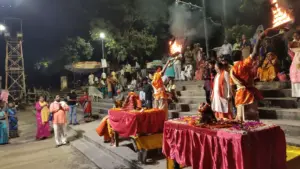
Aarti timings: The main aartis are performed at dawn (approximately 5:30 AM) and dusk (approximately 7:00 PM). The evening aarti at the temple, with lamps and bell-ringing, is particularly atmospheric and draws a good crowd of devotees.
Midday break: The inner sanctum sanctorum is closed for a brief period during the afternoon — usually between 12:00 noon and 2:00 PM — for the midday rituals and the deity's rest period. The outer temple area remains open during this time, but the primary idol is not accessible for darshan.
Kamadgiri Parikrama timings: The 5 km barefoot circumambulation of the Kamadgiri Hill is generally done in the early morning — between 5:30 AM and 9:00 AM is the most popular window. This timing avoids the midday heat in summer and allows you to complete the Parikrama before the main temple gets crowded. In cooler months, the Parikrama is pleasant at any time of day. Allow 1.5 to 2 hours for the full circuit at a moderate pace.
Entry fee: There is no entry fee for the temple or the Parikrama path. The path is public and freely accessible. Small shops along the route sell flowers, coconuts, and other puja items if you want to make offerings at the various shrines along the way.
Photography: Permitted in the outer temple area and along the Parikrama path. Not permitted inside the main sanctum sanctorum. Mobile phones are generally acceptable for photography outside.
What other attractions can be explored near Kamtanath Temple?
Chitrakoot is one of the richest concentrations of Ramayana-linked sites in India, and the Kamtanath Temple's position at the Kamadgiri Parikrama makes it the natural hub from which to explore all of them.
Ram Ghat (within Chitrakoot town, 1 km from Kamadgiri): The main ghat on the Mandakini River, where Lord Rama is believed to have bathed. Aarti is performed here every evening by priests in decorated boats on the river. The ghat is the most visually memorable spot in Chitrakoot — arrive for the evening aarti if possible.
Hanuman Dhara (3 km from Ram Ghat): A natural spring on a hillside, believed to have been created by Lord Rama to cool Hanuman after he set Lanka on fire. The climb involves roughly 360 stone steps and takes about 20–30 minutes. The views from the top over the forests and the Mandakini valley are rewarding.
Janki Kund (2 km from Ram Ghat): A serene ghat on the Mandakini where Goddess Sita is said to have bathed during the exile. The footprints of Sita in stone are preserved here. More peaceful than Ram Ghat, particularly in the mornings.
Sphatik Shila (between Ram Ghat and Janki Kund): A flat rock on the riverbank where Rama and Sita rested. A small shrine marks the spot.
Gupt Godavari (18 km from Chitrakoot town): Twin caves with an underground river flowing through them. The caves are believed to be where Rama held court while in Chitrakoot. More of an excursion than a local walk, but well worth it — allow 2 hours for the visit.
Sati Anusuya Ashram (16 km): The forest hermitage of the sage couple Atri and Anusuya. Set in deeper forest, quieter and more meditative than the main ghats.
Is there any accommodation available near Kamtanath Temple?
Chitrakoot has accommodation at multiple price points, though the town is not as developed as major tourist destinations — expect clean and functional rather than luxurious, in most cases.
Budget options (₹400–900/night):
- Dharamshalas and ashram accommodation: Multiple religious trusts and ashrams in Chitrakoot offer basic rooms for pilgrims at minimal or nominal cost. The quality varies — ask locally for recommendations. The ashrams near the Kamadgiri complex are the most convenient for temple visits.
- MPTDC Tourist Bungalow: The Madhya Pradesh Tourism Development Corporation operates a tourist bungalow in Chitrakoot at government-regulated rates. Basic AC and non-AC rooms are available. Book directly through the MPTDC website or at the property.
Mid-range options (₹1,000–2,500/night):
- Several private hotels have come up along the main road in Chitrakoot town, primarily serving pilgrims and families. Rooms typically have attached bathrooms, hot water, and modest amenities.
- Booking ahead via platforms like MakeMyTrip or Booking.com will show current options and availability — search for "Chitrakoot hotels" rather than a specific property name.
Important note on festival periods: During Ram Navami (March–April) and Vivah Panchami (November–December), all accommodation in and around Chitrakoot fills up rapidly. In these periods, rooms can be booked days or weeks in advance. If you are visiting during a festival, prioritize your accommodation booking before anything else.
Satellite option — Satna: Satna (90 km, 2 hours) is a larger town with a wider range of hotels. If Chitrakoot options are full, Satna is a viable base — many travelers making quick day trips to Chitrakoot stay in Satna.
Is photography allowed inside the Kamtanath Temple?
Photography rules at the Kamtanath Temple are similar to most active Hindu temples: permitted in the outer areas but restricted near the sanctum.
Where photography is permitted: The outer courtyard, the approach to the temple entrance, and the Kamadgiri Parikrama path are all generally fine for photography. You can photograph the temple exterior, the surrounding hills, and the forest scenery without restriction. The Parikrama path in particular offers excellent shots of the Kamadgiri Hill, the various small shrines along the route, and the natural forested landscape.
Where photography is not permitted: Inside the main sanctum sanctorum — the room housing the primary idol — photography is not allowed. This is standard practice at Vaishnava temples and is enforced by the temple staff. The guideline exists to protect the sanctity of the space during active worship, and visitors are expected to respect it.
Practical advice: If you are unsure whether a particular spot is permissible, look for signage (usually in Hindi) or ask one of the temple staff. In general, if you are at the idol level and in the darshan queue, put your camera or phone away.
Video recording: The same rule applies — outer areas are acceptable, inner sanctum is not. Do not record the aarti ceremony from within the sanctum, though watching and participating is fully encouraged.
Drone photography: Not permitted without special permission from the temple trust. Drones are generally not appropriate near active pilgrimage sites in India.
The Kamadgiri Parikrama at dawn, with mist on the hills, offers some of the best photography opportunities in the Chitrakoot area.
Read also
Our Chitrakoot guides.
Tell us your dates. We'll send you a plan and a price.
Our planners reply during desk hours, with a plan and a price for your dates.
Namaste, I'm your name. We'd like to visit Chitrakoot. Please suggest the right tour and how to reach me.
Request sent, ji
It's with our planning desk in Prayagraj. A planner replies on WhatsApp during desk hours: Mon–Sat 11 AM–9 PM · Sun 12–8 PM (IST).
Open WhatsAppPrefer to talk now? +91 77540 97777