







Before you visit
- Address
- Parikrama Marg, Raman Reiti, Vrindavan, Uttar Pradesh 281121
- City
- Vrindavan
- Primary idol
- Lord Krishna
- Speciality
- Shaktipeeth
- Listed hours
- Monday-Sunday, 06:00-21:00Hrs
- Timings change on festivals; confirm before you go.


In this guide
The Radha Raman Temple in Vrindavan is one of the oldest, most revered, and most spiritually potent temples in the entire Braj region. Unlike the later monuments built by royal patronage or wealthy merchants, Radha Raman stands in an unbroken lineage of devotional worship stretching back to 1542 CE — the year when the self-manifested deity of Shri Radha Raman revealed himself from a Shaligram shila (a sacred black stone from the Gandaki River) through the devotion of Gopal Bhatta Goswami. Among the seven principal Thakurs (presiding deities) of Vrindavan — collectively known as the Sapta Devas — Radha Raman occupies a position of particular intimacy and authority.
Gopal Bhatta Goswami and the Shaligram Origin
Gopal Bhatta Goswami (c. 1503-1578) was one of the Six Goswamis of Vrindavan — the inner circle of disciples of Sri Chaitanya Mahaprabhu who established the philosophical and liturgical foundations of Gaudiya Vaishnavism. Born into a South Indian Brahmin family at Srirangam in Tamil Nadu, Gopal Bhatta received the blessings of Sri Chaitanya as a young boy when the saint visited South India on his pilgrimage tour. Later, on Chaitanya's instruction, Gopal Bhatta came to Vrindavan and began collecting Shaligram shilas (sacred stones naturally formed in the shape of Lord Vishnu) from the Gandaki River during a pilgrimage to Nepal.
He gathered 12 Shaligram shilas and, returning to Vrindavan, began worshipping them with great devotion. On the occasion of Purnima (full moon) in the month of Vaishakha (April-May) in 1542, Gopal Bhatta Goswami was performing puja for a devotee who had gifted him fine ornaments. Grief-stricken that he had no proper deity form to adorn with these beautiful offerings, he kept the ornaments with his Shaligrams and entered deep meditation. When he opened his eyes, one of the Shaligrams had transformed into the full four-armed form of Krishna holding a flute, smiling radiantly. This self-manifested deity — who came to be known as Radha Raman, meaning "he who gives pleasure to Radha" — has been worshipped continuously at this spot ever since.
The Deity: A Subtle Smile, a Crown for Radha
Shri Radha Raman is a small deity — approximately 30 cm in height — carved, by the miracle of divine self-manifestation, from a Shaligram stone. The deity displays a subtle, mysterious smile that devotees describe as deeply personal, as if the image is recognising each visitor individually. At the base of the altar, the original Shaligram shilas from which Radha Raman emerged are still present, wrapped reverently.
One of the most discussed theological and aesthetic features of the Radha Raman Temple is the absence of a Radha murti on the altar. While the temple is named for Radha and is a centre of Radha-centred devotion, no separate image of Radha Rani is installed alongside Krishna. Instead, a gold crown (mukuta) is placed to the left of Radha Raman — representing Radha's presence beside her beloved. This symbolic substitution is explained in the temple's tradition as expressing the idea that Radha and Raman are inseparable: to place an idol of Radha would imply a separation that does not exist. The crown contains her; the deity breathes her.
The Samadhi of Gopal Bhatta Goswami
The samadhi (sacred tomb) of Gopal Bhatta Goswami is located within the Radha Raman temple complex, directly adjacent to the place where the deity manifested. This proximity of the saint's resting place to his deity's appearance site is considered extraordinarily sacred. Visiting both — first the deity, then the samadhi — is the standard practice for pilgrims at this temple. The samadhi room is small and serene, a place of great stillness even when the outer temple is crowded.
Continuity and Worship Tradition
The daily worship at Radha Raman has continued without interruption since 1542 — even through periods of political instability when many Vrindavan deities were moved to Jaipur for protection (Radha Raman being one of the few who remained in Vrindavan throughout). The priestly lineage descends directly from Gopal Bhatta Goswami's family and associates, and the standard of worship maintains the standards set by the Goswamis: meticulous, unhurried, suffused with genuine feeling.
The daily schedule follows the traditional eightfold Ashtakaliya seva: eight periods of worship corresponding to different moments in Krishna's eternal daily pastimes, from the pre-dawn Nidra seva (awakening) through the Shayana seva (resting) at night. Attending even one of these seva periods — particularly the morning Shringar darshan when Radha Raman is dressed and adorned for the day — gives a sense of the continuity and depth of living devotional tradition in Vrindavan.
The Temple Architecture and Setting
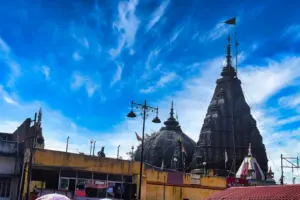
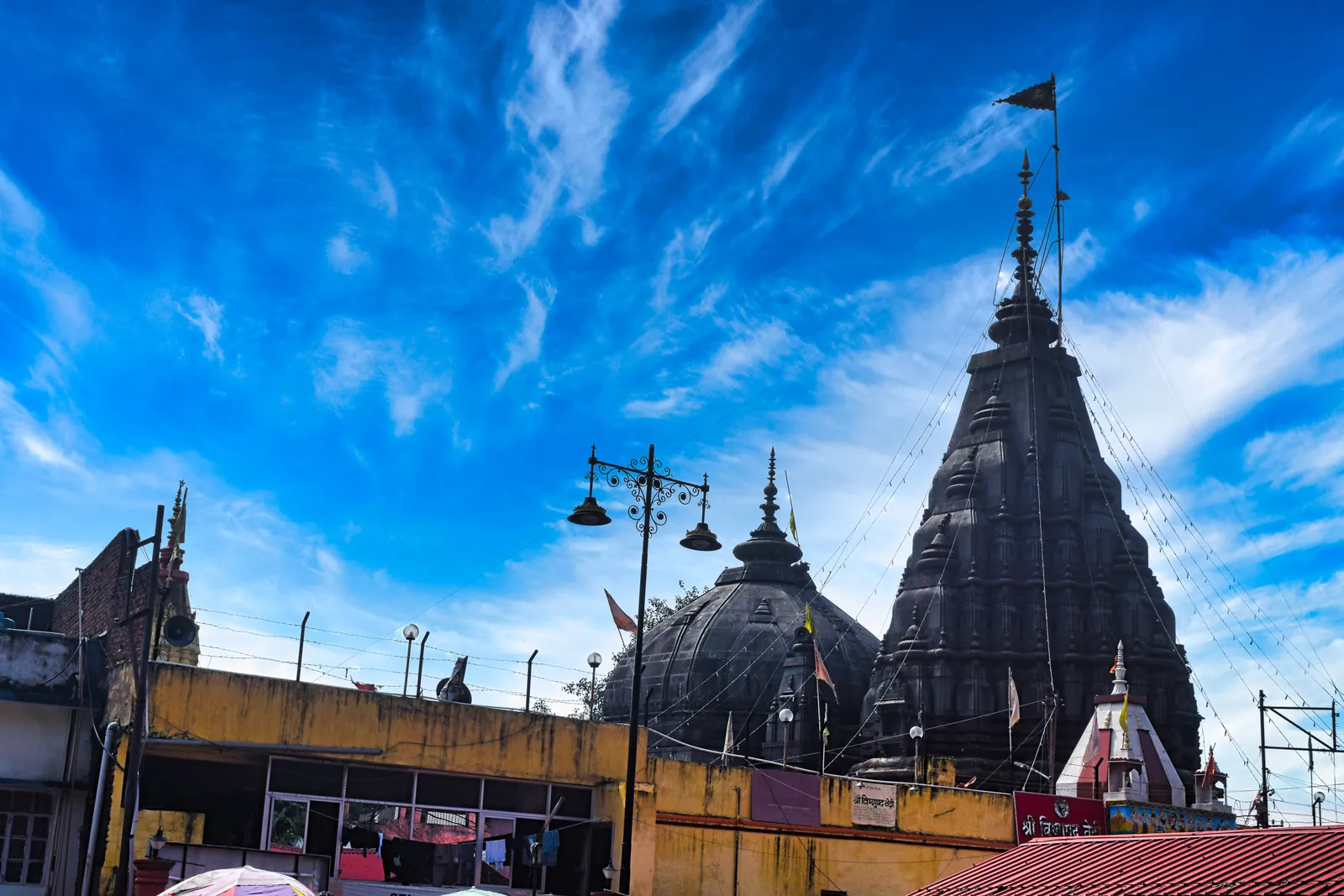
The original 1542 temple structure was remodelled by Shah Behari Lal in 1826, and what you see today reflects that 19th-century renovation: a modest but elegant shikhara in pale sandstone, a covered mandapa that opens into a courtyard shaded by a centuries-old kadamba tree, and the inner sanctum whose doorways are carved with patterns of lotus, vine, and peacock. The scale is intimate — which makes it all the more remarkable that this relatively small temple is regarded by Gaudiya Vaishnavas as one of the supreme places of Krishna worship in the world.
How to Visit
Radha Raman Temple is located approximately 2 km from Vrindavan Railway Station, in the older part of the town. From the main bazaar, it is a 15-20 minute walk through lanes that pass several other significant temples. E-rickshaws and cycle-rickshaws serve this route. The temple opens in the early morning and follows a schedule with midday closure; it is best to check current timings locally as they shift seasonally. Photography is not permitted inside the sanctum. Entry is free.
For a comprehensive guide to Vrindavan's sacred geography, festivals, and travel logistics, visit our Vrindavan teerth-sthal guide. To visit Radha Raman Temple as part of a structured pilgrimage that includes the other major Thakurs of Vrindavan, consider our Mathura-Vrindavan 4N/5D tour package.
Questions pilgrims ask about Radharaman Temple
What is the significance of Radharaman Temple in Vrindavan?
The Radharaman Temple in Vrindavan holds a special place in the hearts of devotees due to its historical and spiritual significance. Established in 1542 by Gopala Bhatta Goswami, one of the Six Goswamis of Vrindavan sent by Chaitanya Mahaprabhu, the temple is renowned for housing the deity of Radharaman, which is believed to have self-manifested from a saligram shila (sacred stone). The temple is a vibrant centre of Gaudiya Vaishnavism and attracts pilgrims worldwide for its divine ambience, intricate architecture, and daily sevas (services) offered to the deity.
Can visitors attend the Aarti ceremonies at Radharaman Temple?
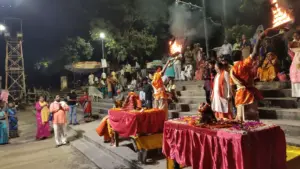
Yes, visitors are welcome to attend the Aarti ceremonies at Radharaman Temple. These ceremonies are a spiritual feast for the senses, involving the offering of lights, incense, and music to the deity. The temple follows a strict schedule for its Aarti and seva rituals, typically held at dawn, noon, and dusk. Attending these ceremonies provides a unique opportunity to immerse oneself in the deep devotion and vibrant cultural traditions of Vrindavan.
What are the unique features of Radharaman Temple?
Radharamana Temple stands out for its exquisite architecture, the self-manifested deity of Lord Radharaman, and its historical significance. The temple features intricate Rajasthani-style carvings and designs. Another unique aspect is its preservation of ancient traditions and rituals, which have been followed without interruption since the 16th century. The temple's deity, Radharaman, is one of the few in Vrindavan not fashioned by human hands, adding to its divine allure.
How can visitors reach Radharaman Temple in Vrindavan?
Vrindavan is well-connected by road and rail, making it easily accessible for visitors. The nearest major railway station is Mathura, which is about 14 km away from Vrindavan. From Mathura, visitors can hire taxis or take local buses to reach the temple. For those driving from Delhi, Vrindavan is approximately 160 km away, a journey that takes around 3 to 4 hours via the Yamuna Expressway.
Are there specific dress codes or etiquette to follow at Radharamana Temple?
While Radharaman Temple does not enforce a strict dress code, visitors are encouraged to dress modestly out of respect for the religious site. Traditional attire is appreciated but not mandatory. It's important to remove shoes before entering the temple premises, and maintaining silence or speaking softly is encouraged to preserve the sanctity of the worship space.
Read also
Our Vrindavan guides.
Tell us your dates. We'll send you a plan and a price.
Our planners reply during desk hours, with a plan and a price for your dates.
Namaste, I'm your name. We'd like to visit Vrindavan. Please suggest the right tour and how to reach me.
Request sent, ji
It's with our planning desk in Prayagraj. A planner replies on WhatsApp during desk hours: Mon–Sat 11 AM–9 PM · Sun 12–8 PM (IST).
Open WhatsAppPrefer to talk now? +91 77540 97777