




Before you visit
- Address
- Sri Rajendra Pathak, Pathak Gali, Vishram Ghat, Vishram Bazar, Mathura, Uttar Pradesh 281001
- City
- Mathura
- Primary idol
- Lord Krishna
- Speciality
- Majestic temple of Lord Krishna
- Listed hours
- Monday-Sunday, 06:00-21:00Hrs
- Timings change on festivals; confirm before you go.

In this guide
The Dwarkadhish Temple in Mathura is one of the most celebrated Vaishnava shrines in all of Braj. Dedicated to Lord Krishna in his majestic form as Dwarkadhish — the King of Dwarka — this temple draws hundreds of thousands of pilgrims each year. Founded in 1814 by the philanthropist Seth Gokuldas Parikh, a treasurer under the Gwalior State, the temple was completed within a few decades and consecrated as a grand landmark of Braj devotion. Whether you arrive during the riotous celebrations of Holi or the serene quiet of a morning aarti, the Dwarkadhish Temple leaves an impression that stays long after you leave Mathura.
History and Foundation
Seth Gokuldas Parikh commissioned the temple in 1814 as an act of deep personal devotion. The construction drew on the combined artistic traditions of Rajasthan and Gujarat, and the result is a structure that feels distinctly regal — fitting for a temple honouring the King of Dwarka. The presiding deity, Dwarkadhish, is carved from black marble (kala pathar) and stands adorned with elaborate shringar (ritual ornamentation) that changes with every festival and season. The image is attended to with great care throughout the day, with multiple darshan slots and aartis that have continued unbroken for over two centuries.
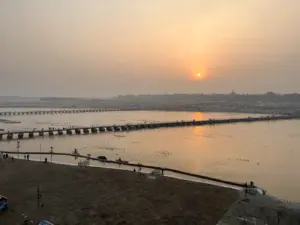
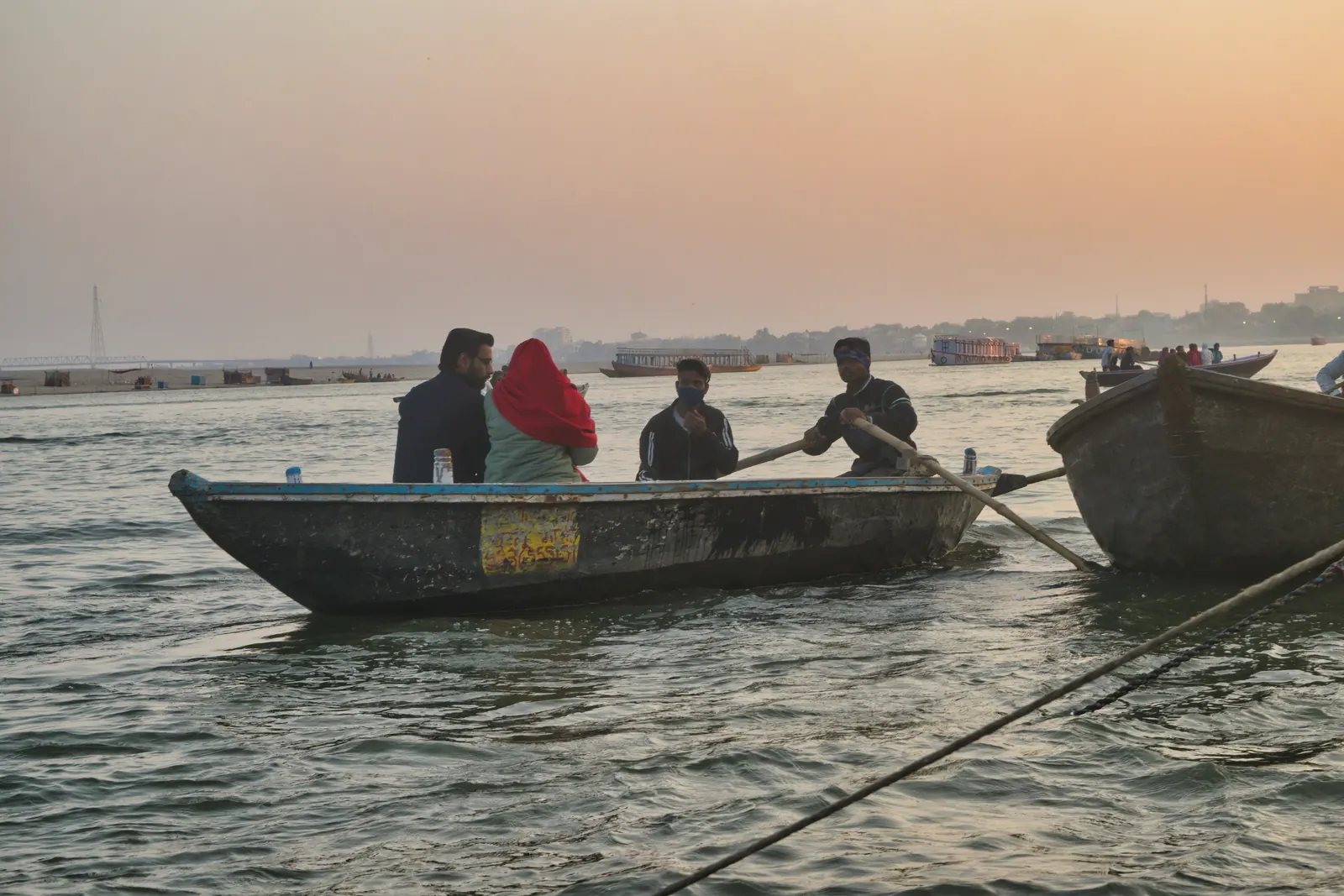
The temple was built adjacent to the Vishram Ghat on the Yamuna, a spot considered particularly sacred because tradition holds that Lord Krishna rested here after slaying the demon Kansa. This proximity to the river and the ghat gives the entire precinct an atmosphere of layered sanctity — pilgrims can take a ritual bath in the Yamuna and proceed directly to the temple for darshan.
Architecture and Artistic Details
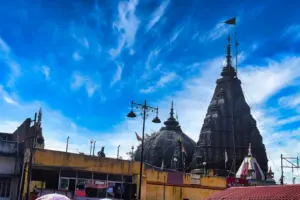
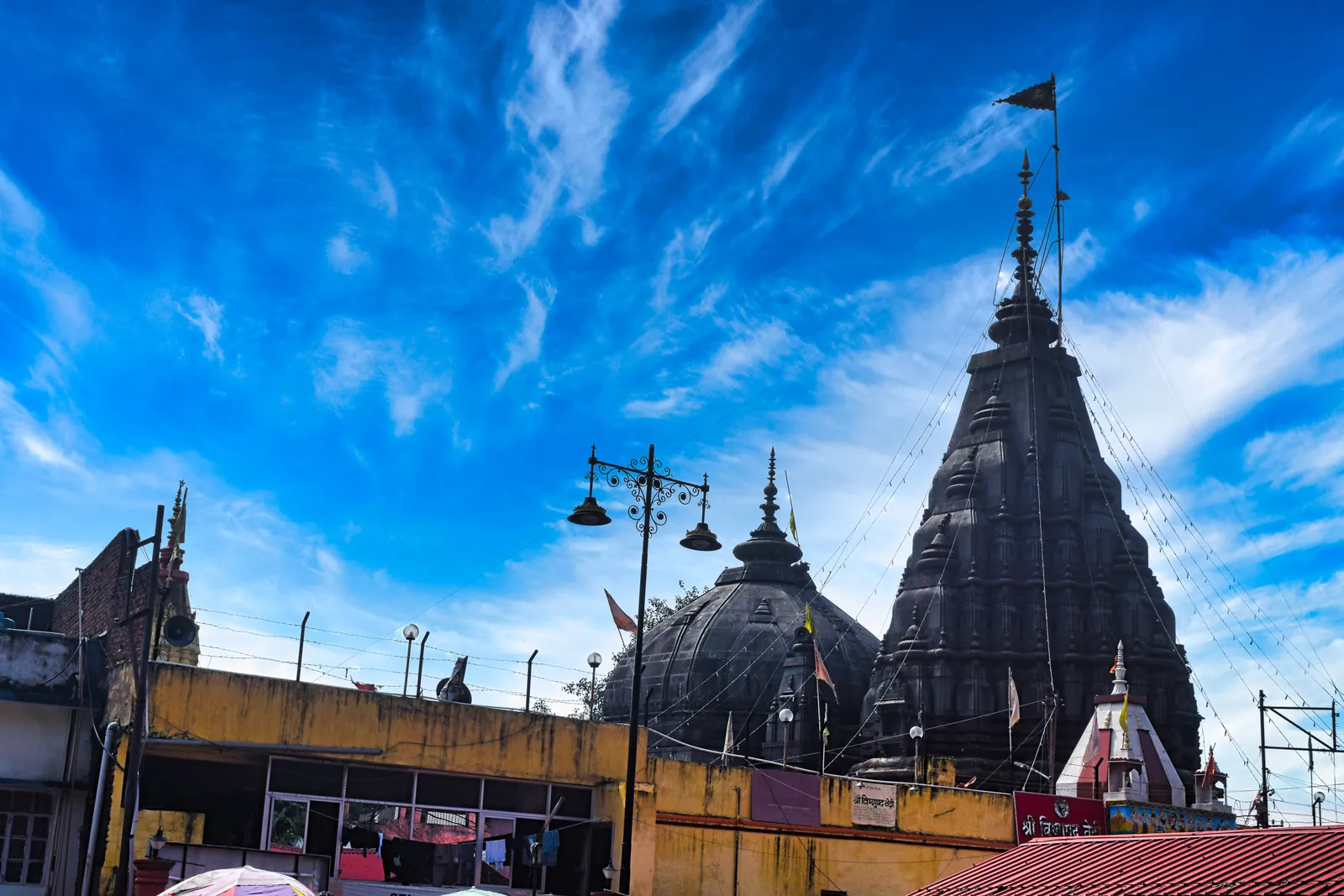
Approaching the Dwarkadhish Temple, the first thing you notice is the shikhara — the towering spire that rises above the roofline of the surrounding bazaar lanes. The shikhara is built in the Rajasthani nagara style, with intricately carved sandstone tiers that diminish as they rise. The exterior walls are adorned with panels depicting scenes from Krishna's life: his birth in the prison of Kansa, the butter-stealing exploits of his Vrindavan childhood, and the grand episodes of the Mahabharata in which he served as Arjuna's charioteer.
Inside the mandapa (the pillared hall before the sanctum), the ceiling is painted with detailed depictions of Vishnu's dashavataras (ten incarnations). The floor is cool polished marble. Devotees sit cross-legged during aarti, and the space fills quickly on festival days. The garbhagriha (inner sanctum) is comparatively small but intensely charged — the black marble Dwarkadhish idol, resplendent in gold and silk, seems to absorb and return every lamp that flickers before it.
The swing festival (Jhulan Yatra) is observed with particular grandeur here: the idol is placed on an ornate silver swing and garlanded elaborately as bhajans ring through the halls. If you are planning a visit specifically for a festival, Jhulan Yatra (usually in July or August), Janmashtami, and Holi are the three occasions when the temple reaches its full ritual intensity.
Daily Darshan and Aarti Schedule
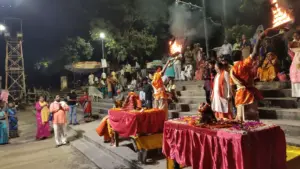
The temple follows a rigorous daily schedule of shringara (dressing), bhog (food offerings), and aarti. The mangala aarti takes place before sunrise, and the temple thereafter cycles through five additional darshan periods through the day, closing for a midday rest before reopening in the afternoon. The sandhya aarti at dusk is particularly beautiful — the inner sanctum is lit entirely by ghee lamps and the sound of conch shells and cymbals carries into the lane outside.
Photography inside the sanctum is not permitted, though the outer courtyard and mandapa are usually accessible. Dress modestly: men should cover their shoulders and women should wear a saree, salwar, or any full-coverage attire. Footwear must be left at the entrance.
The Significance of Dwarkadhish in Braj Theology
In Braj Vaishnavism, the name Dwarkadhish marks a specific lila (divine play) of Krishna — his later life as king and householder after leaving Vrindavan. The temple thus holds a particular emotional weight: it celebrates not the playful cowherd boy of Braj, but the same Krishna grown into a sovereign figure, radiating both majesty and compassion. Many pilgrims who complete the Braj parikrama (the 84-kos circumambulation of the sacred region) include Dwarkadhish Temple as a culminating darshan, seeing it as a bridge between Krishna's pastoral youth and his kingly maturity.
The temple is also one of the four principal Dhams of Mathura city, the others being Kesava Deva (Janambhoomi), Ranganatha Temple, and Birla Mandir. Together they form the backbone of the Mathura pilgrimage circuit that most devotees cover in a single day.
Getting There and Practical Tips
The Dwarkadhish Temple sits in the old city of Mathura, roughly 500 metres from Vishram Ghat. From Mathura Junction Railway Station, the temple is about 2 km by auto-rickshaw (15-20 minutes, roughly ₹50-80). Parking near the temple is limited; if you are arriving by private vehicle, park near Vishram Ghat and walk. The lanes leading to the temple are lined with flower sellers, garland stalls, and prasad shops — it is customary to carry an offering of tulsi, marigold, and peda (a sweet native to Mathura) for the deity.
The temple precinct can become extremely crowded on Ekadashi, Janmashtami, and Holi. If crowds are a concern, the early morning mangala aarti window (around 5:30 AM) offers a quieter, more contemplative darshan. Entry is free; no donation is required though donation counters are present.
Confirm before you go — times change on festivals.
To visit Dwarkadhish Temple as part of a structured pilgrimage, see our complete Mathura travel guide covering all major ghats, temples, and logistics. You can also book a guided tour through our Mathura-Vrindavan 4N/5D tour package, which includes temple visits, a Yamuna aarti experience, and Vrindavan day trips.
Questions pilgrims ask about Dwarkadhish Temple
What is the historical significance of the Dwarkadhish Temple, Mathura?
The Dwarkadhish Temple, located in the holy city of Mathura, India, holds immense historical and religious significance. Built in 1814 by Seth Gokul Das Parikh, the Treasurer of Gwalior State, the temple is a prominent pilgrimage site for Hindus. It is dedicated to Lord Krishna, who is revered as the 'King of Dwarka', hence the name 'Dwarkadhish'. The temple, with its unique blend of Rajasthani and local Indian architectural styles, serves as a testament to India's rich cultural heritage. The site is particularly significant for the followers of Vaishnavism, who believe in the supremacy of Lord Vishnu and his avatars, including Krishna.
- The Dwarkadhish Temple was built in 1814 by Seth Gokul Das Parikh.
- It is a prominent Hindu pilgrimage site dedicated to Lord Krishna.
- The temple represents a unique blend of Rajasthani and local Indian architectural styles.
What are the architectural features of the Dwarkadhish Temple?
The Dwarkadhish Temple showcases an exquisite blend of Rajasthani and local Indian architectural styles. The temple consists of a large complex that houses a main shrine, a large courtyard, and several smaller shrines. The main shrine is adorned with a striking black marble idol of Lord Krishna, known as Dwarkadhish. The edifice exhibits intricate carvings and stunning frescoes depicting various scenes from Krishna's life and the Hindu epics. The temple's large courtyard, surrounded by a two-story verandah, hosts various religious festivals and activities throughout the year.
- The temple is characterized by a blend of Rajasthani and local Indian architectural styles.
- The main shrine houses a black marble idol of Lord Krishna, also known as Dwarkadhish.
- The temple complex includes a large courtyard and several smaller shrines.
What are the main festivals celebrated at the Dwarkadhish Temple?
The Dwarkadhish Temple is the epicenter of several Hindu festivals. Among these, the most significant are Janmashtami, Holi, and Diwali. Janmashtami, the birth anniversary of Lord Krishna, is celebrated with great fervor, with devotees flocking to the temple from across the globe. The festival of Holi, known as the festival of colours, is another major event celebrated with great enthusiasm. Diwali, the festival of lights, marks the return of Lord Ram to Ayodhya and is observed with various rituals and illuminations at the temple.
- The main festivals celebrated at the temple are Janmashtami, Holi, and Diwali.
- Janmashtami, the birth anniversary of Lord Krishna, attracts devotees from all over the world.
- Holi and Diwali are celebrated with great enthusiasm, involving various rituals and illuminations.
How can one reach the Dwarkadhish Temple, Mathura?
The city of Mathura is well connected by road, rail, and air. Mathura has its own railway station, Mathura Junction, which is well-connected to major Indian cities. From the railway station, the temple is just a short rickshaw or taxi ride away. The nearest airport is Agra's Kheria airport, approximately 60 kilometres from Mathura. State-run buses and private vehicles also offer convenient travel options from neighbouring cities and towns to Mathura.
- Mathura has its own railway station, and the temple is a short ride away.
- The nearest airport is Agra's Kheria airport, about 60 kilometres from Mathura.
- State-run buses and private vehicles provide connectivity from nearby cities and towns.
What are the timings and rules for visitors at the Dwarkadhish Temple?
The Dwarkadhish Temple is open to visitors from 6:30 AM to 10:30 AM and from 4:00 PM to 7:00 PM. These timings may vary during special occasions and festivals. Visitors are advised to dress modestly as a mark of respect to the religious sanctity of the temple. Photography inside the temple is generally not permitted. It is also important to note that shoes are not allowed inside the temple premises; shoe stands are available for safekeeping.
- The temple is open from 6:30 AM to 10:30 AM and 4:00 PM to 7:00 PM.
- Modest dress is expected as a mark of respect to the temple's religious sanctity.
- Photography is generally not permitted, and shoes are not allowed inside the temple premises.
What are the nearby attractions to the Dwarkadhish Temple?
Apart from the Dwarkadhish Temple, Mathura boasts numerous other attractions. The Vishram Ghat, a sacred bathing spot on the banks of the Yamuna River, is close by and is where Lord Krishna is believed to have rested after defeating Kansa. The Gita Mandir and the Government Museum, Mathura, which holds an impressive collection of artefacts from the region's rich past, are also worth a visit. The Sri Krishna Janmabhoomi Temple believed to be the birthplace of Lord Krishna, is another significant site in Mathura.
- The Vishram Ghat, a sacred spot on the banks of the Yamuna River, is near the Dwarkadhish Temple.
- The Gita Mandir and the Government Museum, Mathura are worth a visit for their historical significance.
- The Sri Krishna Janmabhoomi Temple believed to be the birthplace of Lord Krishna, is a major attraction in Mathura.
Is there any special ritual or prayer held at the Dwarkadhish Temple?
Several rituals and prayers are held at the Dwarkadhish Temple. A daily ritual called 'Aarti' is performed several times throughout the day and involves offering light from wicks soaked in ghee (purified butter) to the deity. Another significant ritual is the 'Abhishekam,' a holy bath given to the idol of Lord Krishna. Devotees also partake in 'Jhulan Yatra,' a five-day festival during which the idol of Lord Krishna is placed on a swing and the devotees swing the Lord.
- 'Aarti', a ritual involving offering light from ghee-soaked wicks, is performed several times a day.
- 'Abhishekam,' a holy bath for the idol of Lord Krishna, is another significant ritual.
- During 'Jhulan Yatra,' devotees place the idol of Lord Krishna on a swing and swing the Lord.
What are the facilities available for devotees at the Dwarkadhish Temple?
The Dwarkadhish Temple offers various facilities for the convenience of the devotees. There are clean and well-maintained restrooms, drinking water facilities, and a shoe stand for safekeeping footwear before entering the temple. The temple also provides assistance for the physically challenged and elderly. Additionally, there are numerous local shops and stalls around the temple selling religious paraphernalia, snacks, and souvenirs.
- The temple offers clean restrooms, drinking water facilities, and a shoe stand.
- Assistance is provided for physically challenged and elderly devotees.
- Numerous shops and stalls are available around the temple selling religious items, snacks, and souvenirs.
What is the significance of the idols in the Dwarkadhish Temple?
The Dwarkadhish Temple houses several important idols. The primary deity of the temple is Lord Krishna, depicted as 'King of Dwarka,' whose idol is made of black marble. Apart from the main deity, the temple also houses idols of Radha Rani, the divine consort of Lord Krishna, and other deities related to Lord Krishna's life and stories. These idols are not only of religious importance but also represent the rich artistic traditions of the region.
- The primary deity of the temple is Lord Krishna, whose idol is made of black marble.
- The temple also houses idols of Radha Rani and other deities related to Krishna's life and stories.
- These idols are significant not only for their religious importance but also for their artistic value.
Can non-Hindus visit the Dwarkadhish Temple?
Yes, non-Hindus are generally allowed to visit the Dwarkadhish Temple. The temple welcomes visitors of all faiths who wish to explore its architectural beauty, history, and cultural significance. However, all visitors are expected to respect the sanctity of the temple and follow the rules and customs, such as dressing modestly and removing shoes before entering the temple premises.
- Non-Hindus are allowed to visit the Dwarkadhish Temple.
- Visitors of all faiths are welcome but are expected to respect the sanctity of the temple.
- All visitors must follow the rules and customs of the temple, including modest dress and shoe removal.
Read also
Our Mathura guides.
Tell us your dates. We'll send you a plan and a price.
Our planners reply during desk hours, with a plan and a price for your dates.
Namaste, I'm your name. We'd like to visit Mathura. Please suggest the right tour and how to reach me.
Request sent, ji
It's with our planning desk in Prayagraj. A planner replies on WhatsApp during desk hours: Mon–Sat 11 AM–9 PM · Sun 12–8 PM (IST).
Open WhatsAppPrefer to talk now? +91 77540 97777