

Listed hours
Check timings before you go.
Our tours include regular darshan, as per the itinerary. Special darshan is extra, by our quote.
- Deity
- No Idol
- Known as
- Rishi Dadhichi donated his bones here
- Address
- Misrikh-cum-Neemsar, Uttar Pradesh 261401, India
Going with parents? Add a question for our desk
No set tour here yet — we plan it for you
Tell us your dates and who is travelling. We reply with a plan and a price.
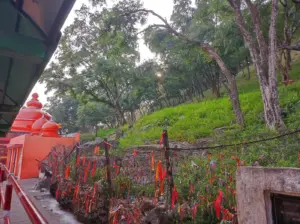
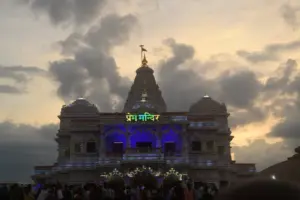
WhatsApp us Mon–Sat 11 AM–9 PM · Sun 12–8 PM (IST)Dadhichi Kund in photos


About Dadhichi Kund
Our guide to the temple.
The mythological significance of Dadhichi Kund makes it one of Naimisharanya's most amazing tourist destinations. Dadhichi Kund, also known as Misrikh Teerth, is a sizable water tank surrounded by beautiful ghats. This well-known shrine in Naimisharanya was constructed using a straightforward architectural style.
Dadhichi Kund at Naimisharanya — also known as Misrikh Teerth — is one of the most morally charged pilgrimage sites in the Hindu tradition. This is not a place associated with royal power, divine birth, or cosmic battles won through supernatural force. It is associated with something rarer: the voluntary gift of one's own body for the welfare of all creation. Maharishi Dadhichi gave his bones — literally, the physical structure of his living body — so that a weapon could be made to save the gods and humanity from demonic tyranny. That act of absolute self-offering is what Dadhichi Kund commemorates, and it is why the site carries a quality of devotional intensity that goes beyond ordinary temple worship.
The Story of Maharishi Dadhichi
The legend of Dadhichi is one of the most powerful in all of Puranic literature. The demon Vritra had grown invincible through a boon and had driven Indra, the king of the gods, and the entire deva community out of their realm. Indra and the gods, unable to defeat Vritra through conventional means, approached Lord Vishnu for guidance. Vishnu told them that only a weapon made from the bones of a great rishi could destroy Vritra — and specifically, the bones of Maharishi Dadhichi, a sage of immense accumulated tapasya (spiritual power), whose body had been made extraordinarily potent through decades of ascetic practice and devotion.
This placed Indra in an extraordinary position. He had to ask a living human being to die for him — to surrender their body so that it could be broken down into a weapon. No amount of wealth, power, or divine blessings could substitute for this gift. The only currency that could save the gods was Dadhichi's willingness to give up his life.
Indra approached Dadhichi and made his request with full transparency, explaining why the bones were needed and what the consequences would be if he refused. Dadhichi's response, as recorded in the Srimad Bhagavata Purana and the Vishnu Purana, is one of the great moments of philosophical clarity in Sanskrit literature: he agreed immediately and without condition. He told Indra that the body is temporary, that it will be destroyed by time in any case, and that if its destruction can serve the cause of dharma and the welfare of all beings, then its surrender is not a sacrifice at all — it is the highest use to which a body can be put.
Dadhichi then sat in meditation, gave up his life voluntarily, and allowed his body to dissolve. From his bones — hardened by years of tapasya into something described as vajra-like in their density — Vishvakarma fashioned the Vajra (thunderbolt), the weapon with which Indra subsequently defeated and killed Vritra. The entire episode took place here at Misrikh, which is why the kund and the temple complex bear Dadhichi's name.
Misrikh Teerth: The Sacred Complex
The Dadhichi Kund complex at Misrikh includes the kund (sacred tank) itself, an ashram area associated with Dadhichi's meditation, and a temple where the sage is venerated. The ghats of the kund are well-maintained, with stone steps descending to the water. The wall inscriptions that devotees encounter as they walk the perimeter of the kund depict moments from Dadhichi's life — his tapasya in the forest, his meeting with Indra, his act of self-surrender, and the creation of the Vajra from his bones. These narrative inscriptions serve as an ambient scripture for pilgrims who may not have read the Puranas directly but can absorb the story through visual storytelling as they walk.
The water of Dadhichi Kund is considered highly sacred — bathing here is believed to purify the bather of accumulated sins and to generate punya equivalent to far more elaborate rituals. The tradition holds that Dadhichi's dissolved body still infuses the water with spiritual potency. This is a form of the concept of tirtha-shakti: the sacred power that a place accumulates through the events that happened there and through continuous acts of devotion over generations.
Nishkama Seva: The Theology of Dadhichi's Gift
Dadhichi's story is used throughout Hindu ethical and devotional literature as the supreme illustration of nishkama seva — selfless service without expectation of personal return. He received nothing from Indra in exchange for his bones. He did not negotiate better terms, or ask for cosmic reward, or make conditions. He gave what was asked, completely, and died. This radical selflessness is what distinguishes Dadhichi from other heroic figures in Hindu mythology who typically receive boons or recognition for their sacrifices.
In the Bhagavata Purana's retelling of the story, the narrative pauses to have Dadhichi explicitly articulate his philosophy: the self that inhabits the body is not the body, and therefore the body's dissolution is of no ultimate consequence to the one who has realised this. He dies as a jnani (one who has realised the self's independence from the body) and as a karma yogi (one who acts without attachment to the fruit of action). The site where this happened is therefore not just a historical or mythological location — it is a teaching in physical form.
Annual Observances at Dadhichi Kund
The most significant annual event at Dadhichi Kund is the Dadhichi Jayanti, which falls in the month of Shravan (July-August). On this day, the ashram and kund are decorated, special puja and havan (fire ritual) are performed, and devotees from across Uttar Pradesh gather to offer prayers at the kund and to the temple of Maharishi Dadhichi. The Puranic story of Dadhichi is read aloud throughout the day, and speakers give discourse on the meaning of his sacrifice for contemporary life.
Kartik Purnima (October-November) and Makar Sankranti (January) are also major bathing occasions at Dadhichi Kund, when large numbers of pilgrims come for the sacred bath. The broader Naimisharanya complex sees its largest gatherings during these dates, and Dadhichi Kund is always one of the key stops on the pilgrimage circuit.
Reaching Dadhichi Kund
Dadhichi Kund is located in Misrikh, a small town adjacent to Naimisharanya in Sitapur district of Uttar Pradesh. It is approximately 25 kilometres from the main Chakra Teerth of Naimisharanya, though many pilgrims include both in a single day's circuit. From Lucknow, Misrikh is approximately 90 kilometres, accessible by road. Local transportation connects Misrikh to Sitapur and from there to Lucknow.
For complete planning information on the Naimisharanya-Misrikh pilgrimage circuit, see our Naimisharanya travel guide, which covers Chakra Teerth, Vyas Gaddi, Suta Gaddi, and all the major sacred sites of the forest. Our UP Pilgrimage circuit tour connects the major sacred cities of Uttar Pradesh in a single organised journey.
Questions pilgrims ask about Dadhichi Kund
What is Dadhichi Kund, Naimisharanya?
Dadhichi Kund is a sacred pond located in the ancient forest of Naimisharanya (also called Nimsar or Naimisha Aranya) in the Sitapur district of Uttar Pradesh, approximately 92 km from Lucknow. The site is named after the revered sage Dadhichi, one of the most celebrated figures of self-sacrifice in Hindu mythology.
According to the Shiva Purana and the Bhagavata Purana, the demon king Vritra had become invincible — no existing weapon could defeat him. The gods approached Sage Dadhichi and requested him to donate his bones, from which the divine weapon Vajra (the thunderbolt) would be crafted. Dadhichi agreed without hesitation, dissolved his physical body in the sacred waters of this kund through yogic power, and the gods fashioned the Vajra from his spine. Armed with this weapon, Indra was able to slay Vritra and restore order. Dadhichi's act of giving his very bones for the welfare of the universe made him the supreme symbol of yajna (sacrifice) in the Hindu tradition.
The kund itself is a small pond, considered to be the very spot where Dadhichi dissolved his body. The water is regarded as sacred, and pilgrims take a ritual dip here before visiting other shrines in Naimisharanya. The adjacent temple is dedicated to Sage Dadhichi and receives steady streams of devotees, particularly on Purnima (full moon) days and during festivals.
Naimisharanya as a whole is one of the most ancient pilgrimage forests of India, mentioned in multiple Puranas. Dadhichi Kund is one of its key sacred spots, alongside Chakra Teerth, Vyas Gaddi, Suta Gaddi, and the Lalita Devi Shakti Peetha.
What is the history and mythology associated with Dadhichi Kund, Naimisharanya?
Dadhichi Kund's historical and mythological significance is intertwined with Hinduism's ancient scriptures. The story goes that sage Dadhichi renounced his physical existence by dissolving it in the waters of this kund (pond). The gods later used his bones to create the invincible Vajra weapon, which helped them triumph over the demons. Additionally, Naimisharanya is believed to be the place where many sacred Hindu scriptures, including the Puranas, were written.
What are the main attractions of Dadhichi Kund, Naimisharanya?
The primary attractions of Dadhichi Kund are the tranquil pond, believed to be the place of sage Dadhichi's self-immolation and the adjacent temple dedicated to the sage. Additionally, the entire forest of Naimisharanya houses numerous other pilgrimage sites, including the Chakra Tirtha Temple, Vyas Gaddi, and Hanuman Garhi. The peaceful ambience, rich history, and spiritual aura of the place attract tourists and devotees alike.
How to reach Dadhichi Kund, Naimisharanya?
Dadhichi Kund is located in Naimisharanya, which is in the Sitapur district of Uttar Pradesh. Here are the practical ways to reach it:
By Road from Lucknow (92 km, ~2 hours): This is the most common approach. UPSRTC state buses run from Kaiserbagh bus stand in Lucknow to Naimisharanya (Nimsar), with journey times of about 2–2.5 hours. Private cabs from Lucknow cost approximately ₹1,500–2,000 one-way. The route is via Sitapur on NH-730 — well-paved throughout.
By Train: The nearest railway station is Mishrikh-Naimisharanya (also listed as Misrikh), which is about 8 km from the main Naimisharanya complex. A smaller halt station, Nimsar, is slightly closer. Both are on the Lucknow–Sitapur–Hardoi broad gauge line. From the station, auto-rickshaws or e-rickshaws take you to the Chakra Teerth complex (the central point of Naimisharanya) for ₹30–50. From there, Dadhichi Kund is a short walk.
By Air: Chaudhary Charan Singh International Airport in Lucknow is the nearest airport at 92 km. Pre-paid taxis from the airport to Naimisharanya cost around ₹2,000–2,500. The road passes through Sitapur town, and the route is straightforward.
From Sitapur: Naimisharanya is 32 km from Sitapur. Regular buses and shared jeeps connect Sitapur to Nimsar throughout the day — a faster option if you are approaching from the east.
Once at Naimisharanya, the key sites — Chakra Teerth, Dadhichi Kund, Vyas Gaddi, Suta Gaddi, and Hanuman Garhi — are all within a 1–2 km radius and can be covered on foot in 3–4 hours.
What is the best time to visit Dadhichi Kund, Naimisharanya?
The best time to visit Dadhichi Kund, Naimisharanya, is during the cooler months from October to March. The weather during this period is pleasant and perfect for exploring the spiritual sites in the area. However, devotees visit this sacred place all year round, especially during the auspicious Hindu festivals.
Are there any special rituals performed at Dadhichi Kund, Naimisharanya?
Yes, there are special rituals performed at Dadhichi Kund. Devotees usually perform 'tarpan' (a ritual of offering to ancestors) and take a holy dip in the Kund, believed to cleanse one's sins and bestow blessings. Also, during specific Hindu festivals, grand ceremonies and rituals take place at the Kund.
Are there any accommodation facilities near Dadhichi Kund, Naimisharanya?
Indeed, there are a number of accommodation options near Dadhichi Kund, Naimisharanya. From budget-friendly guest houses to more comfortable hotels, there's a range of accommodations to suit various budgets. Some of these establishments offer stunning views of the local temples and the surrounding scenic beauty.
What local cuisine is available near Dadhichi Kund, Naimisharanya?
The area around Dadhichi Kund, Naimisharanya, offers a variety of local Uttar Pradesh cuisine. You can savor delectable dishes such as Awadhi Biryani, Lucknowi Kebabs, and sweet delicacies like Jalebi and Balushahi. Additionally, there are also food outlets serving North Indian Thali and other popular Indian dishes.
What else can one explore near Dadhichi Kund, Naimisharanya?
Naimisharanya and its surrounding area offer far more than just Dadhichi Kund. Here is what you can explore on the same visit:
Chakra Teerth (within Naimisharanya): The most sacred spot in the entire Naimisharanya complex — a circular pond believed to be where Brahma's discus (chakra) fell to Earth, sanctifying the forest. Taking a ritual bath here is considered highly auspicious. The pond is surrounded by ancient temples and is the first stop for most pilgrims.
Vyas Gaddi (within Naimisharanya): The "seat of Vyasa" — the spot where the sage Veda Vyasa is believed to have divided the single Veda into four parts and later narrated the Puranas. A small temple marks the site, which holds particular significance for scholars and devotees of the Vedic tradition.
Suta Gaddi (within Naimisharanya): The site where sage Suta narrated the Puranas to the assembled rishis over the twelve-year yajna — the originating event of Naimisharanya's sacred status. Adjacent to Chakra Teerth.
Hanuman Garhi (within Naimisharanya): A hilltop Hanuman temple reached by climbing around 100 steps. The views from the top over the surrounding forest are good, and the temple itself is active with devotees throughout the day.
Lalita Devi Temple (within Naimisharanya): One of the 108 Shakti Peethas, dedicated to Goddess Lalita — a form of Sati. An important stop for devotees of the Shakta tradition.
Local market (Sitapur): Sitapur district is known for its chikankari embroidery work and local handloom fabrics. The market near the Naimisharanya complex has small shops selling religious items, handicrafts, and local sweets like Balushahi and Jalebi that are worth trying after a morning of temple visits.
Most pilgrims cover Chakra Teerth, Dadhichi Kund, Vyas Gaddi, Suta Gaddi, and Hanuman Garhi in a single morning, taking about 4–5 hours in total.
Is Dadhichi Kund in Naimisharanya, a family-friendly destination?
Absolutely, Dadhichi Kund, Naimisharanya, is a family-friendly destination. The spiritual importance of the site, combined with the natural beauty and peaceful surroundings, makes it a unique destination for all age groups. It provides a great opportunity for families to immerse themselves in ancient history, spirituality, and nature all at once.
More temples in Naimisharanya
From our temple guide.


Read before you go
Our Naimisharanya guides.

A postcard from a family
Watch before you plan
Group from MumbaiTheir tour, in their words.
Planned in Prayagraj · since 2018Tell us your dates. We'll send you a plan and a price.
Our planners reply during desk hours, with a plan and a price for your dates.
Namaste, I'm your name. We'd like to visit Naimisharanya. Please suggest the right tour and how to reach me.
Request sent, ji
It's with our planning desk in Prayagraj. A planner replies on WhatsApp during desk hours: Mon–Sat 11 AM–9 PM · Sun 12–8 PM (IST).
Open WhatsAppPrefer to talk now? +91 77540 97777